view more
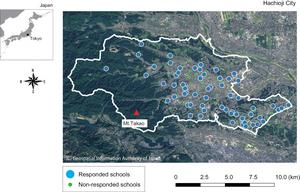
The natural environment provides human society with essential non-material values, such as cultural symbolism and local attachment, known as "cultural ecosystem services." But can these abstract cultural values actually influence how communities behave? According to a new study focusing on public schools in Hachioji City, Tokyo, the answer is yes.
In a study published in the journal Nature Conservation, researchers Kazuki Miyauchi and Associate Professor Takeshi Osawa from the Graduate School of Urban Environmental Sciences at Tokyo Metropolitan University investigated the relationship between nature-related vocabulary in school anthems and actual environmental education practices.
Why school songs?
Lyrics serve as a vital medium for expressing nature within a cultural context. However, because popular or general songs are sung in many different places, their references to nature tend to be abstract and often lack a strong connection to a specific region. In contrast, school anthems are deeply rooted in specific schools and communities and are characterized by being sung regularly and repeatedly. Consequently, how local nature is depicted in school anthems can provide insightful clues into the relationship between the school, the community, and the environment