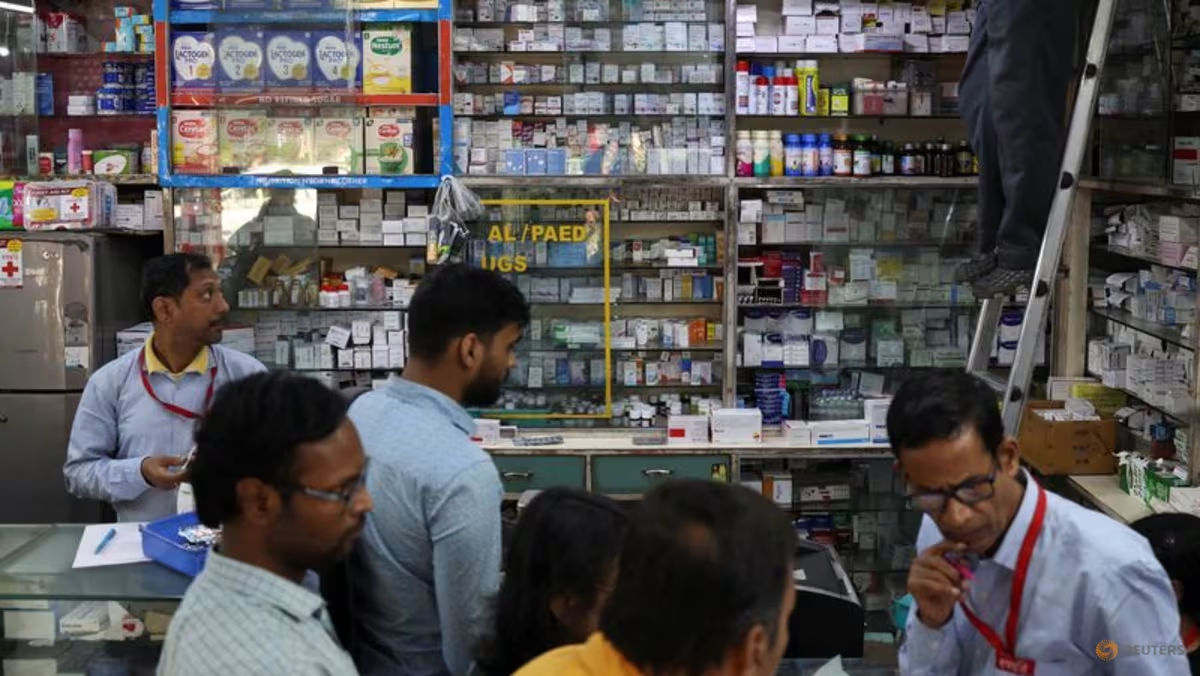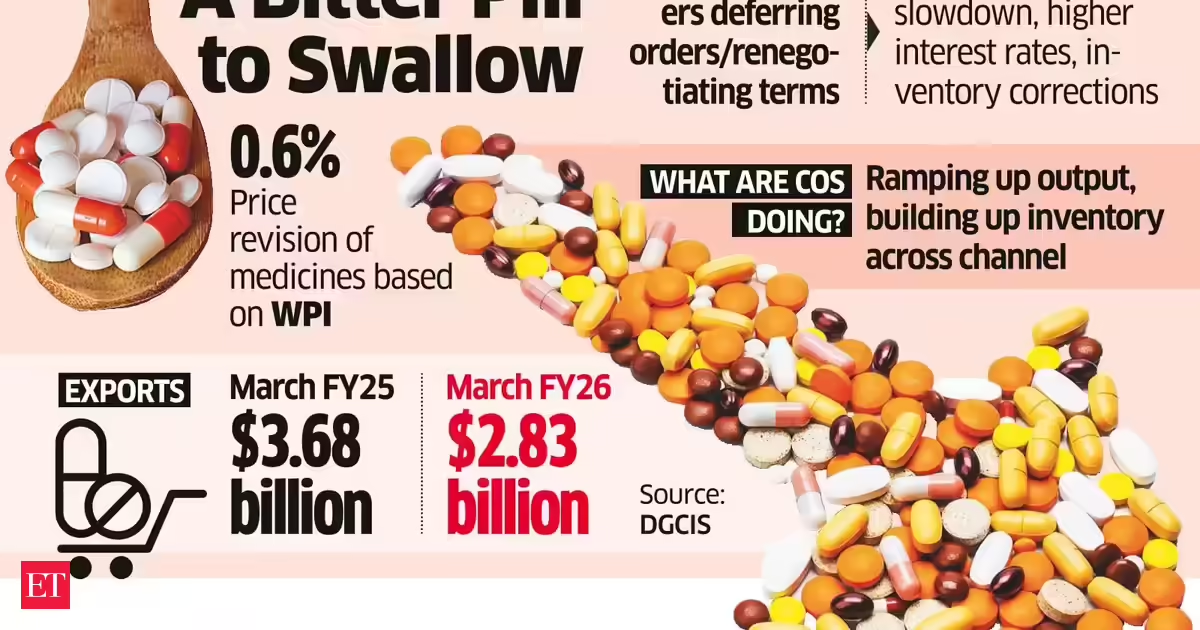
New Delhi: India's pharmaceutical industry is grappling with a twin challenge: rising input costs driven by a weakening rupee and sluggish export demand amid a global economic slowdown. The sharp appreciation of the US dollar against the rupee has pushed up the cost of raw materials, including active pharmaceutical ingredients (APIs) and key chemical intermediates."Very true, the input cost has gone up drastically," said Pharmaceuticals Export Promotion Council of India (Pharmexcil) chairman Namit Joshi. Manufacturers say this has left them with little room to protect margins in an already price-sensitive market. "The Indian pharma is facing severe margin squeeze. The combination of a strong dollar and war-driven spike in raw material and freight costs has crimped profitability," said an industry executive.ET BureauStrong dose: Cos shifting to higher-margin formulations expecting better pricing powerAlso, the West Asia war led to widespread panic-buying in March, with distributors and institutional buyers aggressively stocking up on essential medicines, said industry expert Mehul Shah. Manufacturers also ramped up output, stretching supply chains and building up inventory across the channel. But the demand was not sustained. "As tensions eased, fresh orders dried up through April and into May," Shah said. The spillover effect of March surge is expected to weigh on order flows as well, delaying a meaningful recovery in volumes, said experts.According to industry executives, the modest price hike of 0.6% that the government has allowed on essential medicines effective April 1 is too little to pass on the higher cost the consumers.You Might Also Like:To combat the challenges, manufacturers are moving to higher-margin formulations or complex generics where they have pricing power compared with plain bulk APIs.Some are negotiating surcharges or shorter contracts with overseas buyers, experts said. "A weaker rupee means you pay more for anything priced in dollars. APIs, key chemical intermediates, specialty solvents, even packaging materials are mostly imported or dollar-linked," said Dinesh Dua, a pharma expert. "While your domestic revenue stays in rupees, your RM (raw-material) bill has jumped. With the dollar strong and rupee under pressure, input cost spike is real."On the export front too, the picture is equally challenging, experts said.India's pharma exports fell 23.2% to $2.83 billion in March this year from $3.68 billion a year earlier, according to the Directorate General of Commercial Intelligence and Statistics.You Might Also Like:"Export demand is soft. US/Europe buyers are cautious because of the global slowdown, higher interest rates and inventory corrections," said Dua. "Orders are delayed, margins are squeezed, and you can't fully pass the higher costs to clients who themselves are cutting spends." A broad-based economic slowdown across key regulated markets including the US and Europe has dampened demand for generics, with buyers deferring orders or renegotiating terms.Insiders said convergence of the currency-driven cost inflation, weak export demand and a domestic inventory correction makes for a difficult operating environment.
Rising input costs, export slump take a toll on drug companies' health
India's drug makers are facing a double blow. A weaker rupee makes imported raw materials more expensive. Global economic worries are also slowing down demand for Indian medicines abroad. This is squeezing profits for manufacturers. Companies are trying to focus on more profitable products. The situation presents a tough operating environment for the industry.
469 words~2 min read