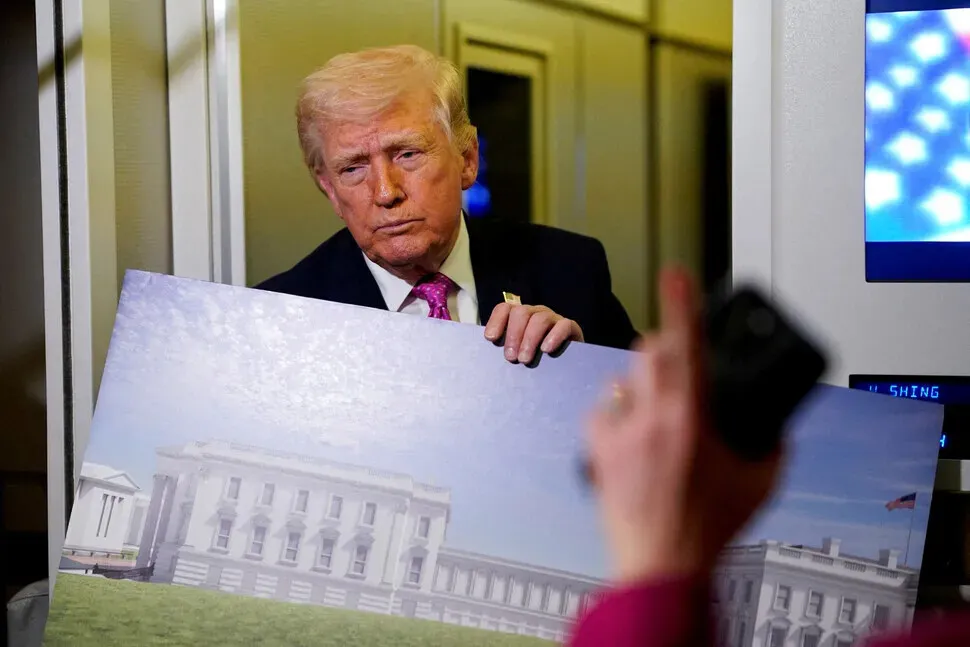
US President Donald Trump holds up a rendering of his planned White House ballroom while speaking to reporters aboard Air Force One en route to Joint Base Andrews, near Washington, DC, on March 29, 2026. (Reuters/Yonhap)
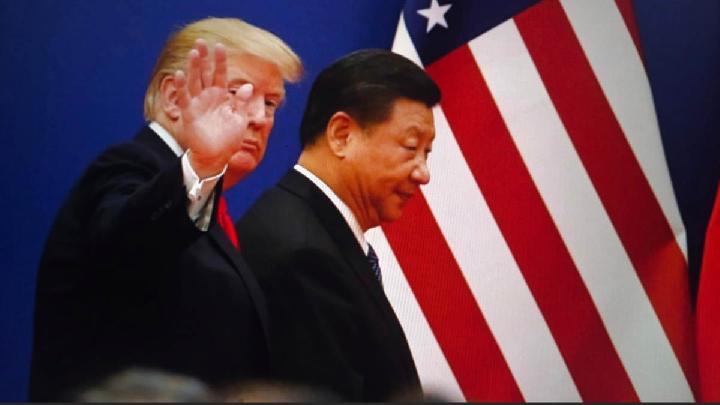
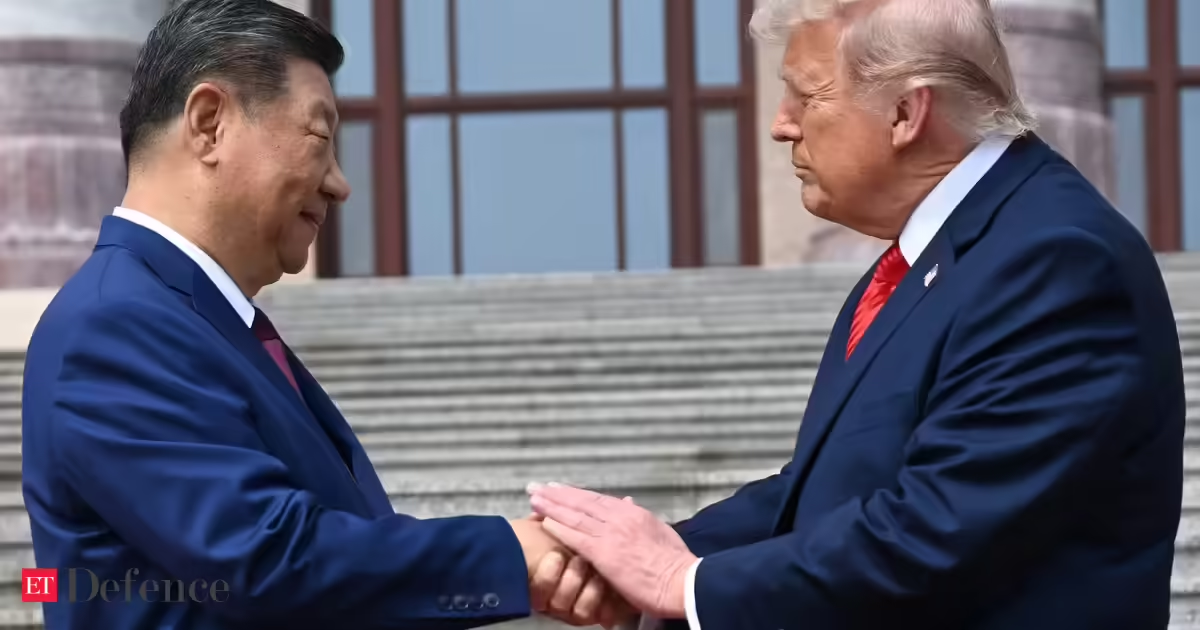
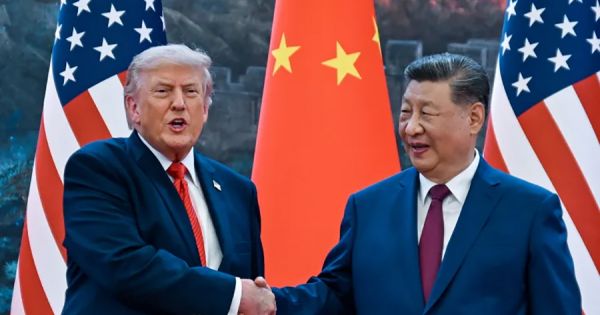
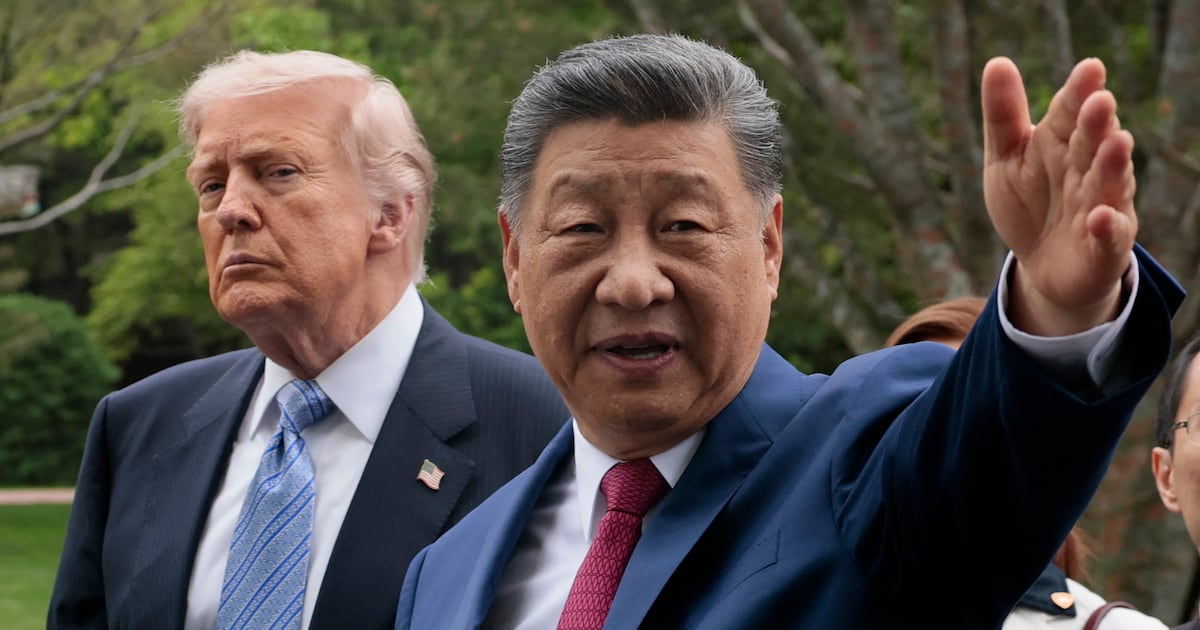
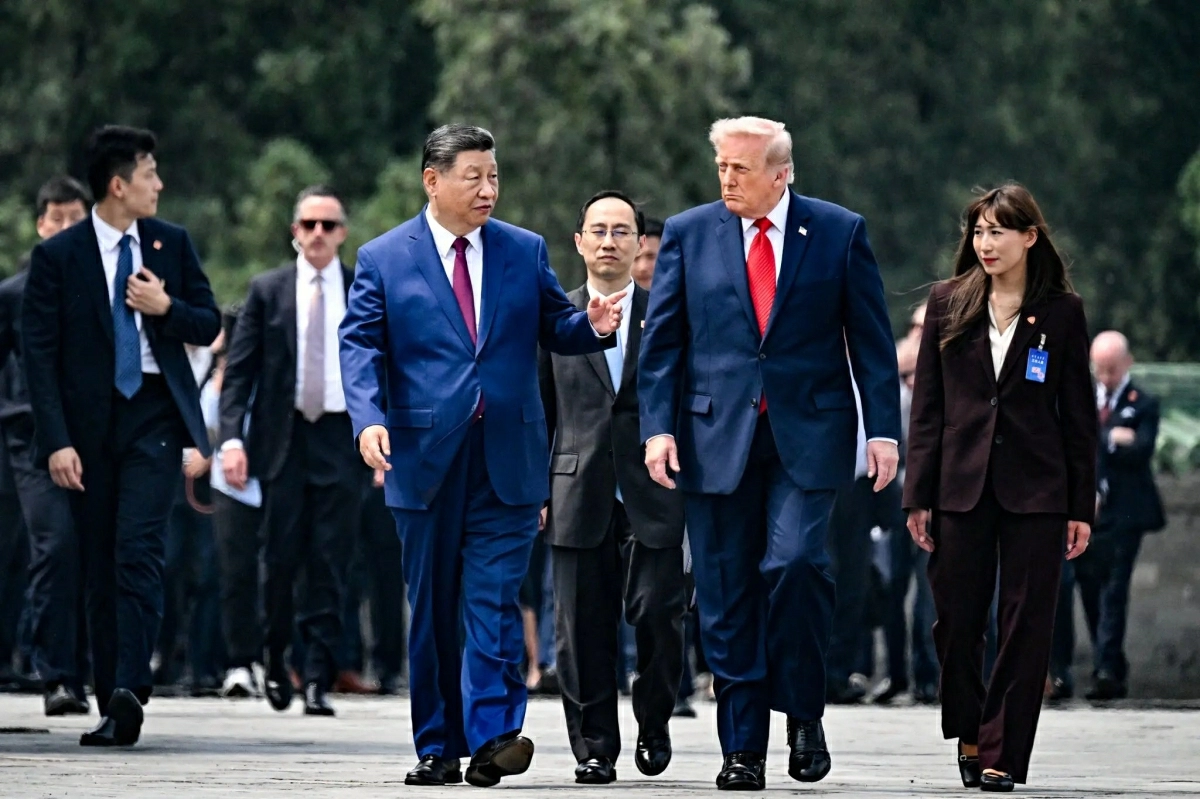
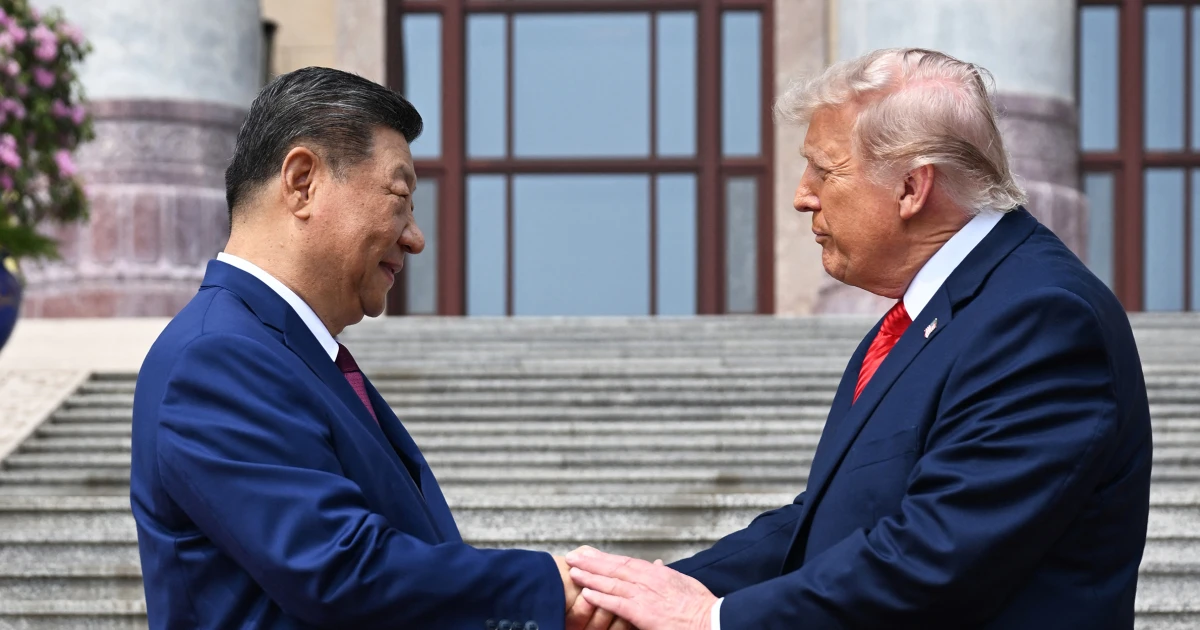
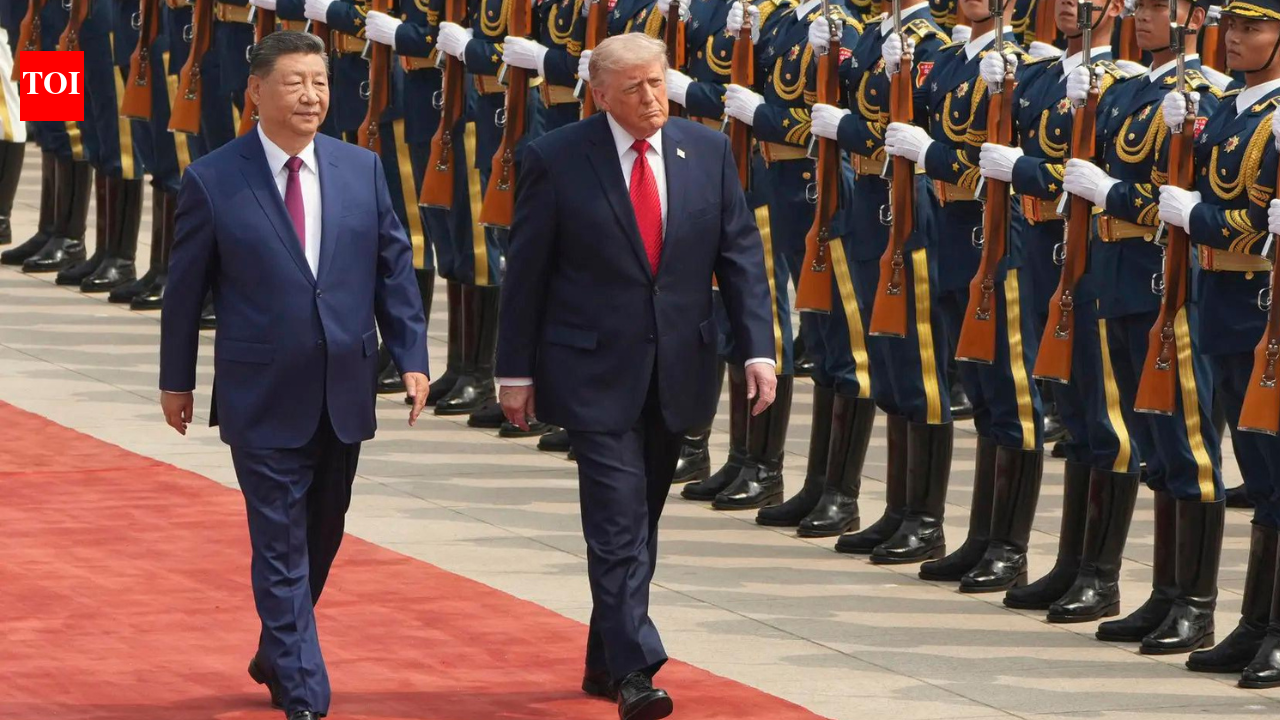
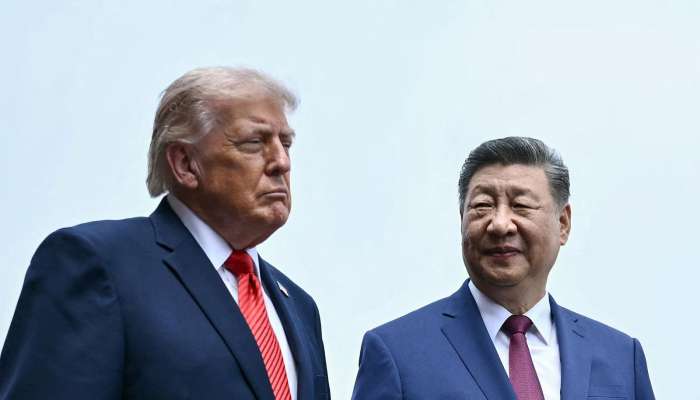
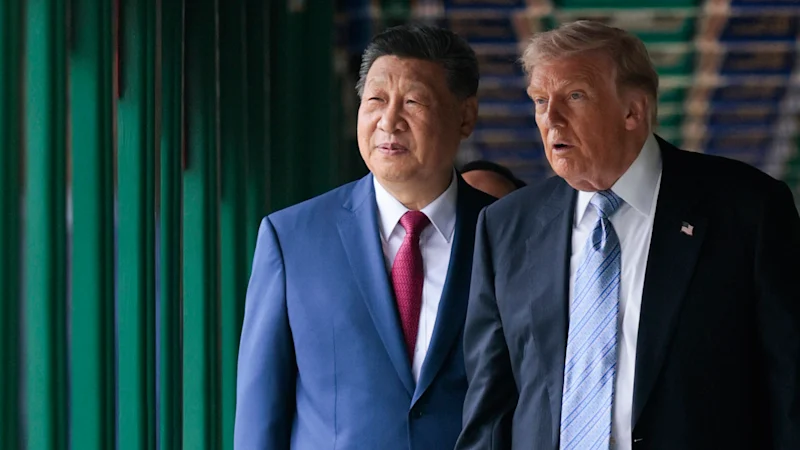
The White House released a fact sheet Sunday detailing the outcome of US President Donald Trump’s visit to China and his summit with Chinese President Xi Jinping. According to the fact sheet, the two leaders reconfirmed their “shared goal” of North Korea’s denuclearization.The fact sheet highlighted economic achievements including China’s agreement to buy large quantities of American farm products and the establishment of bilateral boards of trade and investment. It also touched on issues of foreign policy and national security, including North Korea’s denuclearization, the Iranian nuclear program and opening up the Strait of Hormuz.The fact sheet, posted on the White House website, stated that “President Trump and President Xi confirmed their shared goal to denuclearize North Korea.”That corroborated US Trade Representative Jamieson Greer’s remark during an interview with ABC on Sunday that “the president [Trump] and President Xi both agreed that the goal on the Korean Peninsula remains denuclearization.”China’s state-run Xinhua News reported shortly after the summit on Thursday that the two presidents “exchanged views on major international and regional issues, such as the Middle East situation, the Ukraine crisis, and the Korean Peninsula.”According to the fact sheet, the two leaders called on Iran to reopen the Strait of Hormuz and agreed that it should not be allowed to possess nuclear weapons. They also shared the position that no country or organization should be allowed to charge tolls in the Strait of Hormuz.But it is unclear whether China has committed to any specific actions in connection with opening the Strait of Hormuz.When asked during the ABC interview whether China had made any commitments about reopening the strait, Greer said, “When the president went in, he did not go in asking them to take action in the Strait of Hormuz. He was very focused on making sure that they didn’t provide material support to Iran. That’s a commitment he obtained and confirmed.”On the economic side of things, China’s agreement to buy more American farm products was framed as a major win. The White House said that China has agreed to “purchase at least US$17 billion per year of US agricultural products” each year between 2026 and 2028.The White House explained that the latest pledge was separate from the commitment to buy soybeans that China made in October 2025.China also “restored market access” to over 400 US beef facilities and agreed to “work with US regulators to lift all suspensions of US beef facilities.” China additionally “resumed imports of poultry from US states determined [. . .] to be free of highly pathogenic avian influenza.”Greer emphasized in a separate interview with CBS that China has already begun taking steps over the past few days to allow more US imports. “We saw China over the past couple of days reduce a host of nontariff barriers on agricultural products, such as beef and poultry,” he said.The White House said that China is also moving to purchase 200 aircraft from Boeing, the US manufacturer.“So the 200 Boeings, those are locked in,” Greer told CBS, adding that “this is the first major purchase by China in almost 10 years.”However, analysts note that the Boeing purchase falls short of the market’s initial prediction of 500 aircraft.China and the US also agreed to set up separate boards for trade and investment. The White House explained that the US-China Board of Trade will allow the two governments to “manage bilateral trade across non-sensitive goods.”The fact sheet said that “the Board of Investment will provide a government-to-government forum for discussing investment-related issues.”While Trump said that tariffs did not come up in his meeting with Xi, he remains open to using them as leverage in trade with China in the future.Greer told CBS that if investigations under Section 301 of the Trade Act of 1974 show “a huge problem with overcapacity in China,” Trump will have the option to “take actions like tariffs, like fees on services, like quotas.”The fact sheet’s language on rare earths and critical minerals was closer to general consensus than concrete measures. The White House said that “China will address US concerns regarding supply chain shortages related to rare earths and other critical minerals, including yttrium, scandium, neodymium, and indium.”China is also supposed to tackle concerns “regarding prohibitions or restrictions on the sale of rare earth production and processing equipment and technologies.”However, the fact sheet does not provide a timetable for such efforts or represent China as making any specific commitments about easing export controls.According to the fact sheet, Trump and Xi “agreed that the United States and China should build a constructive relationship of strategic stability on the basis of fairness and reciprocity.”The issue of Taiwan was not mentioned in the White House’s fact sheet.Greer noted in his interview with ABC that “the issue of Taiwan arm sales is something the Chinese always raised,” while emphasizing that “the most important thing that needs to happen is we need to have no change in the status quo in the Taiwan Straits.”“There’s no change in American policy on Taiwan,” he said.While the White House publicized the “historic deals” it had reached with China, some analysts think the actual benefits are limited.“The Boeing purchase is hundreds of aircraft shy of initial expectations, the agricultural purchases are incremental and ill defined, and energy sales touted by senior administration officials got no mention,” said Christopher Johnson, a former CIA analyst and current head of China Strategies Group, as quoted by the Financial Times.By Kim Won-chul, Washington correspondentPlease direct questions or comments to [english@hani.co.kr]