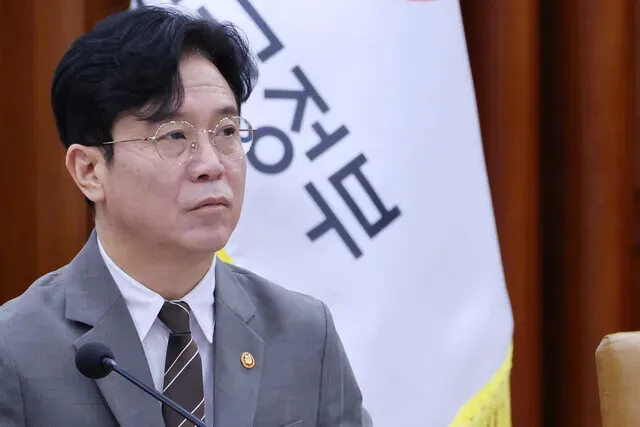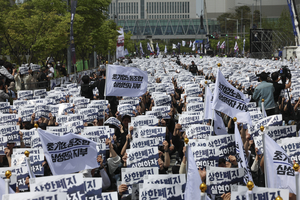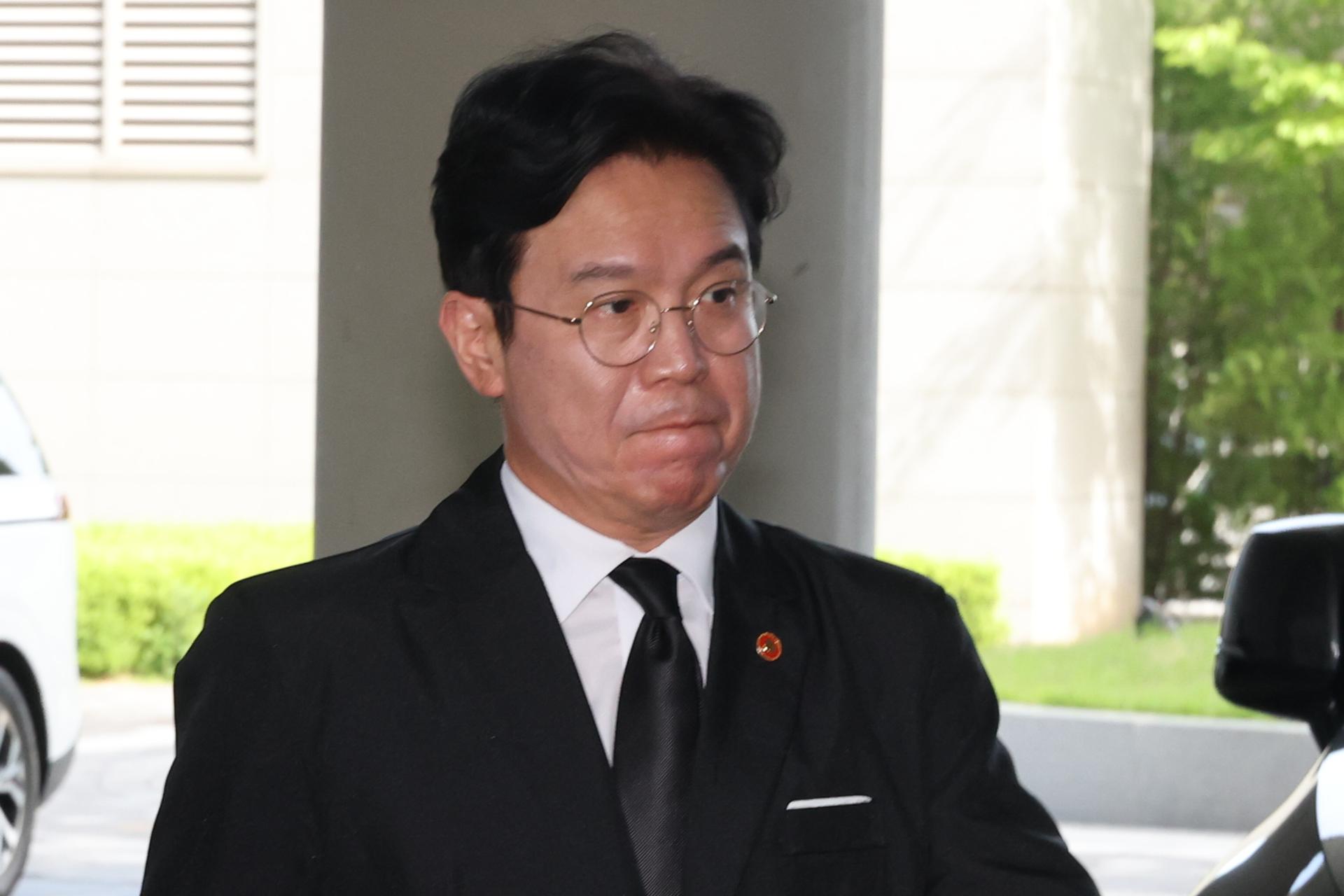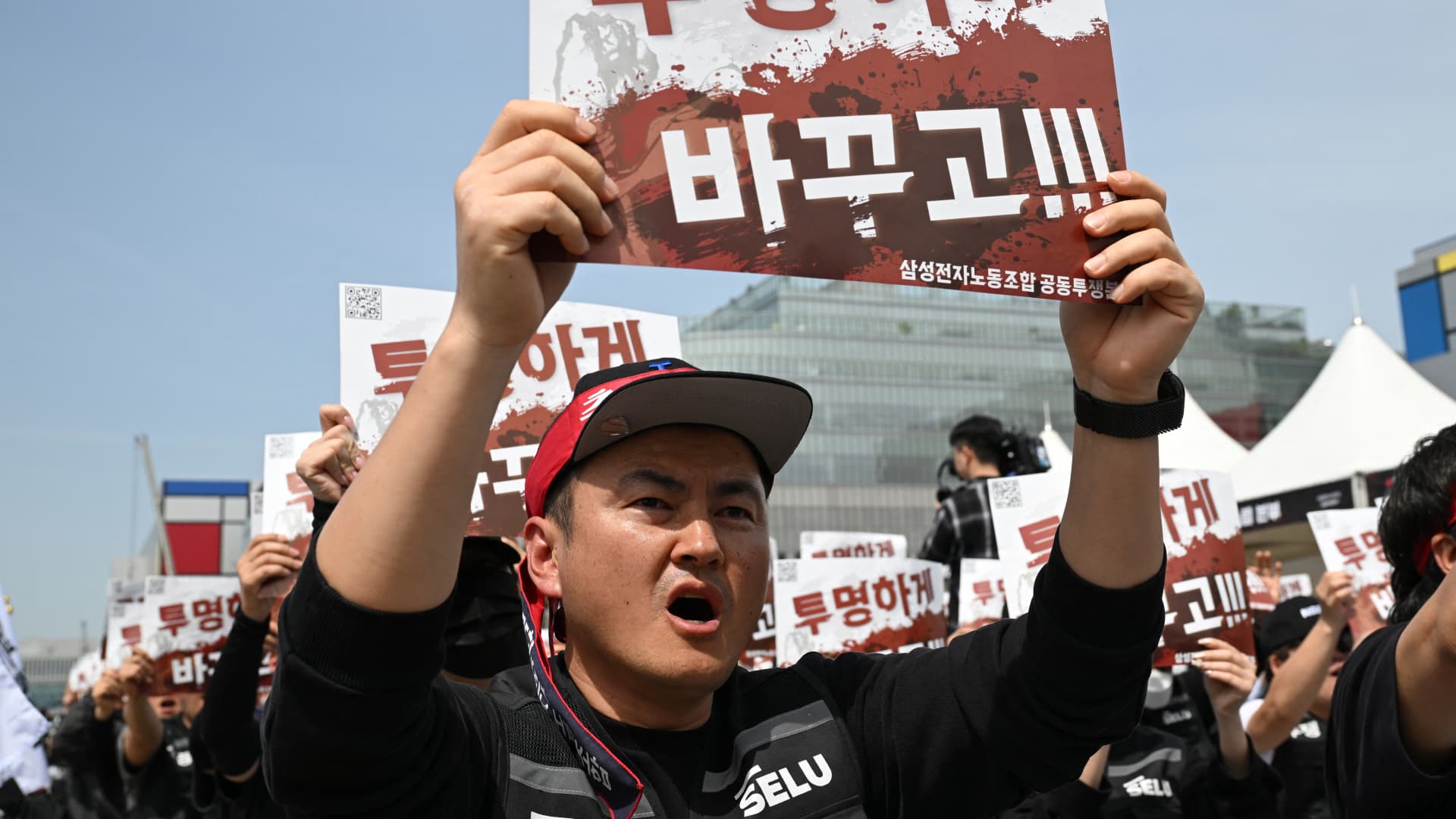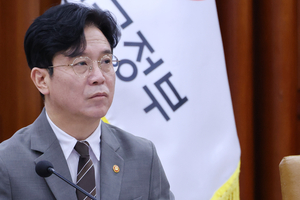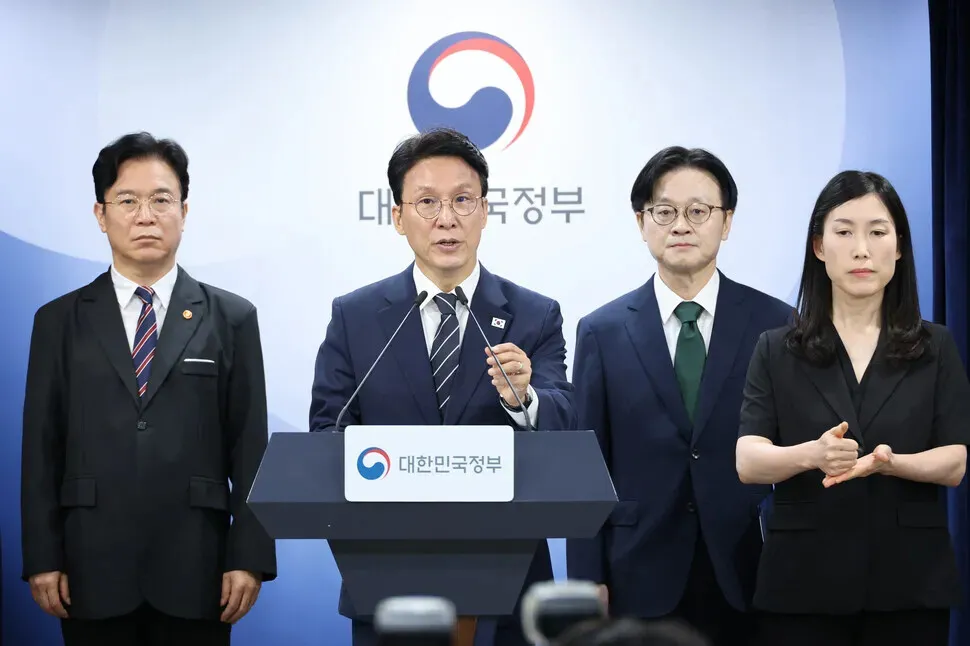
Prime Minister Kim Min-seok delivers an address from the central government complex in Seoul on May 17, 2026, regarding a looming strike by Samsung Electronics’ largest union. (Yonhap)
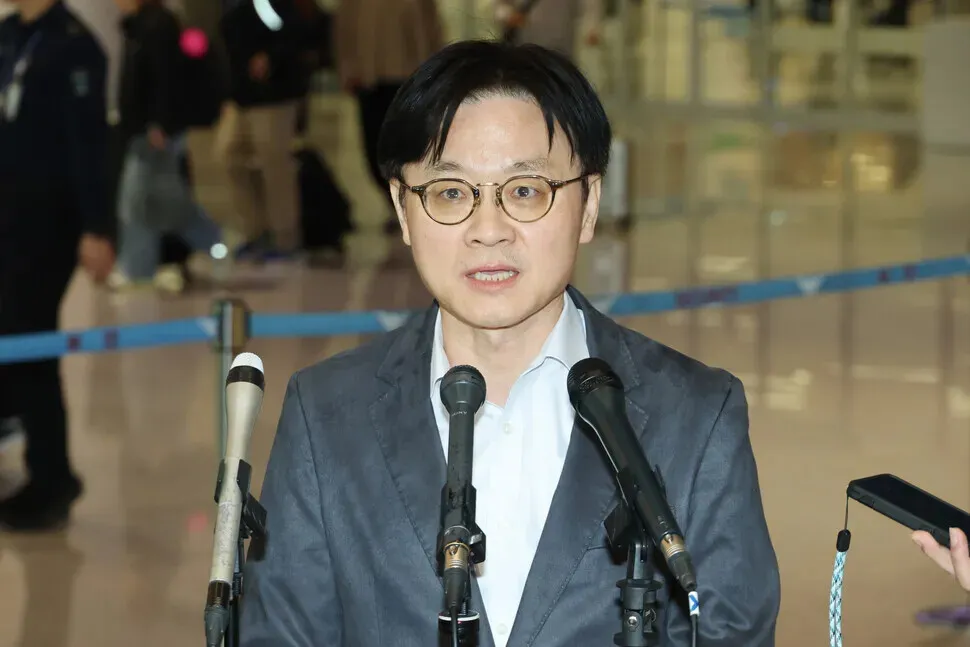
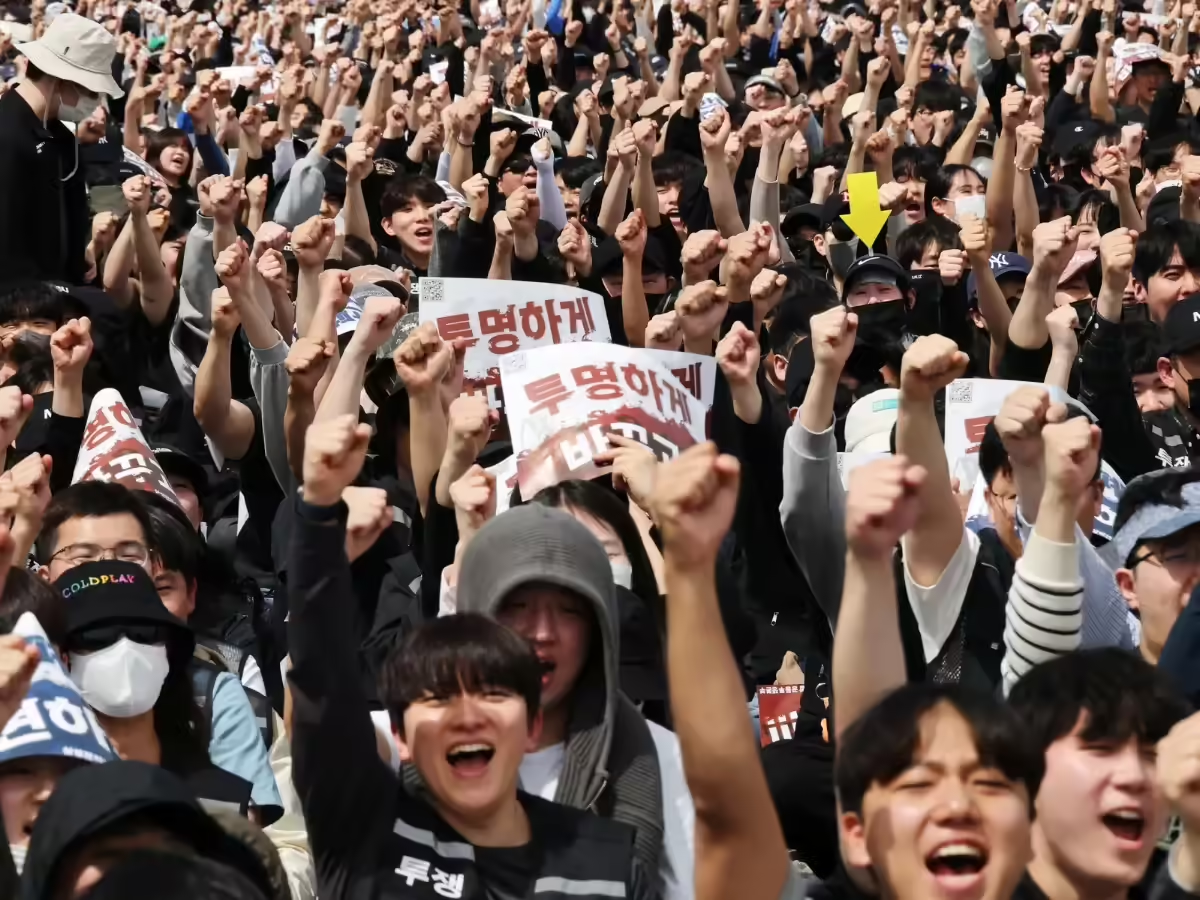
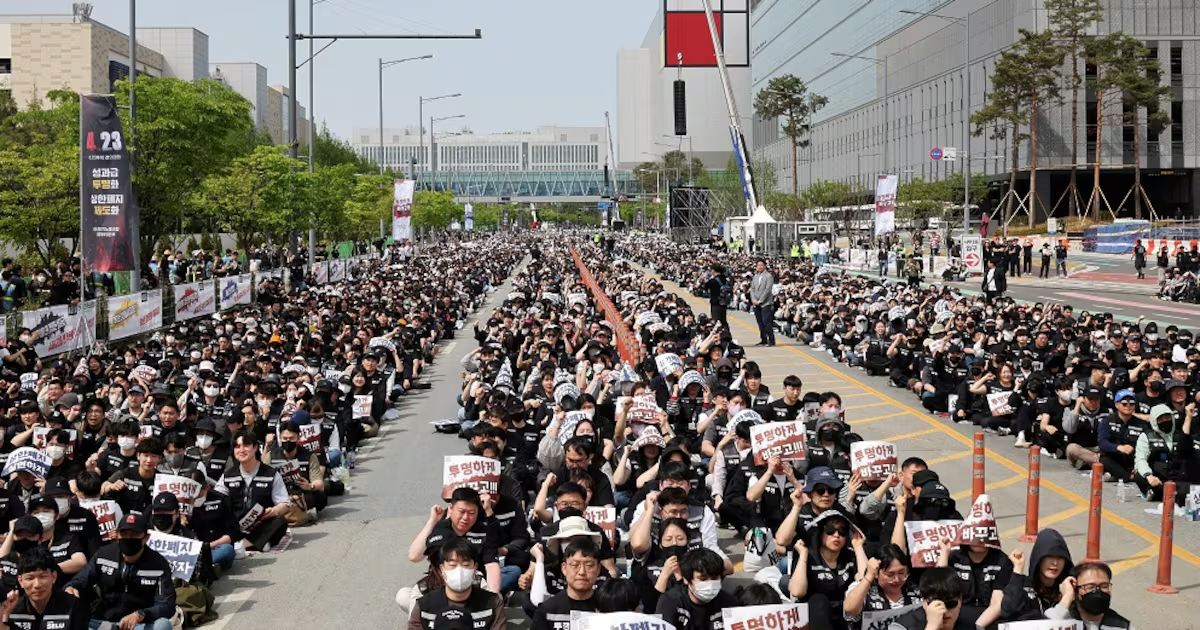
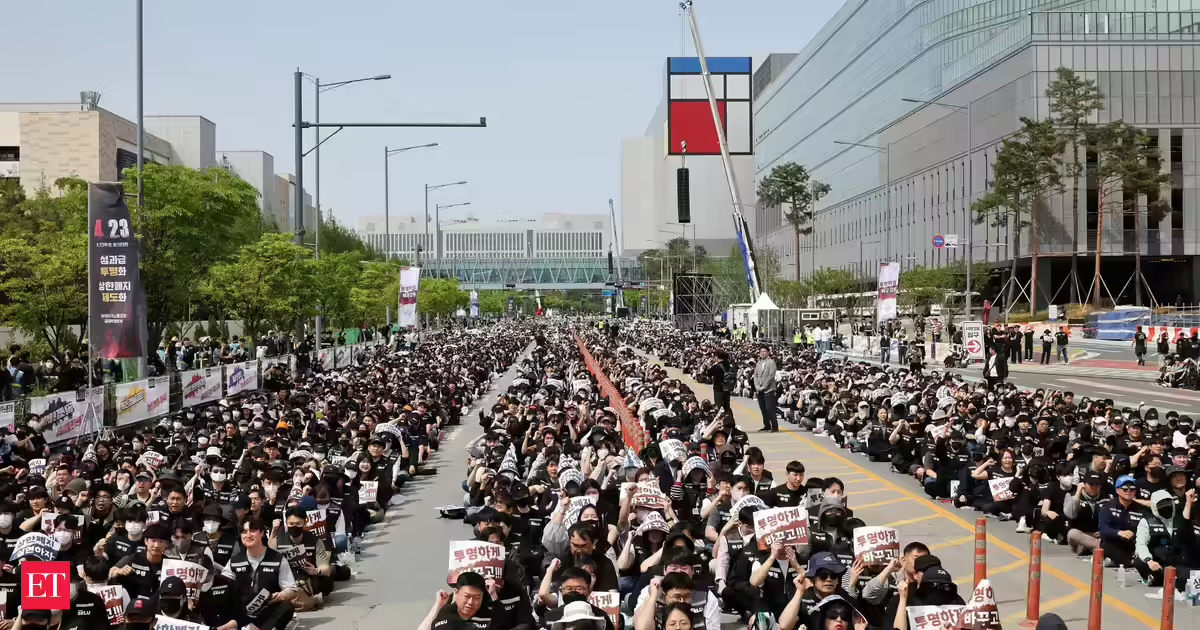
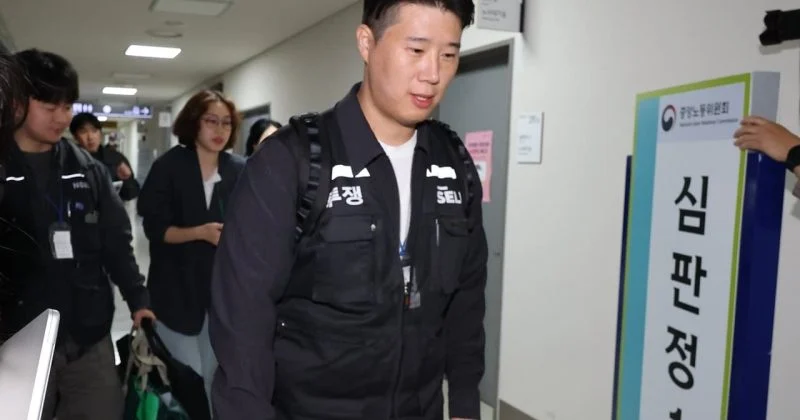
With mere days left until Samsung Electronics’ largest union is set to go on strike on Thursday, the Korean government turned up pressure on the company’s labor and management to find a compromise as it officially signaled on Sunday that it was considering invoking its emergency adjustment authority to suspend a strike. Analysts are reading the move as showing the sense of alarm in Seoul as it attempts to head off the serious shock that the strike stands to deal not only to the semiconductor sector but to all areas of South Korean industry if it comes to pass.“The government will have no choice but to consider all available means of response to protect the national economy — including emergency adjustment — if a situation arises when a strike at Samsung Electronics stands to cause major damages to the national economy,” Prime Minister Kim Min-seok said in an address to the public from the central government complex on Sunday.Also present at the conversation were Minister of Employment and Labor Kim Young-hoon, who heads the chief agency that would be invoking emergency adjustment authority, and Minister of Trade, Energy and Resources Kim Jung-kwan, who is the Cabinet member in charge of semiconductor industry-related duties.Kim Jung-kwan previously made a reference to the emergency adjustment scenario on Thursday. Kim Min-seok’s remarks echoing the same message signaled increasing government pressure on Samsung Electronics labor and management.Emergency adjustment powers have not been invoked in South Korea since a strike by the Korean Air pilots union in 2005.Seoul’s reasons for raising the prospect of such a severe move for the first time in 21 years are based on its prediction that such a strike could have a devastating impact on the country’s economy.Historically, emergency adjustment powers have been invoked four times. On two of the occasions, the strike ended after an agreement was reached between labor and management. The other two involved forced meditation by the government.The government is also conscious of the potential for the conflict between the company’s labor and management to have ramifications beyond a mere wage agreement, as it could end up serving as a benchmark for labor-management relations across different industries. In particular, sources said it was watching closely to see if the situation could end up setting a precedent where Samsung Electronics’ institutionalization of bonuses linked to operating profits leads to similar demand by other unions at major corporations.The Blue House is currently approaching the question of whether to actually invoke emergency adjustment powers with caution.When asked at a briefing on Sunday whether the Blue House was giving in-depth consideration to the issue, senior spokesperson Kang Yu-jung said, “Since follow-up mediation has resumed, there is still time for dialogue, and we will make every effort to provide support for a dialogue-based adjustment.”The outcome of the second follow-up mediation meeting on Monday appears likely to prove pivotal for the government’s response. A Blue House official said, “If things break down on [Monday] the 18th, we will really need to make a decision [on whether to invoke emergency adjustment powers].”The two major labor federations shared messages of concern.In a statement issued Sunday, the Federation of Korean Trade Unions warned, “There is a serious risk that this attempt to apply emergency adjustment powers based solely on the scale of the economic ramifications would effectively set a precedent for constraining the rights of workers at major corporations to strike.”Jeon Ho-il, a spokesperson for the Korean Confederation of Trade Unions, shared similar concerns with the Hankyoreh. “If emergency adjustment is invoked on economic grounds, that makes it impossible to strike not just for major export industry workplaces in areas like shipbuilding and automobiles but for all workplaces,” Jeon stressed. “It is unacceptable to violate rights guaranteed by the Constitution.”Jung Heung-jun, a professor of business administration at Seoul National University of Science and Technology, voiced concern about the efficacy of such a measure. “Not only would the government mediating through emergency adjustment not solve the issue, but it would only exacerbate it,” he said. What are “emergency adjustment” powers?The emergency adjustment system is based on Article 76 of the Trade Union and Labor Relations Adjustment Act. That article allows the minister of employment and labor to make the decision to invoke emergency adjustment powers in situations where an industrial action “is likely to impair the national economy or endanger citizens’ daily lives.”If an emergency adjustment takes place, the union would be forced to immediately halt its industrial action. It would not be able to resume for another 30 days, and it would be obligated to accept the National Labor Relations Commission’s final mediation plan.Since this scenario conflicts with the three labor rights guaranteed by the Constitution — the rights to independent association, collective bargaining, and collective action — past administrations have viewed it as an avenue of last resort.By Seo Young-ji, staff reporter; Kwon Hyo-jung, staff reporterPlease direct questions or comments to [english@hani.co.kr]