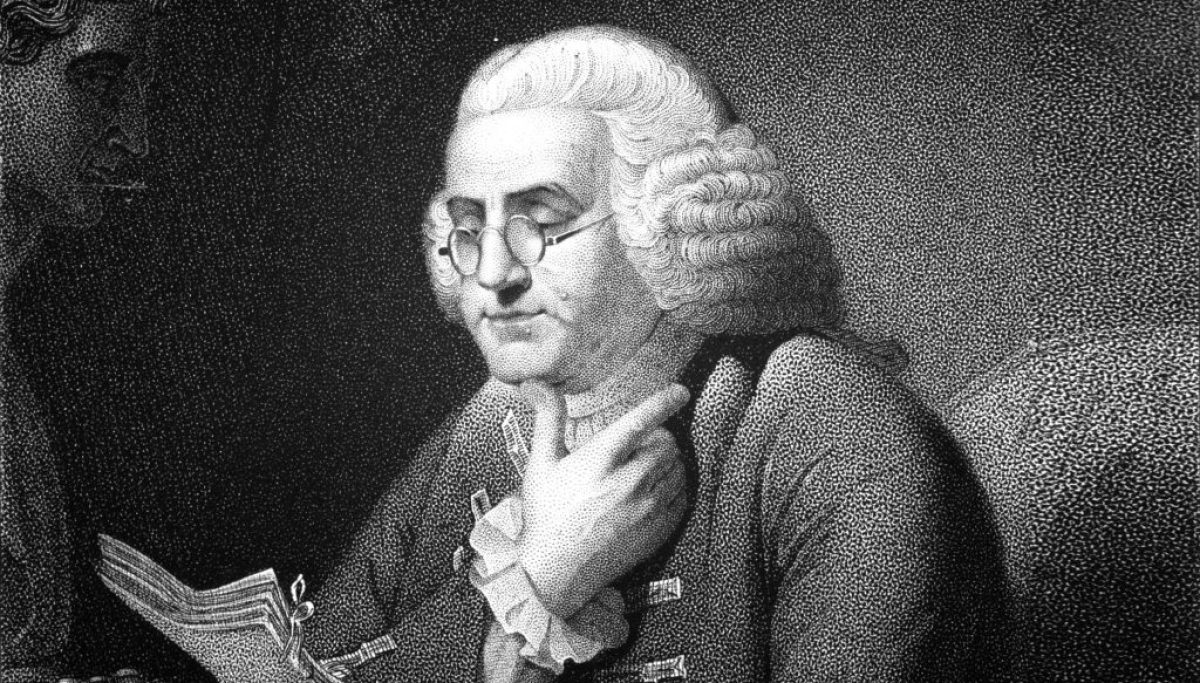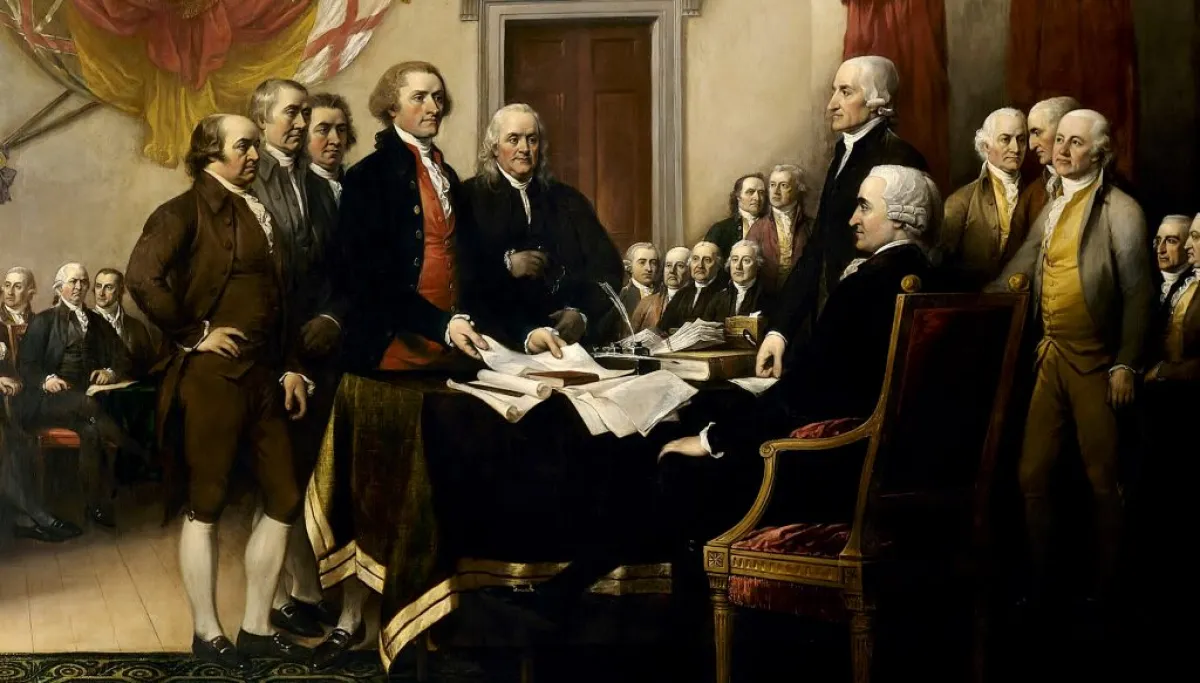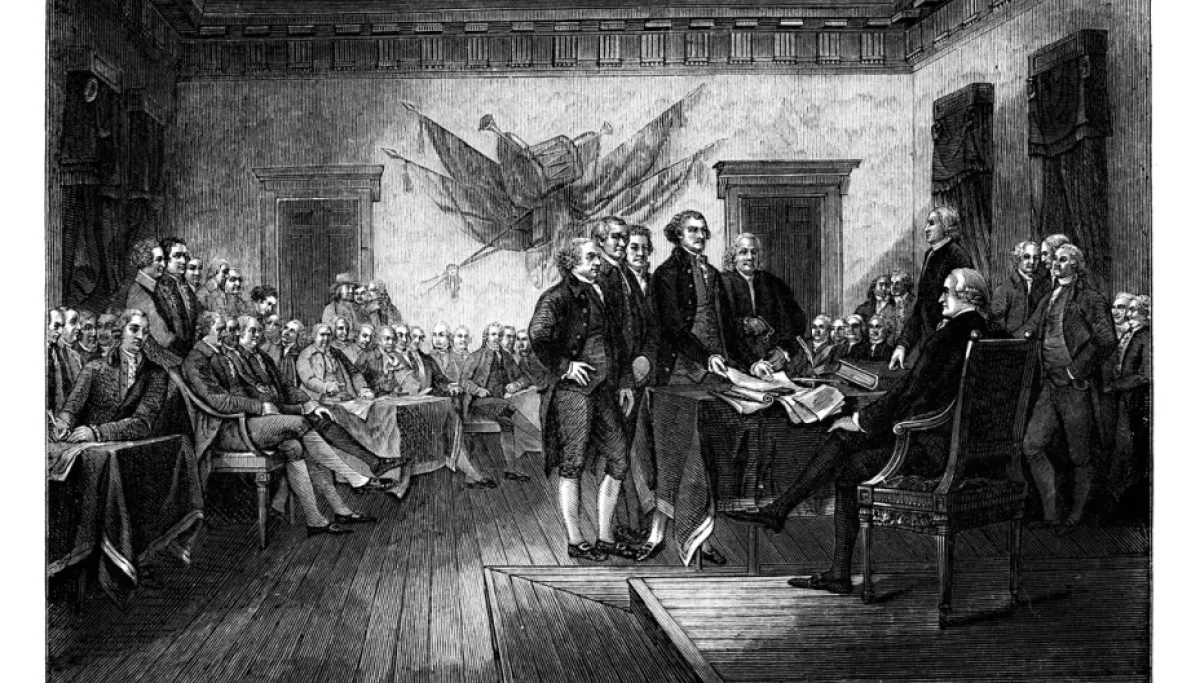
The heat was sweltering when delegates emerged from Independence Hall on Sept. 17, 1787. Crowds had gathered outside, waiting for news from the Constitutional Convention. Among them was Elizabeth Willing Powel, a prominent Philadelphia socialite, who approached Benjamin Franklin, who at 81 was wizened but still sharp.“Well, Doctor, what have we got?” she asked. “A republic or a monarchy?”
The anecdote has become part of the lore of the American Revolution, and for good reason. Franklin’s quip captured the fragility not only of the American experiment but of liberty and self-governance itself.
As America approaches the 250th anniversary of the Declaration of Independence, one cannot help but wonder whether Franklin would say the nation remains a republic.
This is not to say the American experiment has failed, nor to suggest the United States has not been a force for good in the world. It has. But it is fair to ask, as some have, whether America is drifting toward something more akin to late-stage Rome than the republic Franklin envisioned.
For one, few people today even speak of America as a republic. It is far more commonly described as a democracy, something many of the founders rightfully distrusted. When James Madison wrote in Federalist No. 10 that “pure democracies have ever been spectacles of turbulence and contention,” he was warning that unchecked majority rule often devolves into factionalism, instability, and the erosion of individual rights.