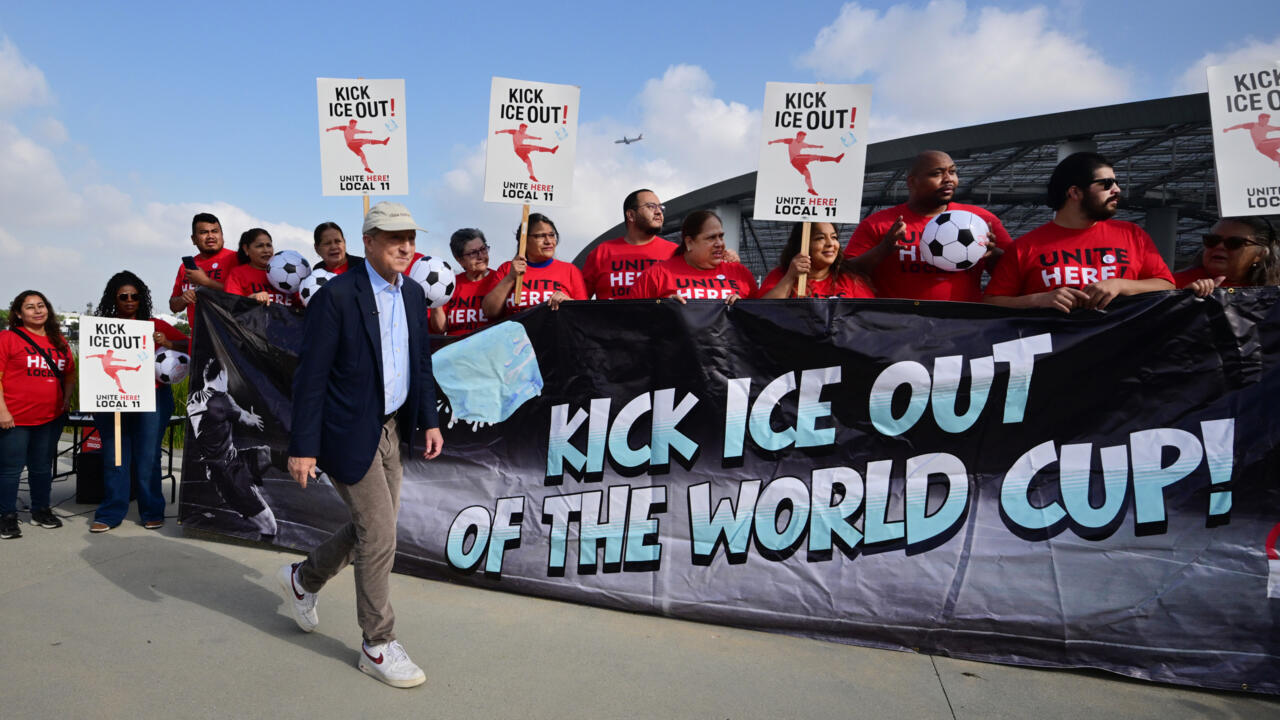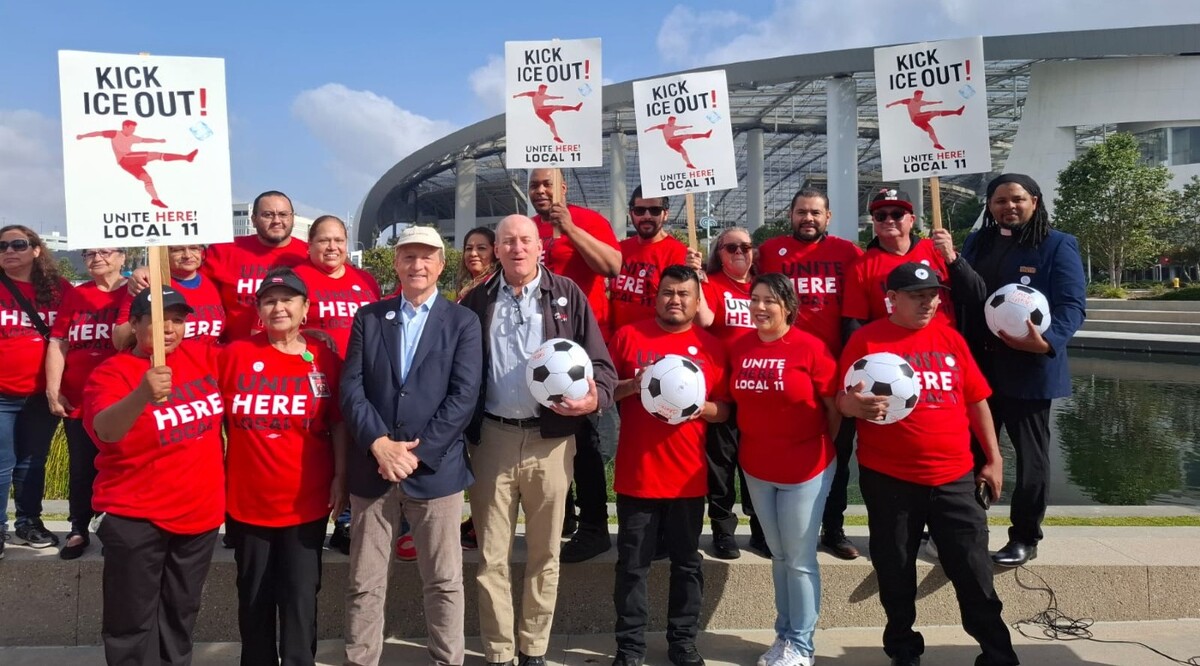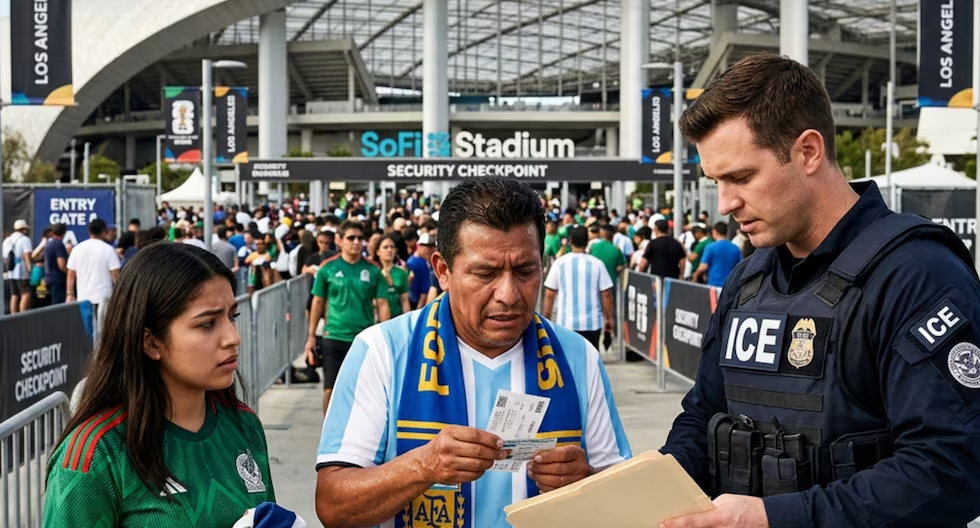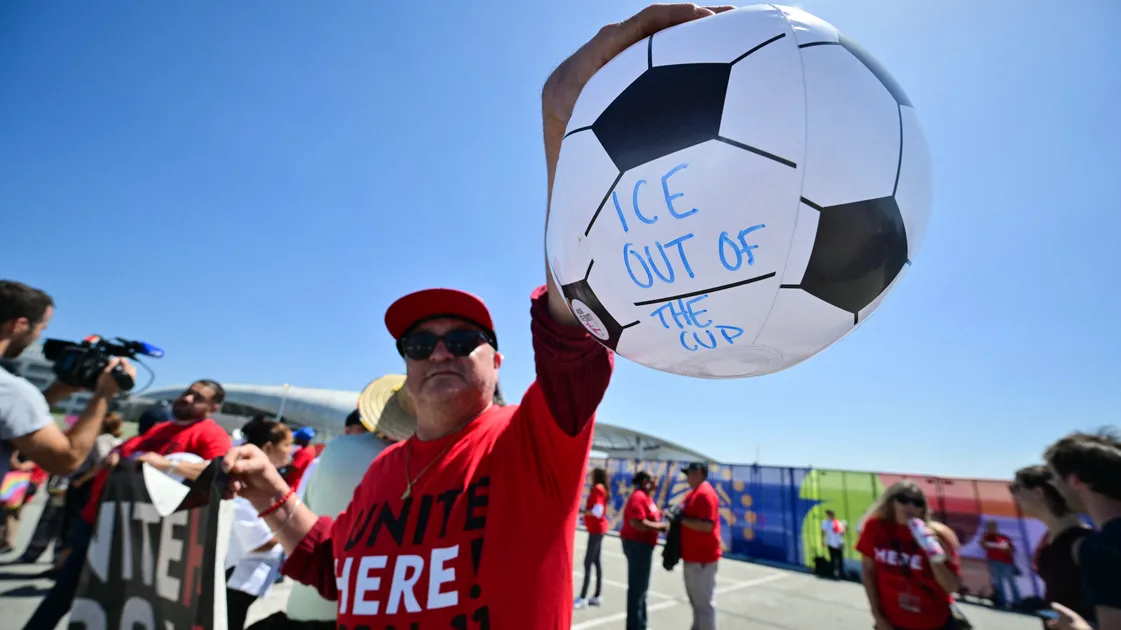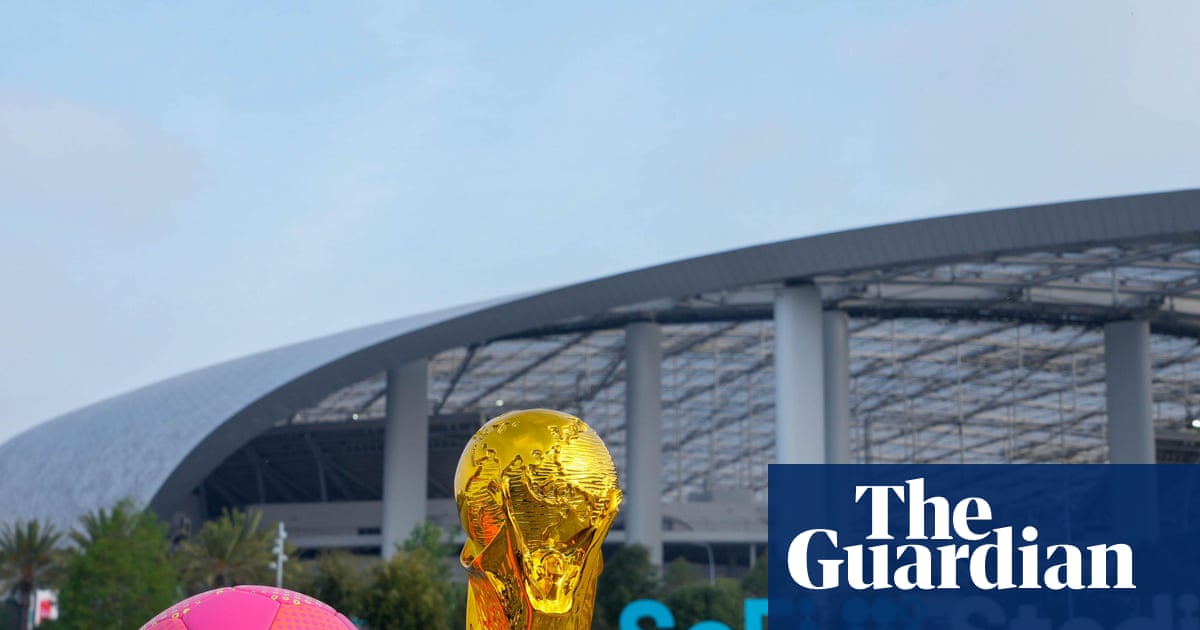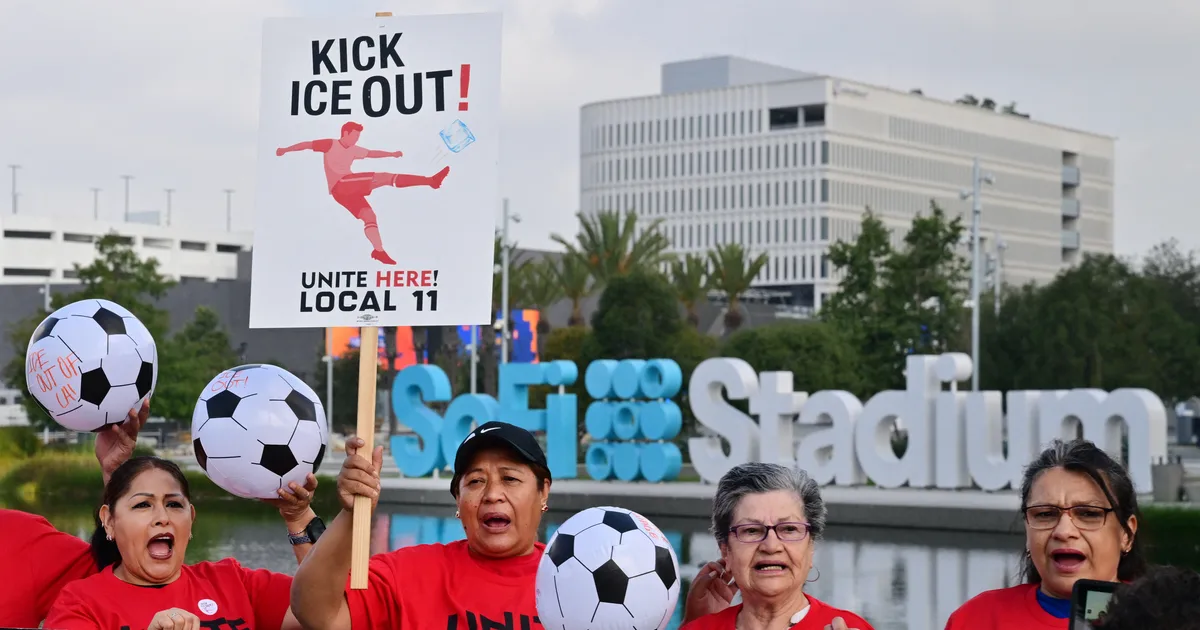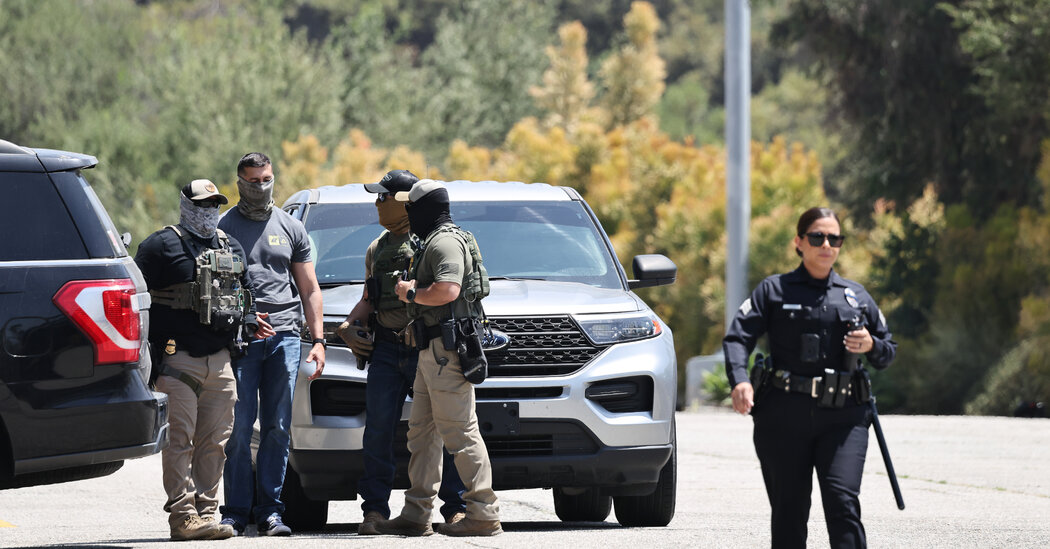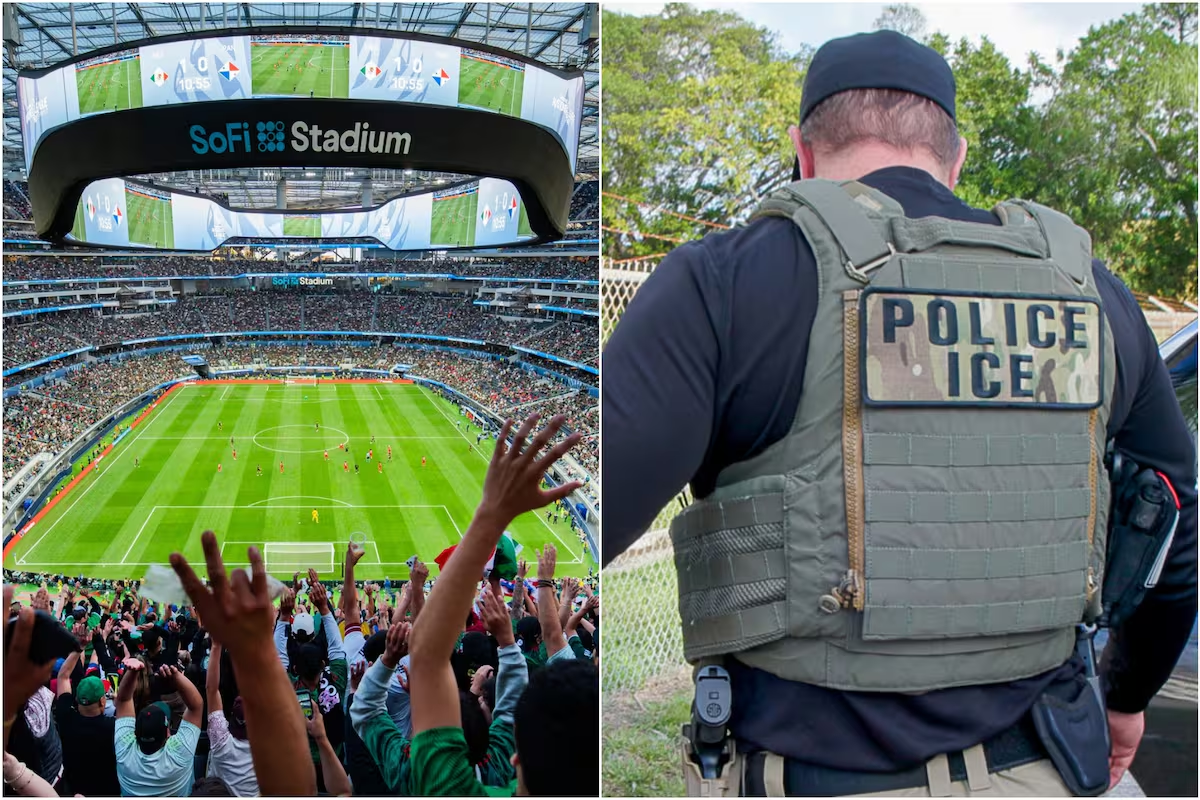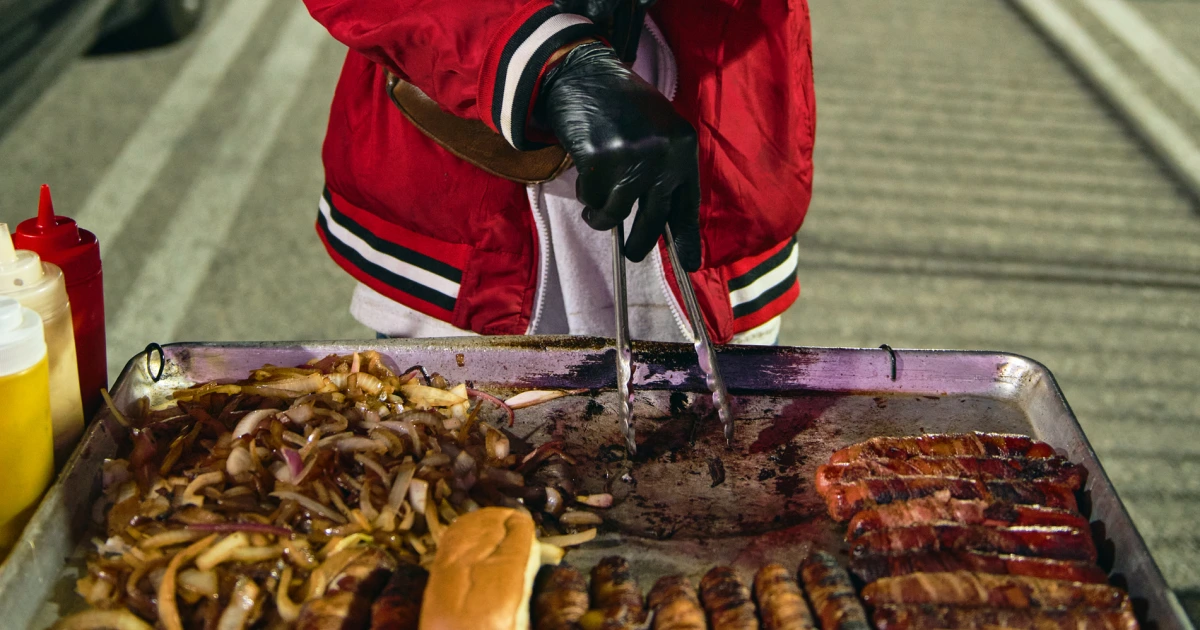
May 18, 2026, 11:00 AM EDTLOS ANGELES — With the World Cup fast approaching, Southern California is bracing for a wave of international fans and elite soccer stars. But there’s another potential arrival causing unease: ICE agents.Latino vendors, fixtures outside SoFi Stadium in Inglewood and other venues around the region, often sell merch and food after concerts and sporting events. Some are expressing concern about ICE potentially working the games. And workers at SoFi Stadium — set to host eight games starting June 12 — are threatening to strike if ICE is there, citing fear for their safety.Last June, the Los Angeles area was the site of sprawling immigration raids in which the Trump administration targeted day laborers and factory workers. Widespread protests followed, along with some clashes between demonstrators and law enforcement and the deployment of the National Guard.“We always have this worry that we’re going to be more on the lookout for immigration [rather] than focused on selling,” said Henrry Josue, a 23-year-old hot dog vendor who did not disclose his legal status but plans to set up his stand during the World Cup.“We came to make money, not cause problems,” he said.Labor activists march alongside a truck through MacArthur Park during a May Day demonstration in Los Angeles on May 1.Justin Sullivan / Getty Images fileNBC News reported last week that federal officers and agents who arrest immigrants as part of their work with ICE may be at World Cup matches.The Department of Homeland Security is offering its personnel to local police departments and federal agencies to provide extra security around the perimeters of games, similar to its role at the Super Bowl and the Kentucky Derby, two DHS officials said, adding that ICE officers and agents providing security won’t be checking spectators or employees for immigration status.So far, it’s unclear whether any departments or agencies are taking ICE up on the offer.Asked whether street vendors outside matches should be concerned if they don’t have legal status, a DHS spokesperson said they should.“Yes, people who are unlawfully in the United States and have no legal status should voluntarily depart and pursue legal entry the same way millions of people around the world do every single year,” the spokesperson said. “That is how immigration law works.”DHS said international visitors legally in the U.S. for the games “have nothing to worry about.”A chill among vendorsJosue, who has been selling sizzling, bacon-wrapped hot dogs for a year and a half at events across the country, said the World Cup presents a big business opportunity.“Generally, we plan to make 2,000 [dollars] every game,” he said — a major jump from the typical $200 he earns a night selling outside SoFi Stadium or the nearby Kia Forum.Vendor Juan Tzita sells clothes outside the Charlie Puth concert at the Kia Forum.Damon Casarez for NBC NewsJosue said he’s not personally worried about ICE, but he is concerned for others who “don’t have the same opportunities” as him. “Just as we need money here to eat, our families back home also need to eat, and that’s the reason we came here to work,” he added.Juan Tzita, a vendor from Guatemala who sells part time after events at SoFi Stadium and the Kia Forum, is determined to sell at the World Cup.“There will be a lot of people, and if I see immigration, I can just hide,” Tzita, who did not disclose his legal status, told NBC News.He plans to sell drinks, ribbons and flags for every country. “If I manage to sell four dozen [each], I think I could make around $700 or $800,” he said. Latino vendors have expressed concern about the presence of ICE at the games.Damon Casarez for NBC NewsSergio Jimenez, co-founder of the Community Power Collective, an L.A. nonprofit that advocates for vendors, said many are “already in the red for not having worked a lot” since last June due to ICE raids. Now, he said, they’re being forced to weigh their livelihoods against safety.“We shouldn’t have those choices, to gamble one’s lives just to ensure that there’s an access to an economic opportunity,” Jimenez said.SoFi Stadium workers threaten to strikeThe union representing workers inside SoFi Stadium has threatened to strike if several conditions aren’t met — including keeping ICE out of games.UNITE HERE Local 11, which represents about 2,000 stadium workers, including cooks, servers and bartenders, held a rally outside the FIFA office in downtown Los Angeles on May 1. At the rally, plastic soccer balls rained down upon a part of the street as workers holding “Kick ICE out!” posters chanted “ICE has got to go! Ole, ole, ole!”Isaac Martinez, a 38-year-old cook and shop steward who has worked at the stadium for 4 1/2 years, said workers are scared.“Sometimes ICE goes off a person’s profile,” he said. “If I look Mexican, Latino … we are a city that’s full of Latin communities. We’ve seen what happened in Minneapolis, Chicago and here in Los Angeles. So there’s real fear.”SoFi stadium workers protest outside FIFA World Cup 26's Los Angeles office on May 1 calling for ICE to be banned from the World Cup.Frederic J. Brown / AFP via Getty Images fileOn May 7, UNITE HERE Local 11 filed a complaint with the California Privacy Protection Agency and the California Department of Justice against FIFA, alleging world soccer’s governing body is collecting stadium workers’ sensitive personal data and sharing it with DHS.Credentialing protocols are common for high-profile sporting events like the Super Bowl and the Olympics. The Super Bowl requires an FBI background check for anyone requesting credentialed access, and LA28, the organizing committee for the 2028 Olympics, tells volunteers they may be subject to a background check.But the union argues that FIFA’s data sharing violates California’s privacy protections. In a letter to California Attorney General Rob Bonta, it demanded he investigate and halt FIFA’s 2026 World Cup accreditation process.The news that SoFi Stadium would host the World Cup was initially exciting, said 64-year-old Susana Lahargue, who has worked there for three years. “But with everything that is happening with ICE,” she said, “it crushed our morale. Yes, this event is important, but our safety is more important.”SoFi Stadium declined to comment and deferred comment to FIFA. FIFA did not respond to requests for comment.Efforts to protect vendors, community membersIn L.A., legal advocates and community groups are laying the groundwork for what they say are safe vending opportunities.Jimenez said the Community Power Collective is working with area city and supervisory councils to allow vendors to sell food securely and safely at World Cup “fan zones,” designated gathering areas for people to watch live matches and take part in activities. Many vendors are being forced to weigh their livelihoods against their safety because of ICE's planned presence at the World Cup.Damon Casarez for NBC NewsThe fan zones, he said, could be safer for vendors because they’ll be organized in coordination with community officials.Public Counsel, a pro bono law firm in Los Angeles that works with low-income communities and vendors, is also working with coalitions and the city of Inglewood to ask that vendors be included in economic opportunities at the games and people in the area without legal status be protected.Both groups plan to work with community rapid response networks if ICE begins detaining people, and to connect them with lawyers if needed. They also plan to hold workshops for vendors to ensure they know their rights, as well as the risks associated with vending at SoFi Stadium.“A lot of vendors, they don’t have a cushion, you know. They often don’t have savings, they don’t have any form of retirement,” said Ritu Mahajan Estes, the directing attorney for Public Counsel’s community development project. “As scared as they may be,” she said, “they feel like they don’t have an option.”Hot dog vendors leave the Kia Forum parking lot after an evening of work.Damon Casarez for NBC News
Amid prospect of ICE at World Cup games, vendors weigh livelihoods against safety
DHS officials say ICE officers may be at matches. Vendors planning to sell in and around SoFi Stadium say it’s a gamble between their safety and a potentially lucrative payday.
1,315 words~6 min read