By
Updated on: May 18, 2026 / 10:30 AM EDT
/ CBS News
Add CBS News on Google
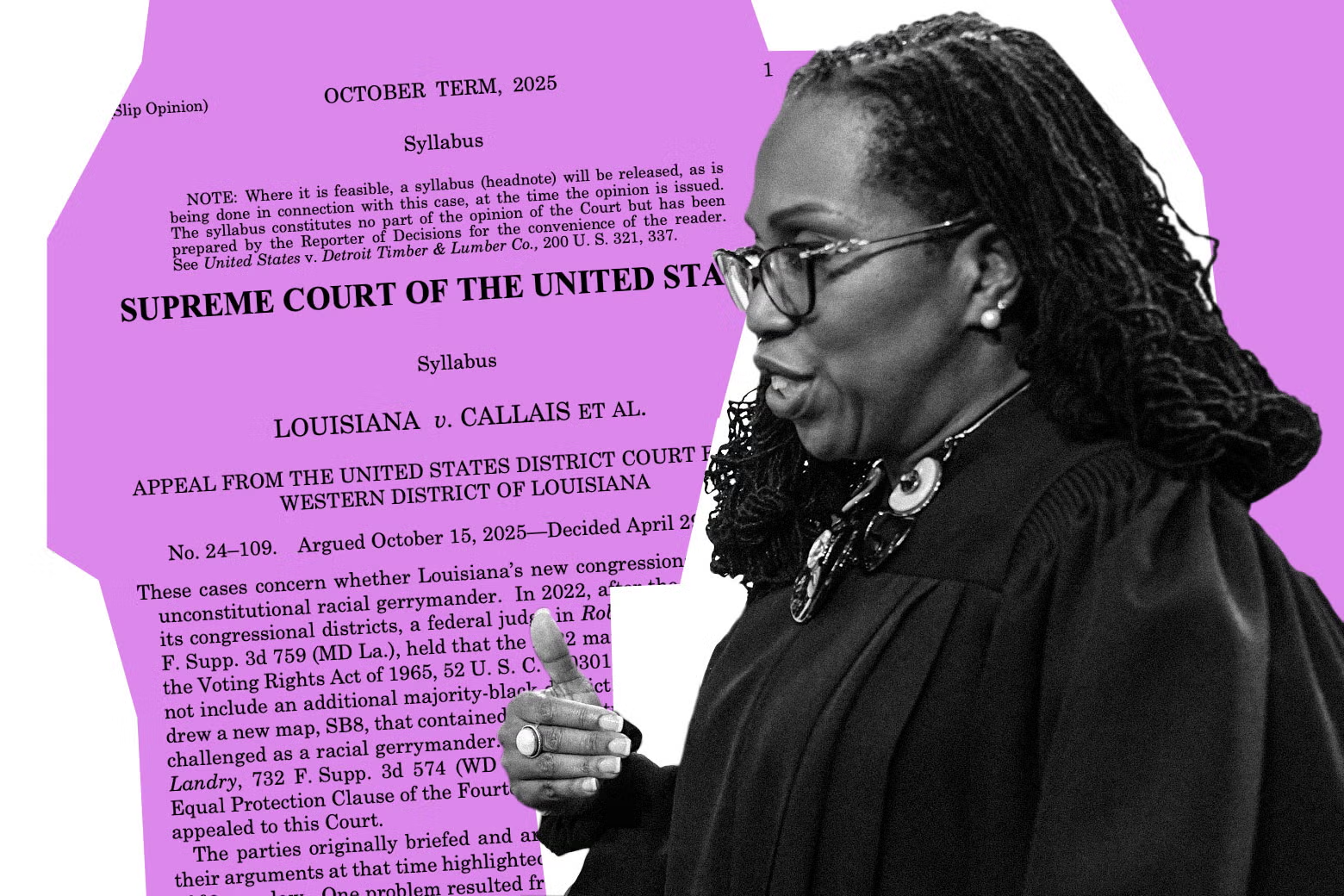
Washington — The Supreme Court on Monday told lower courts to take another look at a pair of cases involving whether private individuals and groups can sue to enforce a key provision of the Voting Rights Act that prohibits discriminatory voting practices.In brief orders, the high court set aside lower court decisions and sent the cases back for further proceedings in light of its landmark ruling last month weakening Section 2 of the Voting Rights Act. Justice Ketanji Brown Jackson dissented.At issue in the disputes is who can bring lawsuits in federal court to address potential violations of Section 2. The cases are the latest test of the 1965 law and threaten to sharply curtail who can sue to enforce Section 2. Future decisions embracing those limits could further undermine the landmark voting law, long considered the crown jewel of the civil rights movement, and hamper the ability of voting rights groups and individual voters to file lawsuits alleging violations of the measure.The latest court fight involving Section 2 arrived at the Supreme Court through two different cases challenging legislative maps drawn in Mississippi and North Dakota after the 2020 census as violations of Section 2.The case from Mississippi was brought by the state's chapter of the NAACP and 14 voters, and in the North Dakota dispute, it was the Turtle Mountain Band of Chippewa Indians, the Spirit Lake Tribe and three Native American voters who sued. Both sets of plaintiffs prevailed before district courts. North Dakota officials appealed the lower court's ruling to the U.S. Appeals for the 8th Circuit, which found that Section 2 cannot be enforced by private plaintiffs suing under a different civil rights law, known as Section 1983. That law allows people to sue government actors in federal court for alleged deprivation of their rights.In siding with North Dakota officials, the three-judge panel from the 8th Circuit applied an earlier ruling in which it held that when Congress crafted the Voting Rights Act, it only intended for the attorney general, not private parties, to enforce Section 2. The 8th Circuit's decision covered only the states within its region: Arkansas, Iowa, Minnesota, Missouri, Nebraska, North Dakota and South Dakota.