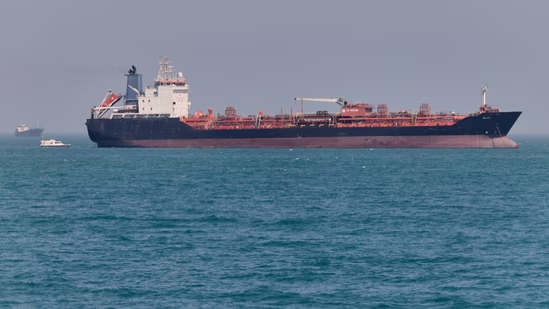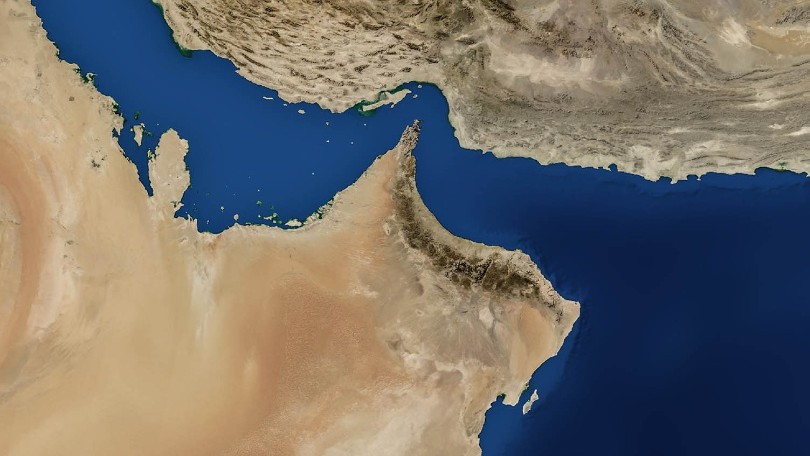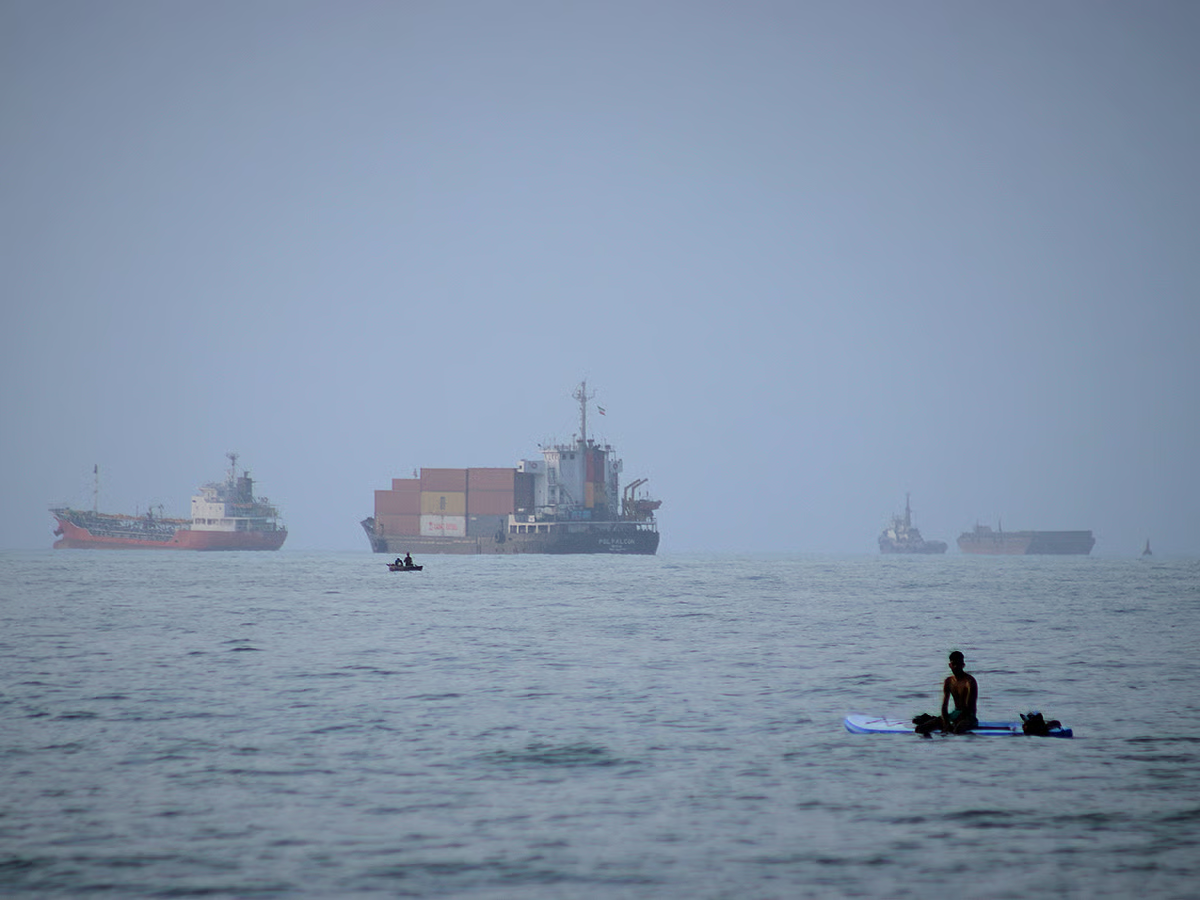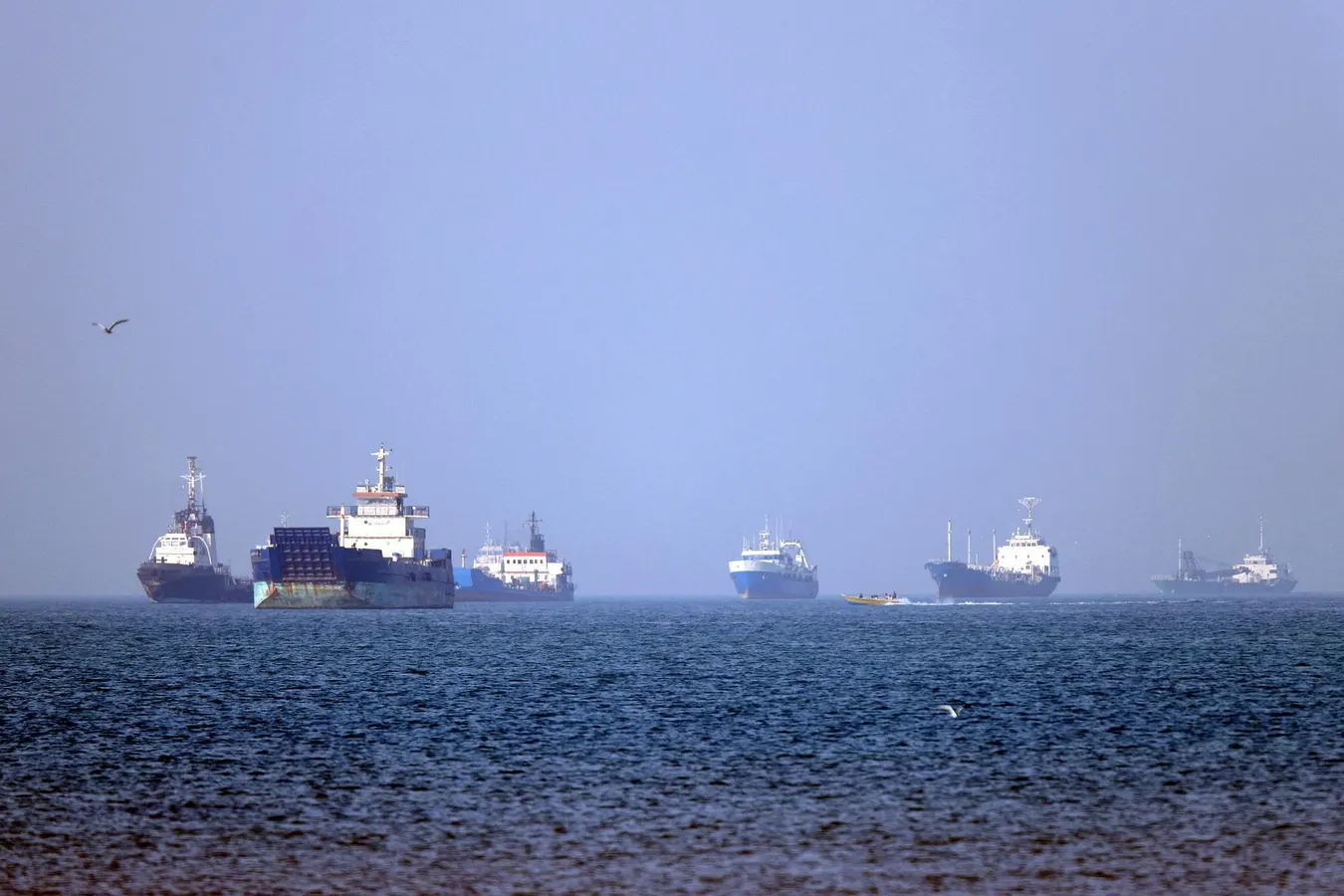
TOPSHOT - In this picture obtained from Iran's ISNA news agency on May 4, 2026, vessels are pictured anchored in the Strait of Hormuz off Bandar Abbas in southern Iran. Iran's Revolutionary Guards on May 4 denied that any commercial ships had crossed the Strait of Hormuz, after the US military earlier said two US-flagged merchant vessels had transited through the vital waterway. (Photo by Amirhossein KHORGOOEI / ISNA / AFP via Getty Images) /ISNA/AFP via Getty ImagesI think most energy analysts would have been shocked to learn that roughly three months into a total closure of the Strait of Hormuz, oil would be trading at just over $100 a barrel. I certainly expected prices to be significantly higher by now. The physical math seems indisputable: take that much supply off the market, and prices should respond quickly and decisively.Oil prices have risen sharply, to be clear. But we are still short of the levels seen following Russia’s 2022 invasion of Ukraine, or of the all-time highs set just before the 2008–2009 financial crisis.Instead of the $150 oil many anticipated, prices have climbed, but not to catastrophic levels. It is easy to look at this and conclude that the market has absorbed the shock. But that interpretation risks confusing resilience with delay. What we are seeing is not a resolution. It is a temporary buffer.The Market’s Hidden Shock AbsorbersThe biggest reason the oil market hasn’t reacted more violently to the Strait of Hormuz closure is simple: the world entered this crisis with more inventory than many analysts appreciated. Those barrels have acted as a shock absorber. They don’t eliminate the problem. They just delay it.Global commercial stocks have been drawing for weeks. OECD inventories are now below their five‑year average, and independent trackers like Vortexa and Kpler show steady declines in floating storage as well. None of this looks dramatic on a chart. The drawdowns are orderly, and prices have risen, but not explosively. On the surface, the system appears to be coping.MORE FOR YOUBut inventory isn’t a strategic reserve. It’s working stock; the minimum volume needed to keep refineries, pipelines, and blending operations functioning smoothly. Once inventories fall below those operational thresholds, the system loses flexibility. Refiners have fewer crude options. Blending becomes harder. Small disruptions that were previously absorbed start to become more significant.That’s the part that’s easy to miss. The drawdown phase looks calm because inventory declines appear one week at a time. The consequences show up later, when the system runs out of slack. The lower inventories go, the longer and harder the recovery becomes, because the barrels that were used to cushion the shock have to be replaced.Spare Capacity Isn’t a Safety NetAnother reason prices have not spiked higher is the perception that OPEC still has spare capacity.On paper, that is true. Saudi Arabia and a few other producers maintain the ability to increase output. In practice, however, spare capacity can’t completely substitute for lost supply from the Persian Gulf.First, not all barrels are interchangeable. Differences in crude quality matter for refining configurations. Second, ramping production is not instantaneous. Even when capacity exists, bringing it online takes time and coordination.Most importantly, spare capacity is finite. Using it to offset a major disruption reduces the system’s margin for error. Once that cushion is gone, the market becomes far more sensitive to any additional shock.So, while spare capacity has helped stabilize prices in the near term, it does not eliminate the underlying imbalance.Demand Has HelpedDemand has also played a role in keeping prices contained.Higher prices naturally lead to some degree of demand destruction. Consumers drive less. Airlines hedge or cut routes. Industrial users look for efficiencies. In emerging markets, fuel consumption is particularly sensitive to price increases.At the same time, global economic growth has been uneven. That has softened the demand side just enough to offset part of the supply shock.But this is not a structural decline in demand. It is a temporary easing at the margins. If economic activity strengthens, or if consumers simply adjust to higher prices, demand can quickly reassert itself.When that happens, the buffers currently holding the system together come under even greater strain.A System Running on Borrowed TimeThe key point is that the market has not solved the problem created by a prolonged closure of the Strait of Hormuz. It has simply deferred the consequences.We are effectively financing the disruption with stored barrels, spare capacity, and incremental demand adjustments. Those tools are finite. They were designed to smooth short-term disruptions, not to replace a major artery of global oil trade indefinitely.This is why the current price level can be misleading. It reflects the system’s ability to absorb the initial shock, not its ability to sustain that balance over time.If the disruption persists, the math becomes increasingly unforgiving.What Happens NextThere are two broad paths from here.The first is resolution. If the Strait reopens or flows are partially restored, the system can begin to rebuild inventories and normalize. In that scenario, prices may stabilize or even decline from current levels, but a return to pre-war prices is unlikely anytime soon.The second path is continuation. If the disruption drags on, inventories continue to fall, spare capacity is further depleted, and the margin for error disappears. At some point, the market is forced to reprice the remaining supply more aggressively.That is when the move toward $150 becomes much more plausible. It’s not necessarily because something new has happened, but because the buffers have been exhausted.The TakeawayThe fact that oil has not reached $150 after three months of a major supply disruption means the market had more short-term flexibility than many anticipated. But flexibility is not the same as permanence.The current equilibrium is being maintained by drawing down resources that cannot be replenished quickly. As those resources diminish, the system becomes increasingly fragile.In that context, the absence of a price spike should not be read as reassurance. It should be seen as a warning that the adjustment process is still unfolding.
Why Oil Hasn’t Hit $150—Yet
Oil prices remain near $100 despite the Hormuz disruption, but inventory drawdowns, spare capacity limits, and structural constraints suggest a delayed supply shock ahead.
994 words~5 min read