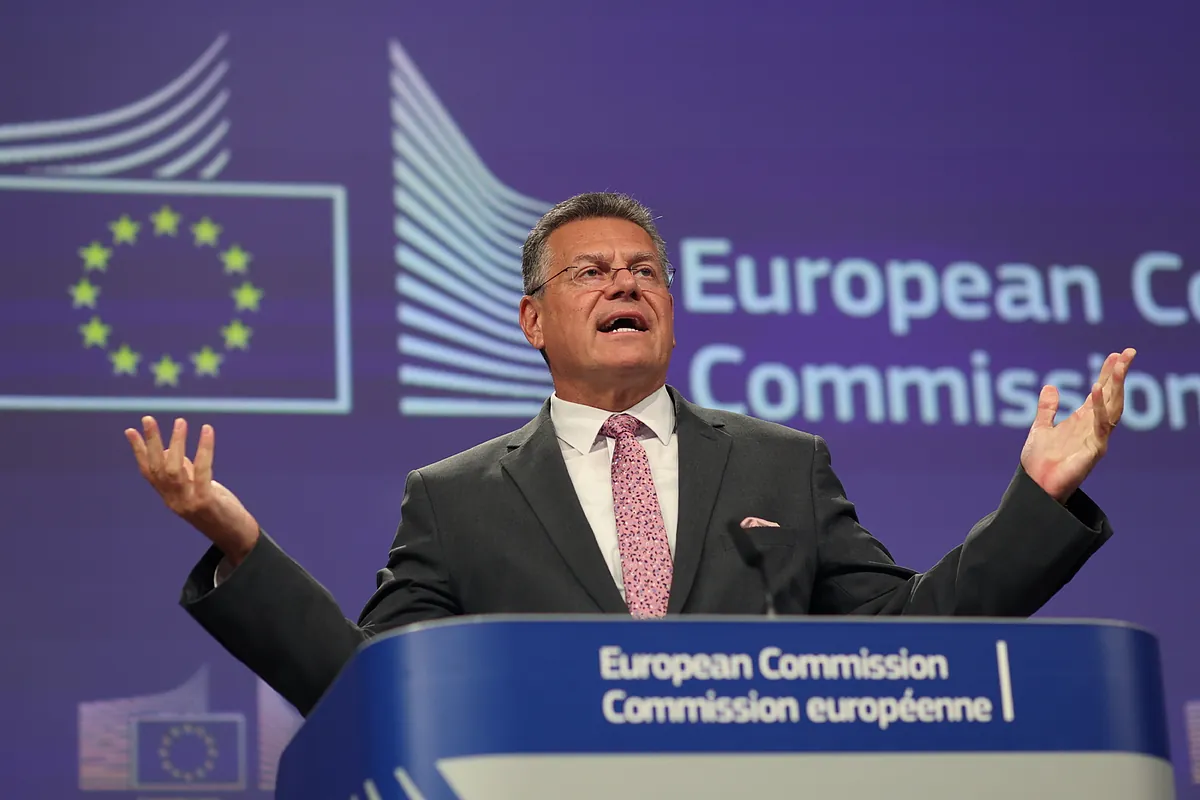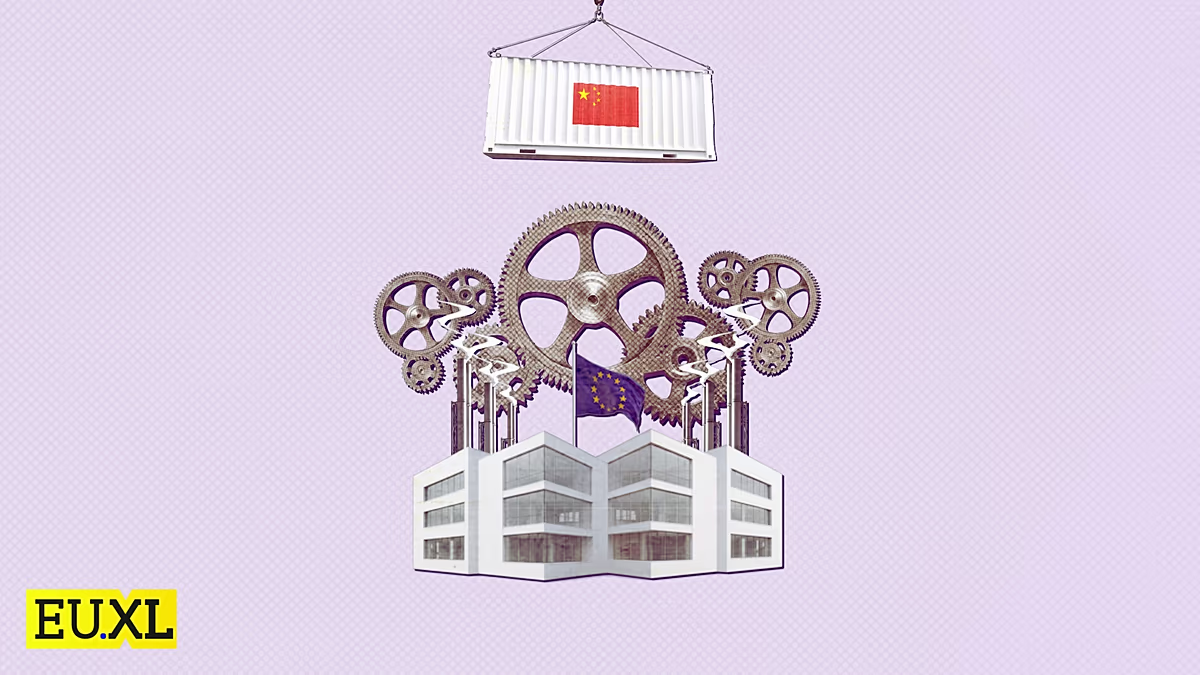
The EU is drawing up plans that could force European companies to buy critical components from at least three different suppliers, in a bid to reduce the bloc’s reliance on China.The new rules would affect businesses in a handful of key sectors such as chemicals and industrial machinery, which have complained about a surge in cheap Chinese imports, according to two EU officials familiar with the matter. The proposals come in response to Beijing’s export restrictions on key technologies.The new law would set ceilings, expected to be about 30 to 40 per cent, for what can be bought from a single supplier. The rest of the components would need to be sourced from at least three different suppliers, not all from the same country.EU trade commissioner Maros Sefcovic wants to tackle the bloc’s €1 billion a day trade deficit and insulate companies from China’s “weaponisation of trade”, officials said. Some European car production lines ground to a halt last year after Beijing slapped controls on the export of rare earth magnets and other components.Sefcovic plans an array of punitive tariffs on Chinese chemicals and machinery to stop a dramatic surge which has sent European manufacturers reeling, according to the officials.“In many areas we are gradually becoming dependent on exports from China,” said a senior European Commission official. “Dependencies have a price and therefore we have to redouble our efforts [to diversify].”The official said China’s huge investment in manufacturing, with high subsidies reported by the IMF, posed an urgent threat to the EU’s industrial base. The Chinese government has said the scale of its industrial policy was overstated. The EU was “pursuing protectionism under the guise of ‘fair competition’”, it said.EU officials cautioned that plans were at an early stage but would be presented to a Commission meeting dedicated to China on May 29. If commissioners agree, a detailed proposal could then be endorsed by EU leaders at a summit in late June. A second official pointed out that this would not just cover China, since some raw materials or chemical inputs come overwhelmingly from a couple of countries, such as helium from the US and Qatar and cobalt from the Democratic Republic of Congo and Indonesia.Olof Gill, Commission trade spokesperson, confirmed there would be a debate on May 29 but declined to comment on internal discussions. He added that “such debates do not involve the adoption of formal proposals”. The EU will attempt to use its network of free trade agreements with more than 70 countries to build investment and supply chains with producers.Last year, the EU proposed increasing steel tariffs to 50 per cent and cutting low-tariff quotas in half to protect an industry that had shrunk to its smallest size on record. However, the officials said it could hand out more steel quota to trusted partners and cut those for others disproportionately, thereby maximising the impact on China. They said traditional anti-dumping and anti-subsidy instruments took too long – up to two years – because they required exhaustive investigations under World Trade Organization rules. Tariffs can only match the level of injury caused by the imports and Chinese companies can absorb them and still sell at a profit given their lower operating costs. The Commission’s trade defence teams were also under pressure from the sheer number of complaints. The FT reported that those from the chemical sector were at record highs, with one industry leader saying the industry was “at breaking point”.“We will not have the time, nor the human resources” to investigate them all, one of the officials said. “Today, in two years, you can lose the whole industry.” Safeguards are activated by a sudden surge in imports and last five years to give industry a breathing space to improve competitiveness. The first official said the steel measures had prompted huge backlash from exporting countries. “The political reaction it generates is proof that our partners also see that these safeguards would work.” – Copyright The Financial Times Limited 2026
EU plans to force companies to buy parts from non-Chinese suppliers
Proposed rules seek to target chemicals and industrial machinery makers
662 words~3 min read