Unlike the Ebola-zaire strains — there are currently no approved Bundibugyo virus-specific therapeutics or vaccines, the WHO said
| Photo Credit:
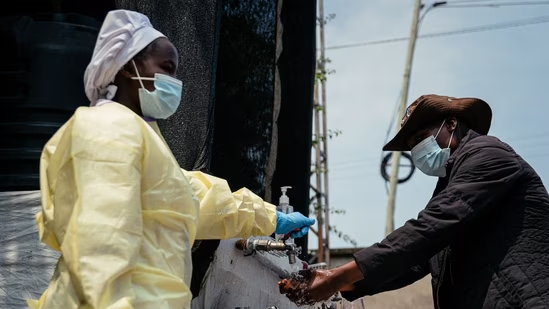
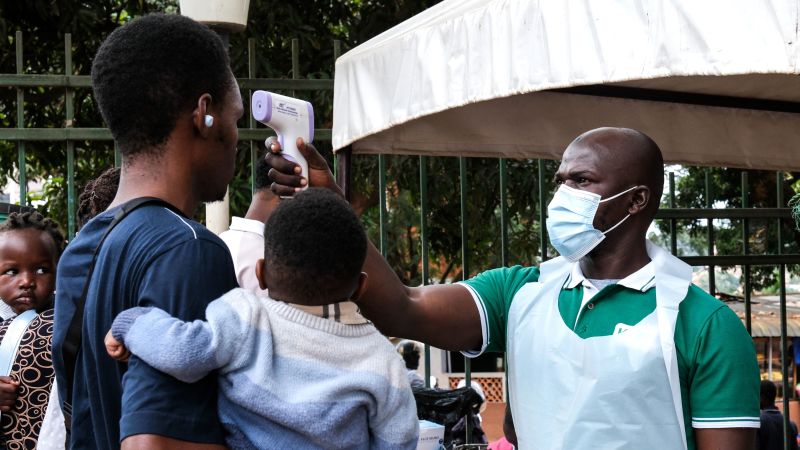
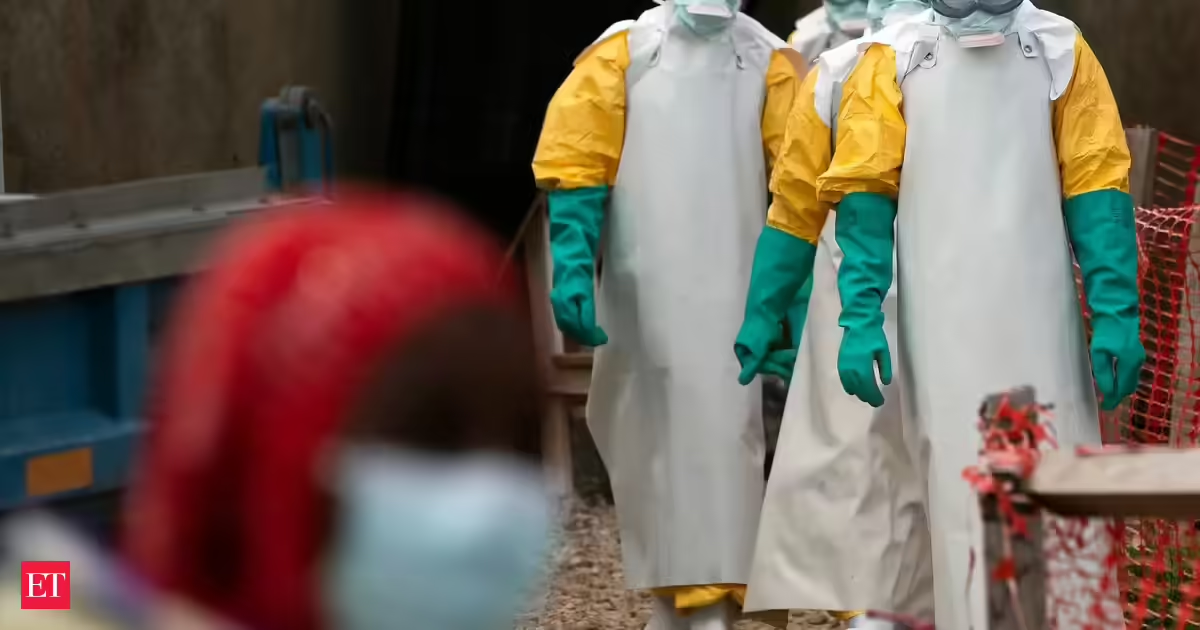
Over the weekend, the World Health Organization (WHO) has labelled Ebola — caused by Bundibugyo virus in the Democratic Republic of the Congo (DRC) and Uganda — a public health emergency of international concern (PHEIC). However, the UN Health agency clarified, the outbreak did not meet the criteria of a pandemic emergency, as defined by the International Health Regulations (2005).The PHEIC development on Ebola signals a heightened state of alert, calling for international coordination, and it comes as the 79th World Health Assembly starts in Geneva, on Monday.Global health administrations are already grappling with the Hanta virus that struck a Dutch cruise ship. Another British cruise ship is presently dealing with a gut-virus, after an elderly person passed away from a stomach illness. Passengers on the ship were temporarily banned from disembarking by French authorities, according to foreign media reports.Meanwhile, the Hanta-virus hit Dutch ship, MV Hondius, is expected to return to the Netherlands on Monday, according to international media reports.‘Extraordinary’ event Explaining why the recent Ebola outbreak is being seen as an “extraordinary” event, the WHO said — eight laboratory-confirmed cases, 246 suspected cases and 80 suspected deaths had been reported in Ituri Province of the Democratic Republic of the Congo across at least three health zones, including Bunia, Rwampara and Mongbwalu, by mid-May. Additionally, two laboratory confirmed cases (including one death) with no apparent link to each other had been reported in Kampala, Uganda, within 24 hours of each other, this month, among two individuals travelling from DRC, it added.The unusual clusters of community deaths with symptoms compatible with Bundibugyo virus disease (BVD) have been reported across several health zones in Ituri, and suspected cases have been reported across Ituri and North Kivu, the WHO said. At least four deaths among healthcare workers in a clinical context suggestive of viral haemorrhagic fever have been reported from the affected area raising concerns regarding healthcare-associated transmission, gaps in infection prevention and control measures, and the potential for amplification within health facilities, the health agency added.“The high positivity rate of the initial samples collected (with eight positives among 13 samples collected in various areas), the confirmation of cases in both Kampala and Kinshasa, the increasing trends in syndromic reporting of suspected cases and clusters of deaths across the province of Ituri all point towards a potentially much larger outbreak than what is currently being detected and reported, with significant local and regional risk of spread,” the WHO said. The ongoing insecurity, humanitarian crisis, high population mobility, the urban or semi-urban nature of the current hotspot and the large network of informal healthcare facilities further compound the risk of spread, as was witnessed during the large Ebola virus disease epidemic in North Kivu and Ituri provinces in 2018-19, it added.But unlike the Ebola-zaire strains — there are currently no approved Bundibugyo virus-specific therapeutics or vaccines, the WHO said. International spread of the virus has been documented, with two confirmed cases reported in Kampala, Uganda, following travel from DRC. Neighbouring countries sharing land borders with DRC are at high risk of spread due to population mobility, trade and travel linkages, and ongoing epidemiological uncertainty, it added.