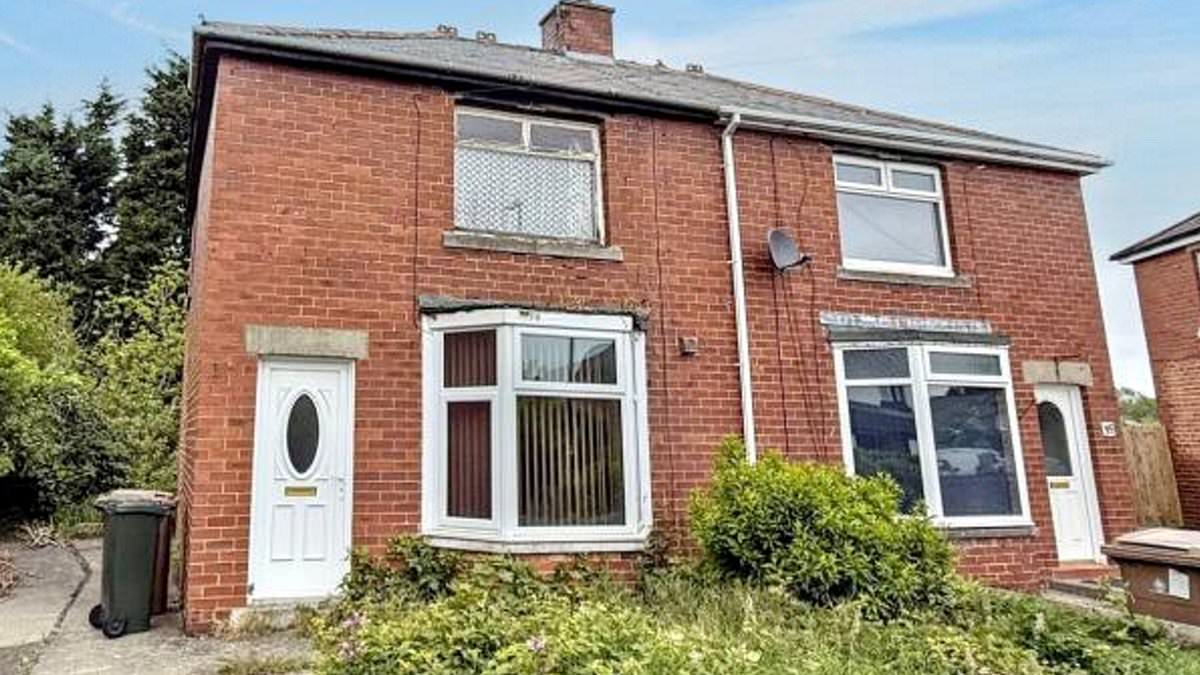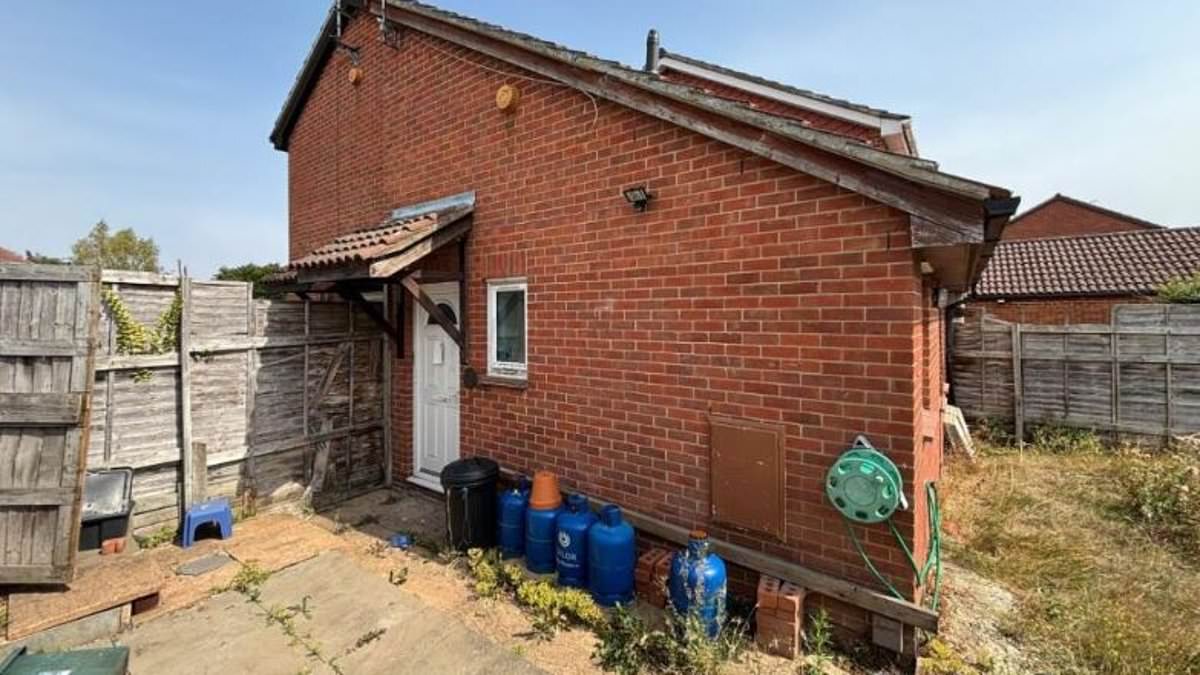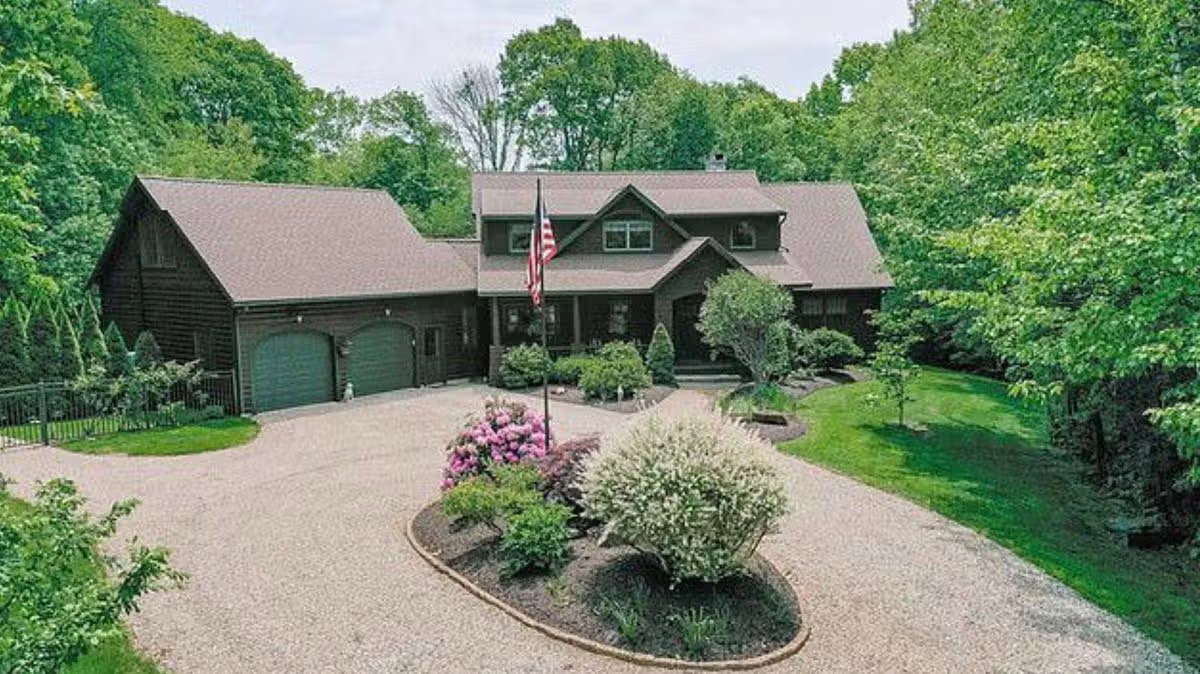
Amid the high-stakes bustle of numbered paddles shooting up and gavels banging down, an unexpected voice calls desperately from the corner of the auction room. “That’s my house,” shouts the woman, watching her home of 20 years up for sale.“I live there. You can tell the people who are bidding I’m not coming out of my house,” she continues.But nothing can halt the cut-and-thrust of this property sale. The besuited auctioneer carries on, fielding bids for the three-bedroom house in north-west London. It doesn’t take long for offers to shoot up past £400,000. After a final plea by the woman, who says she has tried to sort out her mortgage arrears, the hammer slams down. “A little bit late, madam – it’s been sold,” the auctioneer announces, before moving on.This is the cutthroat reality of the property auction, as seen at the De Vere Grand Connaught Rooms in central London. The building was once the meeting place of the Freemasons before being turned into a glitzy events venue. But today the housing crisis takes centre stage. Three hundred properties from across England and Wales are listed for sale. Some have been repossessed, others are being sold off by debt-laden housing associations, and one boarded-up home in north-east England has a guide price of just £1. Photograph: Avalon/Construction Photography/AlamyProperty auctions are big business. Nearly £5.9bn worth of residential and commercial stock was sold this way in 2025, up from £5.5bn in 2024, according to Essential Information Group, a firm that tracks the sector. Repossessed homes represent more than 20% of the auction market, they say, boosted by higher mortgage rates and the cost of living crisis. According to the most recent government figures, there were 14,025 mortgage repossession orders in England and Wales in 2024, the highest number in five years.“There will be repossession properties coming through on a weekly basis at auction,” says Alex Greaves, a property buying agent at Ridgestone Property. And although he’s not expecting a flood of “distressed assets from regular homeowners”, as he saw during the financial crash, he has observed an “uptick” of repossessed properties in central London.In the Grand Connaught Rooms, the hall is heaving with potential buyers when lot 001, a hollowed-out one-bedroom basement flat in Pimlico, London, goes under the hammer. It is snapped up for just over £450,000. It’s followed by a string of high-value properties in fancy parts of the capital and southern England: a four-bedroom townhouse in Wapping by the Thames goes for £800,000; a three-bedroom maisonette on Portobello Road in Notting Hill, with a guide price of £500,000, remains unsold; and a Devon bungalow with a sprawling garden fetches £327,500. A buyer’s premium of 2%-5% is usually added on, which goes to the auction house.These events are no longer dumping grounds for “Homes-Under-the-Hammer-type properties”, says Liam Gretton, an estate agent in Wirral, Merseyside. High-quality homes are increasingly being put up for auction. “If you have a Picasso, where would you sell it? You would take it to auction.”As the day goes on, and properties further and further away from the capital come up, people begin to filter out of the room. But a sizeable number, including a lot of younger faces, remain, raising their paddles in the hope of bagging a bargain. Interest in housing auctions among young people and first-time buyers appears to be on the rise. Greaves says he helped a first-time buyer secure a flat at auction recently and has seen other clients “keen to engage with auctions” for properties that are in short supply, such as family homes in areas with good schools. “The good stuff gets snapped up really quickly,” he says.The auctioneer, carrying on after lunchtime, touts the virtues of these more modestly priced homes, largely in the south of England (outside London) and the East Midlands. Many are listed as suitable for a family and, aside from some renovations, are ready to move in to.Alice Helps outside her new home. Photograph: Jim Wileman/The GuardianAlice Helps, 26, bought her “dream home” in Somerset at auction last April. “Where I live, I couldn’t afford a sparkly new-build,” she says. “So having a renovation project was a good way to get on to the housing ladder.” But she found her first time at an in-person auction, in a room full of “middle-aged farmers”, quite overwhelming. She went with her then boyfriend, who was in his late 20s. “Everyone was staring at us,” she says. “It was horrible. I did not enjoy it, having to put your hand up and everyone looking at you.”After looking at more properties online, she spotted a three-bed semi down the road from her loved ones, being sold by a local family and priced for a quick sale, with a guide price of £145,000. Helps managed to see the property in real life beforehand, but she opted to raise her paddle virtually this time. “I did it on my lunch break while working from home,” she says. “I was shaking.” The property was hotly contested and she found herself in a three-way battle. “I felt like it was happening at 30 miles per hour,” she says. Before she knew it, she had snagged the house for £178,000. “For my area, it was very cheap. I wanted it for roughly £200,000 but I believed it would go for about £225,000.”It took a moment for the news to sink in. By this point, she was newly single and had bought the house on her own. “I was just very overwhelmed, happy, and feeling immensely grateful because I did not think I had a chance in hell with it,” she says.Helps: ‘I’m hoping to move in by Christmas.’ Photograph: Jim Wileman/The GuardianShe paid her deposit (saved up since she was 18) and took out a mortgage open to those buying at auction. When she got the keys a month later, she knew there would be some work to be done, including installing a new roof and a bit of “modernising” – but when a structural engineer came around to assess the property, he had some bad news. “He said: ‘I think you need to check your gable,’” she recalls, meaning the triangular portion of wall at the end of the house, where the two sides of the roof come together.After gutting the ceilings upstairs, Helps realised getting the roof fixed would be trickier, and more costly, than she had expected. “I could see that the top of the gable in the attic was going in and the bottom was pushing out,” she says. The expert recommended knocking this part of the house down completely: “‘If that was to fall in,’ he said, ‘it could potentially kill you.’” There was no going back – once the gavel falls, the winning bidder has effectively agreed a legally binding contract to buy the property. “It’s a negative of the auction because you’re buying it as seen. Some of these issues you don’t know until you start gutting the place.”Helps had originally thought that getting the house up to standard would set her back £50,000-£75,000, but has revised that up to £100,000 (fortunately, she has enough saved up). “I’ve still not moved in,” she says. “I’m hoping to by Christmas.”Regardless, she doesn’t regret her decision at all. “The houses that go to auction are normally big projects. Just be 100% certain, because there’s no going back,” she says. Despite the unexpected renovations, Helps still reckons she’ll have saved over £100,000, and guesses her new, refurbished home will be worth £400,000-£425,000.By late afternoon, the auction room has almost emptied out and most of the homes on offer are hundreds of miles away, largely in the north-east of England. The crowd has thinned down to three when a three-bedroom home in Horden, County Durham, in need of a “full scheme of refurbishment and modernisation”, comes up for sale with a guide price of £1. No one in the room is interested, but online a battle ensues. The north-east of England has been touted as the high-yield capital of the UK, offering higher rates of return for buy-to-let investors, and according to Zoopla, County Durham offers the best bang for your buck in the area.Some of the most deprived parts of England have seen large numbers of homes sold at auction and rented out to families relocated from more prosperous areas, where the local housing allowance (LHA) is too low to cover private-sector rents. Meanwhile, firms such as Reloc8 UK have been paid millions of pounds in public money to facilitate the moves.The former mining village of Horden has become a stark symbol of this practice, with the village’s numbered streets rapidly filling with lower-income families moved there by councils in London, Birmingham and the south-east of England.LHA in Horden for a three-bedroom home is £126.58 a week, regardless of condition. This means that in a year a landlord can collect nearly £6,600. Joanne Thorns, a project manager at Communities Together Durham, a charity that has been on the frontline of the issue, says she has seen properties in Horden go for £5,000-£10,000. “For a landlord to buy that and then do it up a little bit, they’re going to make their money back pretty quickly.”Horden, County Durham. Photograph: Dan Kitwood/Getty ImagesI visited Horden at the end of 2024 and, while it has become a source of morbid fascination for YouTubers and TikTokers, who film the rows of boarded-up homes fitted with fake doors, there is far more to the area than this. A plan to regenerate the numbered streets is in the works, though local residents have launched a legal challenge. And a short walk away is an earthy beach with grand, rugged cliffs looming above. Castle Eden Dene, a national nature reserve, and Denemouth Viaduct are also nearby.People seem to look out for each other, too. When leaving the village, I nipped into Greggs for a snack. I was struggling to find my bank card but, while I was rummaging around, a young man tapped his card for me. I insisted on giving him the cash but he refused.That doesn’t mean that all new arrivals get a warm welcome. Thorns says incoming families, which often include refugees and single women with children, are “often not told anything about the area” and are “usually sent up in a taxi with whatever they can carry”. The homes usually have no flooring, she says, and are fitted with the bare minimum of furniture, often “a bed for each member of the family, a fridge-freezer and a cooker”. Families are frequently moved to half-empty streets, Thorns adds. “If four or five houses around you are all boarded up, it’s very difficult to start forming relationships.” The charity has learned to adapt, helping families get signed up to local GPs and their children into school. “We’re just trying to make them feel welcome,” she says.The issue has become a political lightning rod locally, with Reform UK pledging to put “local people at the front of the queue” for social housing at last year’s local elections. The party went on to take control of the county council, winning 65 seats and reducing Labour, which had been the largest party in Durham since 1919, to a measly four. On social media, claims spread that properties in a housing development were being sold to London councils to house homeless families. “We would like to clarify that this is not the case,” a councillor for the area insisted. “No phases, plots or individual dwellings have been sold to anyone or any organisation.”Durham county council’s deputy leader, Darren Grimes, came under fire recently for sharing an AI-generated image of men of colour disembarking from a coach outside a row of homes in a blog post complaining about southern councils moving “problem tenants, recent refugees and homeless families” to the area. Grimes did not dispute that the image was AI-generated, saying it “was obviously for illustrative purposes”.The reality, meanwhile, is that most of these families have been sent to Durham under a private-sector discharge, meaning they are made to sign a tenancy for a privately rented home in the area, usually by a faraway council attempting to limit the demand for social housing, or its reliance on temporary accommodation. As Thorns puts it, they are told that as far “as the council sending them up is concerned, it’s a suitable property” and, if they don’t accept, they could make themselves homeless.Back in London, lot 300, the final home on sale today, is approaching: a tenanted three-bedroom home on the Wales-England border. The room is practically empty but the auctioneer, his suit as pristine as it was in the morning, continues with the same level of aplomb. His enthusiasm seals the final sale. Going, going, gone for £138,000.And that “£1” home in Horden? It has fetched £3,500. As the auctioneer put it, there’s “potential for an excellent return”.
A house for £1? What a day at a property auction taught me about the UK housing crisis
Some of the homes have been repossessed, while others are being sold off by debt-laden housing associations. Who buys them – and who will end up living there?
2,148 words~10 min read