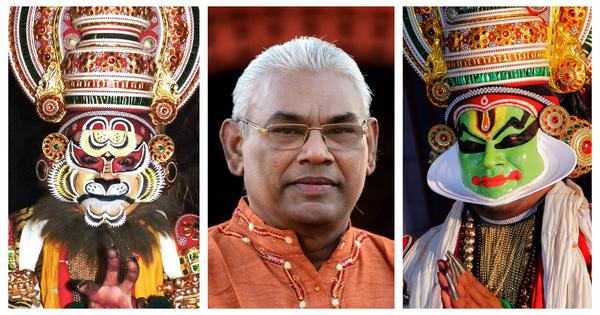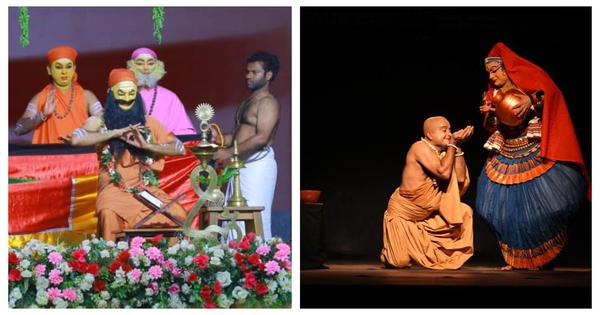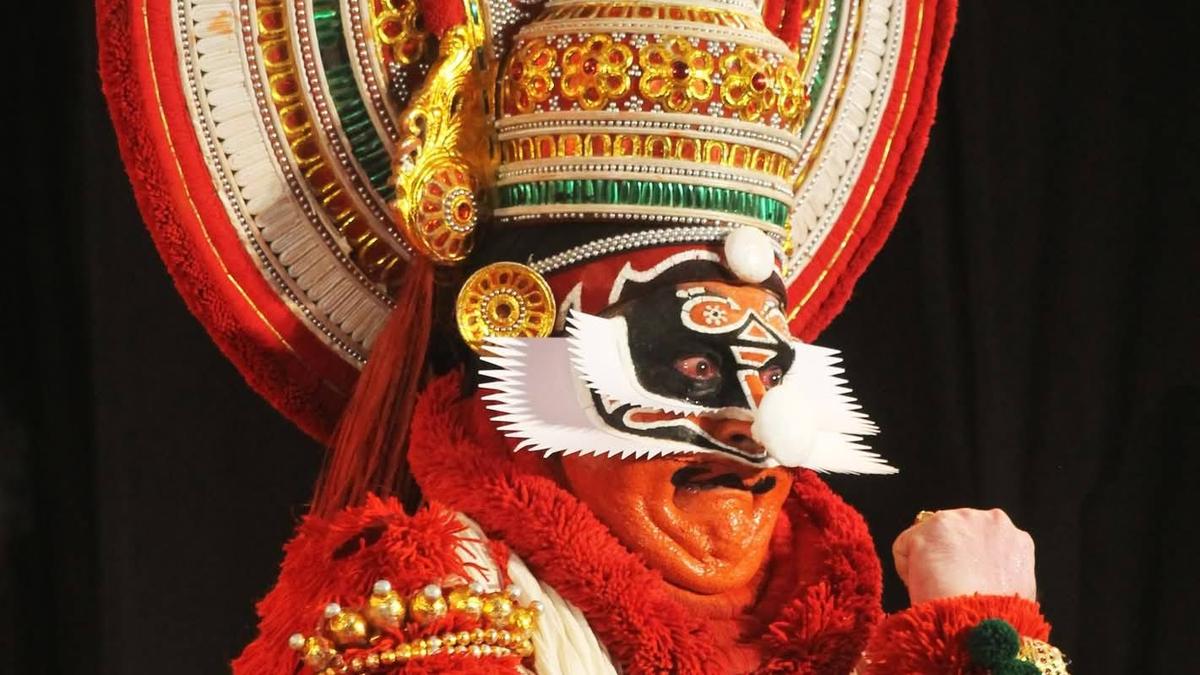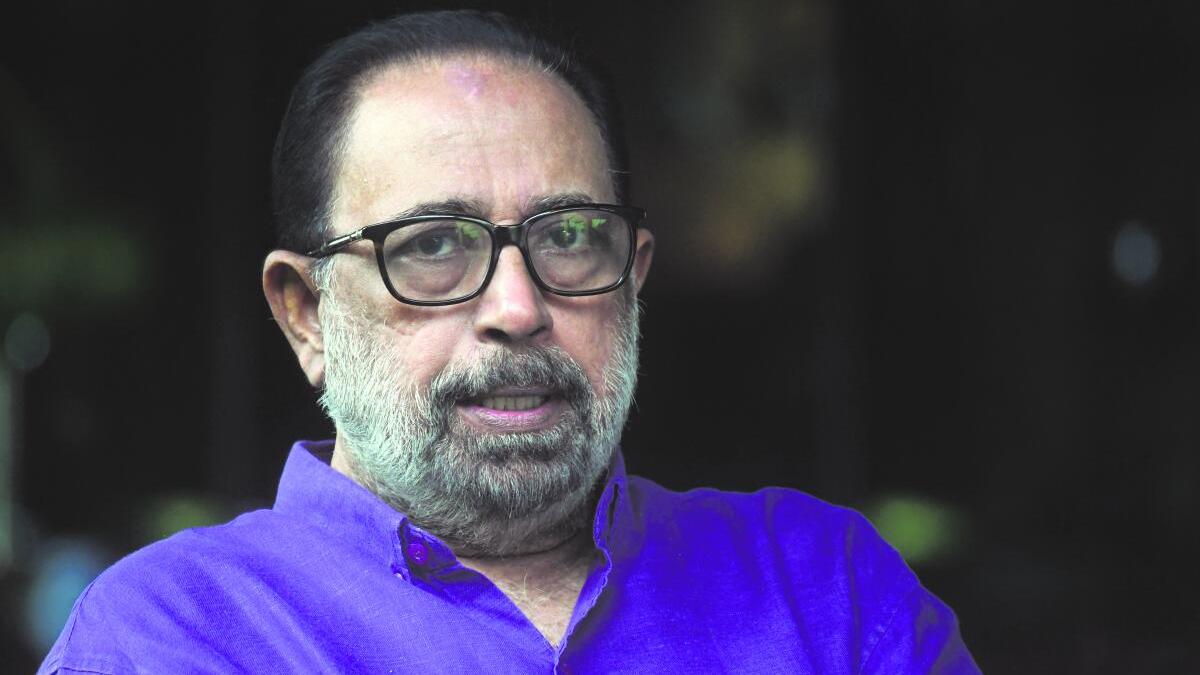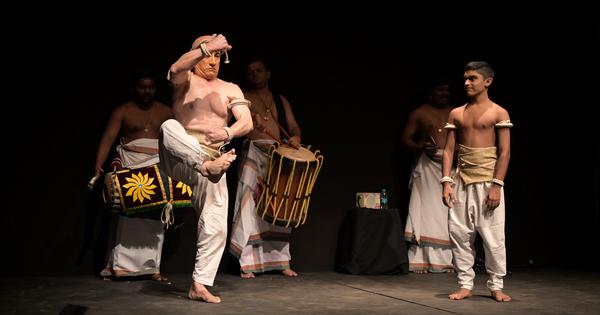
When the dancer who played the title role in a kathakali adaption of American author Ernest Hemmingway’s last fictional work The Old Man and The Sea learnt in March that he had won the best actor prize at the Mahindra Excellence in Theatre Awards, the news came as “a nice surprise”.“I knew I had been nominated, but I didn’t imagine I could win the award,” he said.His surprise may not have been unwarranted. Even members of the audience were astonished to learn that the kathakali exponent playing the Old Man was a 72-year-old Italian named Mario Barzaghi.Barzaghi, who runs the Teatro dell’Albero in Liguria, has been a kathakali practitioner for more than four decades.“Kathakali follows me like a shadow, it’s always with me, perhaps even within me,” he told Sunil Warrier in an email interview.Excerpts:What attracted you to kathakali?I discovered kathakali after joining the Teatro Tascabile in Bergamo [in northern Italy]. They had begun practicing some classical Oriental Theater styles in 1978, including kathakali. Learning kathakali was the new training and research that the director of the TTB, Renzo Vescovi, had suggested to the actors and actresses.Vescovi asked me to practice kathakali and flamenco [from Spain] as he wanted to explore the extent to which an actor could practice two different codes. I received my first kathakali lessons in Italy in 1982.How difficult was it for you to learn kathakali given that you do not understand Malayalam and by your admission you are not fluent in English?I worked in a factory and did [political] theater in the evenings after work. I hadn’t been able to study; my family was working-class, so I didn’t know any foreign languages. I learned basic English by listening to others. Not speaking Malayalam and not being fluent in English, I relied on my senses and my listening.I interpreted my relationship with kathakali regardless of languages. From the very beginning, I treated my eyes as if they were a video camera, looking and capturing every detail that presented itself before my gaze. The Master’s body became an anatomical map, from the whole to the smallest details.The cast and crew of 'The Old Man and the Sea'. Credit: Mahindra Excellence in Theatre AwardsWho were your different teachers over the years and how often do you come to Kerala to learn kathakali?My first visit to Kerala was in 1985 and my first teacher [from 1982 to 2017] was Kalamandalam KM John. Due to a ruptured Achilles tendon, I was unable to practice kathakali from 2004 to 2014.I practiced with Padmanabhan Nair on two occasions, in 1987 and 1990. The first period coincided with my debut at the Kalamandalam koothambalam [the arena specially constructed for the performance of traditional art] in Narakasuravadham (the killing of demon Naraka) and Kalyana Sougandhikam (when Bhima meets Hanuman while in pursuit of the flower sought by Draupadi).I applied three times to the course for foreigners at Kerala Kalamandalam [in Cheruthuruthy town in Thrissur district], and since 2023, my teacher has been Kalamandalam Neeraj, who is also the director of The Old Man and the Sea. I stay in Cheruthuruthy for two or three months a year.Did you have to make any special efforts to understand the mudras and the emotions? How did you understand what you were doing?Even though my English was basic, I would ask questions related to the specific meaning of a mudra or the story. My teachers would check and correct me during practice.I am very careful about the distinction between “memorisation” and “forming”. Memorisation without forming is useless. A student must understand that kathakali requires extraordinary bodies, not ordinary ones, since the extraordinary bodies of the various characters, who are actually archetypes, will be represented on stage.Which characters have you played in kathakali, which is your favorite and why?I’ve played Jayanta (Narkasuravadham), the Kari (demonic characters), Parashurama, and Hanuman. My favorite character is Hanuman as it has twin personalities – the animalistic side and the wise side; the side tied to reason and devotion, especially towards Sita, and the wild side.Did acceptance come easily from an Indian audience?I have never felt intolerance or sensed prejudice during my performances. In 2016, during the Pooram [temple festival] in Cheruthuruthy, I debuted as Parashurama in Sita Swayamvaram, in front of thousands of people. Many came to thank me, and some even wanted to touch my feet.How do people react when you perform in Italy and other countries?The contexts in which I can present kathakali in Italy or Europe are primarily those where research is conducted, such as universities and academies. In those situations, reactions are normal, while they differ from those of festival audiences or so-called popular audiences.Mario Barzaghi as Santiago tries to rein in Marlin the fish played by Hari R Nair. Credit: Mahindra Excellence in Theatre AwardsThe Old Man and the Sea has been staged about six times now, and you’ve played the Old Man five times. How did you have to prepare for the role? How have you evolved over the five performances?My acting skills have evolved over the course of the show’s various performances, thanks to Kalamandalam Neeraj, my mentor and director of the show, who helped me, both technically and intellectually, and also dramaturgically, to understand the show’s various compositional aspects and to delve ever deeper, overcoming the technical problems to get closer to the most important compositional parameters, especially those related to the interpretation of the character.Do you incorporate kathakali into your theatre/dance?Kathakali follows me like a shadow, it’s always with me, perhaps even within me. Its use is often indirect; I’m especially interested in the use of energy in kathakali, as demonstrated especially by the older teachers. There’s something touching, moving in what they manage to do despite their advanced age. Breath and energy seem to me to be the most important things, much more important than the meaning of the story itself.However, Teatro dell’Albero, which I founded in 2000, has the subtitle: The Art of the Actor between East and West. We are constantly committed to building a bridge between the two cultures.When it comes to kathakali, what’s that one thing on your wish list and what’s next on your plan?If I had a magic wand, I’d like to have many dates of The Old Man and the Sea. When I return to India in December 2026 or January 2027, I’d like to perform the Kalyana Sougandhikam with Neeraj in the Kalamandalam koothambalam, and if possible, in village temples, perhaps during the various Poorams, in theaters, and in kathakali clubs across Kerala.Journalist Sunil Warrier is a theatre and dance lover.
‘Kathakali follows me like a shadow’: An Italian dancer on his 44-year love affair with the form
Mario Barzaghi won the best actor prize at the META awards in March for playing the title role in a kathakali adaptation of ‘Old Many and the Sea’.
1,105 words~5 min read