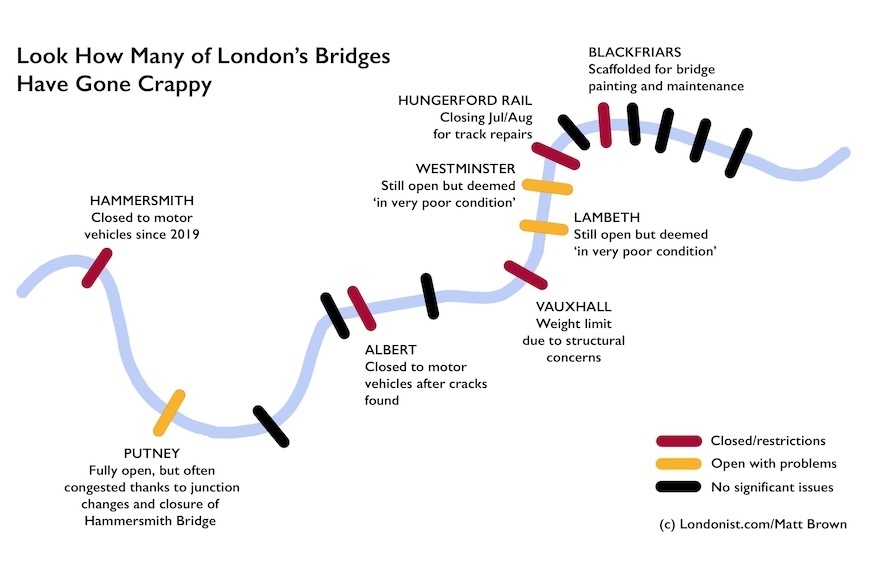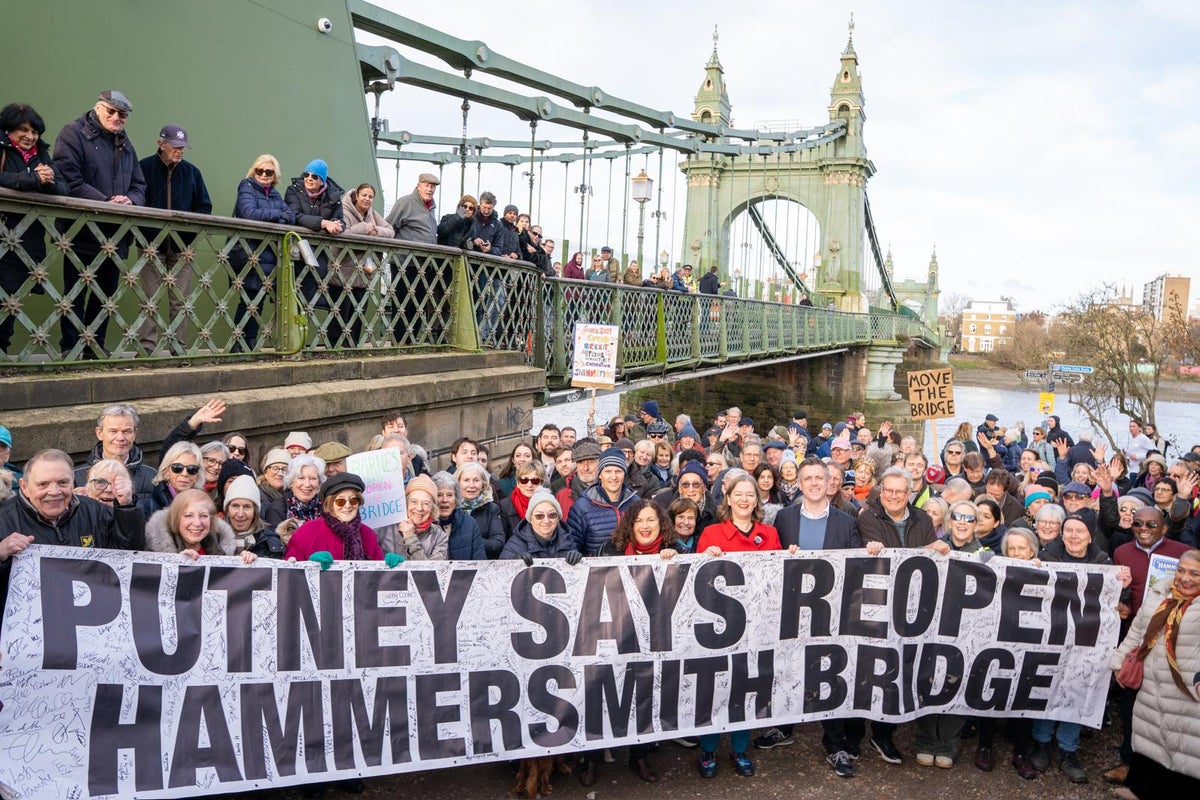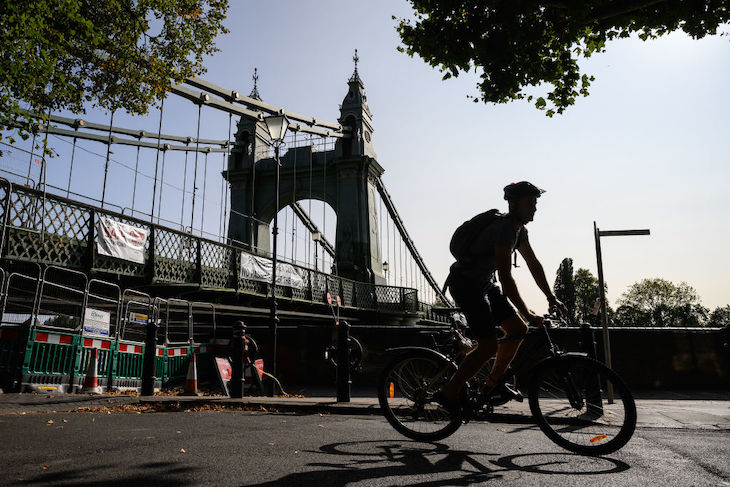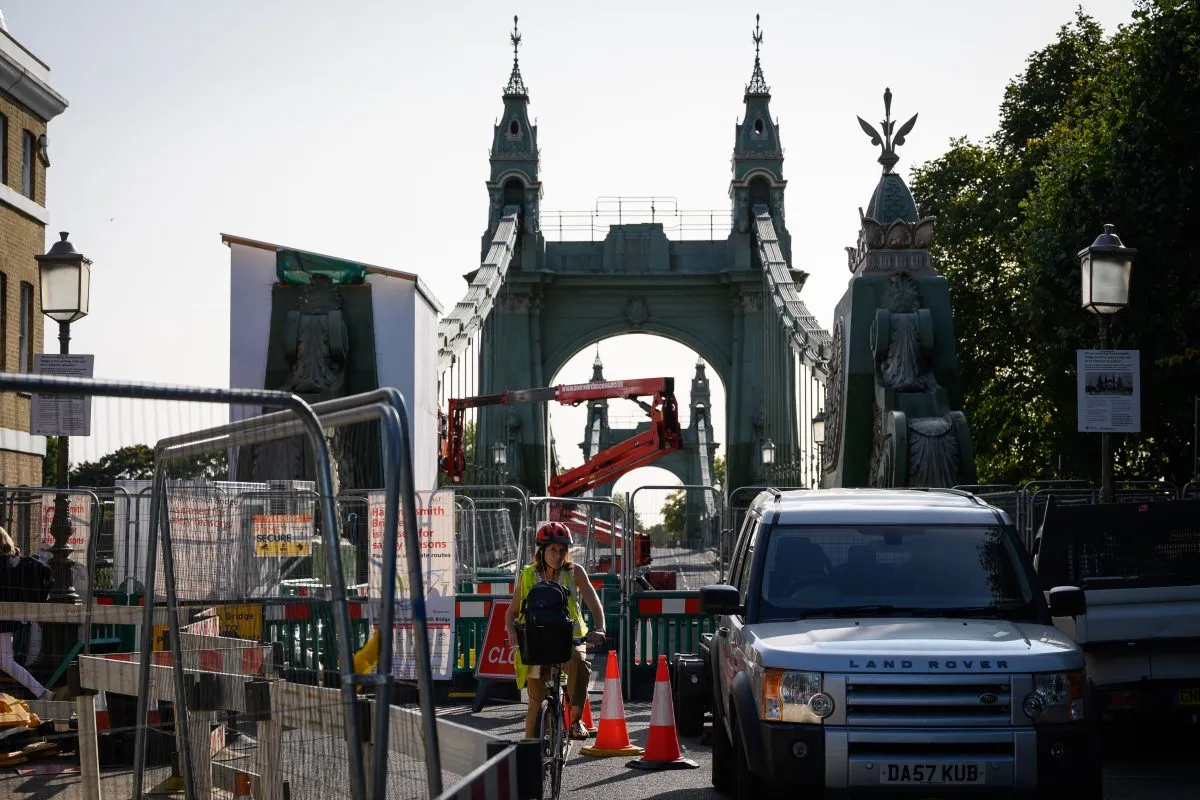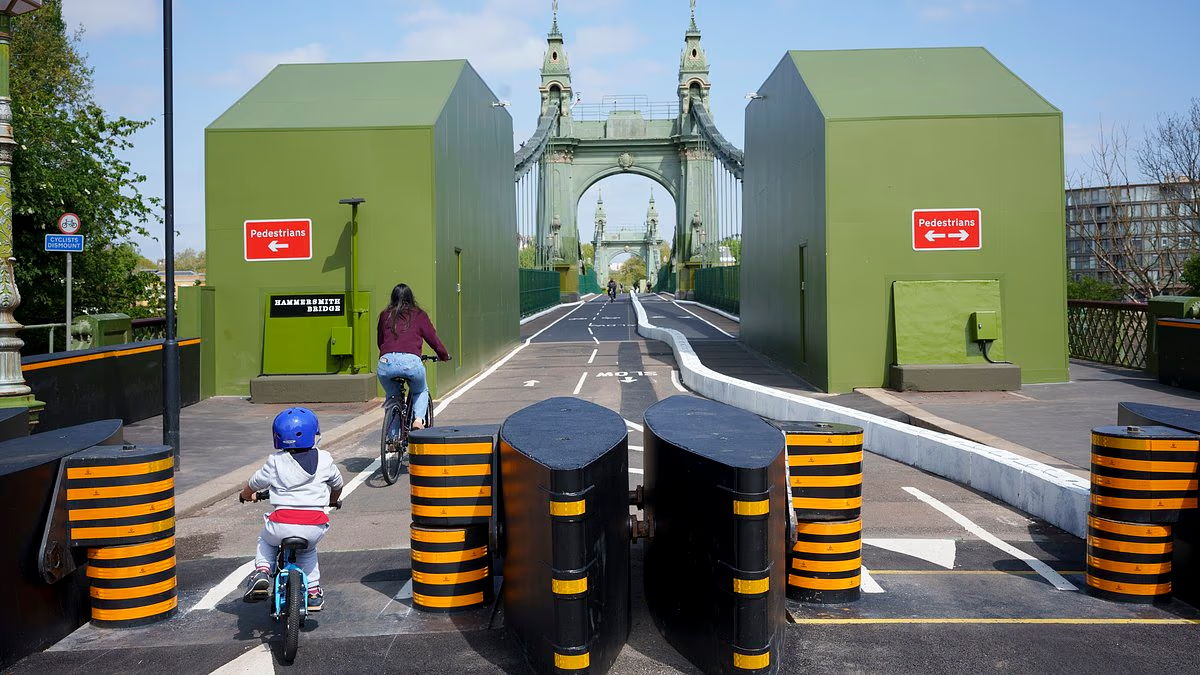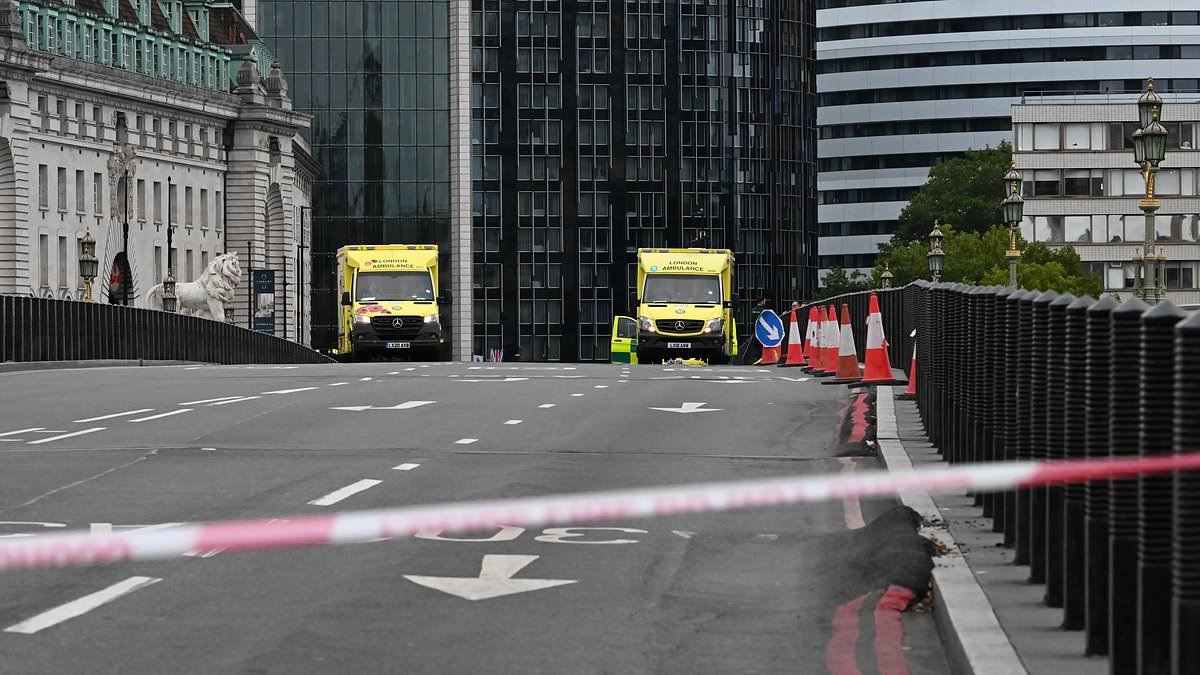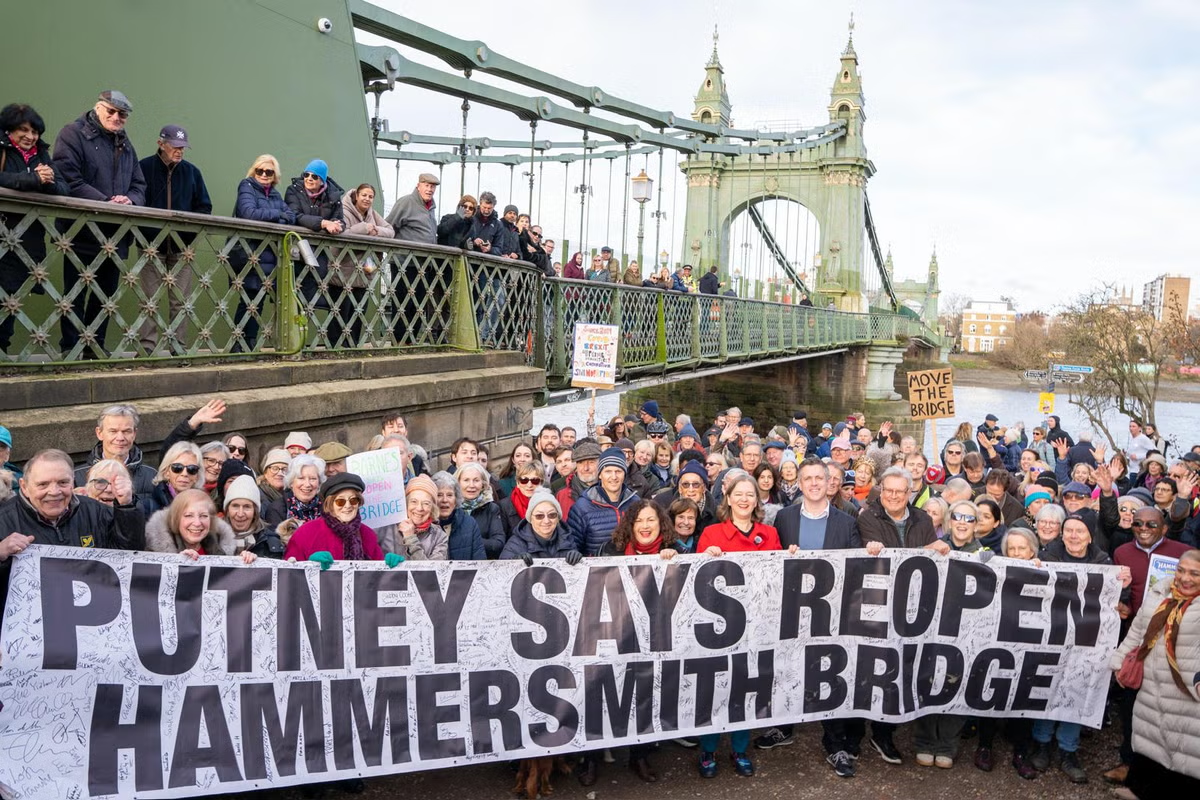
The level of incompetence is breathtaking,” says Nigel Edwards. “We’re one of the major economies in the world and we don’t seem to be able to repair a bridge in seven years. It’s a bit crazy.”It might sound as though he’s talking about the three London bridges put on the critical list this week: Westminster Bridge, Lambeth Bridge and Vauxhall Bridge. But these are just the latest to that infrastructure in the UK’s capital is literally crumbling beneath its peoples’ feet.Edwards, a consultant by day and a resident of North Barnes, is chair of the Hammersmith Bridge SOS Steering Group – a group set up six years ago solely in response to the closure of the historic bridge. Hammersmith Bridge, the 138-year old crossing linking Hammersmith with Barnes, was closed for repairs on 10 April 2019, after cracks appeared in its pedestals. When nothing seemed to happen a year later, the SOS Steering Group was formed, calling for change. Shortly afterwards, the bridge was opened to pedestrians and cyclists. Edwards, along with other residents, assumed that once repairs were completed, the bridge would open up to cars again. But seven years after its closure, that seems like an impossible dream. “It went from 20,000 cars a day down to nobody going over it at all,” says Edwards. “Police cars and emergency vehicles can’t cross the bridge. There’s no transport for the less able, other than a bus route through a single lane via Putney or Chiswick bridges which can take 50 minutes instead of five. “It’s extraordinary it’s been closed for so long. It’s complex and unfortunately stalled. And there’s still no approved plan. All that’s been done is the stabilisation of the bridge. I’m not aware of any real plan to do anything further.”Felix Pivcevic, the Putney Chapter Lead of political movement Looking for Growth, believes the situation is “a national embarrassment”. He adds: “An arterial road in our capital city, one of the wealthiest in the world, remains effectively closed to anyone who is not able-bodied and has been for the last seven years with no resolution in sight.”The issues with the bridge are complex. It falls under the responsibility of the London Borough of Hammersmith and Fulham (LBHF), but as it’s a heritage grade II structure, it was agreed in 2021 that the cost would be shared equally with Transport for London (TfL) and the Department for Transport (DfT). So far, LBHF has spent £54m on the bridge to keep it stable and safe for pedestrians and cyclists, and to prepare it for restoration. The problem is that there is no full plan for this – and there are disagreements on who will pay for it. A report from the LBHF states that they are awaiting £20.2m from the DfT and TfL for the money already spent – and in terms of moving forward, they’ll only be able to pay their third if the government allows them to create a toll for motorists using the bridge, or a road user charging scheme.But there has been a glimmer of good news – a new £1bn government Structures Fund dedicated to repairing run-down bridges across the country has said Hammersmith Bridge “would be a good candidate for investment from the fund, and [they] intend to consider the viability of future funding for the next stage of works through this route”.Fleur Anderson, MP for Putney and a member of the Hammersmith Bridge Taskforce, is hopeful about this verdict, announced recently in a letter by Simon Lightwood MP, minister for roads and buses. “It’s not a no. It’s a yes, we’ll keep looking into it. Hopefully the next figures will be how much it costs to repair it, and who is funding it. This extremely ancient listed historic, fragile precursor to the suspension bridge in Bristol cannot be fixed by a local council. It’s bigger than that.” Labour MP Fleur Anderson, left, is part of the Hammersmith Bridge taskforce (Fleur Anderson)Anderson recently held a protest on the bridge, calling for it to one day be reopened. “People are really, really frustrated that the congestion we see on our roads and the pollution as a result are still continuing. Hammersmith Bridge is not the only reason but it’s one of the factors. It makes our whole road network in Putney less resilient, and the human cost is enormous.”The bridge was the main route into London for residents coming from Roehampton, which has one of the largest council estates in the city, and it is now leaving that community isolated. “For a shift worker it reduces your ability to do that and have a life at all,” she says. “It’s really hard. If it’s an hour getting into London, it’s now an extra hour each way.”Anderson, a Labour MP, is frustrated with the delays, blaming the first few years on “ridiculous political wrangling” with Conservative ministers failing to take action. “It was during Covid, Partygate – their minds were on other things; we lost years there,’ she says. She points out that the money spent on the bridge so far could have been used to rebuild it, and costs are going up by the month due to the Ukraine war pushing up steel prices. “As soon as this government came in, I was ready to get on with it. Then the whole spending review happened. Every department had to look at its books. That took some time. Now we have the Structures Fund and, I hope, the political will.”All hopes are currently lying with the Structures Fund to provide the resources to repair the bridge – but there is also the debate of exactly how to do that. The taskforce has explored various options: from building a temporary bridge in the middle of the bridge while they repair the external parts, building alongside the bridge, rebuilding it, having a double-decker bridge system, and doing absolutely nothing at all.Hammersmith Bridge is currently closed to cars, leaving commuters from Roehampton with a longer drive (PA)“That’s the only one ruled out, as not doing anything at all; it will just continue to deteriorate,” explains Anderson. “They understand they can’t leave it as it is. Cyclists in Barnes love being able to cycle over it, but cyclists in Putney find it a nightmare to cycle on the roads. From any angle, we’ve got to have it reopened.”She’s personally hoping the taskforce will opt for the option of building a temporary bridge in the middle, so the bridge can be used by cars, whilst the external parts are taken away on barges, repaired, and then brought back. “I think it’s a brilliant idea; it’s quick to build and looks like the most cost-effective option.” Other solutions, such as the double-decker Foster-Cowi system, can cost up to £300m. Pivcevic, of Looking for Growth, thinks it is “nonsensical” that local authorities are responsible for maintaining and repairing bridges, and it’s the reason why Hammersmith Bridge has been closed for long. He compares it to Vauxhall Bridge, which is owned by TfL rather than a local council, and has been saved by stopgap repairs which keep it open. “Historically all bridges have been owned by London-wide authorities: a solution developed by our wily Victorian ancestors precisely because they knew localism failed,” he says. “Everyone in London uses the bridge so everyone should be responsible. Today we have a kind of neo-medieval system of local fiefdoms that squabble over petty sums while the local people suffer the consequences.”Another London bridge – the 19th-century Albert Bridge – is also in danger. The wear and tear of traffic means the bridge, owned by Chelsea and Kensington Council, will now be closed for a year while £8.5m repairs are carried out. Pivcevic fears this will turn into another Hammersmith Bridge: “Cracks in the pedestal of a Victorian bridge lead to what they say will be a temporary closure but then turns into years of stasis with no one organisation taking responsibility.“The default position of any functioning society should be to swiftly fix things that break. Unfortunately, that is something we have lost sight of. To do that, you need to vest a single authority with the appropriate funds to deliver in a set timeframe, ideally set out in law.”The DfT does not agree. In a statement to The Independent about the closure of the Hammersmith Bridge, they said: “The repair and maintenance of Hammersmith Bridge is the responsibility of the London Borough of Hammersmith and Fulham. We have already provided £17m to keep the bridge open for walking and cycling, and will continue to work closely with the council and Transport for London as we consider future funding through our new Structures Fund.”For now, all hope for Hammersmith Bridge relies on the Structures Fund, and it’s only once this funding has been confirmed that the taskforce will meet again. “I’ve consistently asked just a very simple question: when will the taskforce meet again?” says Anderson, as the taskforce last met in January 2025. “They’ve said once funding for the Structures Fund has been confirmed. We’ve been told that’s ‘in the near future’. In civil service speak… that’s okay.”
London’s bridges falling down and fast becoming a national embarrassment
As three more of London’s crossings are placed on the critical list, Hammersmith Bridge remains at a standstill. Radhika Sanghani speaks to politicians and locals to find out how we have got to a point when we can’t even repair bridges properly
1,523 words~7 min read