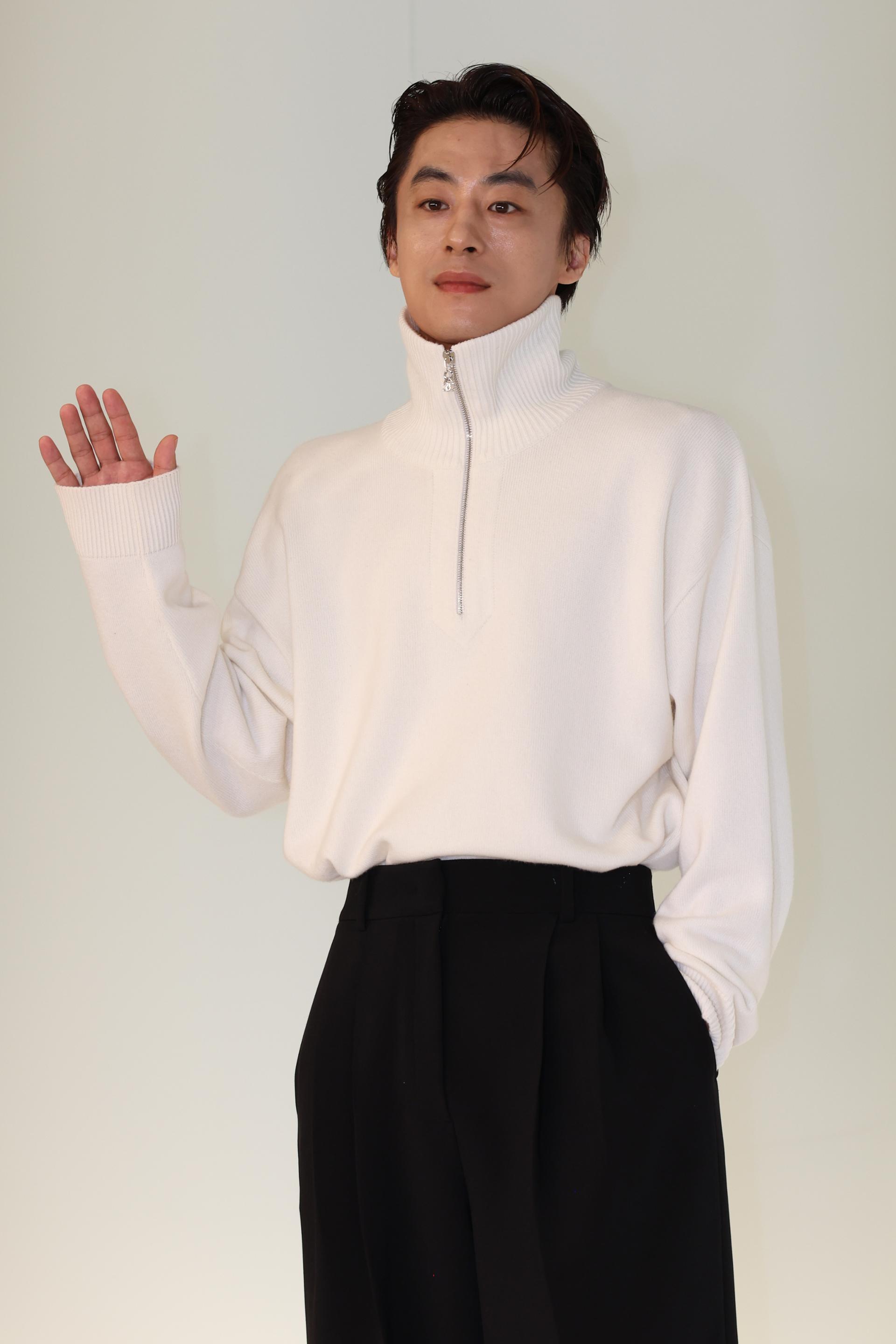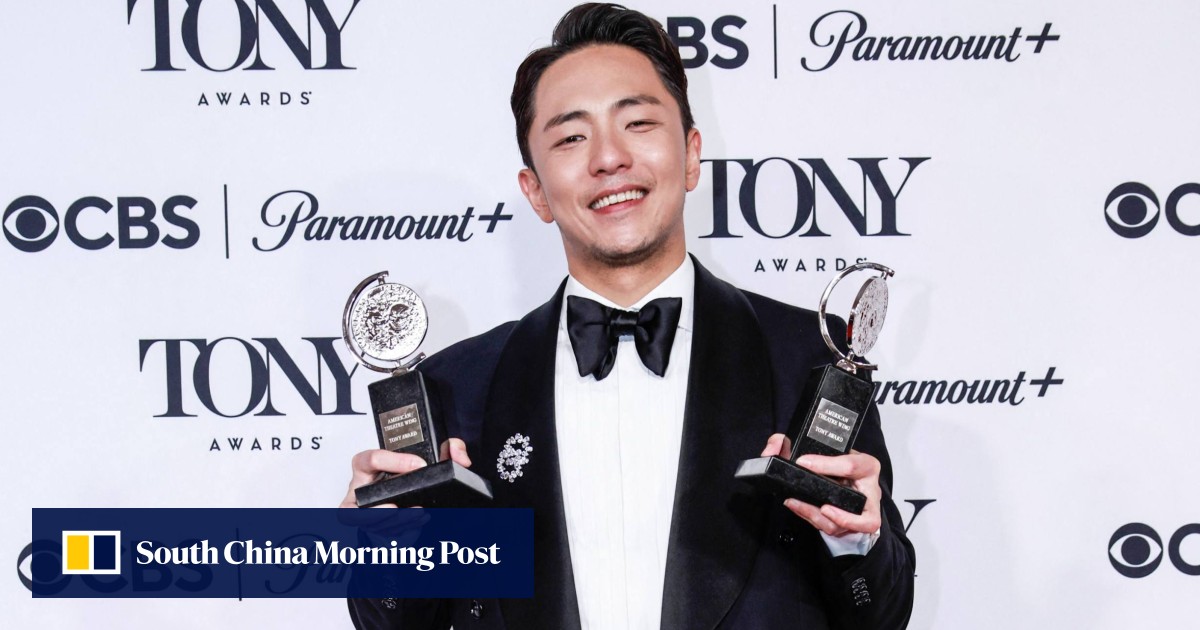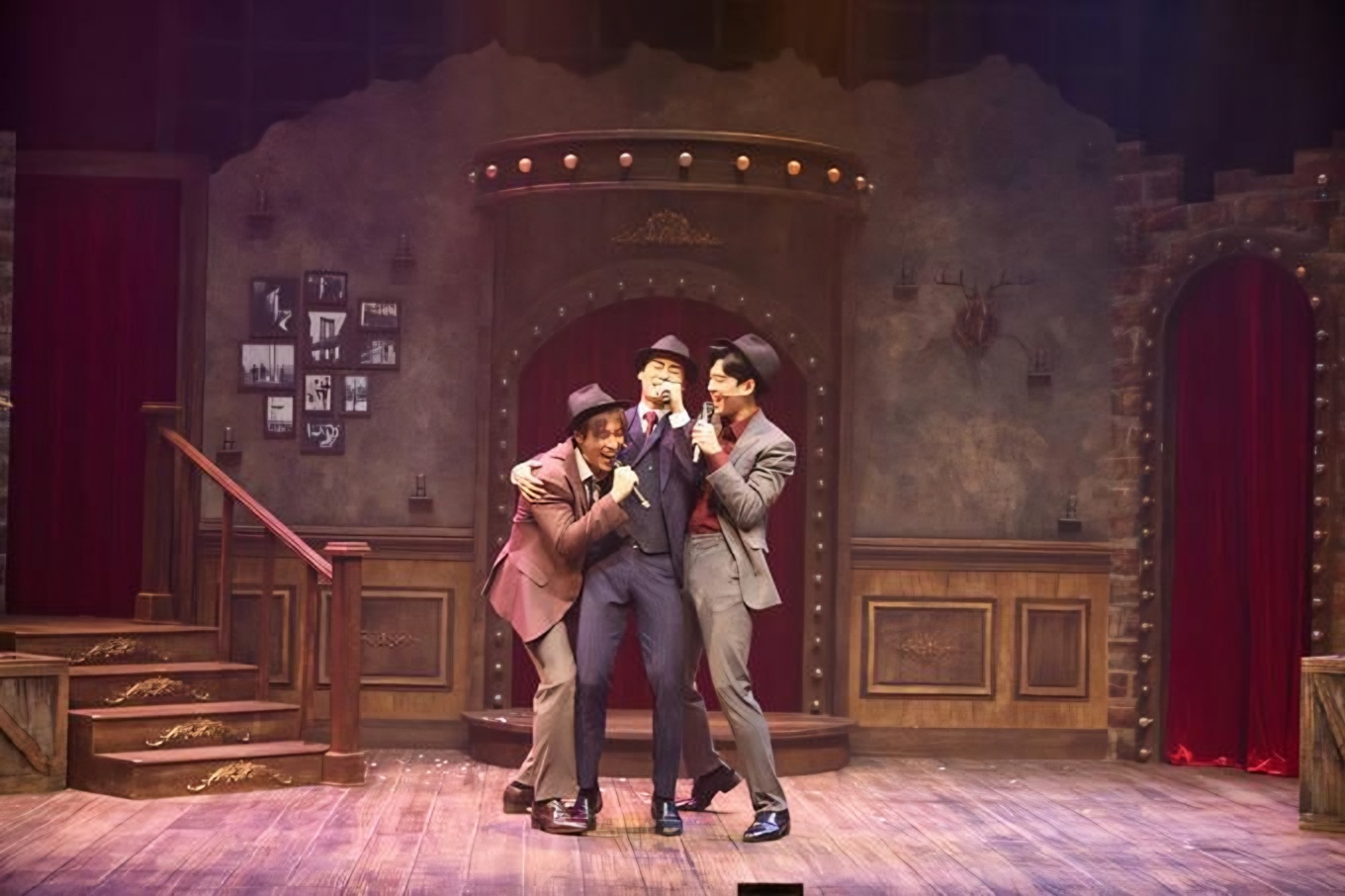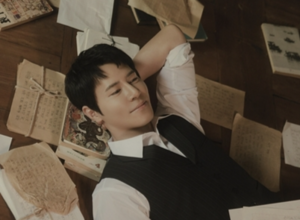
After a decade playing a fading writer in ‘Fan Letter,’ the ‘Prison Playbook’ and ‘Stranger’ actor hopes to see more international tourists in Korean theater audiences Lee Kyoo-hyung in "Fan Letter" (Live) A lot has changed for actor Lee Kyoo-hyung over the past decade. Once known primarily for his stage work, he has built a screen career alongside it — the prison dramedy "Prison Playbook," the crime thriller "Stranger" and the zombie hit "All of Us Are Dead" among his credits, all of which have helped make him a familiar face to international audiences as well.One thing has not changed. Every time the musical "Fan Letter" — a fictionalized story inspired by the literary circles of 1930s colonial Seoul — returns, so does he, as Kim Hae-jin, the tubercular 1930s writer he has played in every season of the Korean original since its 2016 premiere."Honestly, I thought I'd be sick of him by now. I'm not. I'm enjoying it more," the 42-year-old actor said in a recent interview.What changed from season to season, Lee said, was less the character than the angle. One year, he played Kim as a writer racing against death, possessed by a single thought: to make his name with a work that will outlive him. Another, he leaned into the almost stalker-like longing for the reader who finally understood him."All of it was already in him," he noted. "What shifted was which part came forward."Part of what keeps the character fresh, he added, is what he can now find out about him — the world Kim's real-life model inhabited, the cafes, the tea house run by the poet Yi Sang. AI tools have made that research dramatically easier. "Every little detail changes how I meet the other characters on stage," he said.Over a decade, the show itself has enjoyed growing popularity beyond Korea. What opened in a 300-seat house at Lee's alma mater now plays Korea's largest venues and has gone abroad — a sold-out 2,000-seat run in Taipei, Taiwan, a 2024 Japanese-language production at Tokyo's Toho Theatre, and a current Seoul run with Chinese and Japanese subtitles to cater to international fans. Audience members from Taipei, Lee said, still travel to Seoul years later to see the same cast they remember.The Tokyo run, in particular, gave Lee pause. "Fan Letter" is set during Japan's colonial rule of Korea (1910-1945), when writers tried to keep the Korean language alive and were persecuted for it."Honestly, my first thought was, 'Are they going to ruin this?'" the actor said. "If you strip the historical reality out, what's left?" But when he flew to Tokyo for the opening, he found the opposite. The Japanese production was directed by Tamiya Kuriyama, a veteran stage director known in Japan for confronting his country's wartime aggression in his work.Kuriyama had taken his cast through the historical material before rehearsals began, Lee learned, telling them to treat every word of the text as something to be carried with care.Watching Japanese audiences receive the show, Lee said, made him feel the power of art. "There's something that runs through people regardless of country," he said. "That's why we still love the classics — what's essential in human beings runs through, no matter how much the era changes. I thought to myself, this work could survive as a classic." Lee Kyoo-hyung in "Fan Letter" (Live) Lee's vision for the stageLee has not missed a year onstage in his career, even as his screen career has grown. The catharsis of live performance, he said, is something he cannot live without — and he believes its value will only grow.The day he saw an AI-generated video that looked like a blockbuster action scene starring Tom Cruise and Brad Pitt, he went home and asked Google's Gemini what it thought. The two arrived at the same answer: As on-screen performance becomes cheaper to fake, the live stage will only grow more valuable."Even if AI films are free to watch, I don't think people will pay 50,000 or 100,000 won to see robots perform," he said. "That's where this kind of art keeps its weight."Lee has watched Korea's theater ecosystem grow around him. He made his theater debut in the early 2000s and went on to work with the creative teams behind a generation of original Korean musicals — "Fan Letter," "Laundry," "Finding Kim Jong-wook" and "The Hymn of Death," to name a few. The level of writing, composing and stagecraft now coming out of Korea, he said, deserves more recognition than it gets."Honestly, the people in this industry are remarkable," he said. "Even the younger actors who came up dreaming of musicals from the start — their singing is on another level. This country just keeps producing them."What he hopes for next, he said, is for that work to find a wider audience.Korean musical theater has reached a level he is proud of, but it still depends largely on the domestic market, he noted. The actor looks at Broadway and the West End and sees tourists filling the seats. He sees the tourists arriving in Korea, drawn by K-pop, K-dramas and the next hip neighborhood, and wishes a few more of them would walk into a theater."Performance is where the essence of art comes together," he said. "Singing, acting, dancing — all of it in one place. If people who come to Korea would think, 'I should see a K-musical while I'm here,' our work could grow even further.""Fan Letter" runs at Hongik University Daehangno Arts Center through June 7.
TV star Lee Kyoo-hyung makes his case for K-musicals
A lot has changed for actor Lee Kyoo-hyung over the past decade. Once known primarily for his stage work, he has built a screen career alongside it — the prison
923 words~4 min read