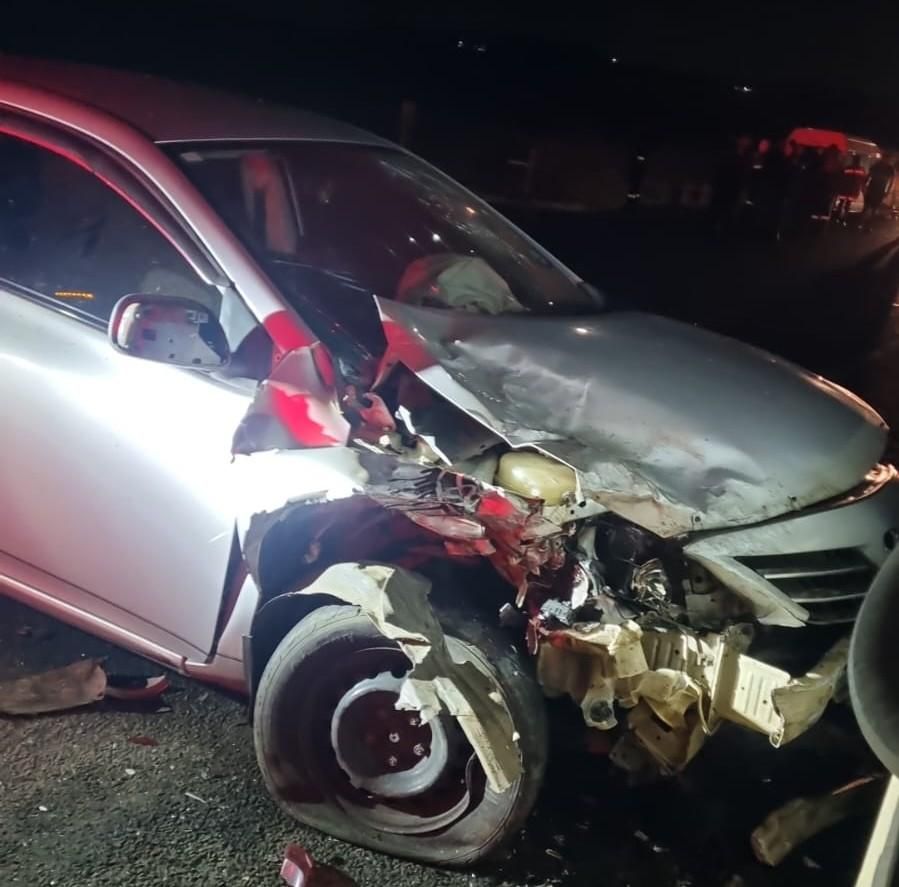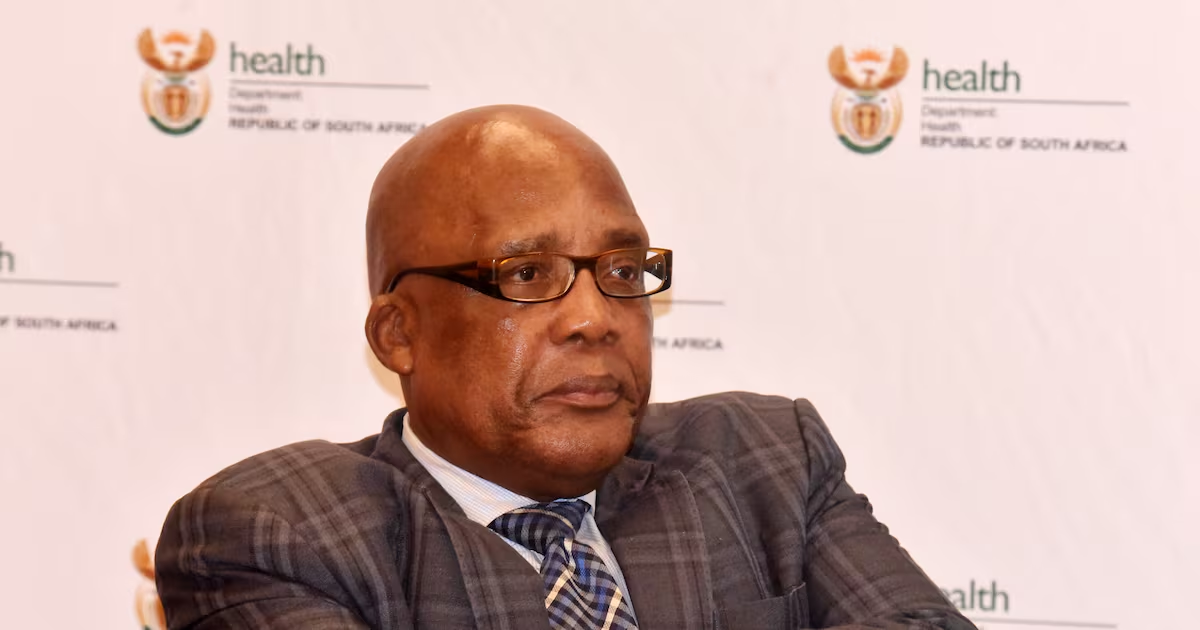
The fatal crash involving health minister Aaron Motsoaledi’s official vehicle has again forced South Africa to confront a recurring question: have blue-light brigades become a law unto themselves?The case differs from the 2023 assault involving deputy president Paul Mashatile’s VIP protection officers. Motsoaledi, his driver and close protection officer reportedly stopped and remained at the scene until emergency services and the police arrived. Investigators have not found that the minister’s driver acted unlawfully. But the deaths of Beauty Shoperai, 37, and her baby on the N1 near Bela-Bela in Limpopo have reopened a wider debate about the culture, conduct and accountability of VIP protection units on public roads.Shoperai and her child died after Motsoaledi’s official vehicle hit them last week while she was apparently crossing the highway to reach the scene of an earlier crash in which her husband, Paul Masunda, had been killed. That first crash allegedly involved an off-duty police officer. The Independent Police Investigative Directorate (Ipid) has taken over the investigation because both drivers involved are police officers.With two culpable homicide cases under investigation, the legal question now turns on the drivers’ conduct: their speed and reaction time, as well as visibility and road conditions, and whether they drove with the care expected of police officers, even while transporting a senior office-bearer.The crash has deepened the family’s grief and raised practical questions about the state’s responsibility. Shoperai, her husband and their child died after what began as a family trip to an informal bus stop for a journey to Zimbabwe. Her brother, Charles Shoperai, has said the family is struggling to repatriate the bodies for burial at home and has raised concern about the surviving child.Whatever the final legal findings, the government has a moral obligation to communicate clearly with the family, support the surviving child and assist where appropriate with the practical aftermath of the deaths.Motsoaledi visited the family on Friday and described the incident as devastating. He said he contacted the police after the crash, after which officers took over the scene.The DA has called for a full, independent and transparent investigation into both crashes, including the conduct of all drivers, the speed of the minister’s vehicle and whether it used blue lights.Those questions matter because VIP protection vehicles do not move through public roads like private cars. Trained police officers drive them, political office-bearers sit in them and their conduct carries the authority of the state.The Motsoaledi crash lands in a political environment still shaped by the Mashatile blue-light scandal. In July 2023, members of the police VIP presidential protection unit attached to Mashatile were filmed assaulting motorists on the N1 near Johannesburg. In November 2025, the Randburg magistrate’s court dismissed an application by the eight former bodyguards to have the charges dropped. Ipid said they would continue to face charges of malicious damage to property and assault with intent to cause grievous bodily harm. Three accused also face charges of pointing a firearm, while two face additional charges of reckless and negligent driving.That case showed how slowly accountability can move when officers assigned to senior politicians face criminal charges. It also hardened the public perception that blue-light units enjoy protection through proximity to power.That perception now frames the Motsoaledi crash. The facts differ, but the public question remains similar: when a VIP protection officer harms civilians, does the system respond with the urgency and transparency it would demand from an ordinary driver?VIP protection costsAccording to figures reported from a parliamentary reply by acting police minister Firoz Cachalia, the police spent R2.29bn on VIP protection for government officials in 2024/25. A further R1.42bn went to static protection services. Projected spending for VIP protection in 2026/27 reportedly stands at R2.46bn with R1.6bn projected for static protection.Ordinary South Africans face high levels of violent crime, slow police response times and overstretched stations. Against that backdrop, heavily protected politicians moving through traffic in blue-light convoys have become a symbol of unequal citizenship: one standard of safety for the political class, another for everyone else.That is why the Motsoaledi crash has become more than a culpable homicide investigation. It now tests whether the state can distinguish legitimate protection from impunity.Ipid will investigate the conduct of the police drivers involved in both crashes. Prosecutors will then assess the docket and decide whether to prosecute. If the evidence shows negligent driving caused death, the driver can face culpable homicide charges. The police can also institute internal disciplinary proceedings, but that process should not replace the criminal process.The use of blue lights does not create immunity. Even where a state vehicle has authority to use warning devices, the driver must still drive with due regard for the safety of others.The point is not that Motsoaledi’s driver has already been proved reckless. The available evidence does not support that conclusion. The point is that the case tests whether the state has learnt anything from previous blue-light controversies.The public should know whether the vehicle used blue lights, how fast it travelled, what the road conditions were, what protection-service protocol required and whether any officer failed to act with the care expected of a trained police driver.The family should also not have to plead publicly for help to bury their relatives. A state vehicle was involved in a crash that killed a mother and child. Whatever the final legal findings, the government has a moral obligation to communicate clearly with the family, support the surviving child and assist where appropriate with the practical aftermath of the deaths.Blue-light protection may be necessary in some cases. Ministers and senior office-bearers can face genuine security risks. But protection cannot become entitlement, and speed cannot become a marker of status.For the public to accept the need for VIP protection, the state must show that those who carry its authority on the road also answer to its laws. In the Motsoaledi case, that means a transparent Ipid investigation, a clear prosecutorial decision and consequences if the evidence shows negligence. Anything less will reinforce the suspicion that blue-light brigades answer first to power and only later to the public.
ANALYSIS: Motsoaledi crash puts blue-light brigades back in the spotlight
After triple tragedy, Shoperai family and SA need to know whether there was negligence
1,009 words~5 min read