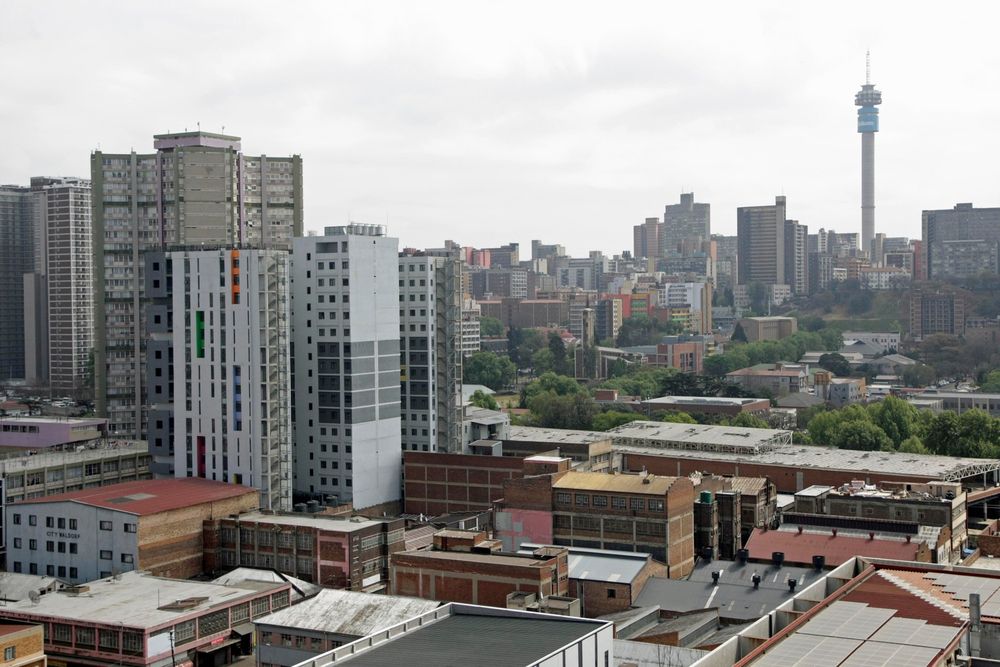
Cape Town loves to cite its 75% pro-poor infrastructure claim. It’s a powerful number, albeit a contested one. However, as Helen Zille positions herself to bring DA-style governance to Johannesburg, the more revealing comparison is not over what Cape Town spends on the poor. It’s about what Johannesburg doesn’t manage to spend at all. Cape Town’s 75% claim is real, but it’s necessary to read the small print. The city’s total budget sits at about R84bn. Of that, only about R12.9bn (about 15%) goes to capital expenditure (long-term infrastructure spend on water, roads, sanitation and settlements). The city says 75% of that capital slice is pro-poor. Taken together, that’s around R9.7bn, or only 11.5% of the total budget. In short, Cape Town is not spending three-quarters of its budget on the poor. It’s spending about R1 out of every R9 on infrastructure it classifies as primarily benefiting lower-income communities. That’s a meaningful but very different claim. The investments are real; major sanitation upgrades in Khayelitsha, MyCiTi expansions connecting the Cape Flats to employment hubs; and settlement upgrades in Philippi and Mitchells Plain. Critics rightly question the methodology where a wastewater plant near a poor area may serve many income groups. But the core debate in Cape Town is about distribution and fairness, not about whether the money is landing at all. Johannesburg’s budget (about R90bn to R95bn) is comparable in scale to Cape Town’s. The gap is not in resources. It’s in what happens to them. Year after year, National Treasury data and audited financial statements have flagged billions in irregular and unauthorised expenditure and fruitless and wasteful spending. These aren’t simply bureaucratic categories. Irregular expenditure means procurement rules were broken. Fruitless and wasteful expenditure means money was spent that reasonable care could have saved in penalty payments, abandoned projects and failed contracts. Year after year, National Treasury data and audited financial statements have flagged billions in irregular and unauthorised expenditure and fruitless and wasteful spending. The backdrop to these figures is not abstract. Johannesburg residents face recurring water outages, potholed roads, interrupted waste collection and disputed billing, even as substantial sums cycle through contracts for water, road maintenance, fleet management and security. The paradox is stark. Large allocations, yet deteriorating infrastructure. A particularly telling indicator is maintenance spend. Municipal finance experts consistently flag under-investment in repairs as a slow motion disaster as assets degrade, emergency interventions cost more, and outsourced contracts multiply. In Johannesburg, that cycle appears well advanced. Both cities have critics. Cape Town’s pro-poor claim invites legitimate scrutiny about whether redistribution is deep enough and fast enough given apartheid’s spatial legacy. But the nature of the critique is fundamentally different. In Cape Town, the argument is about who benefits. In Johannesburg, the argument is about whether anyone benefits at all. Cape Town’s controversies centre on the pace and equity of investment in historically disadvantaged areas. Johannesburg’s controversies centre on institutional instability, procurement failures and the persistent sense that large disbursements yield too little measurable improvement. Zille’s pitch for the Johannesburg mayoralty will inevitably rest on Cape Town’s record. The case is stronger than critics allow, but also more qualified than supporters admit. What Cape Town demonstrates is that a municipality can maintain clean audits, direct capital spending toward poorer areas and manage large infrastructure programmes without the systemic leakage that characterises Johannesburg. Whether it is doing enough, and for whom, is a fair question. What Johannesburg demonstrates is what happens when fiduciary discipline breaks down; when the gap between budget allocation and service delivery becomes a canyon; and when procurement becomes a source of political contestation rather than public benefit. These are different conversations at very different stages of a governance crisis.• Cachalia, a businessman and management consultant, is a former DA MP and shadow public enterprises minister, and chaired De Beers Namibia.
GHALEB CACHALIA | Cape Town and Joburg offer different governance lessons
Audit outcomes highlight stark contrasts in city governance
636 words~3 min read