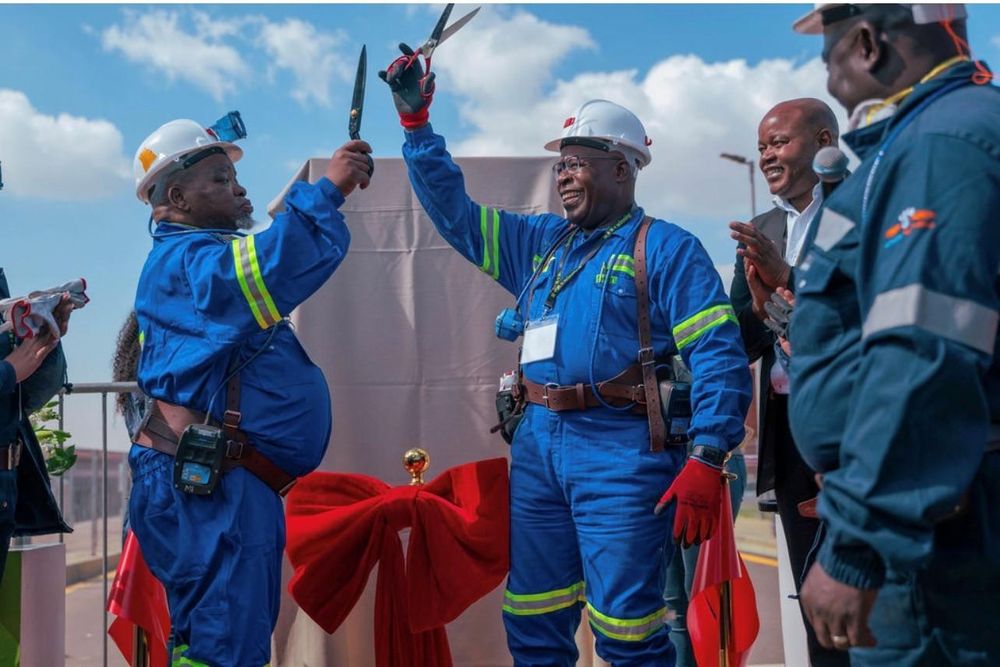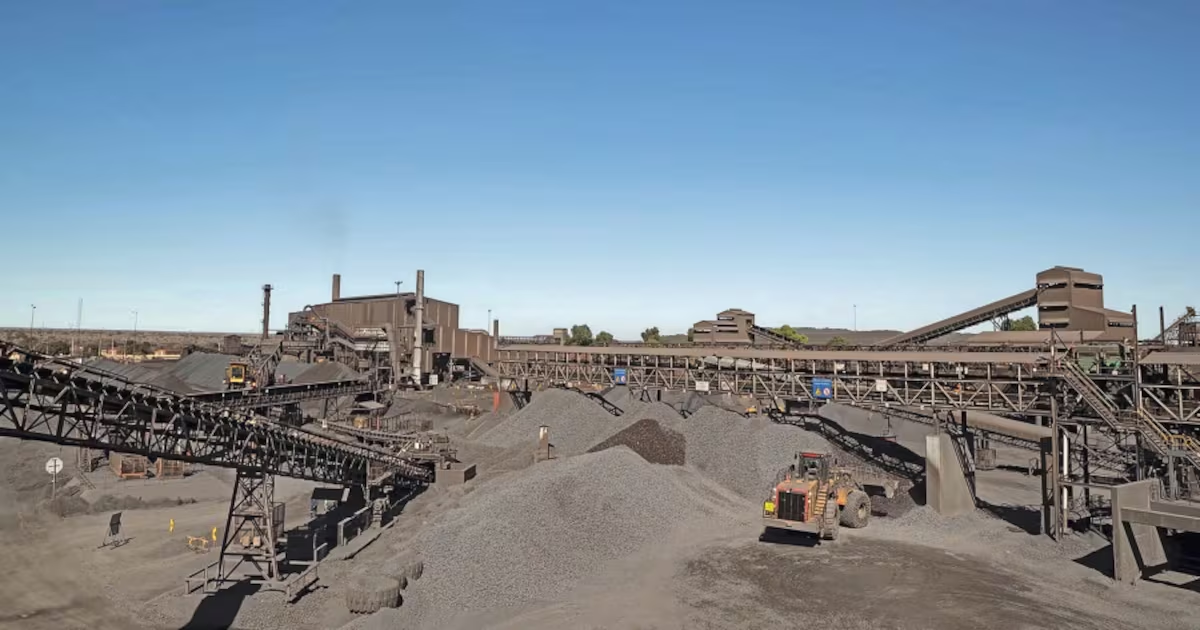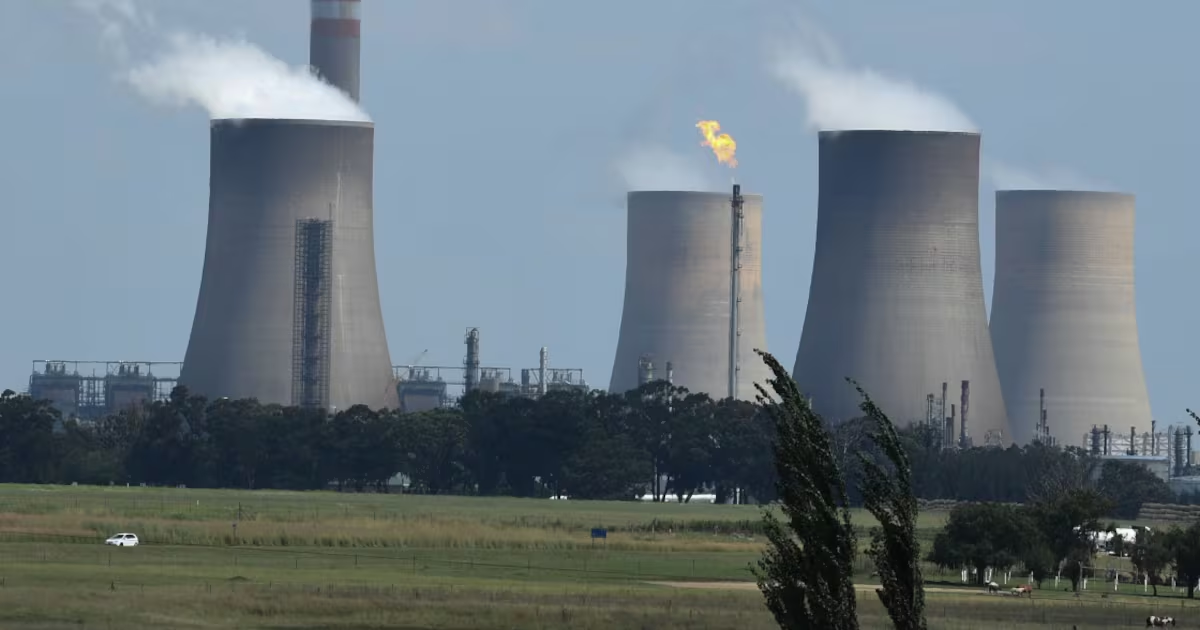
Efforts by the government to embed coal into South Africa’s long-term critical mineral strategy are moving at pace, mining minister Gwede Mantashe told guests attending the launch of Exxaro’s new Matla coal mine.The Mpumalanga mine, which opened on Friday after a 10-year hiatus to install safer, longer-lasting shaft infrastructure, will supply Eskom with coal-fired power for another 17 years, emphasising the role that fossil fuels continue to play in the country’s energy plans.In his speech to mark the reopening of the mine, Mantashe said recent moves to beneficiate coal will aid the mineral & petroleum resources department’s mission to frame coal as a critical mineral.An ongoing programme by Mintek to recover critical minerals from coal waste and turn coal ash into building materials has laid the groundwork for increased coal beneficiation, he said.The launch in March of Sasol’s new destoning plant, which effectively increases coal beneficiation by purifying coal to improve its quality before it is exported, added to the beneficiation drive, Mantashe said.“Despite our long history in coal mining — and despite continued investments in new shafts — we are told to abandon coal in favour of alternatives whose resilience and effectiveness are yet to be fully proven at scale. We are told to choose ecology over the economy, as though the two are mutually exclusive. Yet, in reality, they are mutually reinforcing.“In direct contrast to these assertions, our critical minerals and metals strategy recognises coal as a strategic resource because it continues to create employment for thousands of people and sustains the livelihoods of millions of South Africans,” said Mantashe.A little more than a year ago, the department published a list of critical minerals, mined commodities recognised by the state as strategically significant and thus worthy of state-backed investment.In most of the world, the term relates to the minerals required for clean energy technology, but South Africa’s list includes coal, one of the dirtiest fuels. Mantashe has consistently defended coal’s importance in exports and jobs, particularly for black South Africans.Mantashe said Matla’s reopening is a bellwether for further expansion in the coal industry.“After decades of [Matla] contributing to the country’s energy needs and economic growth, we are gathered here today not to close the mine, but to expand it — thus advancing energy security and extending its lifespan,“ he said.“Our studies confirm that, at current production and consumption levels, the country possesses sufficient coal reserves to sustain production for at least another 150 years and beyond.”The revamped Matla mine is part of a larger, R5.24bn investment project by Exxaro to extend access to the asset’s coal reserves.Last month, in the build-up to its opening, Exxaro announced it had concluded a new long-term agreement to supply coal from Matla to Eskom’s power plant for another 17 years.It will supply about 9.3-million tonnes of coal a year. As part of the deal, Eskom is contractually obligated to fund the mine’s costs to ensure the lowest possible overall fuel cost.
Matla coal mine relaunch bolsters Mantashe’s critical mineral strategy
Mining minister cites new beneficiation initiatives and long-term supply agreements
489 words~2 min read