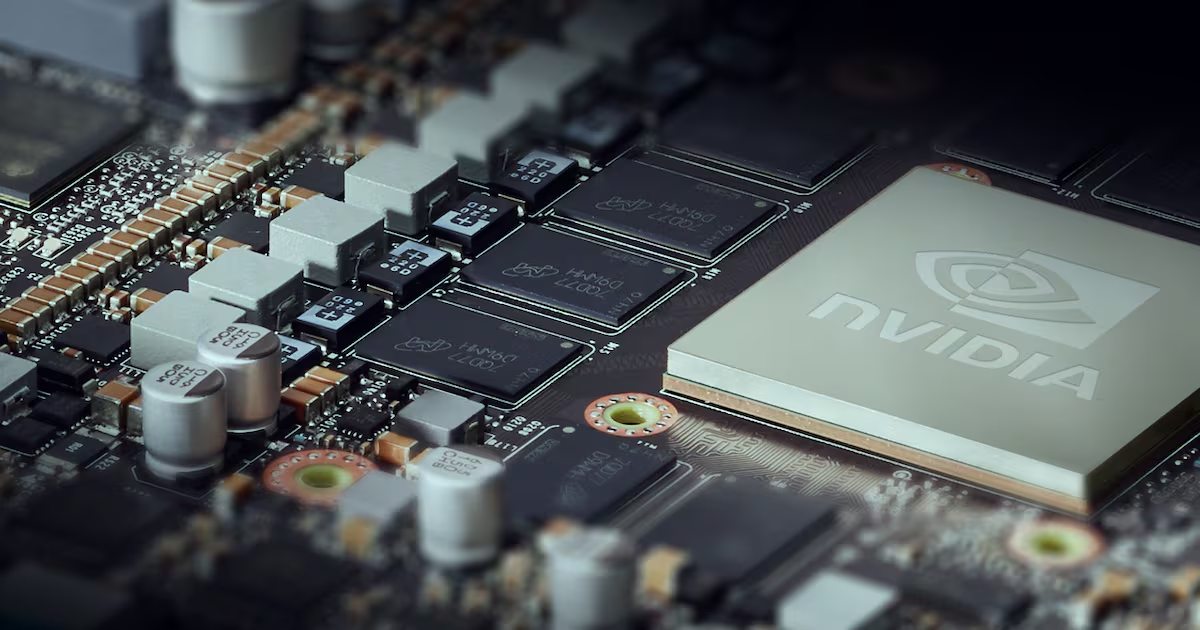
Smartphone retailers are bracing for higher prices as surging AI-driven demand for microchips constrains supplies across the electronics manufacturing sector. The rapid expansion of data centres worldwide to support growing AI use has absorbed much of the supply of memory chips. Rising demand has tightened availability for smartphone manufacturers relying on chipmakers such as Samsung and SK Hynix, driving component prices higher.Device financing business PayJoy expects smartphone prices to increase from the second quarter of 2026. “The demand for AI chips has gone through the roof. It’s now putting pressure on the chips that are needed in mobile phones,” Shaun Durandt, head of business development at PayJoy, told Business Day. Supply constraints for higher-end components affect the business of companies such as PayJoy, which aim to get technology into as many hands as possible.PayJoy is a financial technology (fintech) company that offers smartphone financing to underserved consumers in emerging markets, including South Africa. The demand for AI chips has gone through the roof. It’s now putting pressure on the chips that are needed in mobile phones.— Shaun Durandt, head of business development at PayJoyThe service enables consumers to buy a smartphone with a minimal deposit and pay the remaining balance over three, six or nine months. For mobile operators such as Vodacom, the situation threatens its push to increase the number of internet-enabled devices using its network and, therefore, data usage. The group has a smart device penetration of 68.6%, having added 19.6-million smartphones in the year ended March. Yet, more than 90-million of the group’s combined 237.3-million customers lack a smartphone. “The memory cost issue will basically increase the cost prices of phones,” Vodacom CEO Shameel Joosub said at the release of the group’s earnings report. The company is securing stocks of devices at old prices and is fighting to get more low-cost devices that can go online, he said.“But your underlying cost of a smartphone will rise. Memory costs … we expect will push some costs — like those of PCs and laptops — to more than double in some instances. In smartphones, we haven’t seen the full effect of that yet, but we expect prices to rise more,” Joosub said. PayJoy has a customer base of more than 20-million, with its South African operation having grown to about 2-million in four years.Durand said PayJoy’s financial model helps mitigate the immediate “pinch” of higher retail prices for the average consumer. The group’s platform and facility “just softens that a little bit more” by providing a manageable way to absorb the increases through flexible rental instalments rather than a single, larger cash payment. The most significant market segment for PayJoy is devices priced at R2,000-R3,500. The company offers phones with a price tag of as much as R15,000, though that range accounts for a minute portion of sales.Durand highlighted the paradox that manufacturing costs are rising just as consumer expectations for high-end features are increasing: manufacturers are struggling to maintain the R2,000 “resistance level” while still packing phones with enough technology to satisfy savvy users.As users realise the benefits of mobile connectivity, they quickly demand better hardware. “The realisation [of budget-conscious consumers] is now starting to come — I need something with a bit of a bigger processor; I need something with more memory; I need something with a bigger screen,” he said.
AI chip boom threatens smartphone price hikes in SA
Vodacom and PayJoy brace for cost pressures as memory prices surge
554 words~3 min read