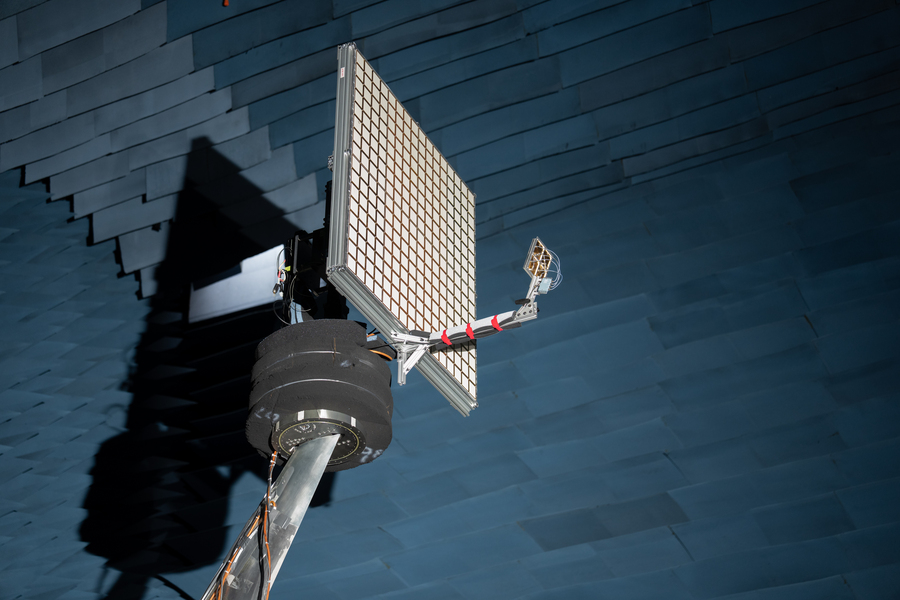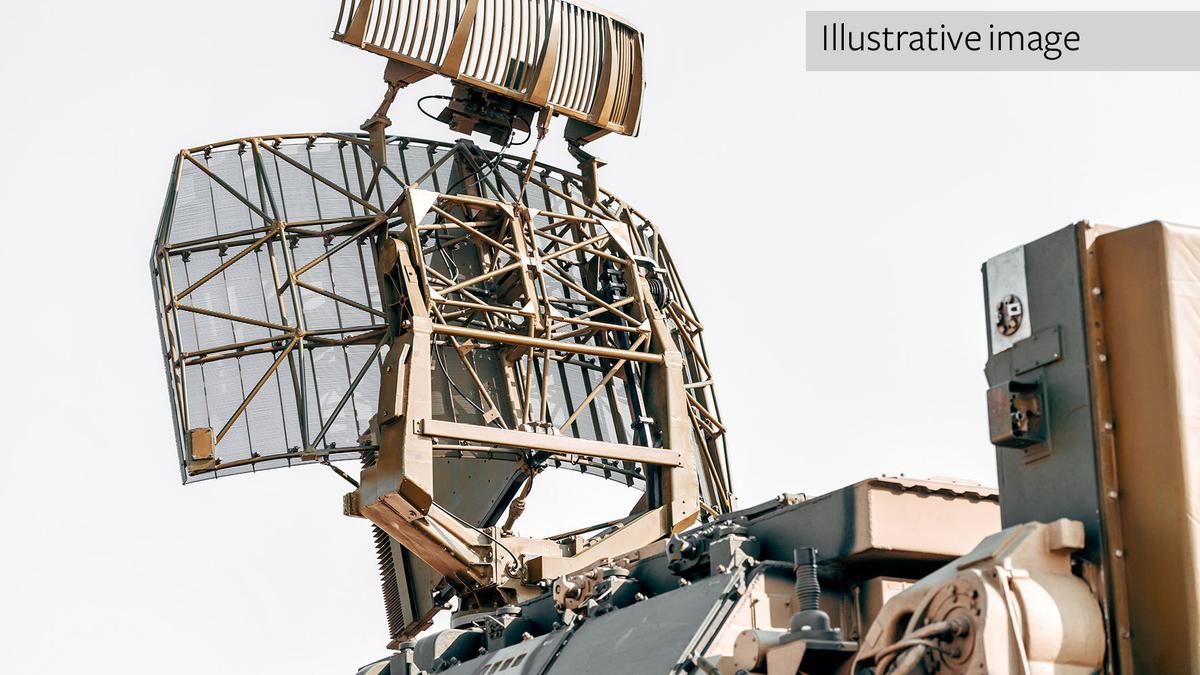
As modern warfare increasingly becomes dependent on fast and secure communication, researchers at the Indian Institute of Technology, Kanpur, are working on advanced antenna technologies that could strengthen India’s defence systems while also finding civilian applications. The institute is developing new kinds of antennas for military aircraft, vehicles and communication systems using “metamaterials”, specially engineered materials that can manipulate radio waves in unusual ways. Conventional VHF and UHF antennas, widely used in military communication, are often large, heavy and difficult to integrate into compact platforms. IIT-Kanpur is designing antennas that are smaller, lighter, low-profile and mechanically more robust, while maintaining long-range communication capability.Another related project at the institute focuses on ultra-wideband antenna arrays for military personnel and vehicles. These antennas are designed to support high-speed data transmission, secure communications and reliable connectivity across difficult terrains and combat environments. They can also significantly improve the radar systems used for surveillance, target detection and tracking.Researchers are using advanced concepts such as metamaterial-inspired structures and artificial magnetic conductors to improve antenna gain, bandwidth and directional performance, while keeping the systems compact and lightweight.Beyond defence, the technologies have strong dual-use potential. Compact and efficient communication systems could be valuable in disaster management, emergency response networks and next-generation connected vehicles.The work reflects a broader trend in Indian research institutions that are increasingly contributing to strategic technologies that have both military and civilian significance.Colour-coded chargingScientists at the Centre for Nano and Soft Matter Sciences have developed a new material that can both store energy and visually indicate how much charge remains in a device by changing colour. The material changes from blue when charged to transparent when discharged, allowing users to instantly know whether the device needs recharging. Researchers say this could pave the way for smart energy-storage devices that can also function as visual indicators.Most present-day electronic devices either store energy or display information, but rarely perform both functions together. The Bengaluru researchers addressed this by developing a special oxygen-deficient compound made from molybdenum and tungsten oxides. The science behind the material lies in tiny gaps created by deliberately removing some oxygen atoms from its structure. These gaps allow ions to move more freely within the material. As the ions move during charging and discharging, the material’s electronic structure changes, producing a visible colour shift.The research team, led by Dr Ashutosh Kumar Singh, used a solvothermal synthesis process to create the material. They also tested it in electrochromic devices — materials that change colour when electricity passes through them.According to the researchers, large-area devices made using the material showed strong colour contrast while consuming relatively less power. The material also performed well as a supercapacitor electrode, showing good energy-storage capability and stability even after 10,000 charge-discharge cycles.The devices continued functioning under bending and varying environmental conditions, suggesting possible use in flexible electronics and smart windows. During demonstrations, the device was able to power an LCD timer and light up an LED.Published on May 18, 2026
Light, compact antennas
IIT-Kanpur develops lightweight, compact antennas using metamaterials for enhanced military communications and civilian applications.
490 words~2 min read