Pain point: Oil dynamics
| Photo Credit:
narvo vexar
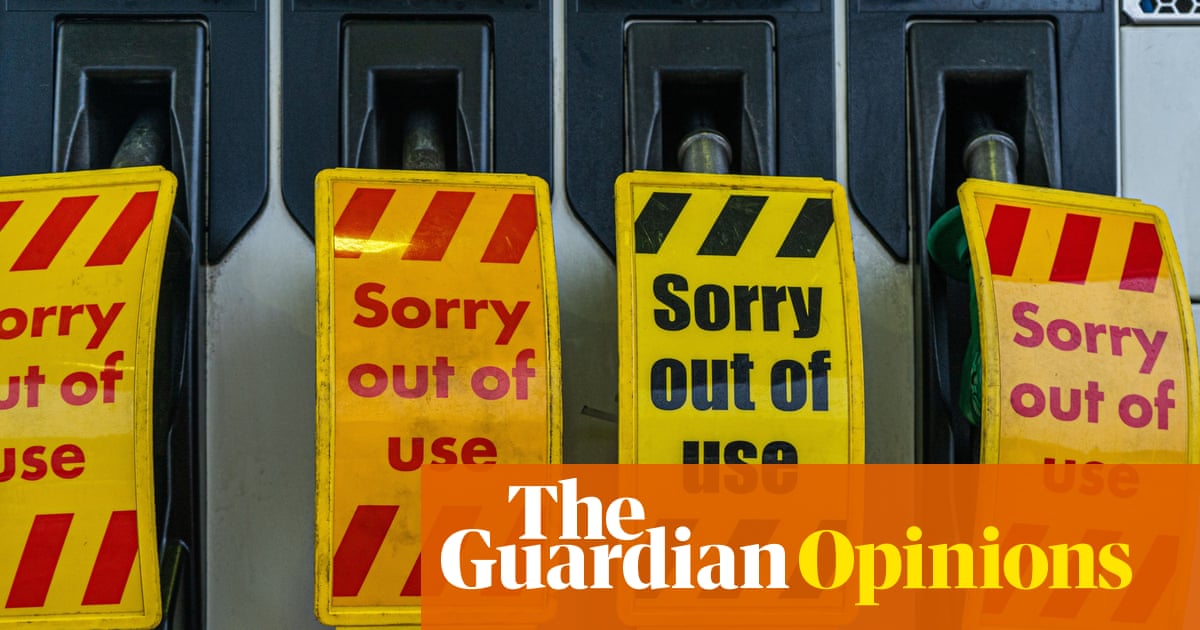
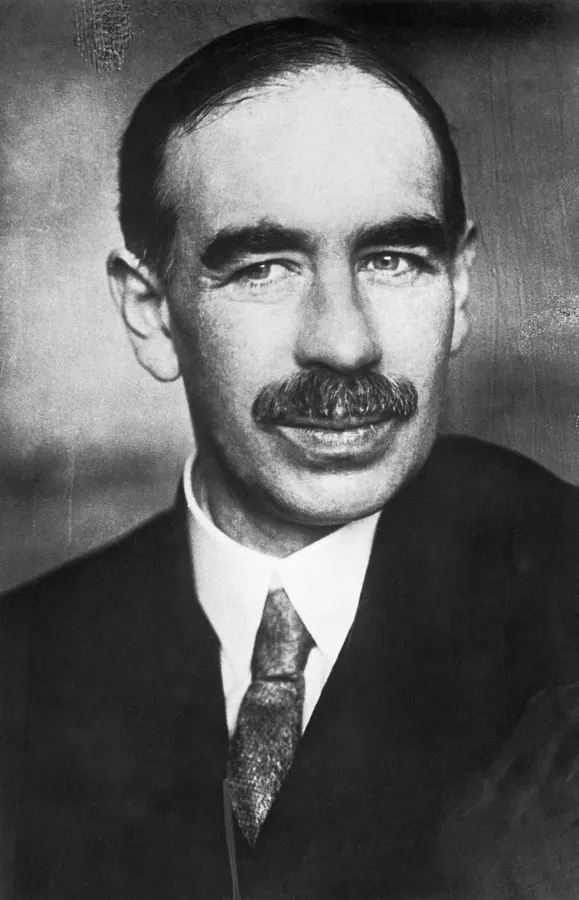
In July 1925, Keynes published a pamphlet titled The Economic Consequences of Mr. Churchill. Three months earlier, the Chancellor had returned Britain to the gold standard at the pre-war parity. The decision was defended in elevated language. Sound money, the dignity of sterling, the City of London restored. It was politically irresistible. It was, as a great many economists had warned and as Churchill himself later conceded, the worst economic mistake of his life. Deflation cost British industry its competitiveness. Unemployment rose. The General Strike arrived the next year. The narrative had been beautifully constructed. It then took several decades to dismantle.This is the recurring shape of the problem.Through the third month of the Israel-Iran war, with crude past one hundred dollars a barrel and India importing some forty-five per cent of its crude through the Strait of Hormuz, the price at the Indian pump did not move. Globally, retail petrol rose some fourteen per cent. Private Indian retailers like Shell and Nayara lifted their prices. The public sector oil marketing companies held the line. A three-rupee hike arrived only this Friday morning, ending a freeze that had held since April 2022. Delhi petrol moves from ₹94.77 to ₹97.77, diesel from ₹87.67 to ₹90.67, with the Prime Minister appealing that citizens economise on travel and prefer the metro.The interesting question is not why the prices have moved only this week. It is why they did not move for the better part of three months. The answer is in the press releases.Three propositionsConsider three propositions.First, a political narrative, once announced, is its own constraint. The government had spent three months explaining that, despite global headwinds and one of the largest supply shocks in living memory, the Indian consumer was being shielded. The narrative was offered as political achievement. To reverse it within weeks of constructing it was not a question of economics, only of timing. The price could not move while the boast was fresh. Pacta sunt servanda, the Romans observed about treaties. The same instinct applies, less honourably, to slogans. A government that has loudly defended a position acquires a sunk cost in continuing to defend it.Second, the published rule is symmetric. Whereas, the political economy is not. The Kirit Parikh Committee in 2010 recommended that prices of petrol and diesel be “market-determined, both at the refinery gate and at the retail level”. Petrol was formally deregulated on June 26, 2010, diesel on October 19, 2014. What happens in practice is that prices are deregulated on the way down and quietly re-administered on the way up. The legal text and the political instinct do not point in the same direction.Third, the cost is not abolished, only relocated. Excise reductions, LPG and fertiliser subsidies and balance-sheet losses at the OMCs together amount to ₹40,000-45,000 crore a month, about 1.2 per cent of GDP. The Centre’s ₹1 lakh crore stabilisation fund will, at this run-rate, last ten weeks. On April 1, the commercial 19-kg LPG cylinder in Hyderabad was raised by ₹214.50, to ₹2,321; the domestic 14.2-kg cylinder remained at ₹965. The restaurant, the dhaba, the small manufacturer pay what the household does not. A pump-price freeze defended on the front page is a tariff on commerce levied on the inside pages.Familiar patternThis pattern is not unique to fuel. The onion export ban returns at every election. The political narrative is the urban housewife’s kitchen budget, the cost is borne by the farmer in Lasalgaon. Farm loan waivers, repeated across states, are described as relief. The recurring damage to rural credit discipline is mentioned only in actuarial footnotes. Free electricity to agriculture is presented as support for the small farmer. The bill is paid by groundwater that will not be there in 2040.In each case, the sequence is the same. A politically attractive decision is taken in a moment of pressure. A narrative is built around it. The narrative congeals. The reversal becomes politically costlier than the original mistake.There is an old caution worth recalling. Burke wrote that prudence in statecraft is the chief, not the lowest, of the political virtues. Ex post discretion is always tempting. Kydland and Prescott, in 1977, named the cost of yielding to it the time-inconsistency problem. The temptation in a crisis is to claim a victory the underlying economics has not delivered. The longer-run consequence is a country that finds it increasingly difficult to do the right thing because it has already announced, in elevated language, that it has been doing the right thing all along.The wise course in a supply shock is not to boast that the consumer has been shielded. It is to say, quietly and with figures, that an adjustment is being managed. Adjustments can be revised. Boasts cannot. Tacitus, surveying the early Principate, observed that Augustus had retained the names of the old magistracies (eadem magistratuum vocabula) while quietly emptying them of substance. We have learnt, down the years, to perform the inverse manoeuvre. We retain the economic substance of administered pricing and dress it in the language of the market. The dressing is what we then have to defend. The defending, in time, takes the place of the doing.Sinha writes on macroeconomics and geopoliticsPublished on May 18, 2026