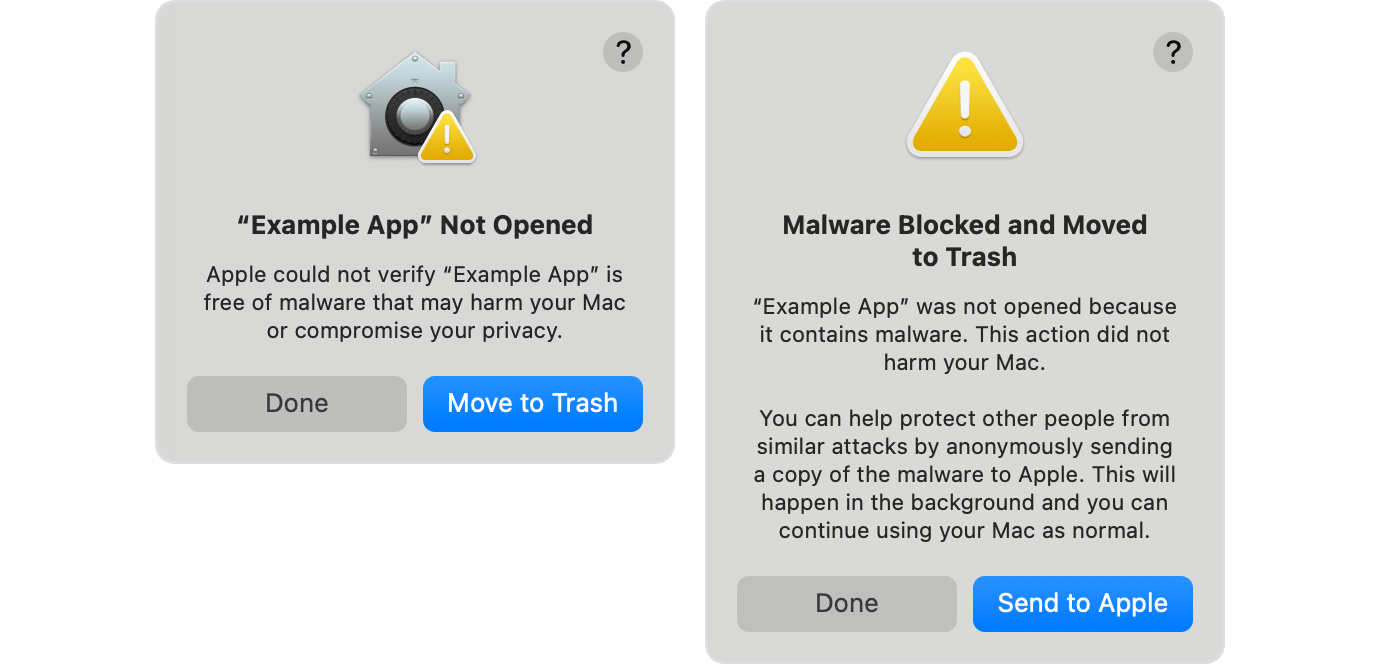
Gatekeeper gets in the way of non-notarized software.
One of the big differences between the Mac and Apple’s other platforms is that, by design, it’s an old-school “general computing” platform—you can install and run whatever software you want, from any source.
That’s a good thing. It’s what makes the Mac the Mac. But it also makes the Mac more vulnerable than Apple’s other platforms, where the company can strictly limit what software is allowed to run on the device behind layers of developer memberships, code signing, scanning, and App Store approval.
For the last decade or more, as the Mac has become more popular, Apple has been trying to ratchet up Mac security. But because the Mac is open, securing it brings some unique challenges, as I found out when I got a chance to discuss these issues with some members of Apple’s security team recently.
Back in 2018, the company introduced notarization for apps, a system that used developer code signing and automated scans to provide a slightly increased level of scrutiny and security. While you can run apps that aren’t notarized on your Mac, it’s become increasingly difficult to do so—on purpose.