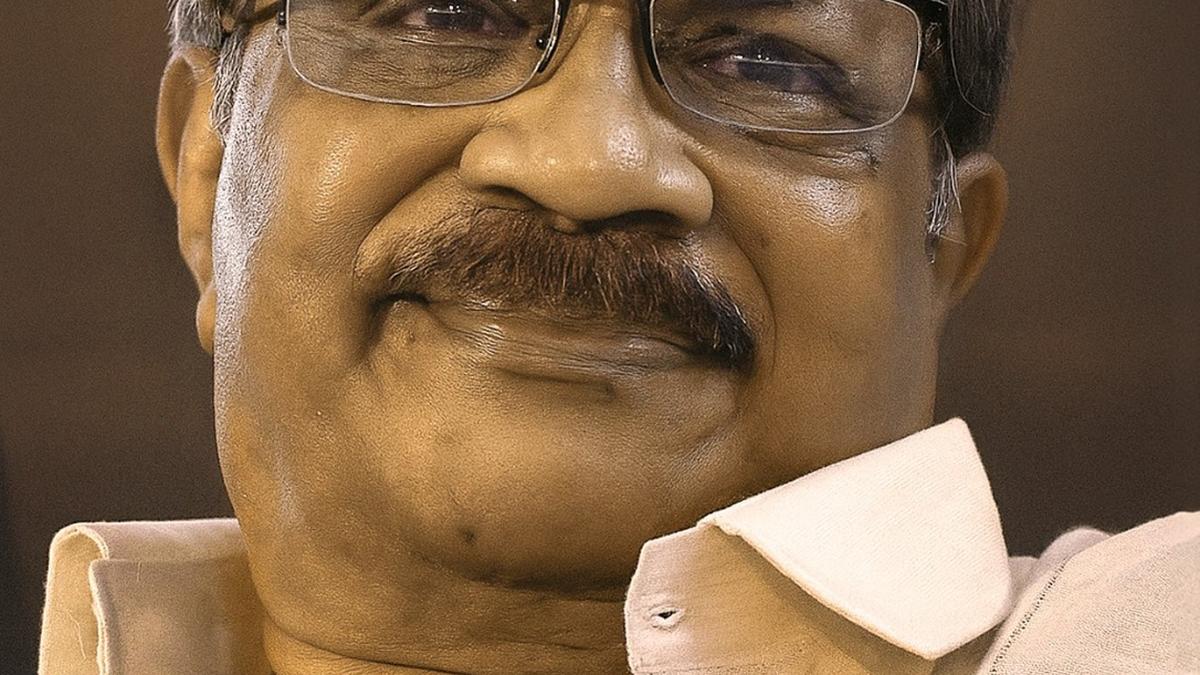
Kavalam Madhava Panikkar was many things: historian, litterateur, administrator, diplomat and strategist. That a man of such range has waited this long for a serious biography is itself a commentary on how selectively India remembers those who shaped it.In A Man for All Seasons, Narayani Basu has now given us a work worthy of a man who operated at the intersection of ideas, administration and diplomacy during India’s most consequential decades before and immediately after independence.Basu traces Panikkar’s intellectual formation from Kerala and Madras to Oxford, where questions of nationalism, empire and identity were urgently debated. His seminal studies of India’s encounters with the Portuguese and the Dutch analysed colonial expansion through the lens of Indian maritime and political traditions. Basu also gives due weight to Panikkar’s parallel life as a Malayalam writer of immense range and distinction.On his career in the princely states, the biography is especially illuminating. A connection through Colonel K.N. Haksar drew him into the court of Maharaja Hari Singh of Kashmir, and he went on to serve as Secretary to the Chamber of Princes, as Foreign Minister of Patiala and as Prime Minister of Bikaner. These years among rulers who were by turns cooperative, self-serving and spectacularly licentious gave Panikkar a remarkable grounding in managing political complexity.Basu writes candidly about Panikkar as a private man, recounting two intense extramarital relationships during his time in Paris and the impact one of them had on his spirited wife Gouri. Panikkar emerges as a brilliant and complex personality who, despite being a committed secularist, unfashionably believed that India’s cohesion rested on a civilisational continuity in which Hinduism functioned as a binding cultural force.China sojournThe biography’s most searching passages concern Panikkar’s ambassadorship in Beijing. His 1945 work India and the Indian Ocean had already marked him as a strategist who understood sea power and geopolitical depth in ways few non-Western contemporaries matched. Basu’s account of how Panikkar and Nehru never fully reckoned with Chinese nationalism, its memory of unequal treaties and the significance China attached to British-era agreements over Tibet, to which it had never consented, is convincingly made.What the biography compels the reader to ask is why Panikkar failed to read the Chinese mind when his own writing showed he had understood China so well. In his book In Two Chinas: Memoirs of a Diplomat, he wrote with prescience that the Communists had “converted what was an inchoate mass into a united nation, capable of organising and bringing into use the immense resources of China,” and that “by this process China had become in fact what it had always claimed to be, a great power.”Here was a China carrying a bitter memory of its century of humiliation. As a victim of colonial depredation, India was uniquely positioned to find common cause with that grievance and engage on terms of mutual recognition as shared victims of imperialism.That this opportunity was missed is the biography’s most haunting aspect. Panikkar was not merely an ambassador but a historian who rightly identified China’s nationalism as a civilisational reckoning with a century of imperial humiliation. He had developed personal rapport with both Mao and Zhou.A Nehru more focused on securing India’s own frontiers would have worked far more closely with Panikkar to translate that understanding and rapport into a durable border settlement, deploying a man uniquely equipped for that task.This points to the one significant gap in an otherwise brilliant biography. Basu does not address the institutional poverty beneath the personal failures she documents. Nehru approached foreign policy with a well-informed amateur’s self-confidence, making it on the fly, and found in VK Krishna Menon an equally restless partner in global overreach. As Jairam Ramesh’s biography of Krishna Menon, A Chequered Brilliance, makes vivid, the two men drove India into an exhausting range of international engagements: the Korean War, the Suez Crisis, Palestine and disarmament negotiations.Foreign policy gapsWhile India had gifted foreign policy minds in Panikkar and KPS Menon, it lacked the institutional depth to back them, with virtually no China scholar of repute in its entire establishment, the sole exception being VV Paranjpe, a diplomat and translator at the Indian mission in Beijing in the 1940s and ‘50s. India’s most significant missions were directed toward London and Washington, leaving its China policy threadbare at its institutional core.Vijay Gokhale, a former Indian Ambassador to China, makes the consequences of this painfully clear in The Long Game: How the Chinese Negotiate with India.Yet this omission does not diminish what Basu has achieved. This is possibly the finest biography written of an Indian of singular consequence, and its ability to hold the reader’s attention across more than 800 pages says a great deal about both subject and biographer. For anyone seeking to understand how India was made, who made it, and what opportunities were seized and squandered in the making, this book is essential reading.The reviewer is a columnist exploring the intersections of state, society, and history. He taught public policy and contemporary history at IISc, BengaluruCheck out this book on AmazonTitle: A Man for All Seasons: The Life of K.M. PanikkarAuthor: Narayani BasuPublisher: Context/WestlandPrice: ₹1,399Published on May 17, 2026
A life at the hinge of history
Discover the compelling biography of K.M. Panikkar, a pivotal figure in shaping modern India, by Narayani Basu.
854 words~4 min read