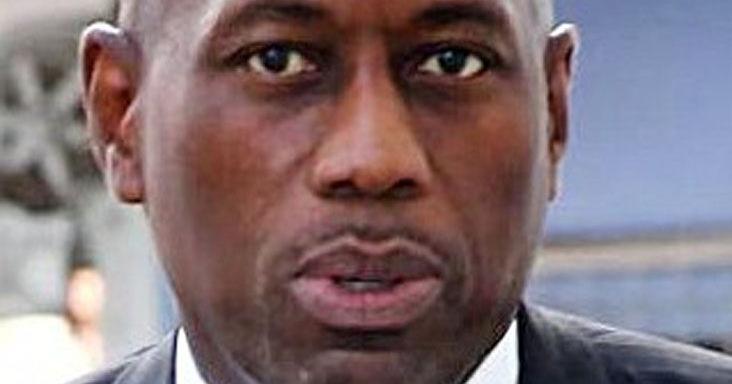
The Office of the Director of Public Prosecutions (ODPP) is facing such severe staff shortages that it cannot assign prosecutors to new criminal courts, even as the Judiciary expands the High Court’s Criminal Division to clear a mounting backlog of cases.The disclosure was made by DPP Roger Gaspard in a letter dated April 30 to acting Registrar of the Supreme Court Kimberly Prescott, in which he stated his office was simply not equipped, from a staffing standpoint, to support the assignment of three or four new High Court judges expected to begin handling backlog matters from early May.
Chief Justice:Ronnie Boodoosingh
Gaspard sounded the staff shortage warning in response to a letter sent to him by Prescott on April 8, advising that three additional judges would be assigned to the Criminal Division of the High Court in early May and that the development would have corresponding operational implications for the ODPP.“Permit me to say that the ODPP remains steadfast in its constitutional mandate and unwavering in its commitment to the efficient administration of criminal justice,” Gaspard wrote. “However, it is precisely from that vantage point of institutional responsibility and practical experience...that I must, with candour and regret, indicate that we are currently unable to assign prosecutors to handle these additional courts.”In his letter to Prescott, a copy of which was obtained by the Sunday Express, Gaspard stressed that the problem is not resistance on the part of his office.“Our constraint is not one of unwillingness or recalcitrance, but rather of staff capacity,” he said, adding that the ODPP “is, and has for some time, been operating under acute prosecutorial staff deficits”.Time needed for trainingGaspard outlined the depth of the problem, noting that in the past three years, three deputy DPPs and two assistant DPPs were promoted to the Judiciary. As a result, “at present there are no Deputy DPPs and all three posts for the position of Deputy Director are vacant”, he pointed out.Of the six established posts for assistant directors of public prosecutions, only three are filled, with two appointments made recently, he said.He further pointed out that while recruitment falls under the remit of the Judicial and Legal Service Commission (JLSC) and the Office of the Attorney General, progress has been slow.“While I am advised that advertisements have recently been issued...the timeline for appointments remains uncertain,” he lamented.Even then, he cautioned that newly appointed prosecutors cannot be deployed immediately.“They must undergo a period of rigorous training and supervised integration before they can be entrusted with the conduct of serious criminal matters. To do otherwise would be tantamount to an abdication of my professional responsibility and a breach of public trust,” he said.Breaking pointAccording to Gaspard, attorneys not assigned to the Assize courts are already being pushed to breaking point and are “stretched to their outermost limits” managing heavy case-loads across district courts, masters’ courts, children’s courts and bail courts.“Each attorney has in excess of 70 matters and is therefore required to be in court every day,” he wrote.In those circumstances, he warned, redistributing prosecutors to staff three or four additional High Court judges would have serious consequences.“To redistribute these severely limited human resources among three or four additional courts would, quite simply, risk a systemic diminution in the quality and timeliness of prosecutions,” Gaspard said.“Speaking candidly, this is unworkable,” he added.Gaspard also highlighted mounting pressures arising from fast-track court matters, capital and non-capital bail applications, and new partner and master arrangements.On capital bail hearings in particular, he said, “given the urgency and complexity of capital bail cases, it is prudent to assign an experienced officer to handle these types of hearings”, a requirement that further strains limited resources.Gaspard reminded the Registrar that the ODPP has long maintained that, as a matter of operational necessity, “a minimum of two prosecutors are assigned to each High Court judge”—a model recommended by several experienced judges.He said this approach is “crucial to effectively manage trials and conduct case management conferences”.He also raised concerns about the assignment of multiple masters to a single High Court judge’s docket, explaining that it requires prosecutors to appear before “various masters at competing times and dates”, creating serious challenges for an already depleted staff complement.No meaningfulengagementTurning to the Administration of Justice (Indictable Proceedings) Act (AJIPA), Gaspard noted that prosecutors assigned to the High Court are now required to file indictments daily.Failure to meet strict deadlines, he warned, would be “counter-intuitive” and could mean that “the gains contemplated by the AJIPA would not be realised”.The DPP said he had raised these concerns at a Criminal Backlog Reduction Dialogue hosted by Chief Justice Ronnie Boodoosingh in February, where stakeholders agreed that clearing the backlog could not be achieved without strengthening the ODPP.He said the current request to staff additional courts without prior meaningful engagement “comes, therefore, as a matter of some surprise” and “departs from the spirit of the dialogue”.Gaspard also addressed what he described as a developing practice of newly appointed judges’ teams communicating directly with individual prosecutors.While acknowledging the need for judicial case management, he warned that such contact risks “administrative inconsistency and, in some instances, unintended pressure upon individual counsel”.“This cannot be countenanced,” he said, requesting that all such enquiries be channelled through the Indictment Department and copied to the Director.Beyond staffing, Gaspard said the ODPP is also constrained by inadequate physical infrastructure and a shortage of administrative and clerical staff, often requiring prosecutors to divert time to non-legal duties.The challenges facing the ODPP are systemic rather than internal, he stated.“The expansion of judicial capacity, while laudable and necessary, must be accompanied by parallel investments in prosecutorial and administrative resources if the intended gains in efficiency are to be realised,” he wrote.Despite the pressures, Gaspard said the ODPP remains open to continued dialogue with the Judiciary and other stakeholders to identify “pragmatic, interim measures” to ease the strain on the criminal justice system, provided the Office is given sufficient notice to plan and adjust.