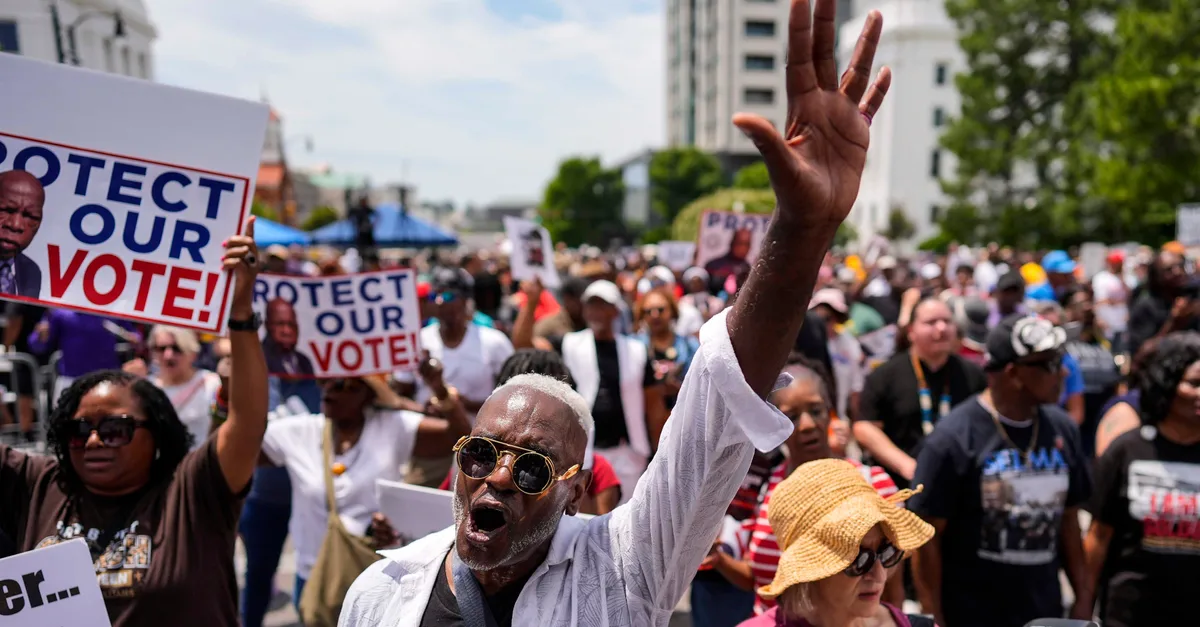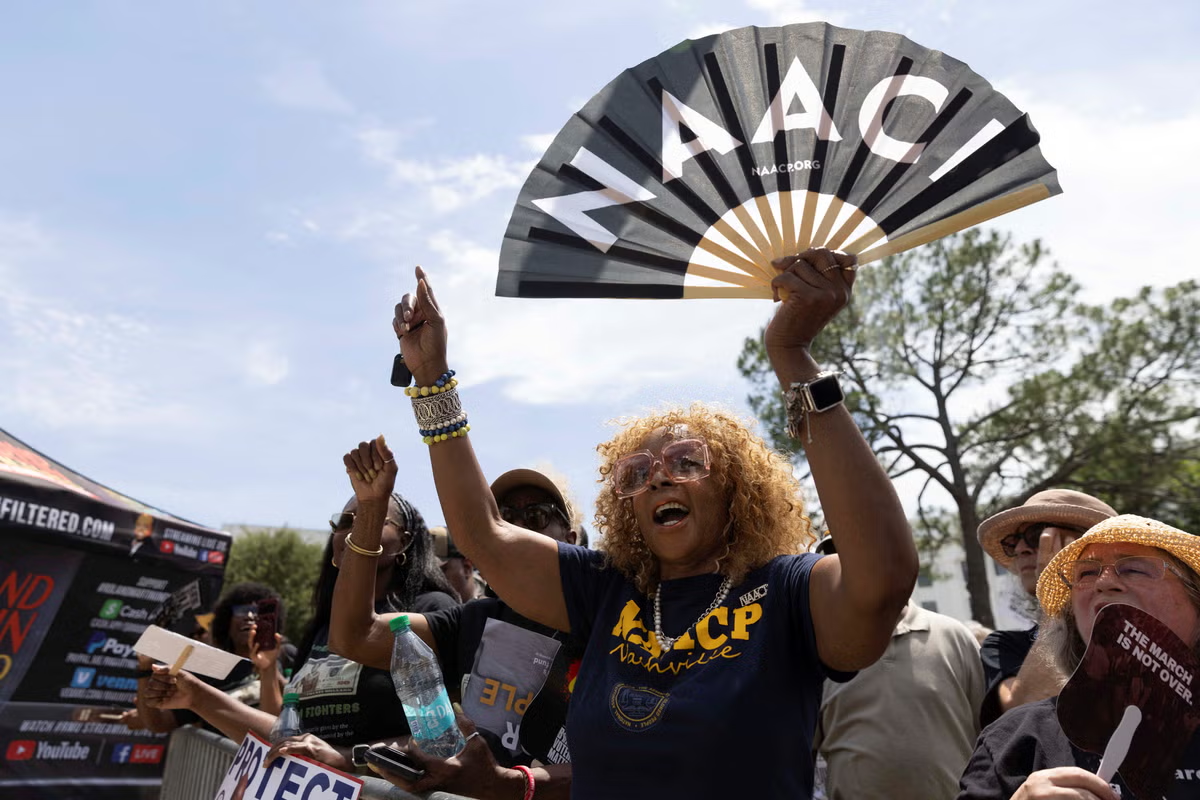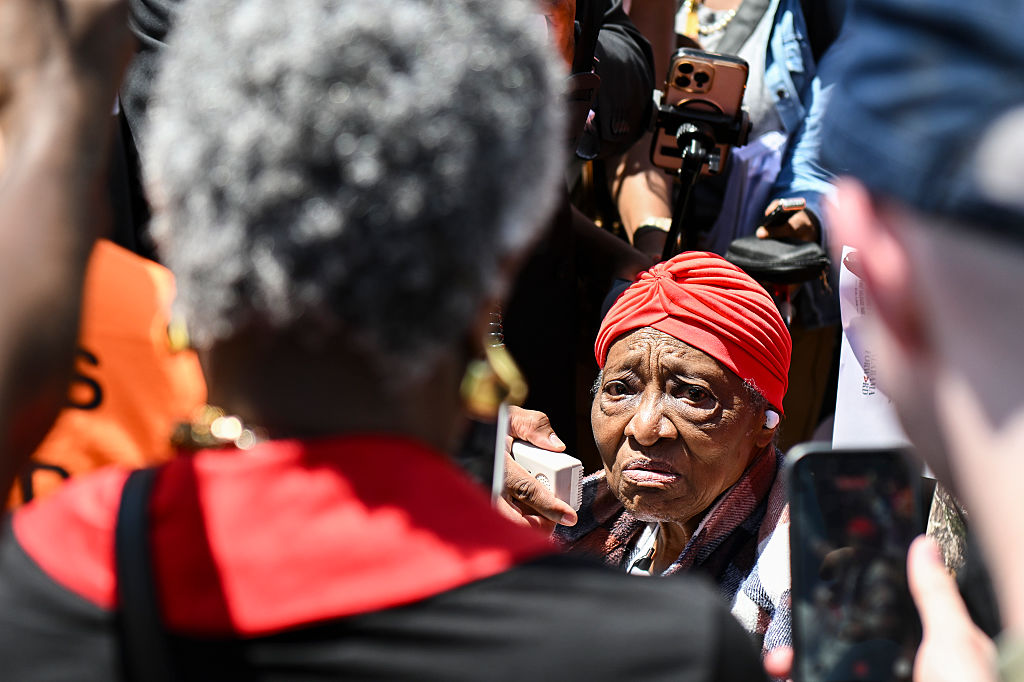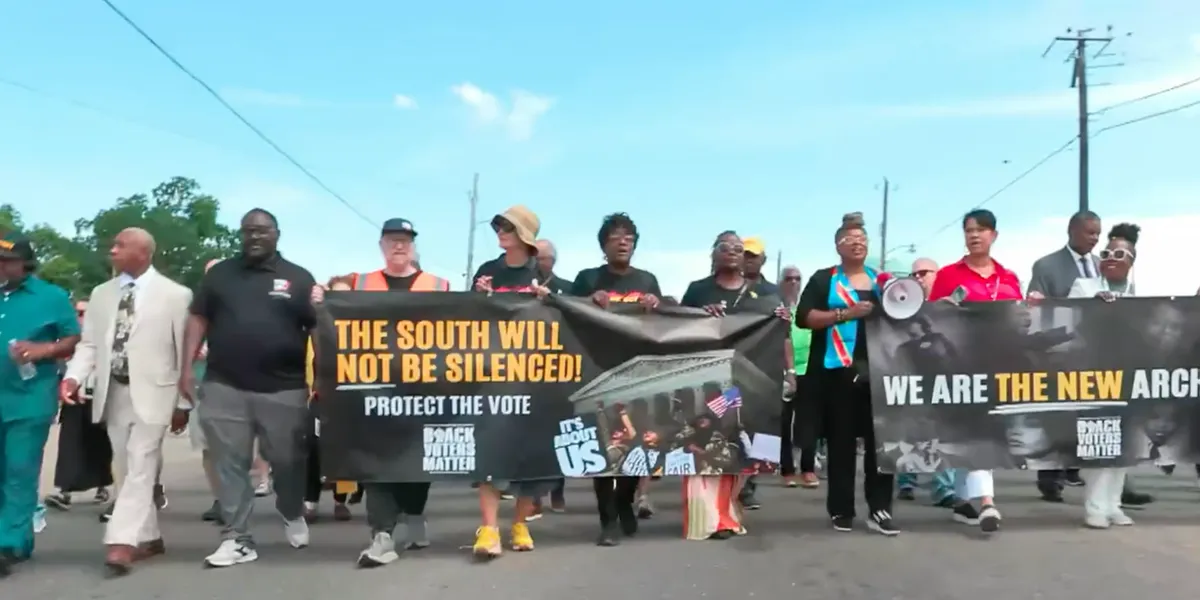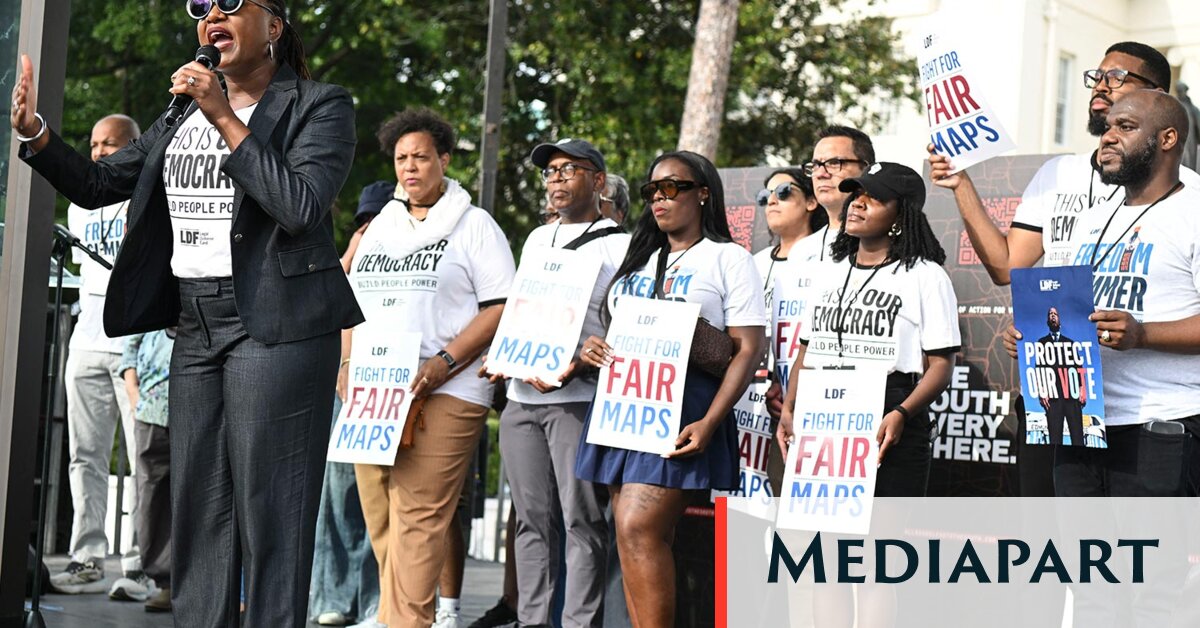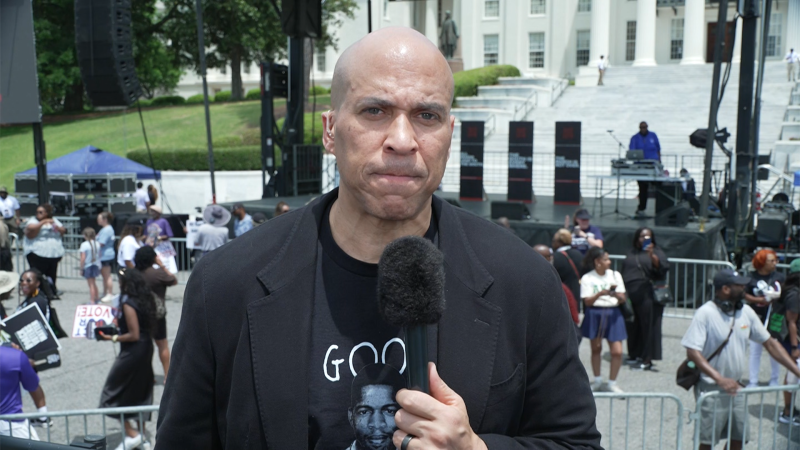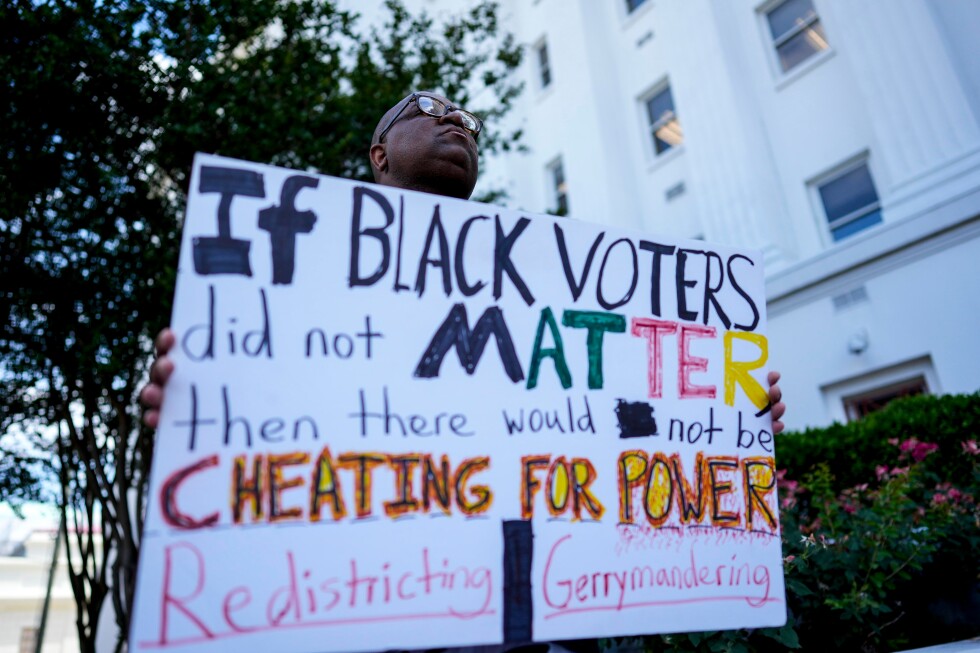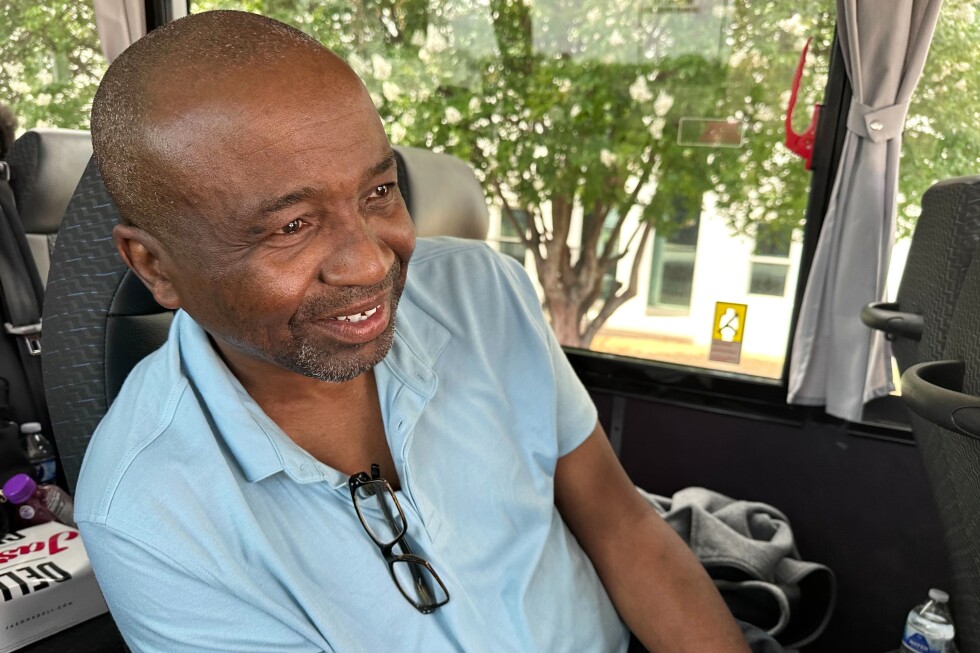
MONTGOMERY, Ala. (AP) — In 1965, Black Americans peacefully demonstrated for voting rights and were beaten by Alabama state troopers before returning two weeks later to complete their march under federal protection. Keith Odom was a toddler then. Now 62 years old, the union man and grandfather of three retraced some of their final steps. On Saturday, he came from Aiken, South Carolina, to Atlanta, where he joined several dozen other activists on two buses to Montgomery, Alabama. A few hours later, he stepped off his bus and onto Dexter Avenue, where the original march concluded. “The history here — being a part of it, seeing it, feeling it,” said Odom, who is Black. His voice trailed off as he saw the Alabama Capitol and a stage that sat roughly where the Rev. Martin Luther King Jr. concluded the original march.Odom lamented that he and his fellow bus riders were not simply commemorating that seminal day in the Civil Rights Movement. Instead they came to renew the fight. The 1965 effort helped push Congress to send the Voting Rights Act to Democratic President Lyndon B. Johnson to sign, securing and expanding political power for Black and other nonwhite voters for more than a half-century.
On the voting rights trail, bus riders to Montgomery retrace old steps while fighting a new fight
The year was 1965 and Black Americans had come to Montgomery, Alabama, to demonstrate peacefully voting rights.
1,256 words~6 min read