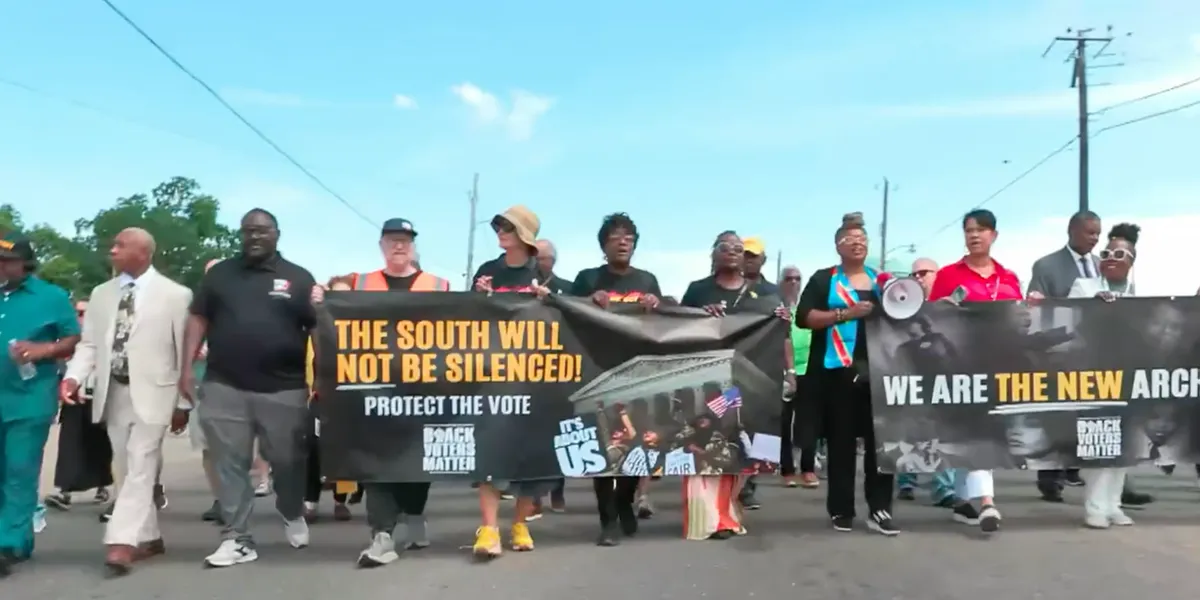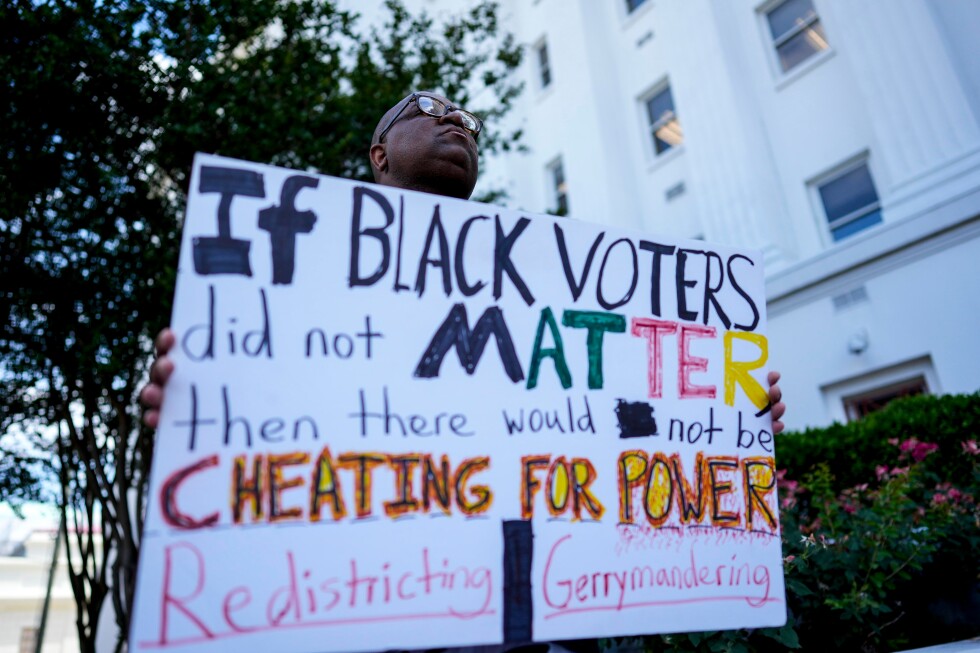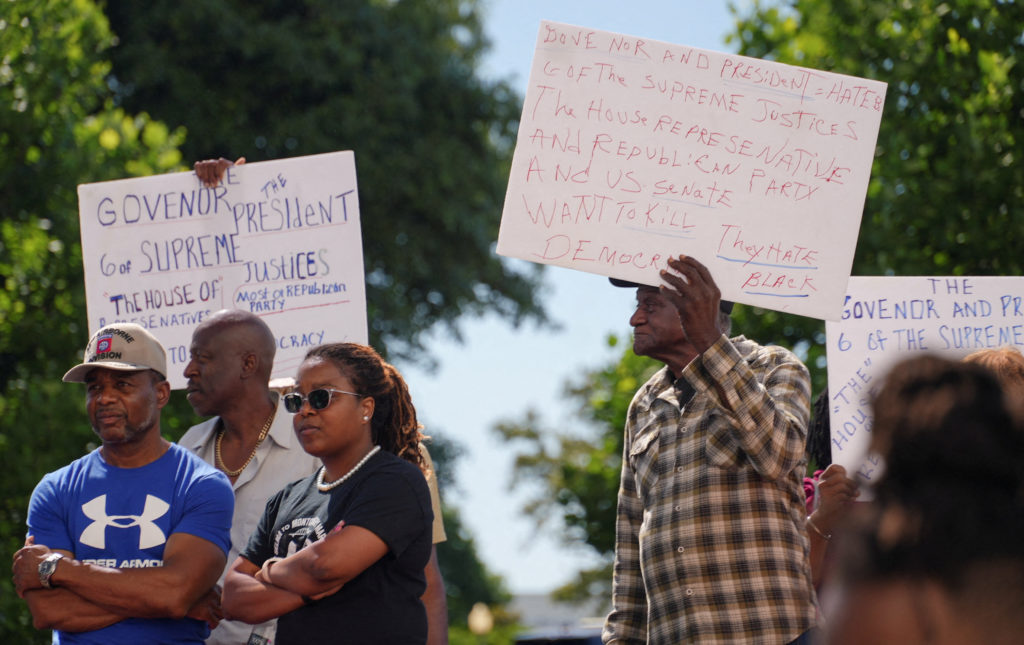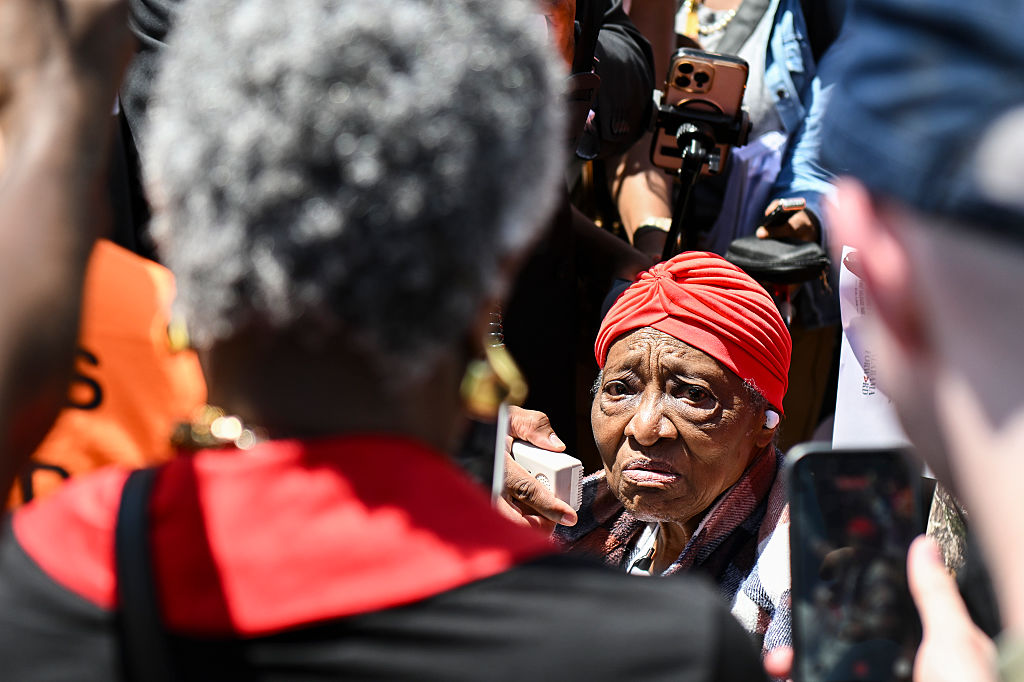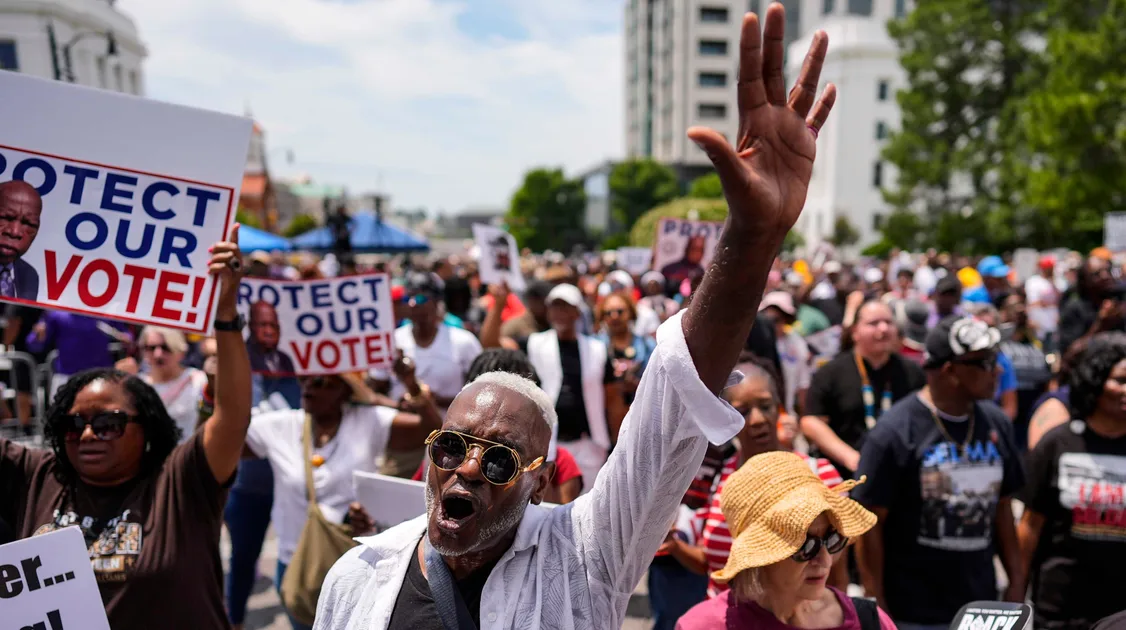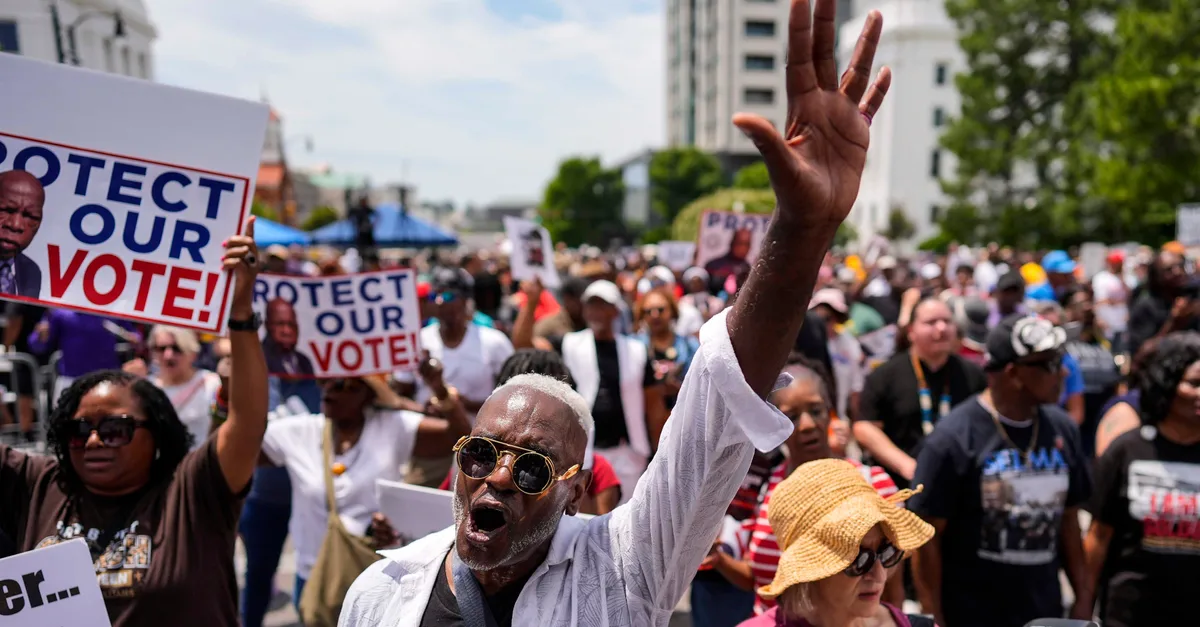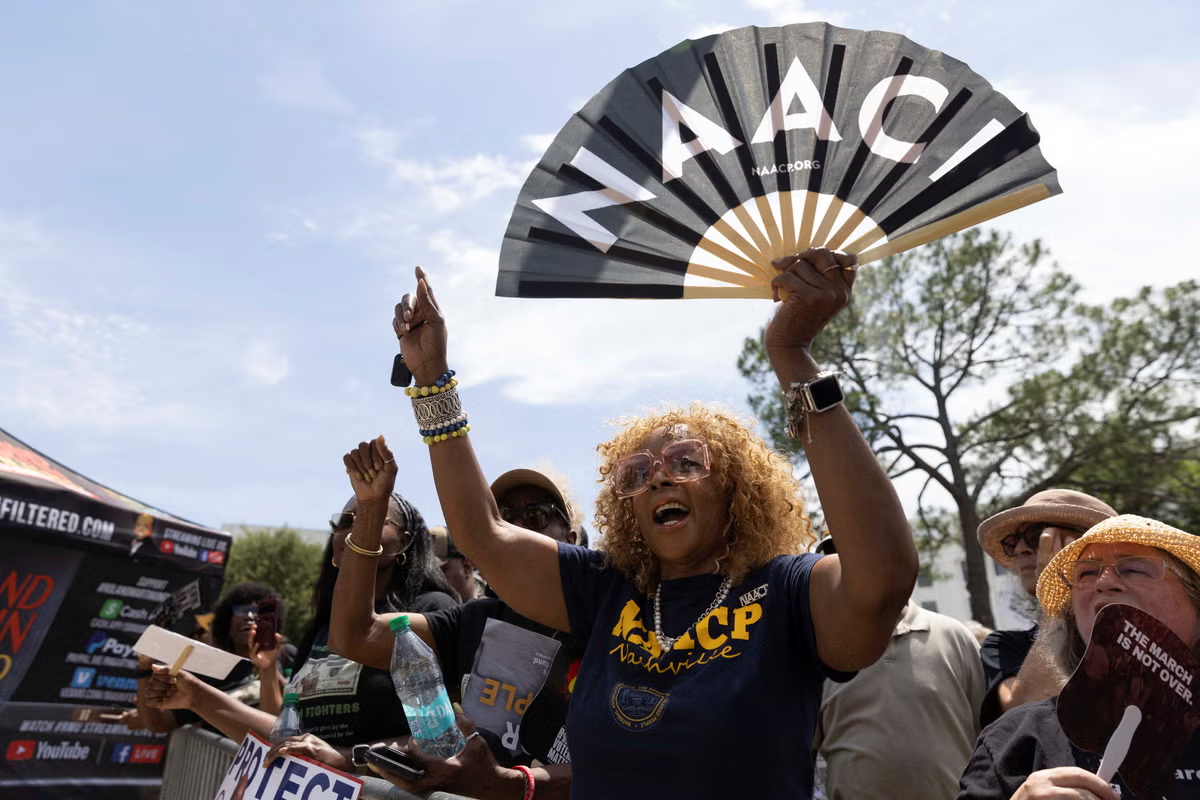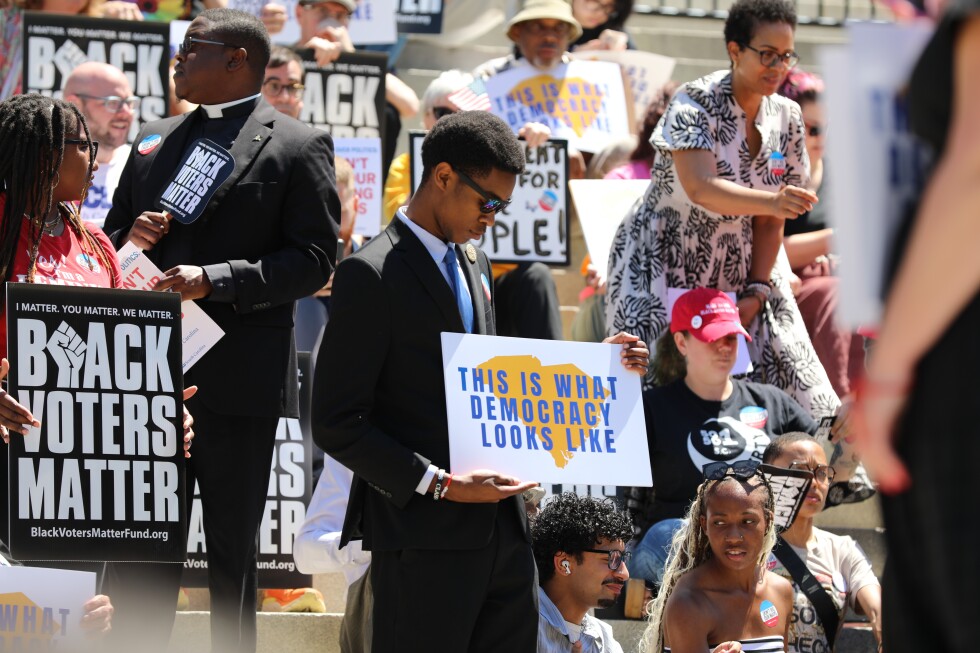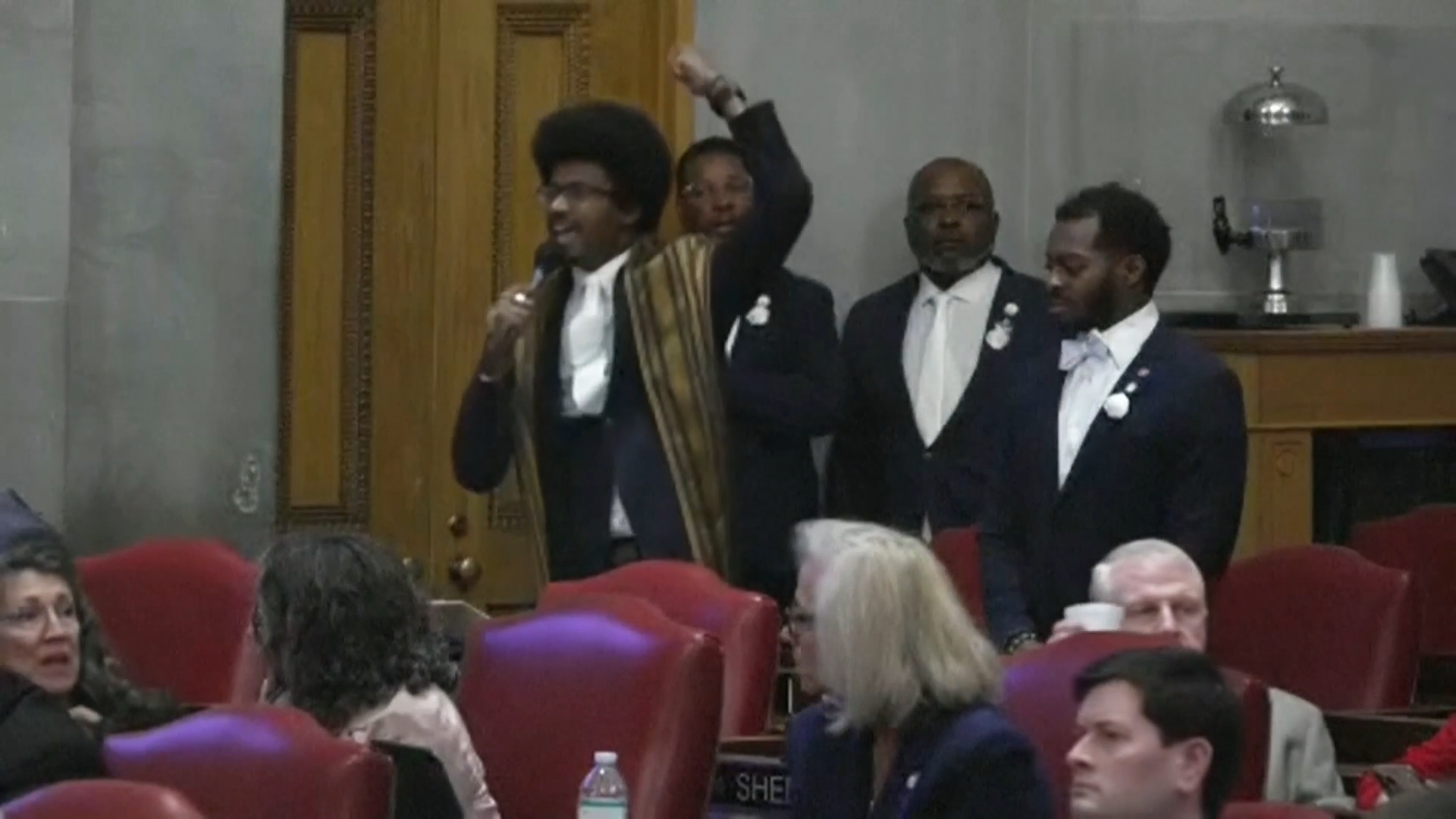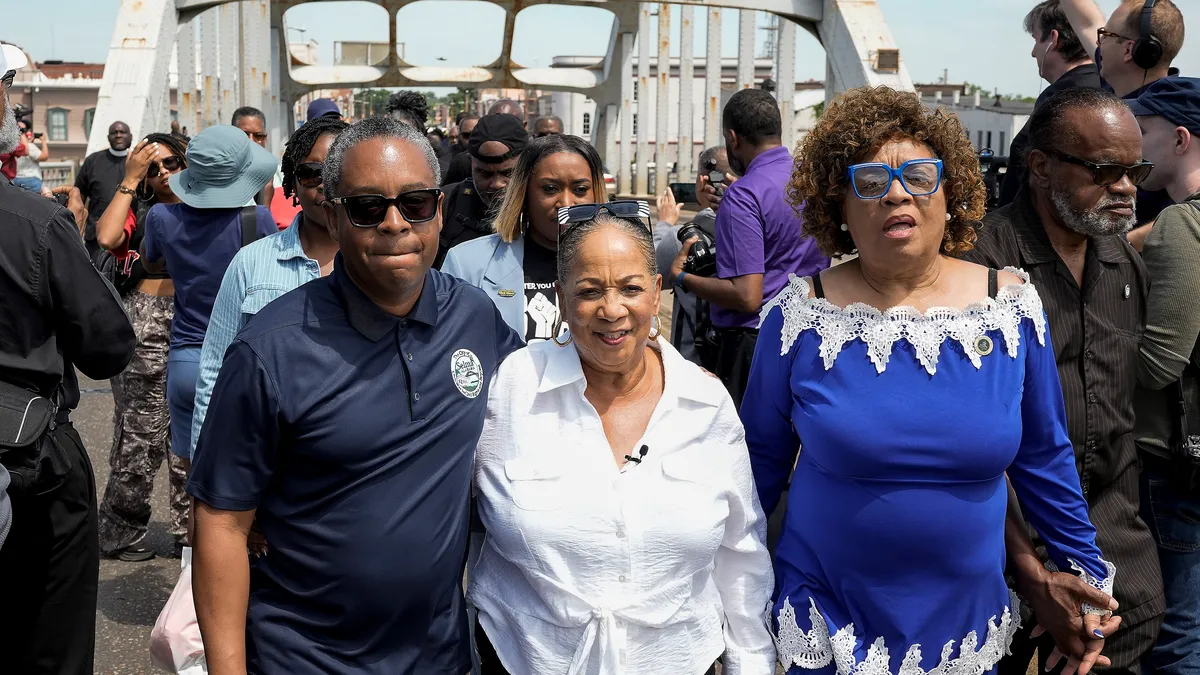
Protesters gathered in Selma, Alabama, among other locations, to push back as Republican-led southern states redraw congressional boundaries.Show Caption
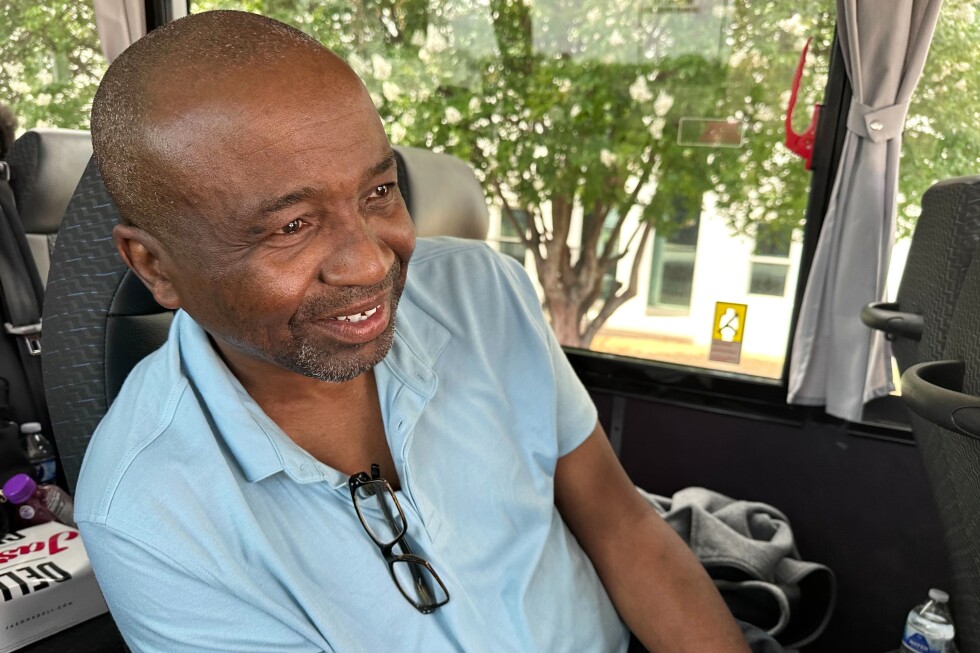
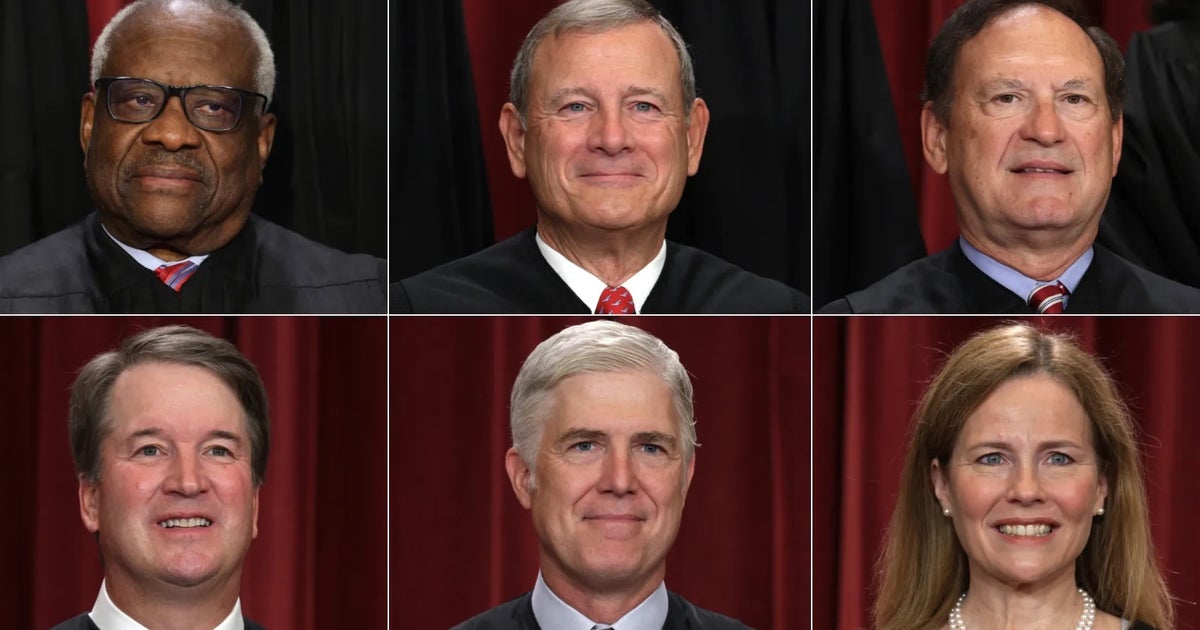
SELMA, AL ‒ Over 60 years ago, on the March 1965 day dubbed "Bloody Sunday," the Edmund Pettus Bridge in Selma, Alabama, was filled with a crescendo of shouts, of bludgeoning batons.Steady footsteps changed from an organized march into chaos as civil rights protesters fled the attacks of police.But on May 16, 2026, the packed bridge was briefly enveloped in a heavy silence amid a different kind of protest. Pastors with graying beards held their heads high. An older couple dressed in their church best – a blue velvet dress and a sharp black suit – held hands, and the woman dabbed at her eyes with a crumpled, mascara-soaked tissue.The event was part of a protest planned by voting rights advocates, faith leaders and activists from across the nation – the “All Roads Lead to the South” National Day of Action. They hope the protests, including another notable event in Montgomery, Alabama, will be a galvanizing moment as Republican-led southern states rush to draw congressional district boundaries ahead of the midterm elections.“This is a sad testimony to the state of the United States of America,” said Rosemary McCoy, a protester who came from Jacksonville, Florida, over six hours away from Selma by car. “If I came here for a different cause, just touring the city, it would probably feel different. … But right now, it’s sad. This is a sad moment.”Alabama, Louisiana, Georgia and Tennessee have either redrawn congressional district boundaries or are considering new ones after the U.S. Supreme Court’s April 29 decision, which weakens a key section of the Voting Rights Act. Early voting is already underway in some of the states, including Alabama."They've woken up a sleeping giant," state Sen. Merika Coleman, a Democrat, told USA TODAY. "People who might have thought politics didn't impact them now are saying, 'Hey, wait, wait, wait, they're trying to take away my voice.'"Supporters of the court's decision say it backs a “colorblind” approach to the Constitution that often views consideration of race as discriminatory. They also point out that Democrats used the same section of the act to carve out Democratic seats in Republican areas.“I will continue to say: Alabama knows our state, our people and our districts best. The United States Supreme Court’s decision is plain common sense and enables our values to be best represented in Congress,” Republican Gov. Kay Ivey said in a May 12 statement.In mid-May, Alabama's majority Republican legislature moved to revert to its 2023 maps. Those maps were previously struck down by a lower court, which ruled they likely violated the act by diluting the voting strength of Black Alabamians.The lower court still must rule whether the 2023 maps can take effect. Plaintiffs believe the original ruling will stand because of the intentional discrimination finding. If that happens, the results of the primary in the congressional districts will stand, but a ruling is unlikely until after the primary election.The legislature decided to still hold the state's May 19 primary. It will void the results in four congressional districts, the 1st, 2nd, 6th and 7th districts. Then, the state will hold a special primary election on Aug. 11.Coleman said she no longer has to wonder what she would have done during the Civil Rights Movement.“We are in our own movement right now," she said. "And no one can afford to sit on the sidelines. We need the whole coalition.”Protesters also planned an event at the Alabama State Capitol in Montgomery. National protest groups, including those organizing the No Kings rallies, are participating. They organized more than 30 similar events across the country.“We have faced these challenges before, and we know our power. Alabama has always been sacred ground in the fight for freedom, and this moment demands that we rise together once again," Cliff Albright and LaTosha Brown, co-founders of Black Voters Matter Fund, said in a statement.Section Two of the Voting Rights Act was written to prevent diminishing the voting power of racial minorities by packing them into one district or spreading them out across many districts. Black representation in the U.S. House rose rapidly after the act became law in 1965.The court's ruling also applies to state legislatures, county commissions, city councils and local school boards.Critics say the decision will dilute the voting and governing power of Black and other minority citizens up and down the ballot, especially in the South. On May 13, leaders of the Congressional Black Caucus told NBC News they fear they could lose as much as a third of their members as southern states redraw boundaries.The priority now needs to be educating Alabama voters about the double primary and making sure they turn out for both and vote for other seats up and down ballot, including statewide offices, judicial seats, the legislature and county positions, said Anneshia Hardy, executive director of Alabama Values and Alabama Values Progress."The message on the ground is to go vote in droves. Even if they divide you, crack you, pack you, we need to still turn out," said Hardy, whose group is focused on voter mobilization and education.Rather than holding a mass rally, the Saturday before primary day could be better spent phone banking, canvassing and educating voters about what's happened, Hardy added.Organizing across the South this summer and beyond will look a lot like it did in the 1960s, she said, with a focus on voter education, door-knocking, town halls and "making sure that the noise doesn't stop when the protests and rallies and all this stuff dies down."The rust on the bridge’s white ironwork, the art deco flourishes on downtown’s buildings, the flow of the Alabama River below the bridge – they haven’t changed since the 1960s. The marchers say the fight for civil rights hasn’t changed, either."It's sad, because I'm here to fight the same fight [as the Civil Rights Movement]," said McCoy. "And they want people to believe that we are so divided. But the truth of the matter is, we're not. And we're going to stand together and we're going to defeat this regime."Contributing: Jeanine Santucci and Zachary Schermele