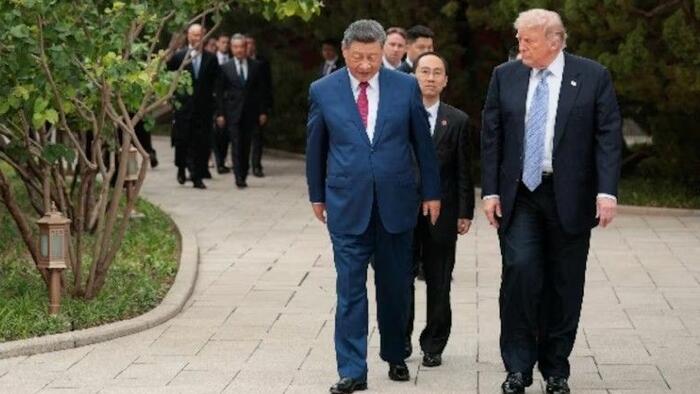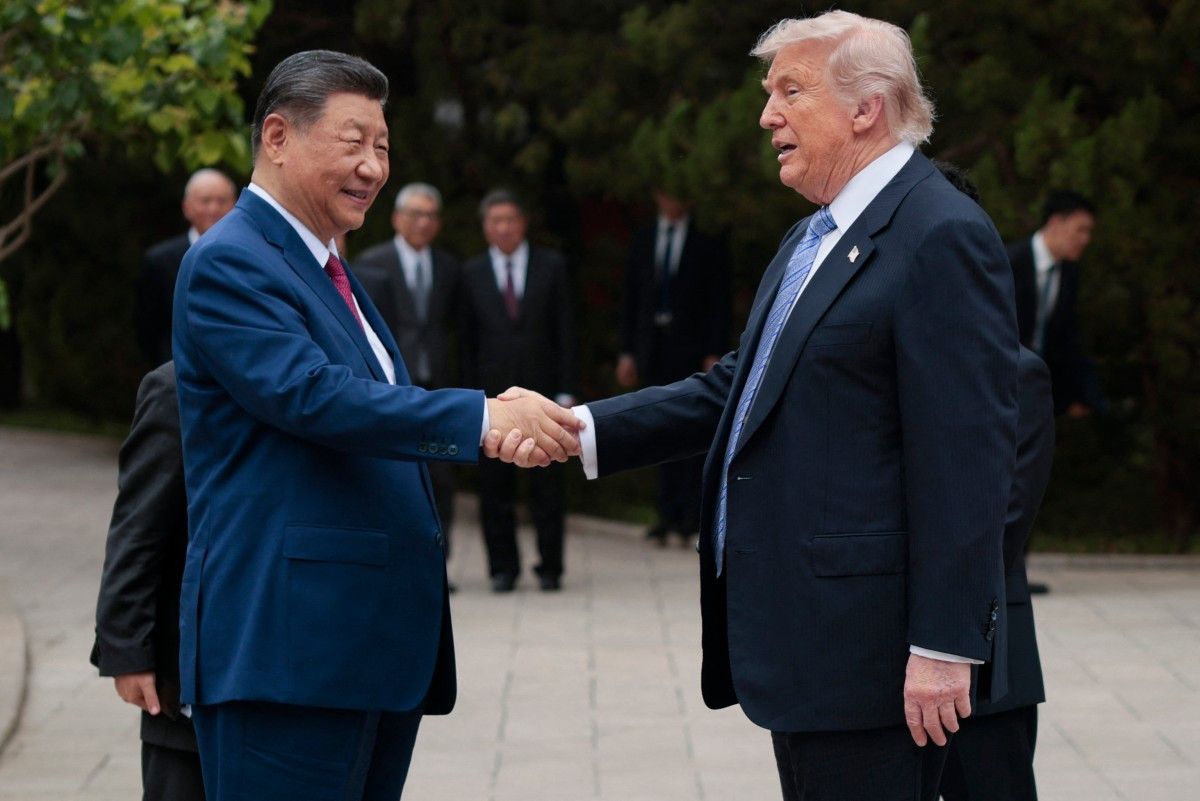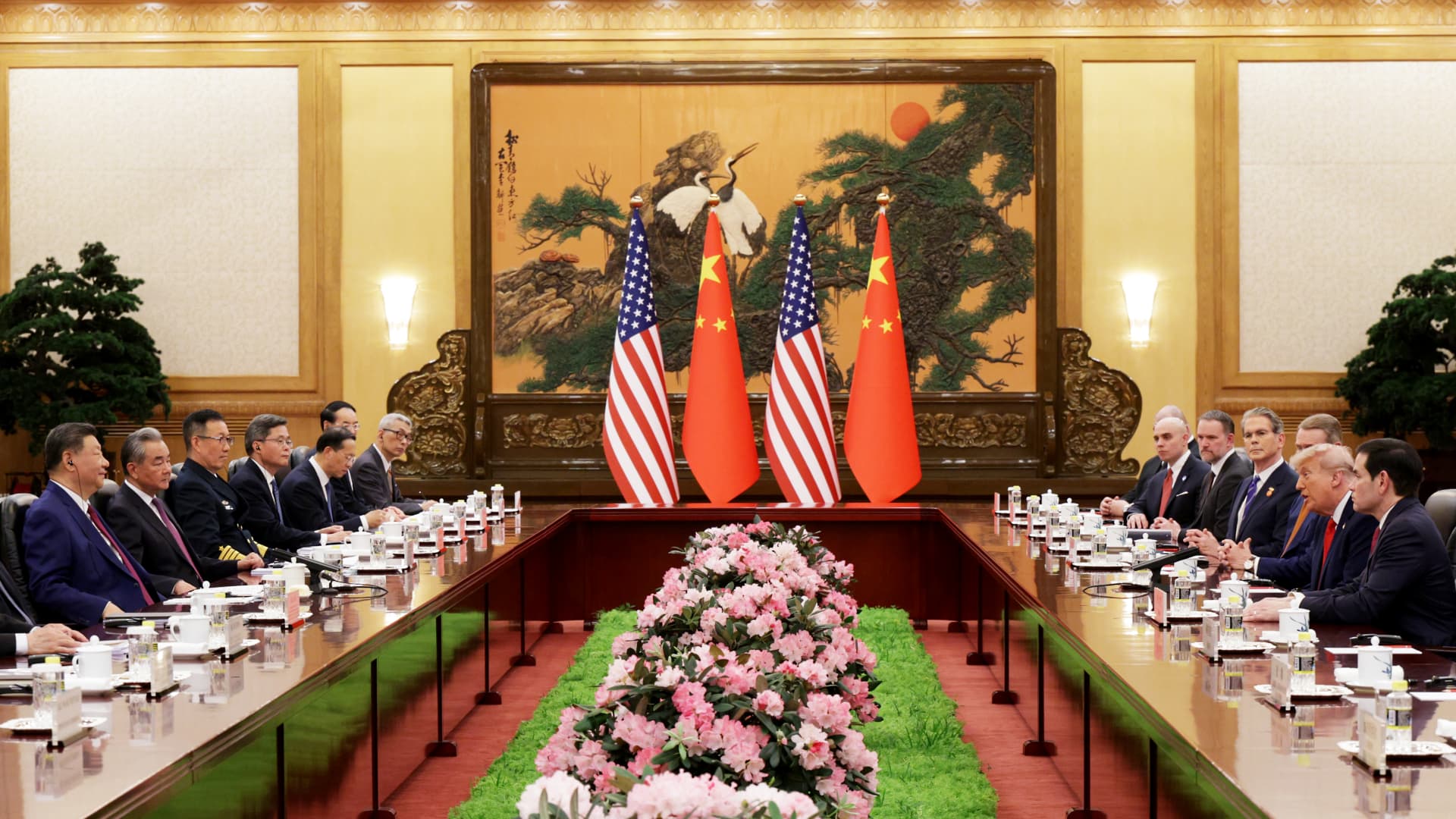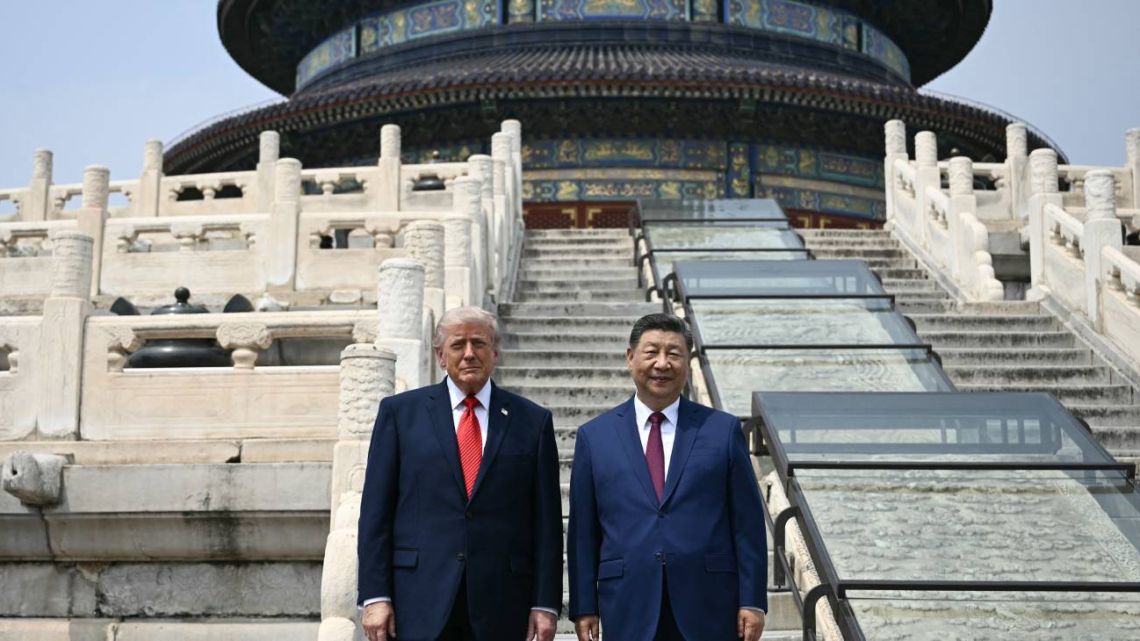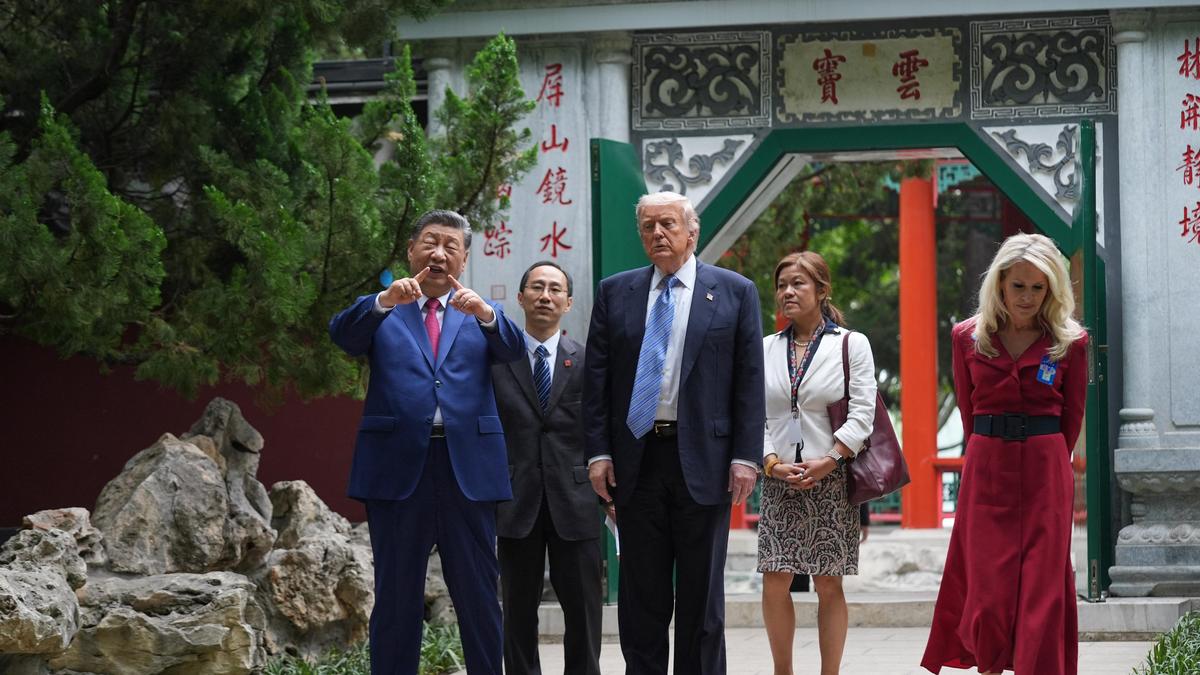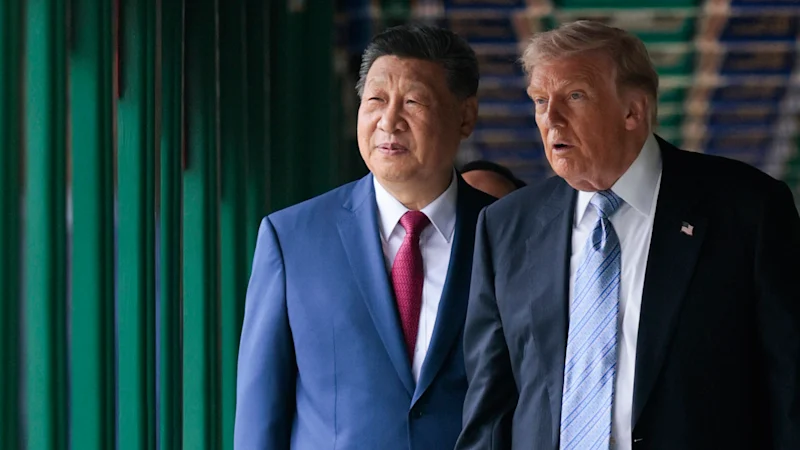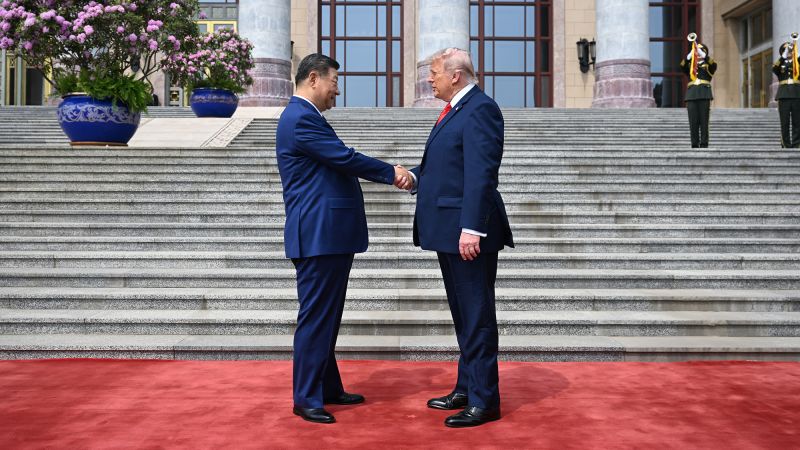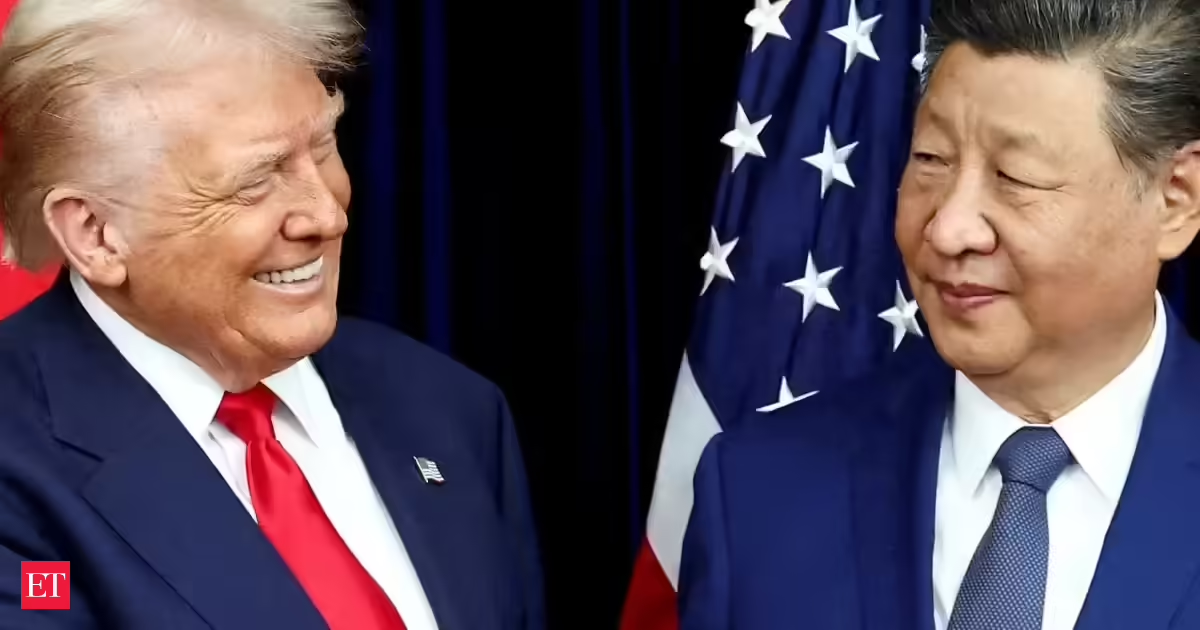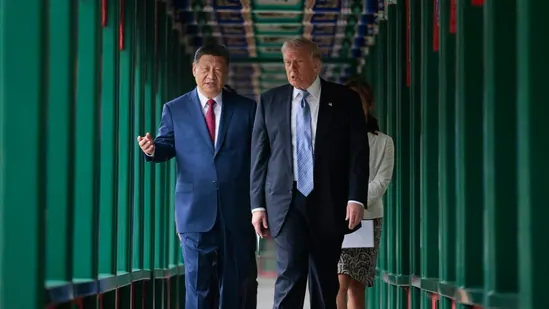
BEIJING—China said Saturday that it had agreed with the U.S. to establish bilateral boards of trade and investment, fulfilling one expected outcome of President Trump’s visit to Beijing and solidifying a commercial truce between the world’s two largest economies.President Trump tours the Communist Party’s Zhongnanhai compound in Beijing with Chinese leader Xi Jinping.China’s Ministry of Commerce, in a statement published late Saturday in Beijing, also said that the U.S. had agreed to sell aircraft, aircraft engines and aircraft components to China, addressing one notable area in which the country continues to lag behind the U.S.The statement marked Beijing’s first public confirmation of a trade agreement between the two sides following a two-day summit meeting in Beijing between Trump and Chinese leader Xi Jinping. Still, China’s Commerce Ministry characterized the results as preliminary in nature, adding that negotiators from the two sides are working to finalize details of the agreed-upon points.A U.S.-China Board of Trade would be used to discuss tariff reduction on certain products, the Chinese ministry said, without elaborating. Neither did it offer any specifics on how a U.S.-China Board of Investment would operate, though the White House said Thursday that Trump and Xi had discussed “increasing Chinese investment into our industries.”A senior U.S. official said in the run-up to last week’s summit that a Board of Investment would allow the two governments to consider Chinese investment plans in the U.S., and wouldn’t interfere with existing investment-screening entities, such as the Committee on Foreign Investment in the U.S.The question of Chinese investment in the U.S. has been contentious, with state-level governments throwing up barriers to projects involving Chinese companies.Simon Evenett, a professor of geopolitics and strategy at IMD Business School in Switzerland, argued in a paper last week that a previous U.S. attempt to set up a similar mechanism to manage trade with Japan during the 1980s inflicted lasting damage on U.S. industries, raised U.S. consumer prices and didn’t do much to shift the trade balance.Beijing on Saturday described the agreement to establish the trade and investment bodies as part of a larger effort to reach a positive equilibrium between the two sides. The Commerce Ministry said in the same statement that the two countries would reduce trade barriers for agricultural products.The Saturday statement also served as confirmation of Trump’s announcement during his visit that Beijing had agreed to purchase 200 Boeing aircraft—fewer than the expected 500—which led the company’s stock to fall nearly 4%.Trump told reporters aboard Air Force One after the summit that China could purchase up to 750 Boeing jets “if they do a good job,” without elaborating.Aviation remains one area where China has yet to catch up to the U.S. technologically. China’s homegrown plane maker, Shanghai-based Comac, has struggled to develop a competitive domestic alternative to commercial planes from Boeing and Europe’s Airbus. Comac’s leading commercial aircraft model, the C919, relies heavily on technology from U.S. companies.A U.S. guarantee to supply aircraft, aircraft engines and aircraft components to China would ensure a steady supply of needed inputs as Beijing seeks to match and eventually overtake the U.S.Write to Jonathan Cheng at Jonathan.Cheng@wsj.com
China says it has agreed with U.S. to set up trade and investment bodies
The confirmation fulfills one expected outcome of Trump’s visit to Beijing and solidifies a truce between the world’s two largest economies. | World News
517 words~2 min read