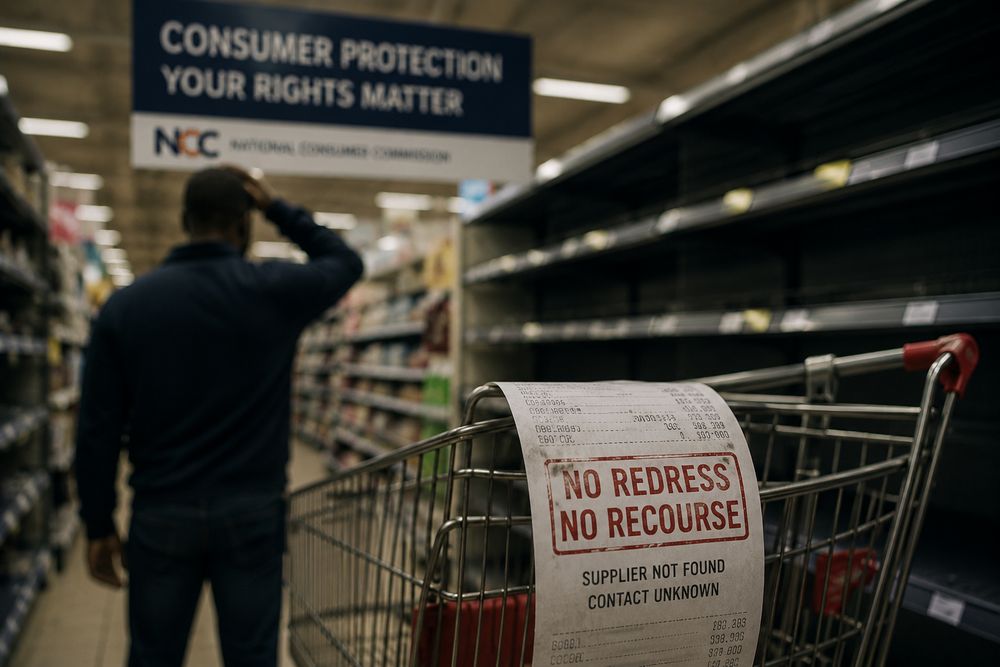
Nicola Mawson|Published 1 day agoThe National Consumer Commission’s (NCC) crackdown on untraceable suppliers comes following research commissioned by the regulator in 2021 showing low levels of public engagement with formal consumer protection mechanisms.While the NCC has intensified enforcement activity against illicit traders, expired goods, illegal imports and scams, its own research suggests relatively few South Africans know how to use the consumer protection system once disputes arise.Research conducted by the Human Sciences Research Council (HSRC) for the NCC found that only 3% of adult South Africans had ever had direct or indirect contact with the regulator.The same study found that more than half of South Africans had never heard of the NCC, while only 11% said they knew enough about the regulator or the Consumer Protection Act (CPA) to explain it to a friend.Awareness levels were especially low in provinces including Limpopo, Mpumalanga, North West and the Eastern Cape.The research also found strong differences based on income and education levels, with wealthier and more educated consumers significantly more likely to engage formal complaint systems.GhostingIn its latest quarterly performance report, the regulator said matters involving untraceable suppliers formed part of the major consumer protection issues that generated public attention during the quarter.This week, the commission added another 20 suppliers to its growing list of “untraceable suppliers,” businesses it says allegedly accepted payment from consumers before failing to deliver goods or services and then disappearing.The NCC warned that consumers were often left with “no means to seek redress” once suppliers vanished from known addresses, shut down websites or stopped responding to complaints.“In many cases, these suppliers have vanished from their known addresses, while some have shut down their websites, making it impossible for consumers to contact them for redress,” the NCC said in an earlier warning.Challenging environmentThe regulator has expanded enforcement activity against illicit operators and non-compliant suppliers.“In line with the NCC’s mandate to promote a fair, transparent, and safe marketplace for consumers in South Africa, the NCC intensified its enforcement efforts against the supply and distribution of illicit goods and illegal imports during the third quarter,” the report said.The NCC added that 51 compliance notices were issued to suppliers, distributors and importers found to be in contravention of the Consumer Protection Act and related legislation.The enforcement notices covered supermarkets, wholesalers, butcheries and importers.PrioritiesIts 2025-2030 strategic plan identifies scams and Ponzi schemes among its priority enforcement areas over the next five years. Trade, Industry and Competition Minister Parks Tau said in the annual report that the NCC had prioritised scams and Ponzi schemes that exploited vulnerable consumers.“The NCC also prioritised scams and Ponzi schemes that particularly exploit vulnerable consumers,” Tau said.Other focus areas include:Unsafe and expired foods,The second-hand automotive industry,Unfair and unreasonable pricing of goods and services,Unfair and unreasonable terms and conditions,Non-compliant clothing, textile, footwear and leather goodsMarket monitoring of low-quality and substandard locally produced or imported goods, andFalse claims on carbon friendly goods (green washing).Feeling sickDuring the country’s foodborne illness crisis, the regulator said it inspected 392 suppliers, including manufacturers, wholesalers, retailers and spaza shops.The NCC’s 2024/25 annual report said the inspections resulted in enforcement action against non-compliant suppliers.The report also said the regulator issued 135 compliance notices during the year against businesses that supplied non-compliant goods, sold expired food or failed to honour terms and conditions.Resource constraintsAt the same time, the NCC has acknowledged internal capacity constraints. Its annual report said funded staffing shortages continued limiting the regulator’s operational reach.“The NCC has been facing capacity challenges in terms of Human Resources,” the annual report said.“While there are positions currently approved in terms of the structure, they have not been sufficiently funded. This hinders the NCC’s ability to have the desired impact in the execution of the mandate.”Despite those limitations, the regulator has continued broadening enforcement activity.In quarter three alone, the NCC said it finalised 32 cases involving non-compliant clothing, textile, footwear and leather goods and prevented 26 consignments valued at more than R3.2 million from entering the South African market.Consumers winThe regulator also reported R6.59 million in consumer redress during the quarter through tribunal decisions, court orders, settlements, refunds and cancellations.Part of that included a settlement agreement with We Buy Cars involving refunds to 31 consumers. The NCC said the settlement also required revisions to terms and conditions and commitments around consumer awareness.The regulator secured preservation orders through the National Prosecuting Authority worth more than R13 million during the period.The NCC’s quarterly report said it achieved a 94% performance score against applicable targets in quarter three of the 2025/26 financial year.IOL BUSINESSGet your news on the go. Download the latest IOL App for Android and IOS now.
Why thousands of South Africans struggle to report consumer scams
The National Consumer Commission has expanded enforcement action against untraceable suppliers, illicit traders and non-compliant businesses, but research commissioned by the regulator shows most South Africans remain disconnected from formal consumer protection systems.
767 words~3 min read