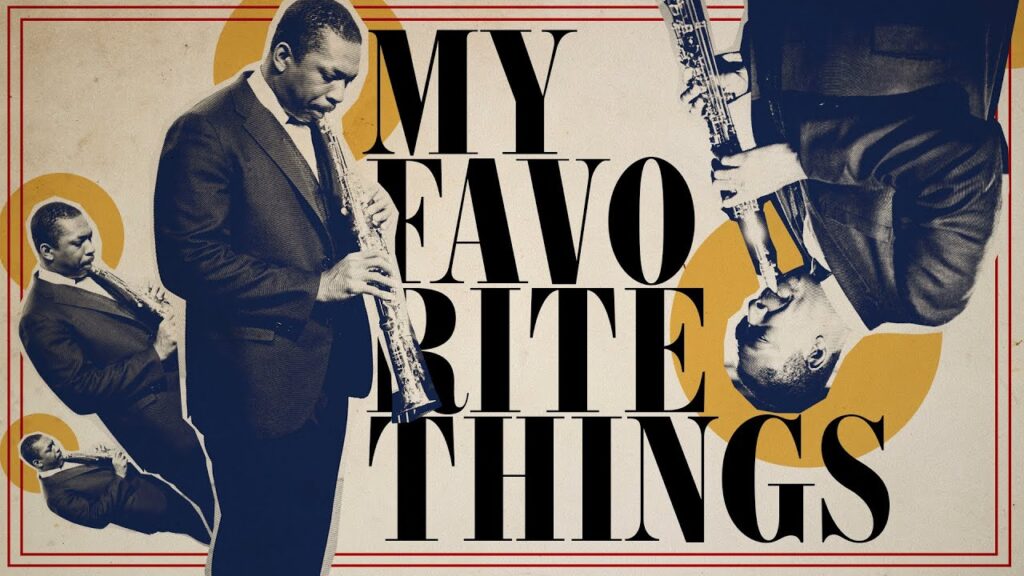
John Coltrane released “more significant works” than his 1960 “My Favorite Things,” says Robin Washington in a PRX documentary on the classic reworking of Rodgers and Hammerstein’s Broadway hit. “A Love Supreme” is often cited as the zenith of the saxophonist’s career. “But if you tried to explain that song to an average listener, you would lose them. [“My Favorite Things”] is a definitive work that everyone knows, and anyone can listen to, and the fascinating story of its evolution is something everyone can share and enjoy.” The song is accessible, a commercially successful hit, and it is also an experimental masterpiece.
Indeed, “My Favorite Things” may be the perfect introduction to Coltrane’s experimentalism. After the dizzying chord changes of 1959’s “Giant Steps,” this 14-minute, two-chord excursion patterned on the ragas of Ravi Shankar announced Coltrane’s move into the modal forms he refined until his death in 1967, as well as his embrace of the soprano saxophone and his new quartet. It became “Coltrane’s most requested tune,” says Ed Wheeler in The World According to John Coltrane, “and a bridge to a broad public audience.”