in History, Religion | December 5th, 2025 2 Comments
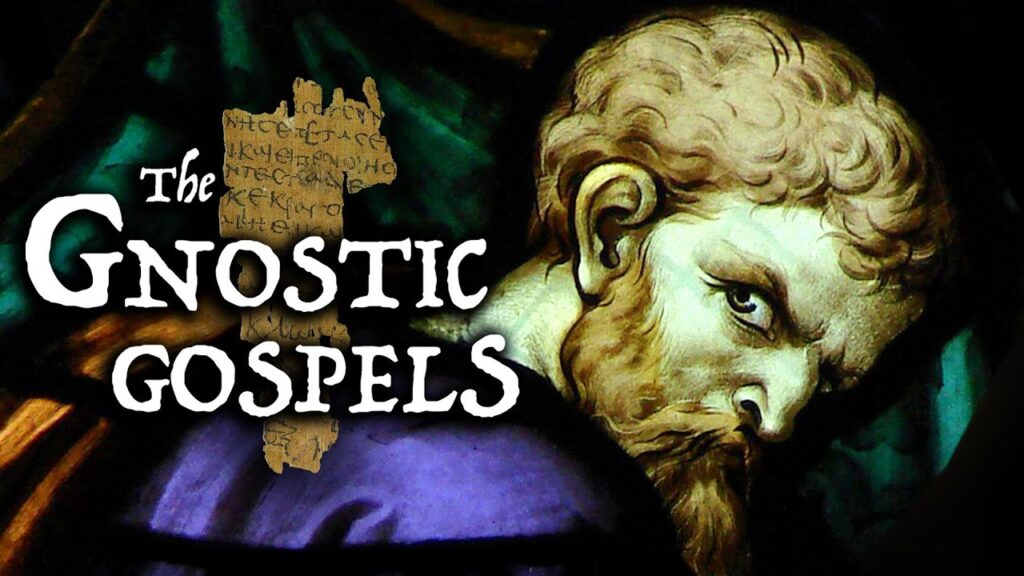
It would be impossible to understand Western civilization without understanding the history of Christianity. But in order to do that, it may serve us well to think of it as the history of Christianities, plural. So suggests Hochelaga creator Tommie Trelawny in the new video above, which explains the Gnostic Gospels, the “forbidden teachings of Jesus.” As a system of beliefs, Gnosticism is a fairly far cry from the mainstream forms of Christianity with which most of us are familiar today. But its surviving texts may sound uncannily familiar, despite also involving outlandish-sounding elements that seem to belong to another civilization entirely. Gnostic teachings have long been considered heresy by Christians, but do they really represent just a different evolutionary branch of the faith: another Christianity?
Religious scholars of many stripes have concerned themselves with few matters as intensively as they have with theodicy, that is, the matter of how to square the notion of a good, omnipotent deity with the obvious existence of evil down here in the world. Since its loose coalition of beliefs came together in the late first century, Gnosticism has proposed an elegant solution: that the deity is not, in fact, good, or rather, that under the transcendent, unknowable God is a much more poorly behaved “demiurge” who displays an indifference, at best, to the lot of humanity. In this view, our resulting world is less a perfect creation than a cosmic mistake — a proposition that would account for certain of its qualities we experience on the day-to-day level, even if we have no particular religious proclivities.