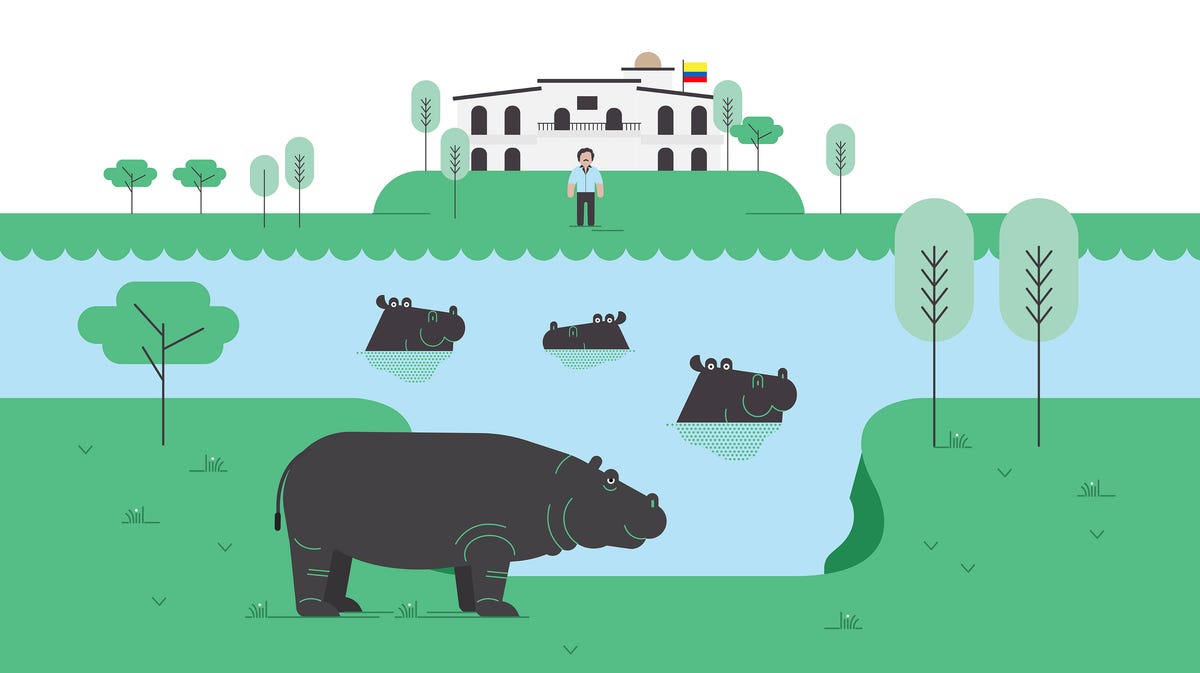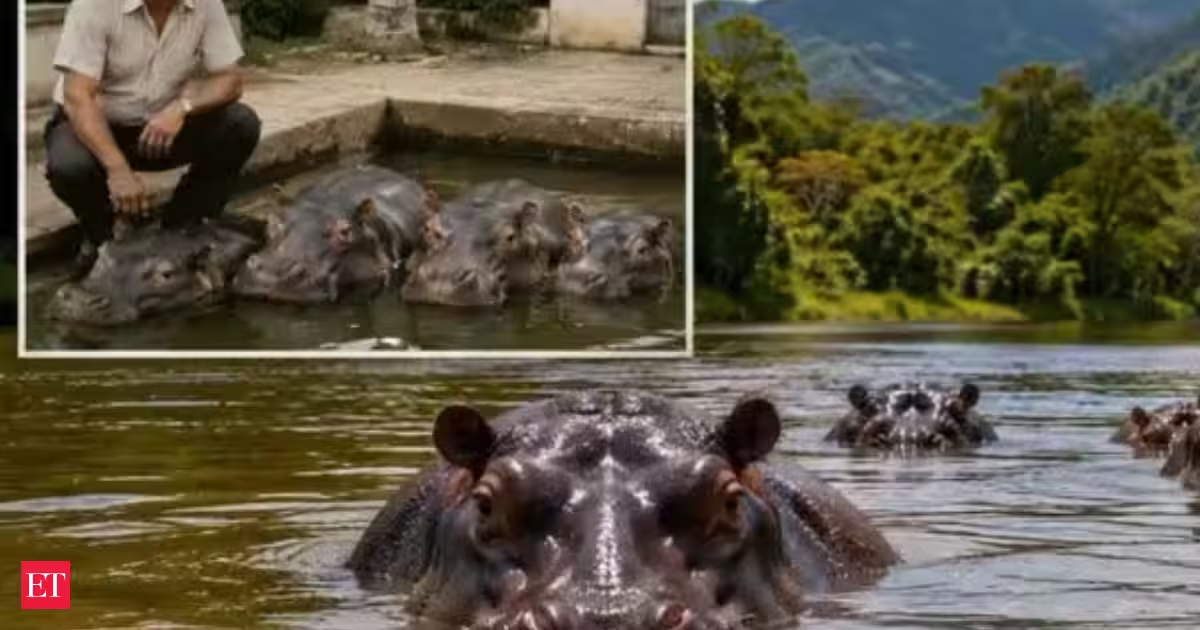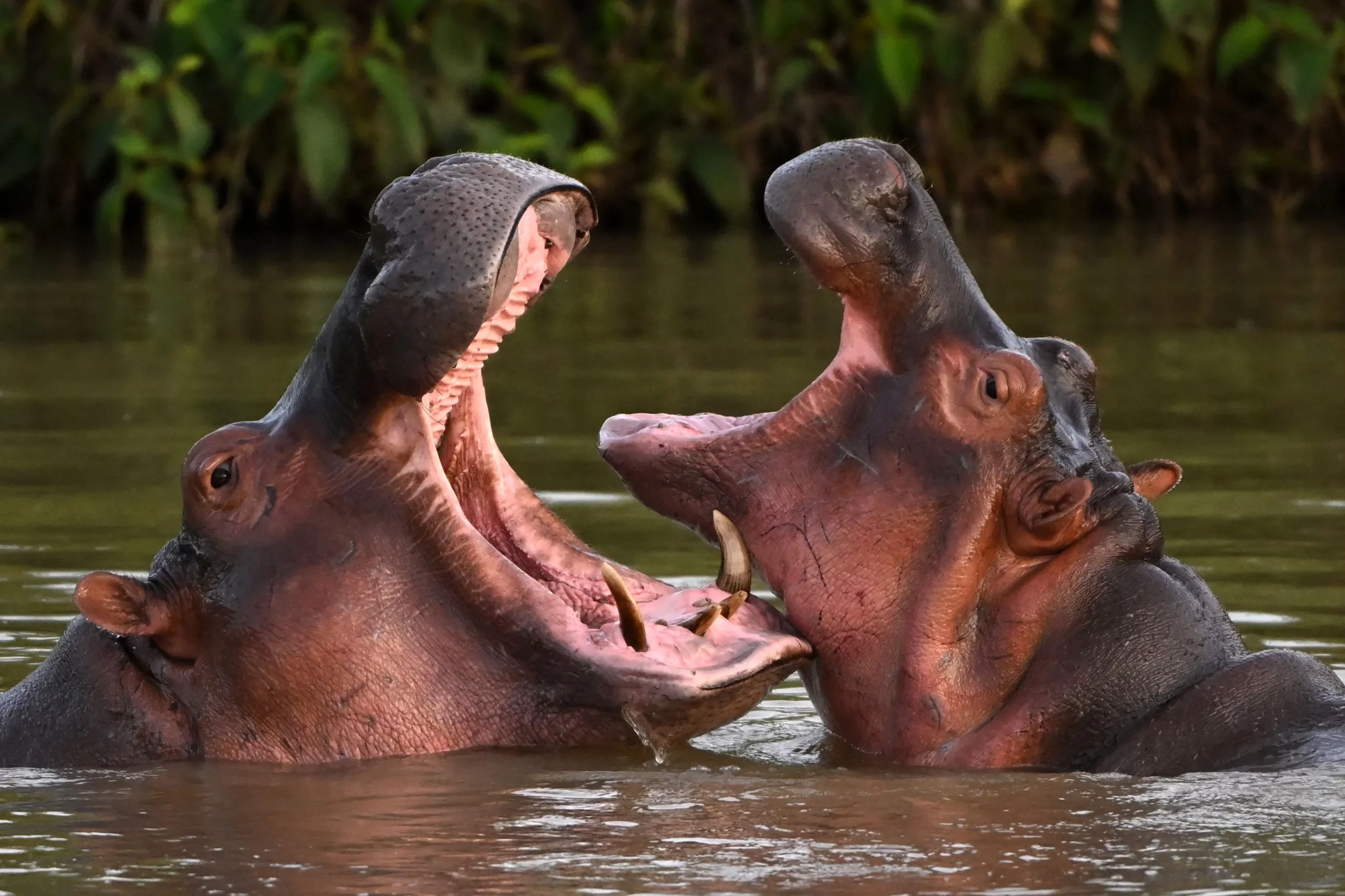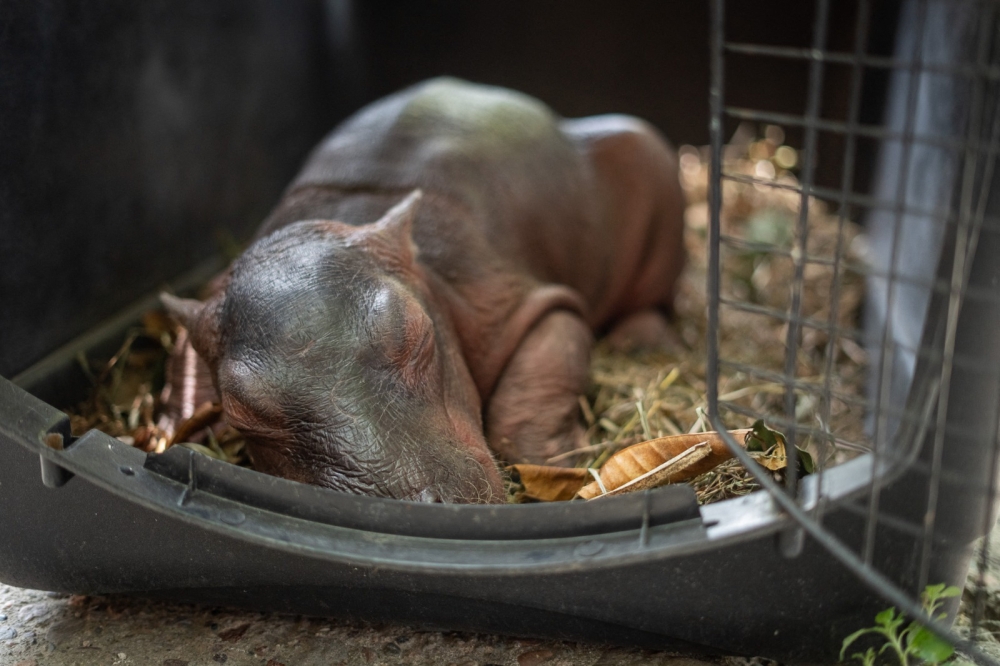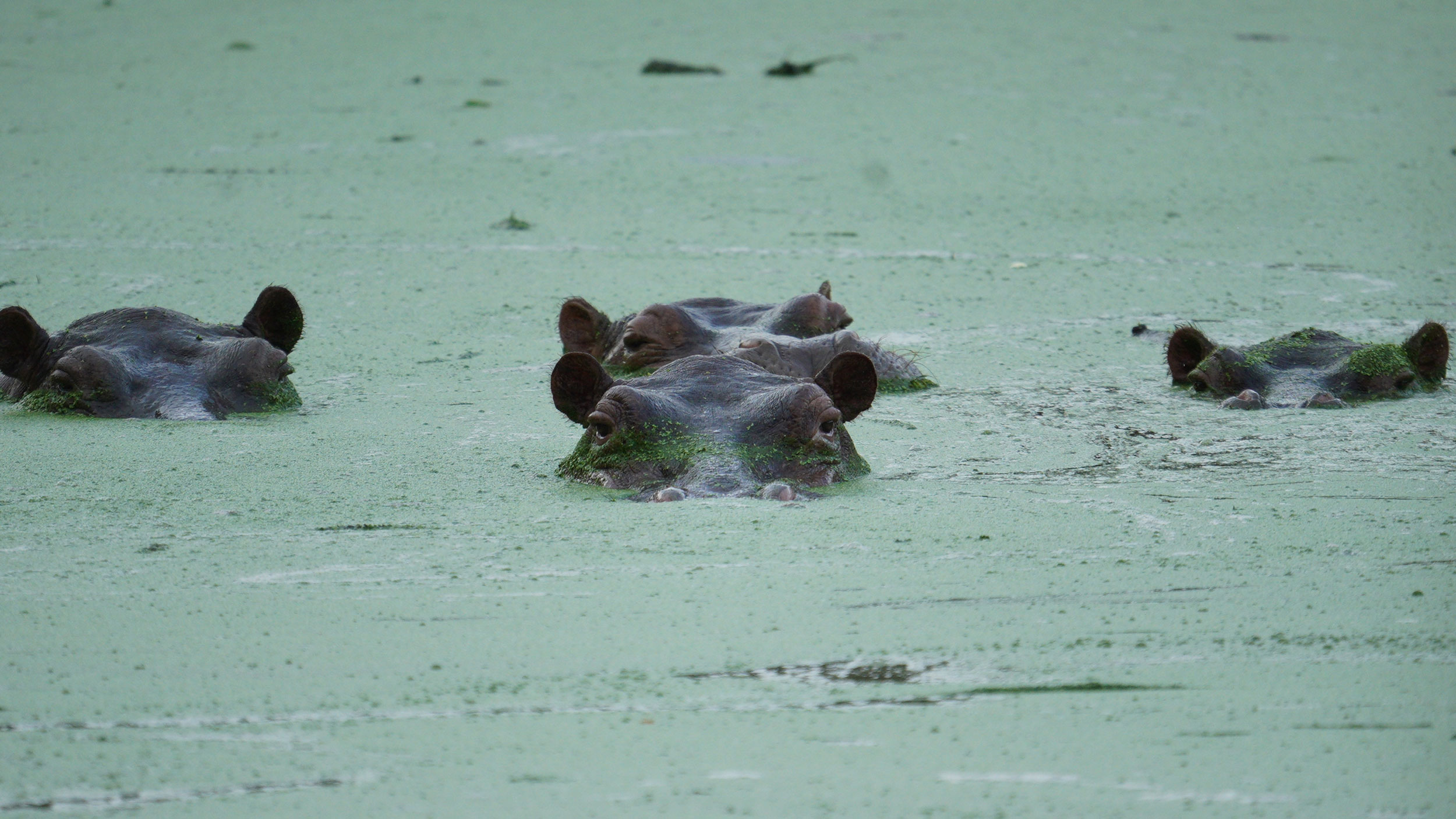
Yamit Diaz is a Colombian fisherman with a peculiar side business.Every three or four days, he takes visitors on boat “safaris” along the Magdalena River, where they can observe some of the hippopotamuses that were brought to central Colombia decades ago by the notorious drug lord Pablo Escobar.“People have a somewhat morbid fascination with things related to Escobar,” Diaz said during a recent hippo outing. “So, that generates additional interest in these animals.”Diaz’s safaris might not last for long, though. In mid-April officials in Colombia announced a plan to cull dozens of hippos that are roaming freely around the Magdalena River.Yamit Diaz is a fisherman in the Colombian village of Estacion Cocorna. To boost his income, he takes visitors on hippo spotting tours.Manuel Rueda/The WorldOfficials say the three-ton mammals have become a threat to locals and to native species, such as manatees and fish.But the decision to cull the charismatic animals is fiercely opposed by locals, like Diaz, who have embraced the hippos and now even profit from taking tourists to see them.The plans to kill many of Colombia’s “cocaine hippos” have also sparked a fierce debate between biologists and animal welfare groups who have opposing views on how to handle the only wild herd of hippos outside of Africa.“Scientists only talk about the negative effect of the hippos,” which were declared an invasive species by Colombia’s government in 2022, Diaz said. “But they also have positive effects,” he explained, adding that the animals “deserve to live.”Scientists estimate that, currently, there are around 200 hippos roaming freely near Doradal, a small town in Colombia’s Magdalena River valley, that is surrounded by lakes and tropical forests.A hippo swims near an island in Colombia’s Magdalena River. Approximately 200 hippos are roaming freely near the town of Doradal.Manuel Rueda/The WorldIf nothing is done to control the population, there could be as many as 1,000 hippos in Colombia within a decade, said Maria Baptiste, a biologist with Colombia’s Humboldt Institute who has studied these mammals and their environmental impact.The hippos are the descendants of four different animals smuggled into Colombia in the 1980s by Pablo Escobar.The drug lord owned a ranch near Doradal with a private zoo that also included elephants, giraffes and zebras.After the Colombian government seized Escobar’s properties, most of the land animals were transferred to legitimate zoos.Tourists take photos of a hippo statue at the entrance to Hacienda Napoles, Pablo Escobar’s former ranch in Doradal, Colombia.Manuel Rueda/The WorldBut no one captured the water-dwelling hippos. And thanks to a lack of natural predators and favorable weather conditions, the hippo population has now exploded.“There are no droughts here, like in Africa,” Baptiste said.The hippos spend most of the day in lakes and rivers to protect their fragile skin.At night they emerge from the water to look for food.A tourist searches for hippos in Colombia’s Magdalena River.Manuel Rueda/The WorldTaxi driver Mauricio Morales said that sometimes, the animals will stray into Doradal. He said that on several occasions he’s seen hippos walking in his neighborhood.“You’ll see them late at night around 10 p.m. or 11 p.m,” Morales said. “They graze on a field that’s right across from the school.”While hippos are herbivorous, they can become aggressive when they perceive that someone is encroaching on their territory, and they are believed to be among the deadliest animals in Africa, where hundreds of people die in hippo attacks each year.Statues of hippos decorate Doradal’s central square. Many locals oppose the government’s plans to cull the wild animals.Manuel Rueda/The WorldIn Colombia, no deaths from hippo attacks have been reported so far. But scientists argue that the nation’s growing population of hippos is already threatening local species.Baptiste said the hippos deposit large amounts of feces in lakes and riverbeds. And this can lead to drastic changes in the water’s chemical composition, reducing oxygen for fish and underwater plants and thereby affecting the local food chain.“That is one of their main impacts,” she explained.The animals also compete for resources with other river-dwelling species, like manatees and capybaras.Hippo souvenirs on sale at a shop in Doradal, Colombia. The animals have become a tourist attraction, since they are the only wild herd of hippos outside of Africa.Manuel Rueda/The WorldFor years, Colombia’s government has attempted to control the hippo population through non-violent means, such as injecting the hippos with long-lasting contraceptives.But these water-dwelling animals are hard to catch and track, so efforts to sterilize them have had limited impact.In mid-April, Colombia’s environment minister announced a new action plan to control the hippo population that includes culling up to 80 individuals this year, or 40% of the population.Officials have argued that the situation has become urgent, and after trying other solutions, they had no choice but to kill some of the nation’s hippos.“We must take this action,” Environment Minister Irene Velez said. “It is our responsibility to protect our ecosystems.But animal rights groups want the government to persist with non-violent solutions.Nicolás Ibargüen, a Colombian filmmaker and environmentalist, said officials should try to transfer some of the hippos abroad.The Colombian government’s decision to cull some of the growing number of hippos that are disrupting the ecosystem has sparked debate among the local population.Manuel Rueda/The World“The hippos are here because of the incompetence of the Colombian authorities,” which he said initially did little to control the hippo population. A recent effort to transfer more than a dozen of Colombia’s hippos to a private sanctuary in Mexico failed after Mexico’s government said that it would go against their own regulations — especially because these hippos are wild animals that have not been bred in captivity.But recently, Anant Ambani, one of the richest men in India, offered to take 80 of the hippos to his private reserve in India’s Gujarat State.The reserve, known as Antara, published a statement this week, urging the Colombian government to suspend plans to kill the hippos while arrangements for their transfer are being discussed.“They have rescued over 300 elephants, they rescue crocodiles,” said Ibargüen, who visited the reserve last year. “So, they have the experience, the resources” to take the hippos.Colombia’s environment ministry replied to the offer last week, saying that it will review the proposal.In a statement, however, the Colombian environment ministry warned that the will of private individuals is not enough. The ministry said that it has asked India’s government whether it will allow the hippos to be transferred to the reserve.But catching 80 hippos is also a complicated task that could take months to complete. It could also be dangerous for the hippos, who must be sedated, put onto trucks and then loaded onto cargo planes that would take them on a flight that lasts more than 15 hours.In the meantime, fisherman Yamit Diaz said he will continue to benefit from the mammals’ presence. He said that Escobar’s hippos need to be protected, like all the other animals along the Magdalena River.“Their ancestors came from Africa,” Diaz said. “But, at this point, they are also Colombian.”
Plan to kill dozens of wild hippos linked to Pablo Escobar generates fierce debate in Colombia - The World from PRX
Around 200 hippos are roaming freely near the Colombian town of Doradal, descended from four animals that Pablo Escobar smuggled into Colombia. Now, the government wants to cull dozens of them as their population continues to explode and threatens the local ecosystem. But not everyone wants the animals gone.
1,156 words~5 min read