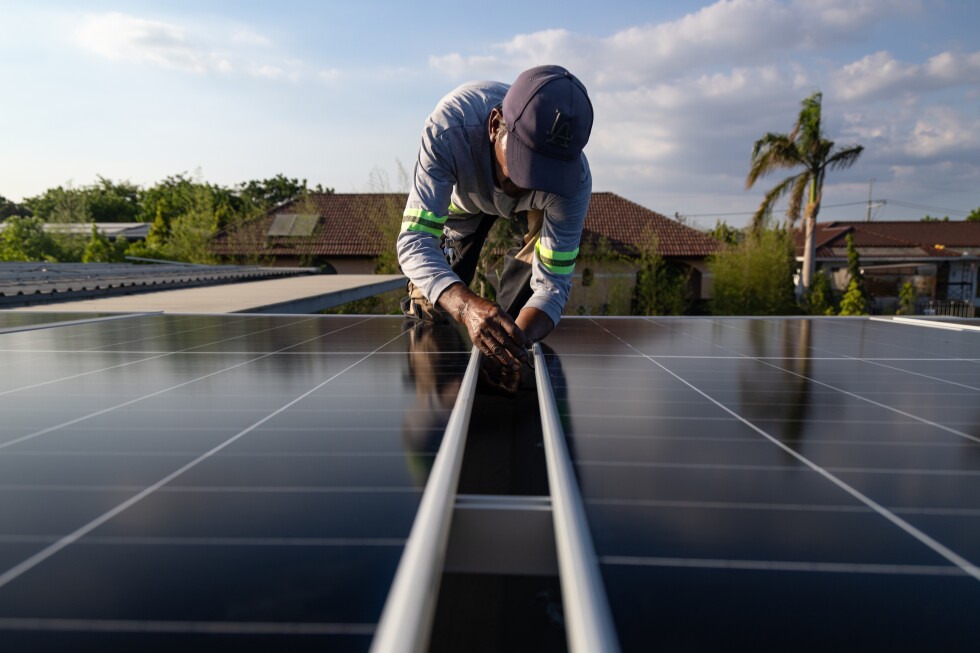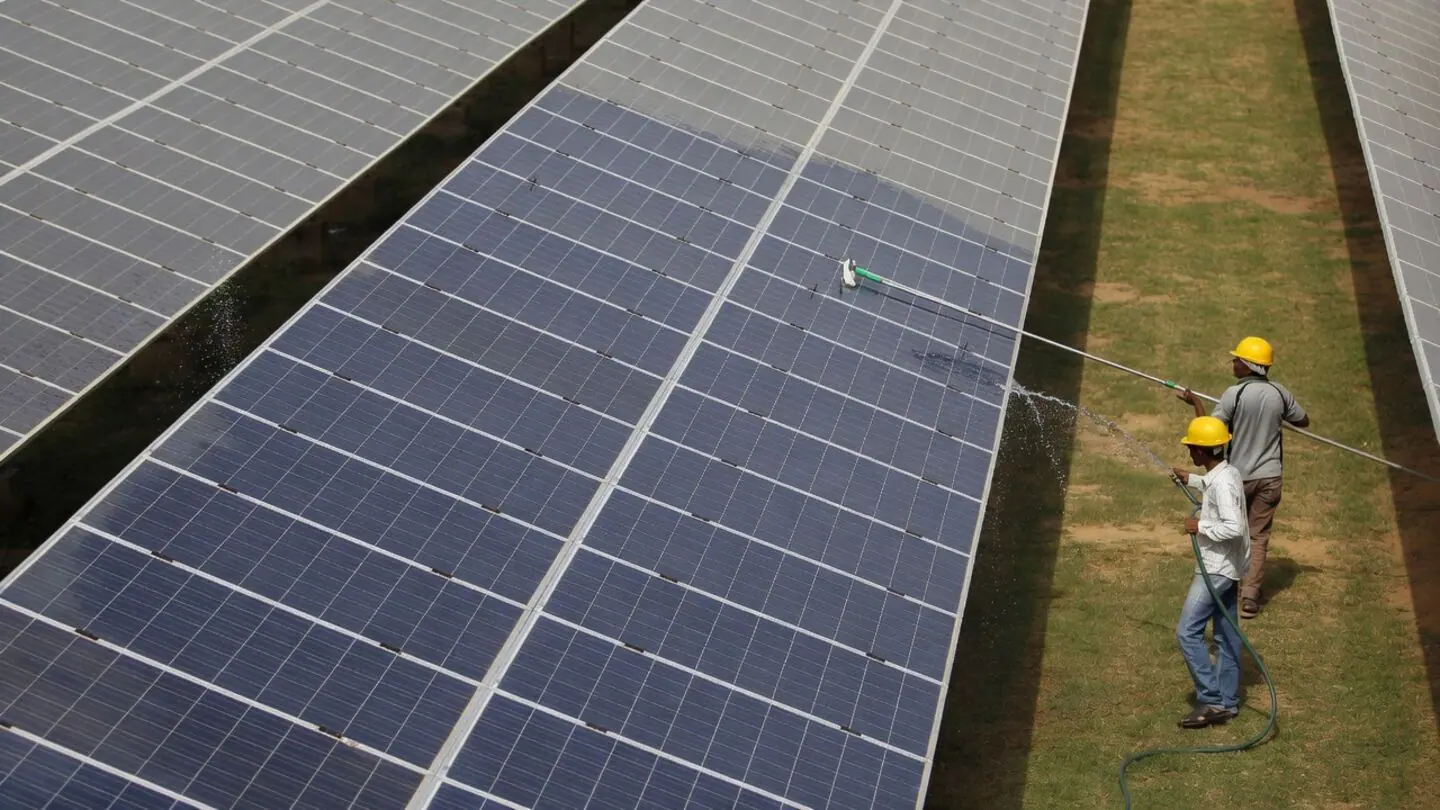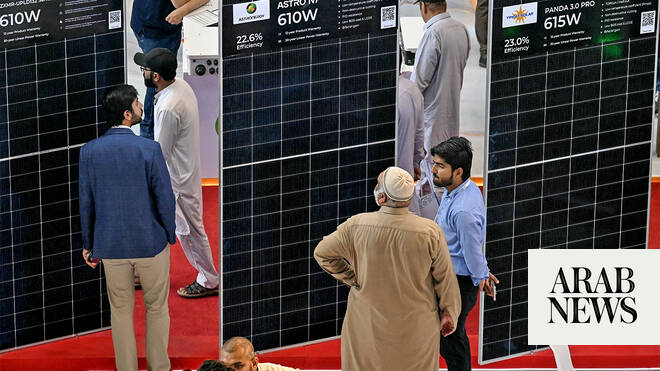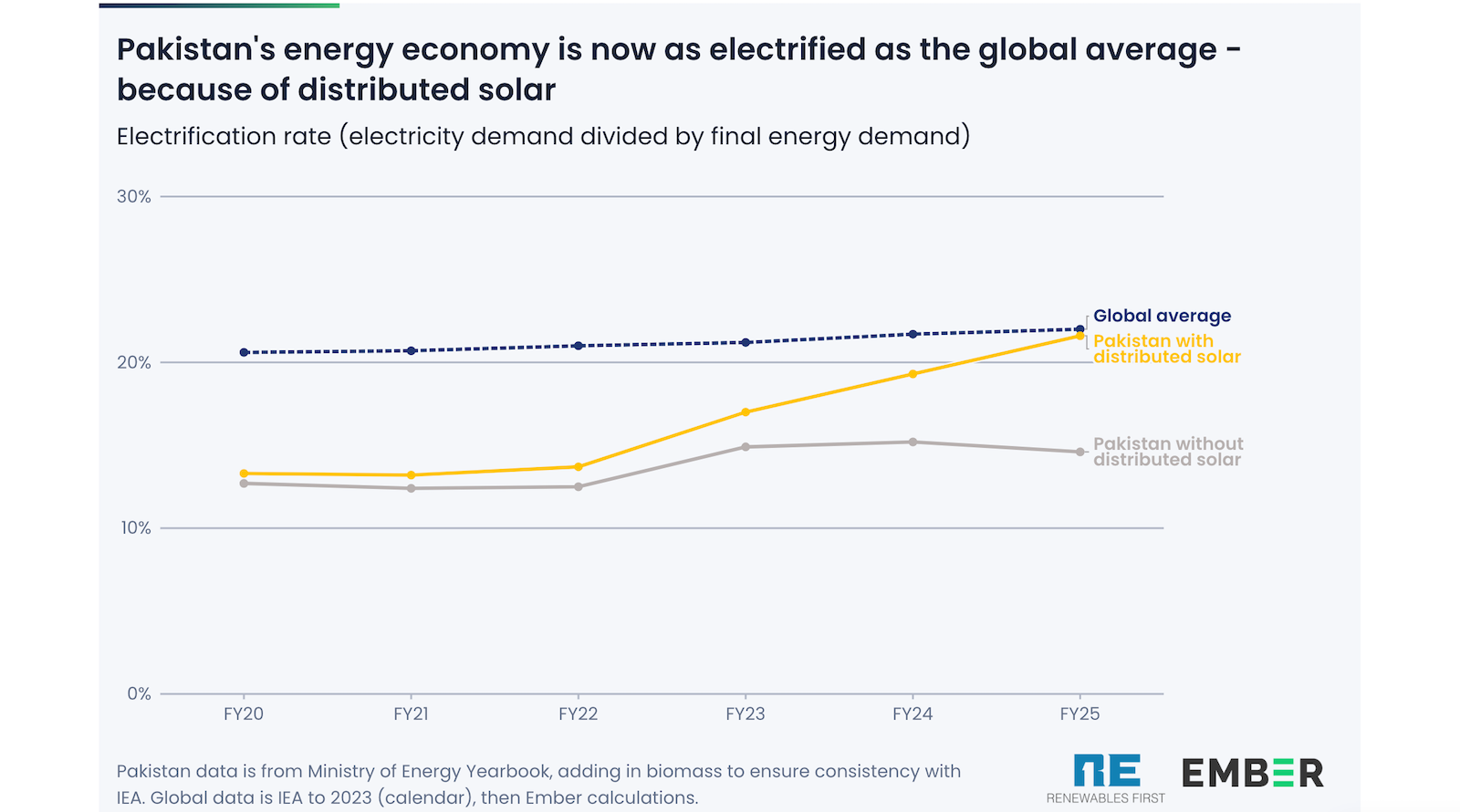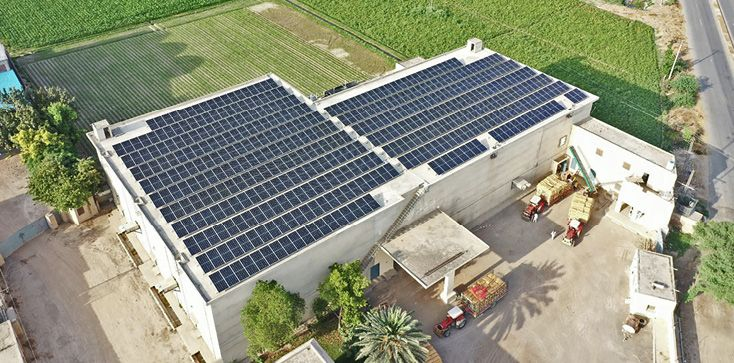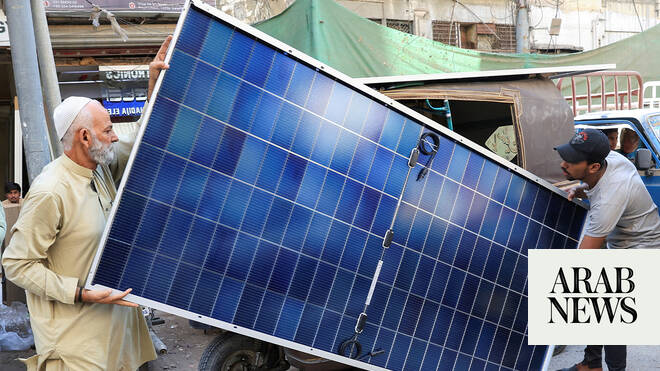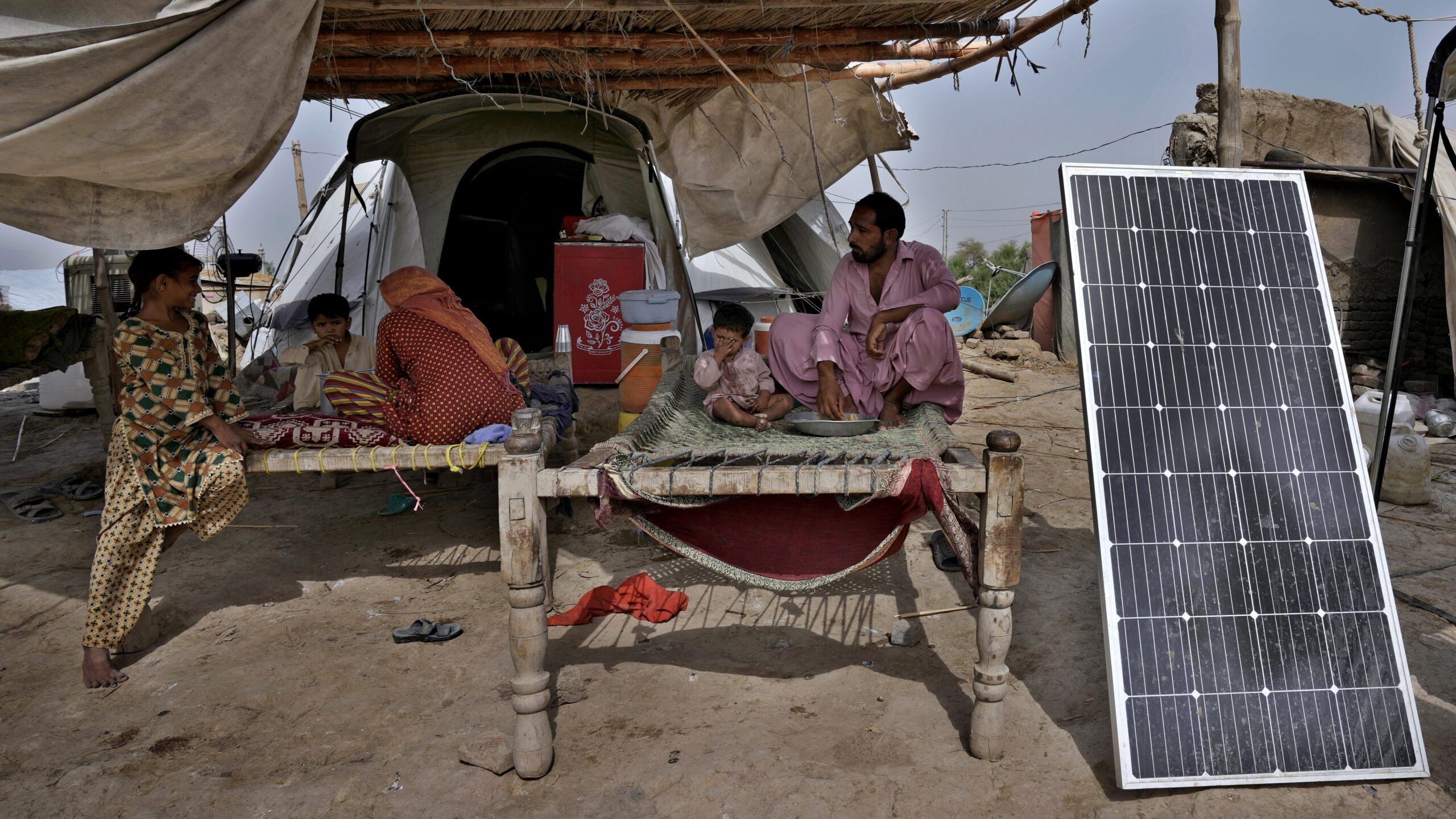
Solar power is booming in Pakistan. The country generates almost 25% of its electricity from solar power — five years ago, it was only 2%.The surge is continuing to accelerate. The World is looking into the why and how of this surge continuing, as part of The Big Fix, a series on the most ambitious ways people are working to tackle the climate crisis. “Most of the deployment happened on people rooftops, in industrial warehouses, even people bought chunks of land to install solar panels,” said Naveed Arshad, director of the Energy Institute at Lahore University of Management Sciences.Arshad told The World that the overhaul began when two simultaneous events occurred: First, Russia invaded Ukraine, sending energy prices soaring. Then, Pakistan’s currency was devalued, making electricity even more expensive.To bring their bills down, many people turned to solar.Carolyn Beeler: So, this is a very individual grassroots thing where people are just going out and buying panels.Naveed Arshad: Yeah, it’s a bottom-up revolution by all means.And so, is that something that you can see walking down the street? Are there a lot of solar panels around now?In the city where I live, Lahore, it’s hard to find a rooftop where there is no solar. Anybody who’s living and can afford it has solar panels already installed. I mean, just take a look at Google Maps and see any Pakistani city, and you’ll find a sea of solar panels.That’s interesting. I was in Lahore, I don’t know, maybe, seven, eight years ago, and that was definitely not the case then. So, a big change in a short period of time. Does having solar panels change anything else other than lowering the price for families? Like, does it prevent some intermittent blackouts or provide more reliable electricity?Mostly people are doing it to save energy costs. In rural areas, it’s mostly for the main or backup supply of the grid. But with this war [in Iran], I think it is now becoming more of a stability thing also. So, people are installing batteries and maybe scaling up their solar installations. So, for example, if somebody has a 10-kilowatt system, it’s going to 15 kilowatt and adding batteries, so that they have a 24-hour backup available in case there is a power shortage. But then, I think the government has managed it. Now, we don’t have power outages except in certain rural areas of the country.Solar panels help power a washing machine and other necessities in Ismail Khan Khoso village in Sohbatpur, a district of Pakistan’s Baluchistan province, May 18, 2023. In rural areas of Baluchistan, only those who saved their solar panels from the flooding have access to electricity to keep the cool in the summer heat.Anjum Naveed/AP/FileSo, Naveed, you have mentioned that these panels are being added to people’s homes and are powering them. It sounds like the electricity is not fed back into the grid. That means this is a pretty big change in how electricity is generated and distributed in Pakistan, moving from large power plants burning fossil fuels, hydropower or nuclear power to people generating power in their own homes. Has that caused any issues for the grid, or have there been any infrastructure updates needed?The grid is now starting to face challenges. I mean, it’s also taken the grid and the government by surprise at how [many] solar panels were installed in the last three years. Just to give you perspective, I think in the past three years, Pakistan has installed more solar panels than the entire African continent combined. There are 54 countries there. And the thing is, solar is now so ubiquitous that people are pushing back [against any changes to] solar-related policies. And the government knows about it. So, they’re not stopping it, but they are changing the policy so that whoever is connected to the grid should be connected at a fair price mechanism.Naveed, it sounds like some pretty specific conditions in Pakistan have really allowed this boom in solar to happen: the electricity price surge and the devaluation of the currency, which made electricity even more expensive. And then you had people who were already used to generating or storing some of their own power at home because of a weak grid. Are there lessons here that you think could be applied to other countries that want to see a big solar boom, like Pakistan, things that could be replicated about your country’s experience?Yeah, I think some cannot be replicated, but others can. So, for example, in Pakistan, most of the rooftops are flat, so we don’t have those curved rooftops. So, that’s why solar panel installation is easy. We have an army of solar installers available in Pakistan. You go to deep villages, deep rural areas, and you’ll find a solar installer there. You will find solar panels there. Then the modularity of solar panels also played a role. People can install one panel to thousands of panels, I mean, any range can happen.And then the government at least did a catalyst, in terms that it abolished duties and taxes, gave out loans at very subsidized rates, and also they have started solarization of their own buildings; so, which actually triggered many installers and many companies to come into Pakistan with so many large orders that they are getting. And then the supply chain availability … there are hundreds of companies in Pakistan that are offering solar panels and other services. And let me tell you the most surprising part of all this: Pakistan has done this without any external financing. So it was, you could say, people’s savings or maybe loans from banks. This is a great thing that, while we have all the solar panels, we did it all on our own.In this AP file photo, men use a cot to salvage belongings, including a solar panel, from their flooded home, in Jaffarabad, Pakistan, Sept. 5, 2022. Some made rescuing their solar panel a priority as they fled their homes amid rising floods, wading through stagnant water with their panel. Fareed Khan/AP/FileNaveed, this sounds like a huge success story, as you have said, almost too good to be true. Are there any downsides, or is there anything on the horizon that has you worried about the continuation of this trend?So, I think the trend is continuing. The more troublesome thing is that we have invested a lot of money in our electricity grid in the past 10 years. Lots of new plants and new transmission lines. And I’m not sure what will happen to them. The worst-case scenario is that it will be a standard asset. Most of these assets will be standard assets that probably will not be able to be used in the future. The best-case scenario is that we can somehow marry the grid and solar panels in a wiser manner, but it is still a problem. Because we have all these installations downside of the meter, we are in an uncharted territory. No country has been there before. For us, I think it’s very important to use it as an advantage rather than as a challenge, and somehow have a win-win situation for the grid as well as for the solar, so that you can say the velocity of this solar panel installation should not be reduced in any way.Sheep graze under solar panels in Hainan prefecture of western China’s Qinghai province, July 1, 2025.Ng Han Guan/AP/FilePakistan also gets almost all of its solar panels from China. Is there concern about being so dependent on one country for this vital resource?Yes and no, because this is not a commodity like fuel, which requires a new shipment of fuel every time you need it. So, if a solar panel is installed, I mean, its lifespan is 15-20 years. So, it’s a long-term, you can say, asset. And yes, it is a challenge, because unfortunately, there’s only one country, China, that supplies solar panels in that quantity and at that price. To address that, the government is coming up with a solar panel policy, where they are encouraging local companies to install solar panel factories and produce them here. How soon those factories will be set up and what will be the scale of that, that we’ll see in the next few years.Parts of this interview have been lightly edited for length and clarity.The story you just read is not locked behind a paywall because listeners and readers like you generously support our nonprofit newsroom. Now more than ever, we need your help to support our global reporting work and power the future of The World. Can we count on you?
Pakistan’s solar revolution - The World from PRX
Pakistan is in the middle of a solar power revolution. Over the past five years, the percentage of electricity generated from solar panels jumped from 2% to nearly 25%. Almost all of that growth has been driven by individuals buying their own solar panels, removing their homes or businesses from the centralized grid and generating electricity for themselves. For The Big Fix, The World's Host Carolyn Beeler speaks with Naveed Arshad, director of the Energy Institute at Lahore University of Management Sciences, about why — and how — Pakistan has embraced solar power.
1,442 words~7 min read