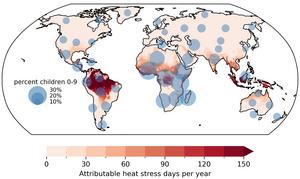
Climate change, including extreme heat and frequent heat waves, is already known to harm ecosystems, agriculture, and human health. New evidence now suggests that increasing temperatures may also slow key aspects of early childhood development.
Published in the Journal of Child Psychology and Psychiatry, the study reports that children who experienced unusually warm conditions, specifically average maximum temperatures above 86 °F (30 °C), were less likely to reach expected literacy and numeracy milestones when compared to children living in cooler environments.
"While heat exposure has been linked to negative physical and mental health outcomes across the life course, this study provides a new insight that excessive heat negatively impacts young children's development across diverse countries," says lead author Jorge Cuartas, assistant professor of applied psychology at NYU Steinhardt. "Because early development lays the foundation for lifelong learning, physical and mental health, and overall well-being, these findings should alert researchers, policymakers, and practitioners to the urgent need to protect children's development in a warming world."
Large International Dataset Reveals Clear Patterns