Modern cosmology is often associated with massive observatories, advanced instruments, and large international collaborations backed by significant funding. However, meaningful progress does not always require such scale. Even in the complex search for dark matter, smaller teams with creative approaches and institutional support can still make important contributions.
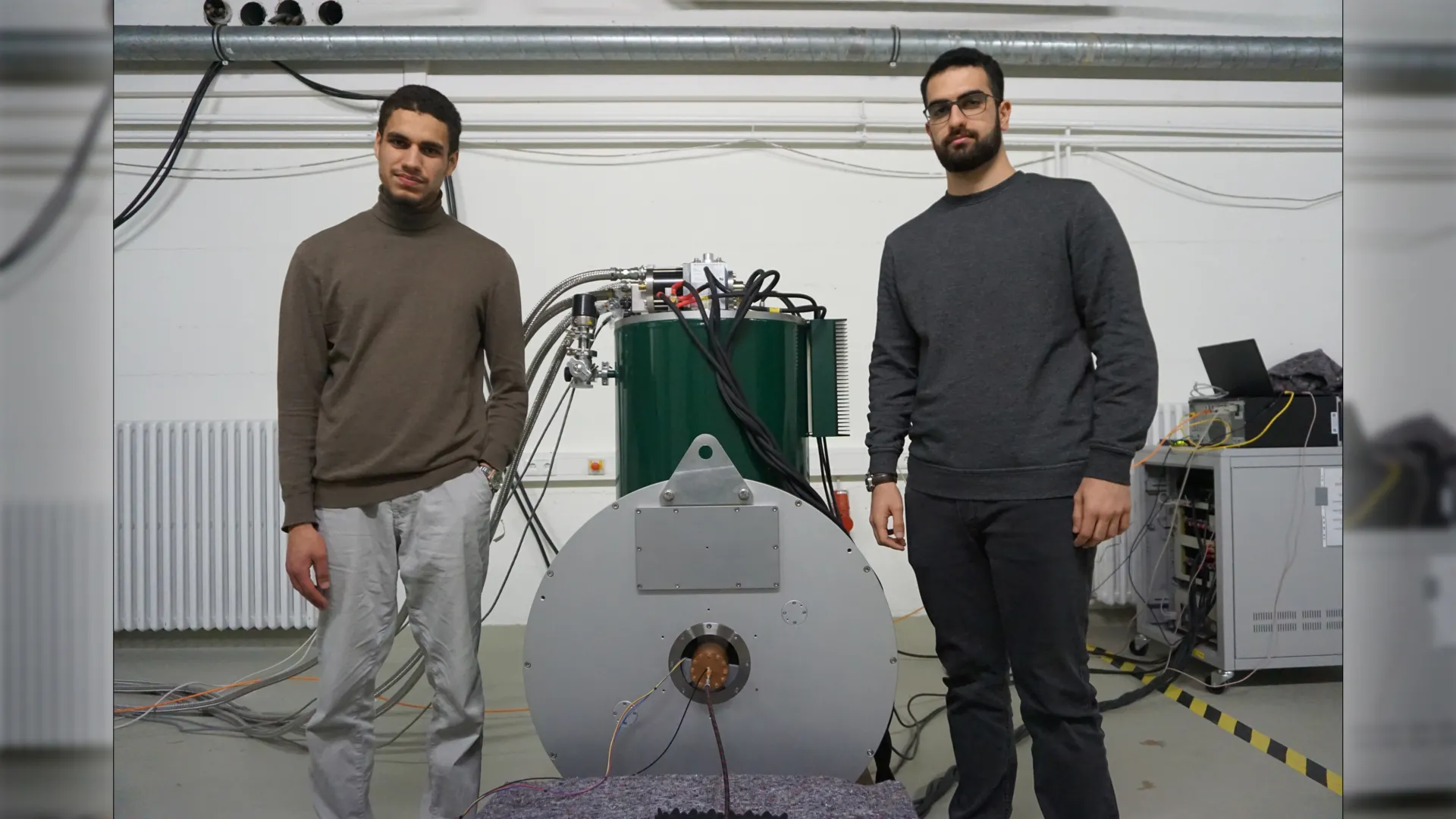
A recent study published in the Journal of Cosmology and Astroparticle Physics (JCAP) highlights this idea. A group of undergraduate students from the University of Hamburg designed and built a cavity detector to search for axions, which are among the leading candidates for dark matter. Despite working with limited resources, they were able to establish new experimental limits on axion properties, demonstrating that smaller experiments can still advance one of physics' biggest unresolved problems.
Student Funding and Institutional Support
The project was funded through a student research grant from the University of Hamburg, provided by the Hub for Crossdisciplinary Learning. This program supports independent research projects led by students.
"We were kind of embedded in the research group of the MADMAX dark matter experiment," explains Nabil Salama, one of the study's authors and a current M.Sc. student in Physics at the University of Hamburg. "MADMAX carries out a similar experiment on a much larger and more complex scale, and we benefited from their expertise and support."