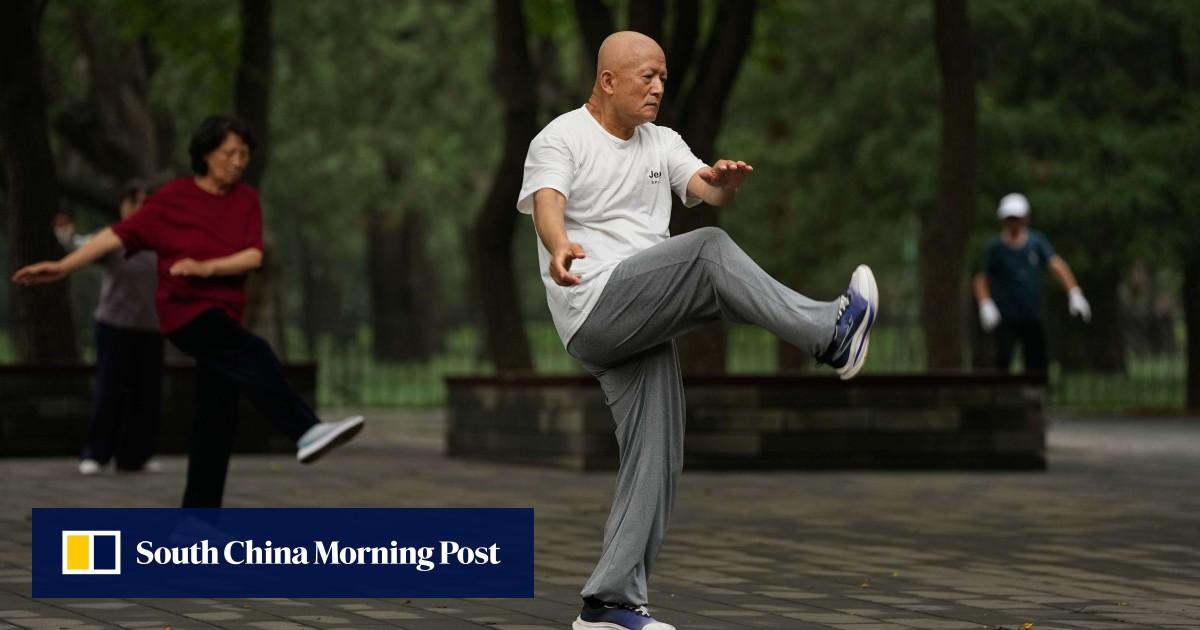
An ancient Chinese exercise practice that combines slow movements, controlled breathing, and meditation may help lower blood pressure as effectively as brisk walking, according to a large randomized clinical trial published in JACC, the flagship journal of the American College of Cardiology. Participants experienced improvements within three months, and those benefits continued for a full year.
High blood pressure remains one of the biggest preventable contributors to heart disease. Doctors often recommend regular physical activity to help manage it, but many people struggle to maintain long-term exercise habits, especially when workouts require gym memberships, special equipment, dedicated spaces, or ongoing coaching.
The practice studied, called baduanjin, is a traditional Chinese exercise made up of eight structured movements that combine aerobic activity, flexibility training, isometric exercise, and mindfulness. It has been practiced for centuries in China and is commonly performed in parks and community settings.
A typical session lasts about 10-15 minutes and does not require equipment or extensive training, making it easy to do in many different environments. Because the exercises are considered low- to moderate-intensity, researchers say the routine is accessible and safe for many adults.