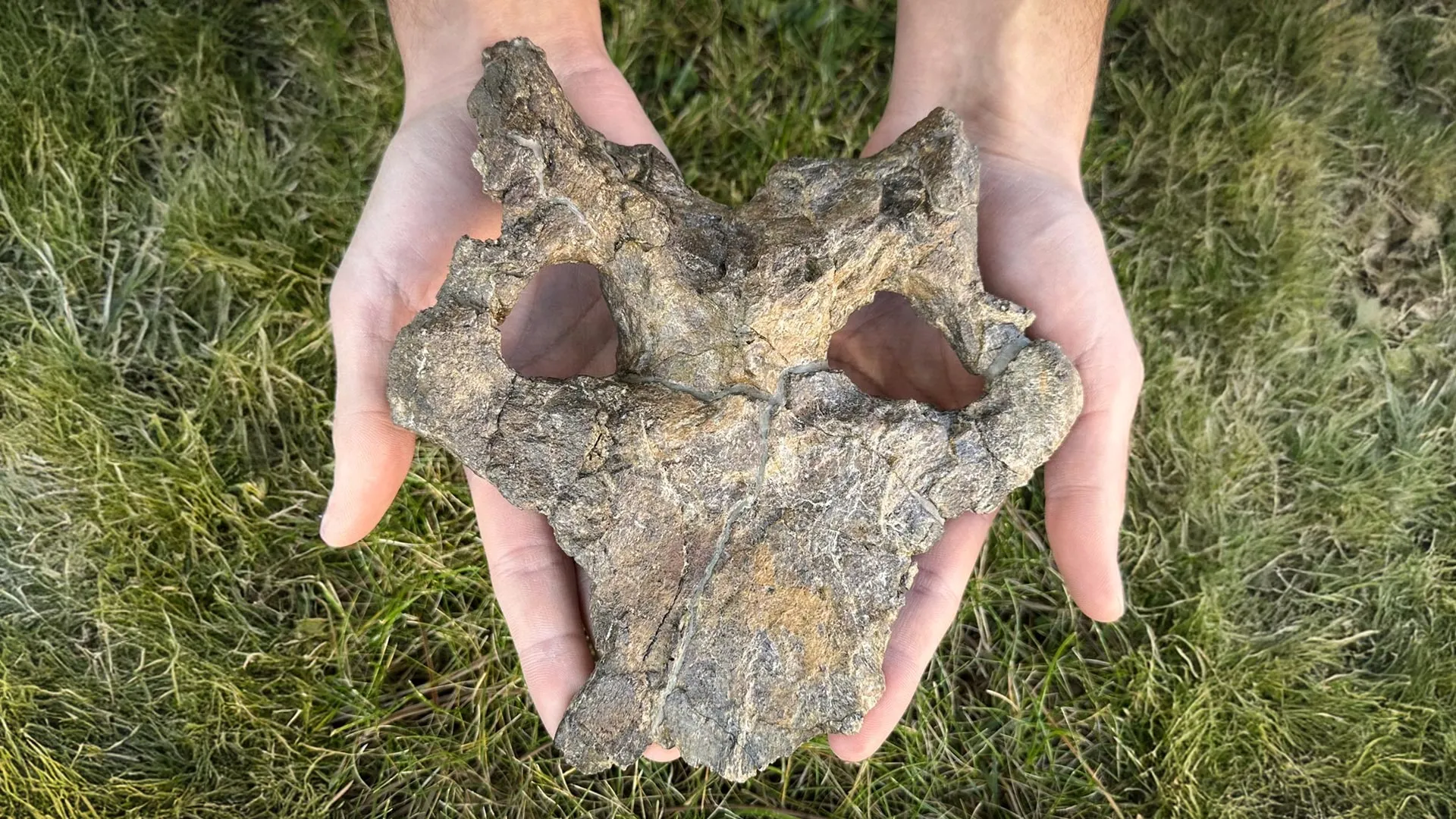
Paleontologists from the Fundación Conjunto Paleontológico de Teruel-Dinópolis have published new findings in the scientific journal Vertebrate Zoology describing an extraordinary stegosaur skull discovered in Riodeva (Teruel, Spain). The fossil, which comes from a plated dinosaur that lived about 150 million years ago, is also helping researchers propose a new explanation for how stegosaurs evolved and spread across the world.
Stegosaurs were plant-eating dinosaurs that walked on four legs and are best known for the rows of plates and spikes running from their necks to their tails. The newly studied fossil was uncovered during excavations led by Fundación Dinópolis at the "Están de Colón" site within the Villar del Arzobispo Formation, which dates back to the Late Jurassic period.
Researchers identified the specimen as Dacentrurus armatus, one of Europe's most iconic stegosaurs. The fossil is considered the best-preserved stegosaur skull ever discovered in Europe, a remarkable achievement because dinosaur skulls are extremely delicate and rarely survive intact over millions of years.
Sergio Sánchez Fenollosa, researcher at Fundación Dinópolis and co-author of the study, said: "The detailed study of this exceptional fossil has allowed us to reveal previously unknown aspects of the anatomy of Dacentrurus armatus, the quintessential European stegosaur, which in 2025 marks 150 years since its first description. Dinosaurian skulls are rarely preserved due to the extreme fragility of their bones. This discovery is key to understanding how stegosaurian skulls evolved.