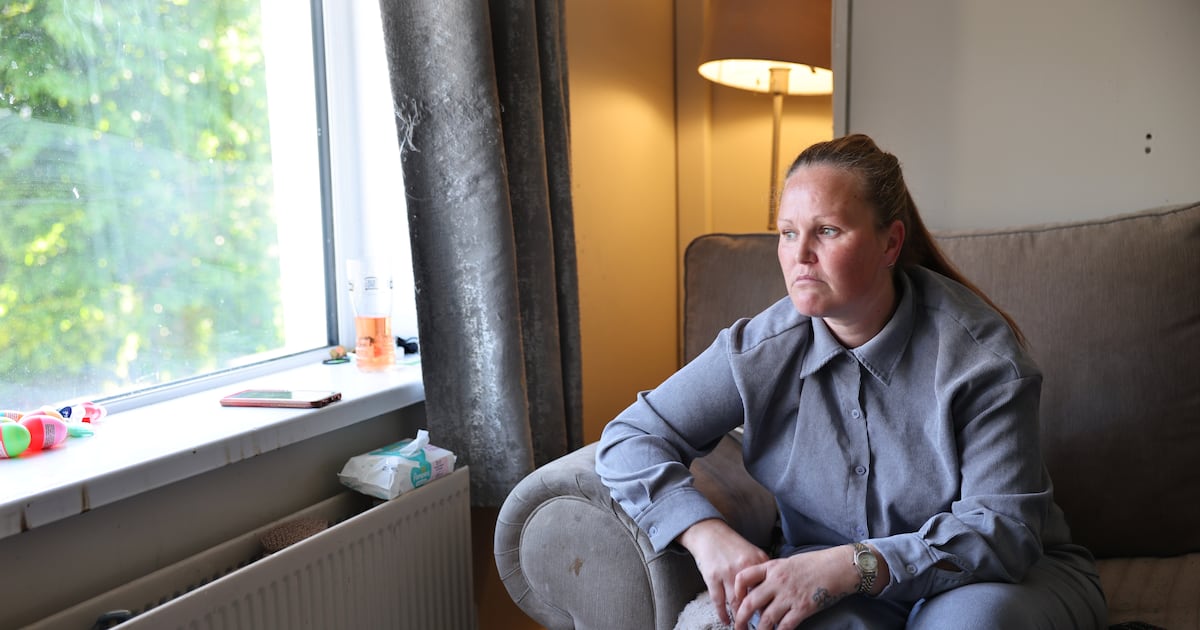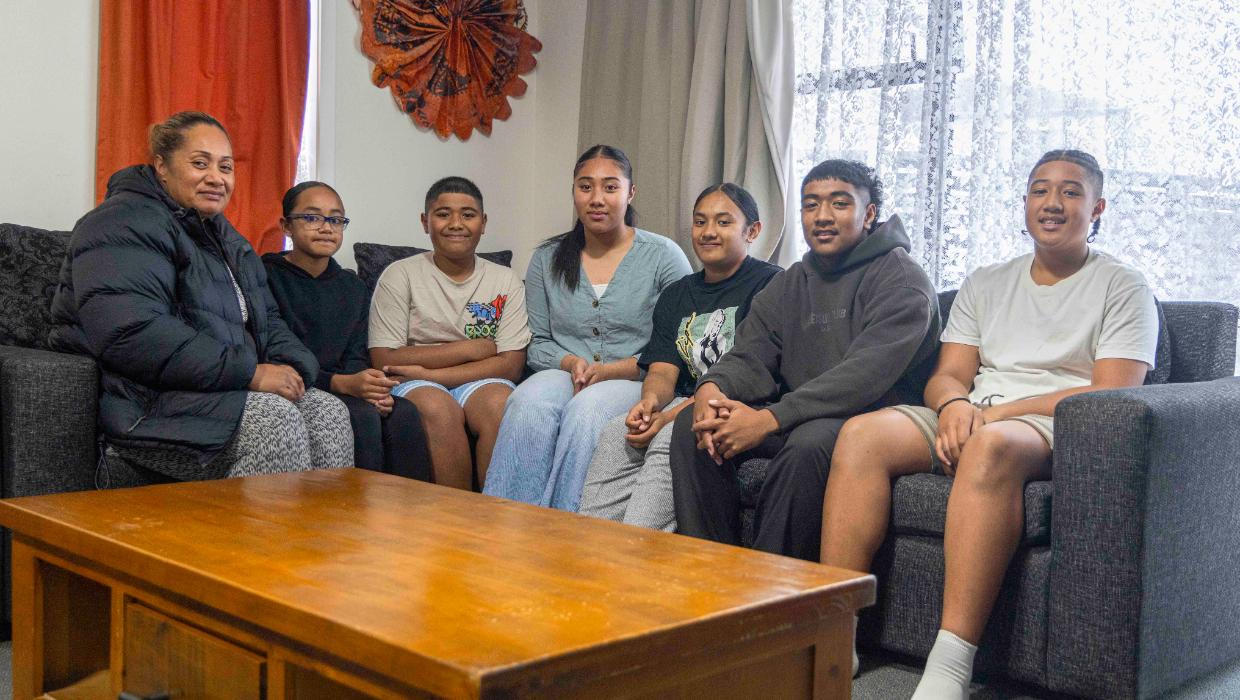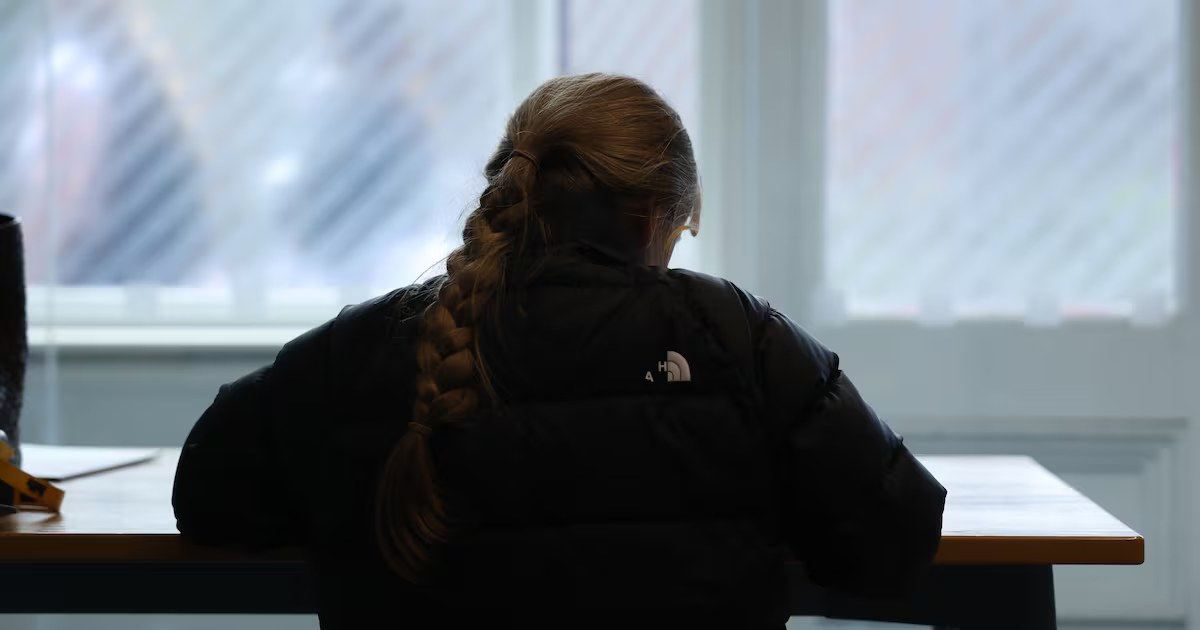
Sophie* (11) remembers the day her family lost their Dublin home. She recalls feeling sad at leaving friends she had played with “all the time”. “We were outside playing on my scooter while my mam was talking to the girl, giving the keys back. We just walked out because all our stuff was already moved into my granny’s,” she says.She had liked living there, she says. “It was big. There was two bedrooms. We had a kitchen, a livingroom.”Now their situation is very different: they share one room with an adjoining bathroom. “It is small,” says Sophie. “There’s a bunk bed with a double bed on the bottom and a single bed on the top. I share the bed on the bottom with my mam.”Sophie has her own drawer; her brother has one too.“He has about 50 billion teddies in his drawer and then all his teddies go in my drawer, and then my drawer is messy and it’s so annoying.“Then we have just the fridge and then we have a window.”Sophie: 'I do worry because I get stressed so I can’t imagine how stressed [my mam] feels.' Photograph: Enda O'Dowd The family lost their home almost a year ago. They have been in two emergency accommodations ever since. Sophie says the first was “really, like, dirty”.“There was like bugs everywhere ... and my mam started crying. She was just so emotional,” she says.Her mother decided they were not staying there.“I do worry because I get stressed so I can’t imagine how stressed she feels,” says Sophie.The 20-room hotel they now live in has strict rules; children must be quiet and not run around. Staff “shout” at the children, says Sophie. Noise at night from other rooms interrupts her sleep. Sophie’s is not a unique story. She is one of 5,571 homeless children, according to latest data published by the Department of Housing. The number of children in homelessness has increased by almost 20 per cent in a year. In advance of the department publishing next month its first Child and Family Homelessness Action Plan – aimed at addressing the rising number of children in emergency accommodation – Sophie is one of three children interviewed by The Irish Times with the support of homeless charity Focus Ireland. Sophie, one of 4,118 homeless children in Dublin, is a member of Focus Ireland’s children and youth panels. Photograph: Enda O'Dowd This reporter first interviewed homeless children in November 2014 when there were far fewer children without homes: 680 children in 307 families were homeless in Dublin at the time. The years-long housing crisis has only exacerbated the problem.Those interviews, also in with the charity’s support, were raised in the Dáil by then leader of the opposition, now Taoiseach Micheál Martin. The interviews, he said at the time, “laid bare an appalling and shameful scandal in present day Ireland”.Since then, the number of homeless children in Dublin has increased by 505 per cent, to 4,118. They are in 1,866 families.Sophie is a member of Focus Ireland’s children and youth panels. Established a year ago “to amplify the voice of the homeless child”, the five panels, covering separate age groups, provide a forum for those aged zero to 26 years to speak about their conditions and needs in homelessness. [ Child homelessness up by 19% since last year, new figures showOpens in new window ] She says she would like “more space” to store belongings, a desk to do her homework and somewhere for “bigger kids” to hang out and where she could “get some peace”. A fold-out camping chair serves as her desk for homework. “All my books are just falling everywhere. There is no table ... It is very hard,” says Sophie.The family eat breakfast sitting on the bed in their room. Only occasionally do they use the kitchen or hotel diningroom for dinner. “The children get shouted at,” says Sophie’s mother. “I dread going back there for dinner.”She says she tells staff: “Don’t rush them. We are anxious living here and you are making it worse.” But she fears “repercussions” if she speaks up too much. “I don’t want to make life harder.”Asked if she knows when the family will receive a home, Sophie says: “My mam said it would be a month and it has been almost a year. I know she is trying really hard to get us a house. It makes me a bit worried.”She looks forward to having a home of their own. “I want to decorate my room. I am getting my cousin and my other friend to come over and help me,” she says.Another child in homeless accommodation shares a similar story.Dembélé* (14), on Focus Ireland’s panel for 12- to 18-year-olds, has lived in Dublin city-centre emergency accommodation with his three siblings and parents for more than two years.“We have two rooms and a kitchen that we all – all the families – share,” he says. Children are not allowed in the kitchen and cannot be left alone in bedrooms. “I have a little baby sister that whenever my mum cooks we – me and my sister – we have to take care of her,” he says. “I would prefer better and bigger rooms. We need more space for our stuff. I share a room with younger siblings. It is a lot annoying, I want peace, but they just scream a lot. It is stressful.”He does not know when the family will find a home. He says his parents are looking but it will be “very hard” to find a house for six people.[ Accommodation crisis pushes ‘destitute children closer to sleeping on Dublin streets’Opens in new window ]“It is stressful for them. My little brother, he wants to go outside to play, but most of the time my parents have no time to go with him to the playroom and he can’t [be there] alone. He is seven,” says Dembélé.They cannot have friends to visit and he says it is “boring” for his younger siblings; they cannot stay in the room for the whole day especially during the summer holidays. “It is going to be very boring for them,” he says.A home would mean Dembélé could have a pet cat. “They are just really lovely and my friends, they all have cats,” he says. I would wake up at six in the morning to go to school. I had to take two buses. So I was really tired in school. I remember once I fell asleep in science and I actually got in trouble for it— Anna“For my family, it would mean a lot for us. We would have more facilities to do more stuff and it would be more peaceful, more space.”Anna* (16) from west Dublin, was homeless for three years with her mother and two younger brothers until last summer. She still participates in Focus Ireland’s 12s-18s panel.Her family moved four times between various emergency accommodations. “At first I didn’t really mind it, but sometimes it would make me embarrassed because none of my friends or schoolfriends knew,” she says of the fact that they were homeless.Their first accommodation was a long distance from her school and she struggled to sleep at night.“There were people banging doors, yelling and stuff like that. I was having nightmares and panic attacks,” she says.“I would wake up at six in the morning to go to school. I had to take two buses. So I was really tired in school. I remember once I fell asleep in science and I actually got in trouble for it.” The family had to share a bedroom and book time slots to use kitchens. Some of their items were stolen occasionally. “At weekends my mum would try to take our mind off it a little bit. We would go to town and shop around, eat and then come back – maybe do stuff we hadn’t done, like the Guinness factory or go to Cork,” says Anna.She says she experienced overwhelming anxiety from being homeless – something that still affects her. “I closed down myself. I didn’t want to like bother [my mother] with my stuff because I saw she had her own problems,” she says. “I would sometimes hear her crying at night so I kept everything to myself, which now has an effect on me because if I am stressed I start having a panic attack.”She recalls the feeling when her mother received a call telling her the family had been allocated a house “That moment made her really happy. She was back to smiling. You saw the little light in her start coming back,” says Anna.Things are “really good” now, she says; she has her own room, she can have friends over and bring people in. “It is quiet so I fall asleep easily – I can think about the future,” she says. “Homelessness is really horrible and I wouldn’t wish this on anyone.”The Focus Ireland panels have helped these children while providing important feedback for both the charity and to feed into Government policy, says Amy Canavan, child support worker with the charity’s family homeless action team (HAT). “With the opportunity to communicate their views and needs, the message to them is: ‘You are valued. You are important. What you say matters.’ It gives them some sense of agency in a situation where they can feel very helpless,” she says.Some of the young people presented at the Department of Housing during on the forthcoming Child and Family Homelessness Action Plan.HAT leader Hester Rodenhuis found it “powerful and heartbreaking” that many children, when asked what they wanted in their eventual home, said: “A couch.”“They don’t have their own couch in a hotel room. A couch represents a nice evening with family, in a room that is not a bedroom,” says Rodenhuis.Among things the children wanted in homeless accommodation were staff that didn’t shout at them, space for older children to hang out, better quality beds and bedsheets and more child-support workers. Focus Ireland says these are “very basic” demands. Families who are “long-term homeless” should be prioritised for social housing and sufficient social homes should meet the needs of children with additional needs and disabilities, the charity says.A spokesman for the Department of Housing said addressing family homelessness was a “key priority” for Government. The new action plan would “drive the continued focus on preventing children and families entering emergency accommodation, providing enhanced supports for children experiencing homelessness, as well as measures to accelerate exits and reduce the time spent by families in emergency accommodation”, it said.A spokeswoman for the Dublin Region Homeless Executive – the co-ordinated service responding to homelessness across Dublin’s four local authorities – said it had last year adopted a new homeless action plan, which included “specific actions to ensure that children in emergency accommodation receive appropriate supports and services”. This included collaboration with the Health Service Executive’s social inclusion teams on a “families first” programme, which “proposes a dedicated, multidisciplinary team to deliver co-ordinated, wraparound supports for families experiencing homelessness” across Dublin. Asked for her thoughts on taking part in the children’s panel, Sophie says it is “fun”.“It’s also good I am doing it,” she says, as she believes it will help other homeless children “because they will probably also want more space and to not be given out to [by hotel staff] for just talking.” * The names in this story, chosen by the children, have been changed to protect their anonymity.
‘Powerful and heartbreaking’: A couch is what Ireland’s homeless children say they want most
Focus Ireland says the desires of children in homelessness accommodation – for more space, better beds and sheets, and that staff don’t shout at them – are ‘very basic’ demands
1,910 words~9 min read