Nigeria’s rising debt figures mask a deeper reality driven largely by naira devaluation, FX volatility, and long-hidden liabilities, writes Festus Akanbi
Nigeria’s rising debt profile has again returned to the center of economic debate, but beneath the frightening headline figures lies a more complicated story shaped by exchange-rate volatility, inherited liabilities, weak revenue generation, and rising borrowing costs, rather than by reckless accumulation of fresh loans.
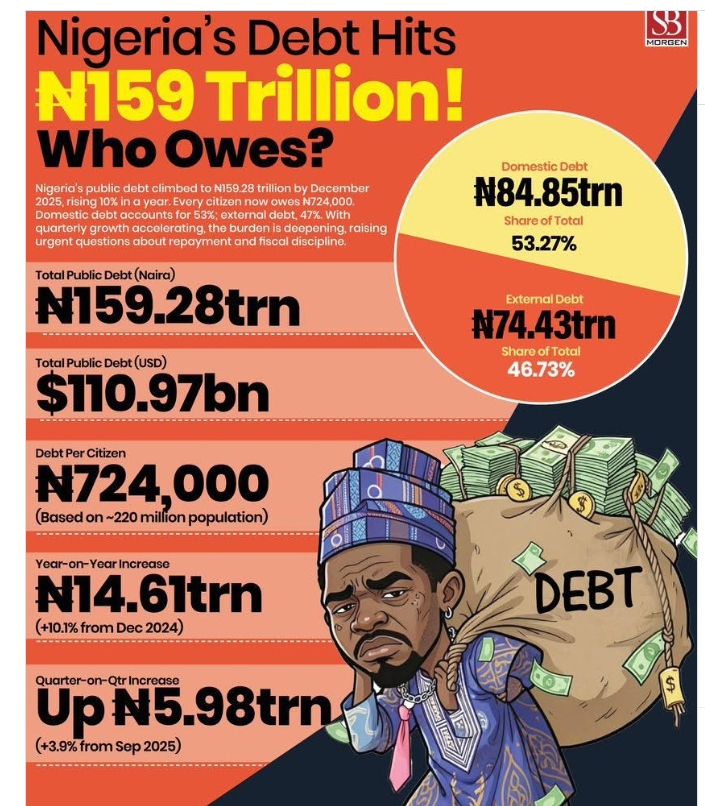
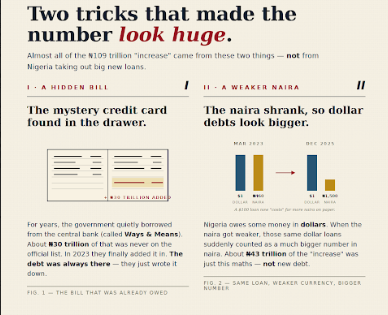
The controversy followed revelations that Nigeria’s total public debt rose from about N49.8 trillion in March 2023 to nearly N159.2 trillion by December 2025, triggering fears that the country may be drifting towards a debt crisi. Yet economists insist that much of the increase was driven by the sharp devaluation of the naira and the formal recognition of long-existing obligations.
A report by The Briefing – Macro & Markets argued that the dramatic rise created a misleading impression that Nigeria had accumulated massive new debt in a short period. According to the report, when measured in dollar terms rather than naira, NNigeria’stotal debt only rose slightly from about $108.2 billion in March 2023 to roughly $110.9 billion by December 2025.