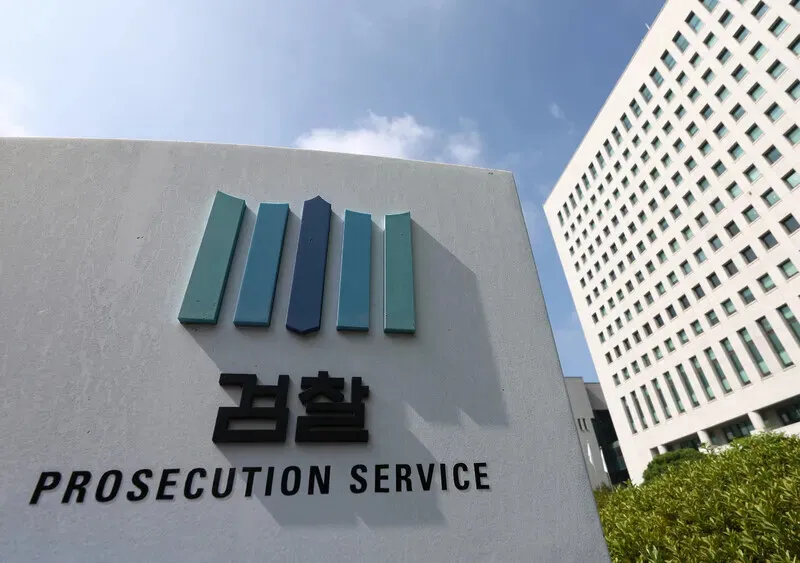
The Supreme Prosecutors’ Office in Seoul’s Seocho District as seen on Sept. 26, 2025. (Yonhap)
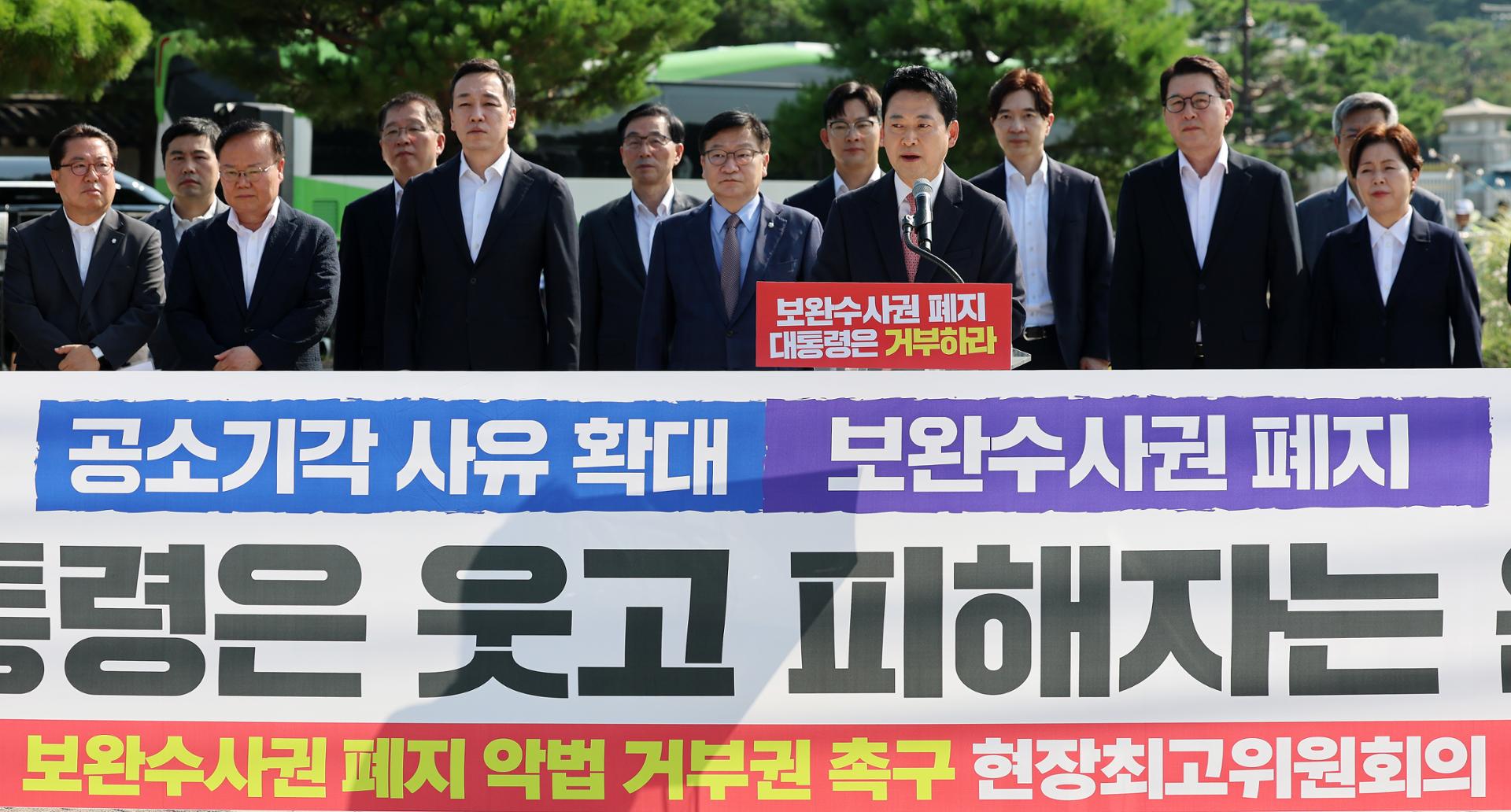
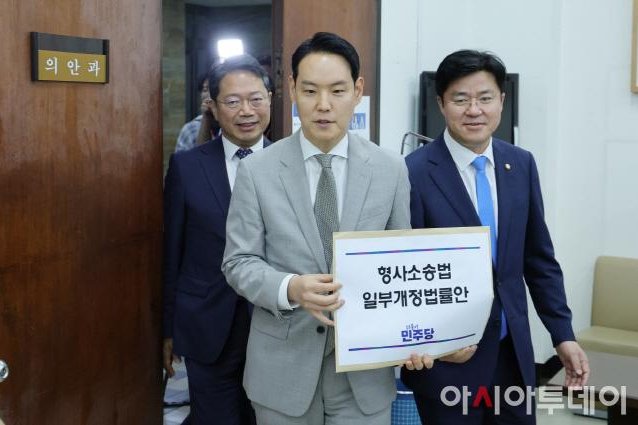
South Korea’s prosecution service will be dissolved in September 2026, 78 years after its inception with the establishment of the Republic of Korea in 1948. After decades spent growing its authority by taking on corruption scandal after corruption scandal, the prosecution service, now a leviathan agency unable to keep its own power in check, brought about its own demise with repeated controversies over biased investigations that followed every change of presidential administration. The decision to disband the service immediately provoked backlash, with former prosecutors general and others signaling their intent to file a constitutional complaint, and some within the service calling for follow-up measures to minimize negative repercussions for the public, which could be caused by the subsequent gaps in handling criminal cases. The National Assembly passed an amendment to the Government Organization Act introduced by the ruling Democratic Party during the plenary session on Friday. Following a one-year grace period, the two main functions performed by the prosecution service will be spun off into two newly created agencies in September 2026. Authority over indictments will be transferred to a public prosecution office under the Ministry of Justice, while its investigative functions will be handed over to a dedicated agency for investigating felonies, which will fall under the authority of the Ministry of the Interior and Safety. The prosecution service of today bears little resemblance to the agency it was when it was first founded. After Korea’s liberation in August 1945, during US military rule, the prosecution service existed as a court department, instead of being its own independent organization. The promulgation of the Prosecutors’ Office Act on Aug. 2, 1948, allowed the office to evolve into an agency independent of the court. Over the years, 46 individuals have served as prosecutor general of Korea, starting with Kwon Seung-ryeol on Oct. 31, 1948, and ending with Shim Woo-jung. The two-year term system for prosecutors general was introduced in 1988 to ensure that prosecutors could exercise their investigative authority without feeling pressured by any given presidential administration. Ironically, it was around this time, starting in the 1990s, that prosecutors frequently became embroiled in disputes over their political neutrality. At the center of this controversy stood the Supreme Prosecutors’ Office’s (SPO) Central Investigation Department, known to be under the direct control of the prosecutor general. Provisions for establishing the department had been laid out in the Prosecutor’s Office Act in 1949, but its formal launch was delayed until 1961 on account of the Korean War and other circumstances.Its name changed over time from the simple "Investigation Bureau” and the “Special Investigation Department” before being reorganized as the Central Investigation Department shortly after the Chun Doo-hwan regime took power in 1981. From that moment on, it served as the central hub for investigating corruption scandals involving those in power. The SPO’s Central Investigation Department handled investigations into corruption cases involving politicians and large corporations that were difficult for local prosecutors’ offices to tackle. Major power-related corruption cases in South Korea’s modern history, such as the Jang Yeong-ja and Lee Chol-hui financial scandal in 1982, Roh Tae-woo’s slush fund case in 1995, the Hanbo scandal in 1997, the corruption scandal involving former President Kim Young-sam’s second son, Kim Hyun-chul, in 1997, and the presidential election fund investigation in 2004, were all handled by that very department.The Central Investigation Department garnered a reputation for itself as the “sword of justice.” However, the sword turned out to be double-edged. As the prosecution service’s authority over investigations and indictments grew, it began to be exploited by those at the top of the government. The independence and fairness of investigations became compromised due to the vested interests of those in power, earning the prosecution service a reputation as a “political” agency. The service’s own unseen system of promoting prosecutors who oversaw investigations of politicians to key positions in exchange for steering investigations to align with the administration’s interests only added to this reputation. The investigation into former President Roh Moo-hyun, which led to his tragic death in 2009, became the direct catalyst for reforming Korea’s prosecution apparatus. The SPO’s Central Investigation Department, which had handled the case, was disbanded in 2013 when the Park Geun-hye administration took office, after it came under fire for what many saw as a politically retaliatory investigation. It was around this time that those within political circles and civil society realized that allowing the prosecution to wield both investigative and prosecutorial powers was the structural root of their abuse of authority. Public outrage toward prosecutors grew when then-Prosecutor General Yoon Suk-yeol conducted sweeping investigations by mobilizing special investigation units to probe the family of then-Justice Minister Cho Kuk. The Yoon administration, which allowed a former prosecutor general to leap up in the ranks directly to be president, saw the prosecution launch blatantly biased investigations that pandered to those in power. The sweeping investigations into now-President Lee Jae Myung, the leader of the opposition at the time, were lambasted as being retaliatory and intended to humiliate him. When it came to investigations into Yoon’s wife, Kim Keon-hee, who was accused of meddling in the Deutsch Motors stock price manipulation case, the first lady was given perks such as having prosecutors question her at the location of her choosing. The case itself was also dropped without any charges being pressed. After years spent adding to the list of reasons for prosecution reform, Korea’s prosecution service will finally be disbanded under the administration of Lee Jae Myung. Given the inevitable major changes to Korea’s criminal justice system, a prosecutorial reform task force under the prime minister’s office will prepare follow-up measures over the next year to prepare for the abolition of the service as it currently stands. The service, for its part, plans to draw up specific procedures for the handover of its duties to the two newly created agencies for indictments and investigations of felonies, including the designation of the two institutions’ roles, divvying up of personnel and coordination of their respective authorities. The exact scope of investigative power to be granted to prosecutors belonging to the new indictment office is also a key issue to be debated, with a decision yet to be made on whether to grant prosecutors with the agency the authority to carry out supplementary investigations. An appropriate distribution of authority will need to be set so that prosecutors with the indictment office can act as a check on the police and the serious crimes investigation agency while warding off the abuse of powers to conduct independent investigations. The constitutionality of the abolition of the current prosecution service in the Government Organization Act will likely be contested. A group of former justice ministers and prosecutors general released a statement Sunday declaring, “The abolition of the prosecution service is a flagrant abuse of legislative power that violates the basic principles of the Constitution. We will do everything to right this wrong, including filing constitutional appeals.” Despite the circumstances, prosecutors in the field have emphasized the importance of follow-up discussions. “I hope that various measures to restore a proper system are discussed in future legislative stages,” a prosecutor based in the Seoul metropolitan area commented.“If there is a problem with the prosecution service, relevant parties should discuss the issue amongst themselves. I am afraid that in this revised system, ordinary civilians will be impacted negatively,” another senior prosecutor stationed in the same region pointed out. By Kim Ji-eun, staff reporter; Kwak Jin-san, staff reporterPlease direct questions or comments to [english@hani.co.kr]