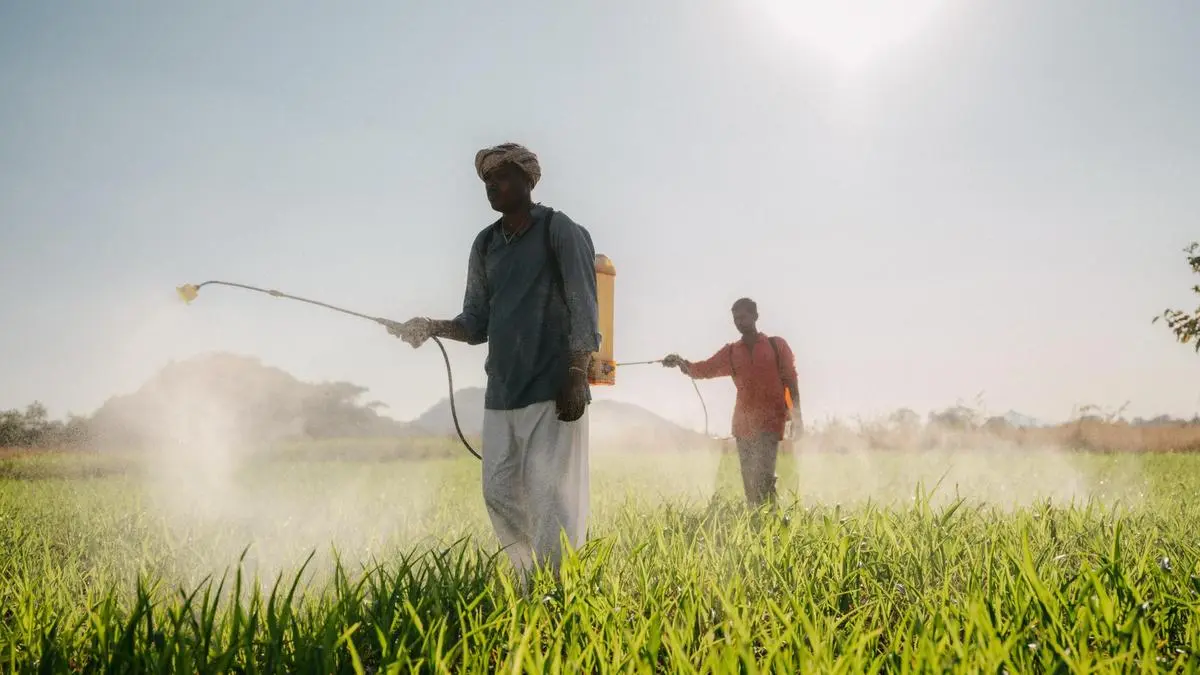
Our previous call on food and agri-business major Godrej Agrovet was published in March 2024, when the stock was around ₹485. The stock is now around ₹570, giving a moderate price gain of about 17.6 per cent (annual dividend yield of about 2 per cent) but outperforming broader market by over 15 percentage points.However, the journey hasn’t been linear. The stock hit all-time high of ₹877.85 (BSE) in July 2024, corrected a bit, again moved near peaks in July 2025, and then has corrected 35 per cent so far. We believe the rallies were driven by a mix of Godrej family settlement-led ownership clarity, recovery expectations after a weak FY23 (profit drop), improving margins and hopes around palm oil and animal nutrition businesses, while the correction from peak can be attributed to the uneven delivery across Crop Care, Dairy and Astec, along with the possible reassessment of near-term earnings versus earlier optimistic expectations.The stock now trades at around 17 times FY28-estimated consensus earnings, which assume about 18 per cent adjusted EPS growth in both FY27 and FY28, following a 7.6 per cent rise in FY26. Valuation comfort comes from the fact that the FY27 PE is about 16 per cent below its five-year average, while earnings growth over the next two years supports the medium-term upside.Thus, existing investors can continue to hold Godrej Agrovet shares. Fresh investors with a three-five year view can accumulate gradually, on declines.The business case now rests on earnings delivery, not just re-rating. FY26 shows clear improvement, but the recovery is uneven. Palm oil and animal nutrition are strong engines. Crop care, dairy, foods and Astec businesses need to step up more. We explain below.BusinessGodrej Agrovet has multiple business segments, each with different pulls and plugs.One, it sells cattle, poultry, fish and shrimp feed in India and Bangladesh under various brands.Two, it produces crude palm oil (CPO), crude palm kernel oil (CPKO) and palm kernel cake. Given India’s heavy dependence on imported edible oils and the pressure this places on the import bill when the rupee is weak, this improves the strategic relevance of the company’s palm oil business. Its domestic plantation-led, integrated model positions it as a beneficiary of India’s push to reduce edible-oil import dependence.Three, the company sells herbicides, insecticides, fungicides, growth regulators and fertilisers and organic manures under its crop care segment. Astec, a listed subsidiary (m-cap ₹1,500 crore), makes active chemical ingredients and intermediates.Four, the company runs the Jersey dairy brand through Creamline.Five, it also sells poultry/processed foods under Real Good Chicken and Yummiez.Segment wise, the company organises operations across animal nutrition (46 per cent revenues in FY26), palm oil (19 per cent), dairy (15 per cent), crop care (11 per cent), poultry/processed foods (7 per cent) and others. But as percentage of FY26 consolidated segment profit before interest and taxes, Palm oil is the biggest, followed by animal nutrition, crop care, poultry/processed foods, dairy and others.Specifically in FY26, animal nutrition and palm oil performed well, but crop care business faced a challenging year. Astec segment achieved a turnaround, reaching EBITDA break-even. Dairy segment profitability was squeezed by elevated milk procurement costs. Foods saw revenue degrowth but saw margin uptick with focus on higher-margin categories.Beyond profitability, Godrej Agrovet saw improvement in operational efficiency as average net working capital days fell from 45 in FY24, 39 in FY25 to 25 in FY26. Average ROCE has improved to 20 per cent in FY26.Growth pillarsThe main change is that Godrej Agrovet is no longer only a margin recovery story. Consensus estimates project 9-9.5 per cent margin for FY27 and FY28, not very different from FY26. The company is trying to become a more focused, value-added and market-facing agri platform. To understand, let us look at its two big segments — palm oil and animal nutrition.Palm oil segment had a landmark FY26. Segment revenue rose 42.4 per cent and segment result (segment profit before interest and taxes) rose 67.9 per cent. Segment margin improved to 20.1 per cent from 17 per cent. The management commentary indicates record area expansion, strong fresh fruit bunch growth, record oil extraction ratio and a medium-term benefit from tree maturity. It has developed over 75,000 hectares of plantations across Andhra Pradesh, Telangana, Tamil Nadu, Goa, Maharashtra and Mizoram. The company is also moving towards value-added products, with a specialty fat refinery being rolled out and a goal to have 50-55 per cent of the palm oil portfolio in value-added products by FY31. Roughly 50 per cent of its capex for FY27 is being deployed specifically toward this business.Animal nutrition business has also improved. FY26 volumes grew 11.6 per cent and Q4 volumes rose 15.2 per cent. Cattle feed was the key driver, with Q4 volumes up 24 per cent. The management is targeting double-digit FY27 revenue growth, largely volume-driven, with a longer runway over the next decade. Growth will be driven by new products and higher adoption of branded compound cattle feed. Margins are expected to benefit from R&D-led raw material optimisation, technical services, efficient sourcing and the new pet-food manufacturing adjacency.Our viewOur call is based on positives and checks.The positives are clear. First, palm oil has become a high-margin profit engine with multi-year volume visibility from maturing trees and downstream value-addition. Second, animal nutrition is showing volume growth, mix improvement and margin support from branded feed adoption. Third, working capital and ROCE improvement give the business better quality. Net debt to EBITDA at around 2x is comfortable.The checks are equally important. Crop care had a weak FY26, with steep drop in margins. The management expects recovery from Q2FY27, helped by inventory normalisation, but this remains to be seen. The recovery could face near-term headwinds from higher costs due to global supply disruptions. Also monitorable are recent negative headlines on herbicide regulations. Creamline Dairy also remains weak, with FY26 revenue flat and EBITDA falling by one-third. The expectation is milk procurement prices would normalise in a few months, but that is a big ‘if’. Astec has improved, but not yet a meaningful profit engine. The company targets good revenue growth this year and higher share of exports, but expects some fruition of CDMO play to be seen from FY28.Lastly, India’s 2026 monsoon will be a key monitorable, given Godrej Agrovet’s exposure to crop inputs, cattle feed, dairy costs and palm oil yields. A weak or uneven monsoon could hurt volumes and margins. Globally, palm oil prices remain exposed to Malaysia/Indonesia supply, crude-linked biodiesel demand and weather risks. For Godrej Agrovet, the domestic plantation base helps, but earnings may not be fully insulated from global price swings.Published on May 16, 2026
Godrej Agrovet Accumulate Call Palm Oil Animal Nutrition Outlook
Godrej Agrovet trades below five-year average P/E valuation with strong palm oil and animal nutrition growth supporting medium-term upside
1,099 words~5 min read