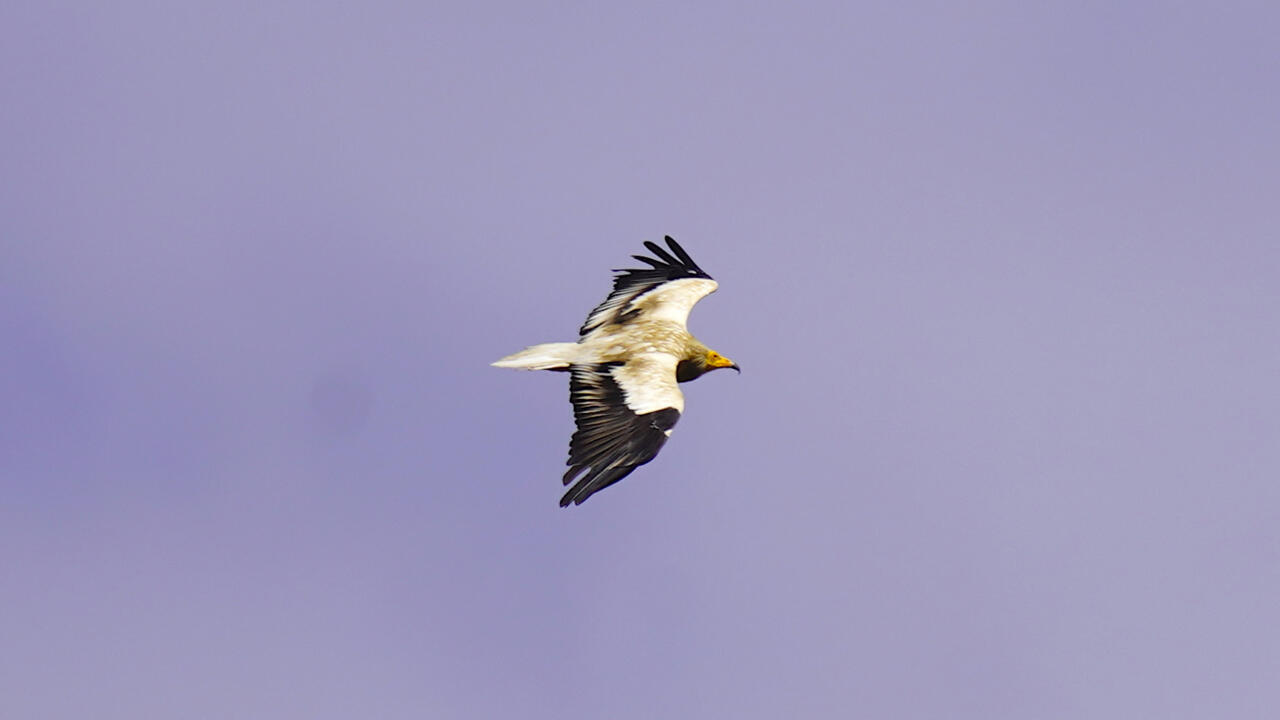
Gjirokastër (Albania) (AFP) – Endangered Egyptian vultures, with their vivid yellow face and white plumes, would usually be nesting across the Balkans in their dozens by April. But experts tracking the rare birds say local teams have struggled to find more than a handful in recent weeks, raising fears that the wars in the Middle East may have further disrupted their already perilous journey from Africa.
Issued on: 16/05/2026 - 16:19
2 min Reading time
"The war is adding to the risks already present along this species' migration route," Nikolai Petkov, project manager at the Bulgarian Society for the Protection of Birds, told the French news agency AFP. From electrocution to poaching, the scavenger faces many hazards on its 5,000-kilometre annual migration to its Balkan breeding sites. "The Middle East is a crucial migration corridor, and the war can have a considerable impact on this already sharply declining population," said Xhemal Xherri from the group Protection and Preservation of Natural Environment in Albania (PPNEA). With thousands of people killed in bombing campaigns and the threat of further military action, any information on the impact on wildlife is hard to find, even for experts. "Bombardments disturb not only Egyptian vultures, but also many other birds," he said, warning that the decline of the specific species could be a wider signal.