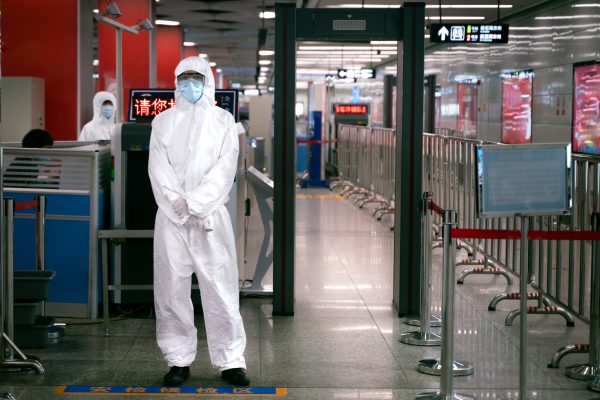
This is Part II of a four-part series on “The First Airtight Empire” – analyzing the historically unprecedented closure that the Chinese Communist Party (CCP) is constructing in 2026, and how that closure has rendered American policy assumptions obsolete. Part I documented the two slogan substitutions through which Beijing rewrote its history and prewrote its future. This installment turns to the conditioning sequence that prepared the population to accept the closure those slogans were authorizing. Subsequent installments will examine the four-dimensional architecture by which the closure has been mechanically engineered (Part III), and the long historical frame and policy implications that follow (Part IV).
The COVID-19 lockdowns of 2020 through 2022 were not what they appeared to be.
These were not isolated public-health interventions. They were, in operational effect, a three-stage conditioning sequence by which the population of the world’s second-largest economy was brought to the point of accepting what followed: an airtight seal that is, for those inside China, no longer visible as a closure. It’s simply accepted as a fact of life.
The First Lockdown: The Test
In late January 2020, the Wuhan municipal government announced the closure of an 11-million-person city – the largest metropolitan-scale closure in human history. It was extended through April. International coverage at the time treated it as an extraordinary measure justified by the unfamiliar character of the COVID-19 outbreak; domestic Chinese coverage treated it as a mobilizational triumph of the centralized state.