Marlen Haushofer’s masterpiece, The Wall (1963), opens with the cessation of time, at least as humans mark and measure it. ‘Today, the fifth of November, I shall begin my report,’ the narrator writes, before correcting herself: ‘I don’t even know if today is really the fifth of November. Over the course of the past winter I’ve lost track of a few days.’ She has also lost her watch.For around two years – though who can tell precisely how long? – she has inhabited not months but seasons, not a regimented march of moments but a looser rhythm of labour and rest. More relevant for her purposes than dates are the fluctuations of the weather, the tasks that present themselves as urgent or distant, the warm periods that allow for the mowing of hay, the cold stints that consign her to the hunting lodge where she has taken shelter. Her companions are a bloodhound called Lynx, a cat she sensibly designates ‘the cat’, a couple of ill-fated kittens, and a cow called Bella, who eventually gives birth to a son, Bull. The narrator’s existence has the fey quality of a fairy tale. But if there are elements of a childhood fantasy in The Wall, it also has a dystopian undercurrent. The narrator is secluded in the forest with her menagerie because, as far as she knows, she is the only surviving person on the planet.The event that annihilated the rest of the world was sudden, unexpected and total. The narrator went to stay with friends at their hunting lodge in the country, decided against accompanying them to town for a drink and fell asleep. The next morning, she went to investigate their disappearance and could not reach the village. In her path stood ‘something smooth and cool’, ‘something like a windowpane’. The people and animals on the other side were frozen, apparently dead, ‘like something excavated from Pompeii’. So many choked, reticent ‘somethings’: the wall is obtrusively unnameable, and it never becomes any more legible. The narrator, a product of Cold War paranoia, assumes that it’s ‘a new weapon that one of the major powers had managed to keep secret’. Beyond this initial speculation, ‘I didn’t give too much thought to the wall,’ she writes. There’s the more pressing matter of survival to attend to.The Wall is at once a pastoral and a work of horror, an uneasy synthesis of the two genres Haushofer mastered over the course of her career. Some passages echo her lush accounts of childhood, nostalgic enchantments that recall her own upbringing in the Austrian alpine hamlet of Effertsbach in the 1920s and 1930s. These books have tomboyish female protagonists with names that begin with M, like Marlen, and they are full of sensory details: jagged peaks, stabbing spires, the heaving of a panting dog. The best known of Haushofer’s works in this mode is Nowhere Ending Sky, an autobiographical novel originally published in 1966 and translated into English in 2013 by Amanda Prantera. Now it is joined by its predecessor, The Fifth Year, a dreamy novella from 1952 that has been translated by Shaun Whiteside.Nowhere Ending Sky and The Fifth Year are superficially different but essentially continuous. The heroine of the former is a mischievous girl called Meta; the heroine of the latter is a mischievous girl called Marili. Meta lives with her parents and her brother, Marili with her grandparents because her parents have died. In both families an indulgent father figure works as a forester, as Haushofer’s father did, while an exasperated mother figure keeps house with an air of vengeful fastidiousness, as Haushofer’s mother did. Haushofer’s stand-ins are stuffed into scratchy woollen stockings and scolded for their lack of decorum, but they are also treated to various compensations: trees for climbing and streams for wading, rocks to be palmed and sweets to be pilfered.The two books are most similar in the expansive swell of their narration. Both feature a child protagonist who is, improbably, neither precious nor twee. Haushofer adopts the unspoiled perspective of her characters, winding between the dull reality they share with their adult guardians and the magic of their private hours. Meta fends off a cavalcade of ghosts and carries on arguments with the creaking walls of her bedroom, while Marili fears the painting of Jesus on the wall (he has a habit of climbing out of his frame). Haushofer relates these foibles without judgment or scepticism. Time proceeds elastically, as it does for children, sometimes expanding into the restless boredom of rainy days, sometimes contracting into the haze of summer. Brief incidents, like the arrival of an acquaintance whom Meta suspects of sorcery, take pages, while weeks pass in the span of a single clause.In these books, however, childhood bliss is edged with intimations of sorrow. When Marili detects the first traces of autumn, she laments: ‘The time of free and mysterious roaming was over. Where had everything gone, and what would come after the long summer?’ Marili’s is an honest sadness, slightly comic, but admirable in its intensity. It is quite unlike the hollow, withheld sadness displayed by the adult narrators of Haushofer’s other books, which are composed – one might even say assembled – in a cooler first person. These works include Haushofer’s final novel, The Loft (1969), and Killing Stella, a brisk novella originally published in 1958 and recently translated into English by Whiteside.Haushofer’s tone of frozen horror is no less autobiographical than her hymns to her rural childhood (she often remarked that all her work was autobiographical). To those who knew her as an adult in the provincial capital of Steyr, her life must have seemed bland and orderly. In 1941, when she was 21, she married a soldier-turned-dentist called Manfred Haushofer and assumed the role of the dutiful housewife. Occasionally she assisted in her husband’s dental practice; for the most part she cared for the couple’s two sons. She began publishing stories in 1946 to supplement the family income, which the profligate Manfred had squandered on flashy cars. He showed no interest in her work, and when she died of bone cancer at 49 none of her neighbours had any idea that she had been a writer.Anyone who bothered to read Haushofer’s writing would have sensed how much her performance of normality cost her. ‘It is the epitome of perfidy that one has to have one’s teeth right up in one’s head,’ the protagonist of her second novel, The Jib Door, thinks, steeling herself for a dental appointment. Cruelty creeps into everyday banalities – even the routine workings of Manfred’s business. Indeed, every semblance of tidy contentment cracks under closer inspection in Haushofer’s life as well as in her work. One of the two children she raised as Manfred’s was in fact the product of a pre-marital tryst, and her marriage itself was something of a farce: she divorced her serially unfaithful husband in 1950, only to marry him a second time in 1958, all unbeknown to their acquaintances in Steyr. In Vienna, which she visited often, she led a different life altogether. There she moved in literary circles and boasted of her own affairs. What the urbane woman in the capital had to do with the unassuming housewife in the provinces is difficult to discern. The two figures are as remote from each other as Haushofer’s childish effusions are from her stony adult fictions.What unites Haushofer’s books about childhood and her books about adult disenchantment is the abrupt incursion of vicious men. In The Wall, the narrator discovers that she is not the last human alive when a man materialises in the pasture and kills Lynx and Bull with an axe. Before he has a chance to speak she shoots him, and his motives die with him. A similar episode occurs in The Loft when the narrator becomes mysteriously deaf and retreats to the countryside to recuperate. On one of her walks in the mountains, she encounters a man who speaks animatedly at her. He doesn’t seem to mind that she can’t hear him; on the contrary, he would prefer to make his confessions to someone who does not comprehend them. Their disturbing meetings come to an end when another of Haushofer’s ‘somethings’ intrudes. The narrator refuses to name that something, just as she refuses to hear her mysterious interlocutor’s explanation of his actions.An obvious criminal like the one in The Loft would be out of place in Haushofer’s childhood reminiscences, yet sinister men always lurk in the margins. In The Fifth Year Marili glimpses a beggar from the window of the attic, where she has unearthed a ‘white porcelain cake basket’. ‘Grandfather had talked to her so often about hidden treasures, and now she knew at last what it was like to have found one,’ she thinks. She picks it up and is suddenly overcome by a longing to see the beggar’s face. When she dashes down, clutching her treasure, what she finds repulses her: ‘His mouth was like a big wound, full of bloody clefts and crevices, and pulled down low at the corners.’ Like the murderer in The Wall, the beggar does not speak. Wordlessly, he snatches the cake basket and throws it ‘at the nearest stone’. Then he ‘tramps on through the grey rainy day’. Marili is so stunned that she develops a fever. By the time she resurfaces from her delirium, her childhood has become irrecoverable. Outside, it is snowing. ‘Tomorrow it would snow again,’ Haushofer warns, ‘and all through the whole long winter.’The central crime in Killing Stella is more subtle and gradual than the beggar’s, but also more appalling. Its chief architect is Richard, the narrator’s oppressively well-adjusted husband, who works as a lawyer inan unidentified town. He has the usual bourgeois vices: he’s impatient of introspection, fond of red wine and prone to infidelity. His daughter – she is the narrator’s daughter, too, yet she is more quintessentially Richard’s – resembles him insofar as she is ‘too healthy and happy to be truly loved’. The girl ‘might as well have been the child of an acquaintance who happened to be visiting’.The narrator is a brutal woman, contemptuous of family and friends alike. The only person she cares for is her son, Wolfgang. When the actual child of an acquaintance comes to stay with the family to take a course nearby, she ignores the girl: ‘I had no idea if she had any real talents or skills.’ Does the girl, Stella, have an inner life? The narrator isn’t so sure. ‘Sometimes,’ she reports, ‘I doubted that she was thinking anything at all.’ Stella is beautiful in the dull, generic way that anyone young and healthy is beautiful, with a ‘gleaming face’ and ‘blossoming flesh’. The narrator can only describe her charge in the bored and inattentive terms of someone who is not really looking.Unsurprisingly, the girl’s death doesn’t disturb the narrator. She feels guilty, but only that she does not feel guiltier. Is she to blame for urging Stella to go out with Richard one night, then allowing her to go out with him again? She can’t bring herself to care when Richard seduces the girl, although she knows she ought to. ‘It would have been my duty to warn her, to scold or talk to her or at least try to comfort her,’ she writes from the safe distance of the conditional mood. Then: ‘I did none of that.’Stella’s unhappiness bothers the narrator only because it is indecorous, even gauche. The girl’s ‘sobbing in the night hadn’t moved me at all’, she writes. ‘It had only revolted and confused me.’ Meanwhile the death of a houseplant is ‘a real worry’, as is the fate of an orphaned baby bird. When Stella runs in front of a truck, the narrator cannot suppress ‘a great sense of relief’. Now she no longer has to make small talk at meals – and Stella even had the decency to make the suicide appear accidental. The narrator regrets only that the teenage Wolfgang senses her culpability and asks to leave for boarding school.Killing Stella is the most merciless of Haushofer’s books, and the most blatant in its political implications. The narrator stops just short of asserting that Richard was a Nazi. He is, she writes, ‘a considerate paterfamilias, a valued lawyer, a passionate lover, traitor, liar and murderer’ – like so many of his compatriots. Yet the novella is not content to indict him and exonerate the rest of his family. After all, it’s not called ‘He Killed Stella’, and the generality of its English title recalls the last line of another harrowing postwar Austrian novel, Ingeborg Bachmann’s Malina (1971), which ends with the words ‘it was murder’ (‘es war Mord’). This accusation is not addressed to anyone in particular and is therefore addressed to everyone who hears it.The German title of Haushofer’s novella is more direct and dares to say what the narrator won’t. Wir töten Stella means, literally, ‘We kill Stella.’ Still, if Haushofer’s ‘we’ evidently includes the narrator, it’s not clear who else is implicated. ‘We’ could include Stella’s mother, who palms the girl off on the narrator so that she can travel with a younger lover; it could include Richard’s peers, who seem to abet his behaviour; it could even include the well-meaning Wolfgang, who doesn’t intervene when he begins to grasp what is happening. It could encompass the whole town, the whole of Austria.The world occupied by Haushofer’s youthful protagonists is in the process of deteriorating; the world occupied by her adult narrators has already deteriorated. Food tastes grey and artificial. ‘Everything we eat has lost its flavour. Chicken, pork and veal taste like soggy dishcloths,’ the narrator of The Loft complains. ‘It’s seemed to me for some years that our climate is gradually shifting,’ the narrator of Killing Stella broods. ‘Where are the blazing summers of my childhood, the snowy winters, and the hesitant, very slowly unfolding spring?’ The windows of the house where she lives are ‘gradually becoming more opaque’, sealing her off from the outside world. The alienation of Haushofer’s adult characters is personal: most of them fondly recall a childhood like their author’s, ‘a round, integral world that no longer exists’, as the narrator of The Loft describes it. Their alienation is also historical. The narrator’s husband, who served in the army during the war, takes a bite of veal stew and exclaims: ‘Where the devil is that smell of corpses coming from?’ In a world tainted by the excesses of civilisation, rot is unavoidable.Haushofer’s characters go wrong when they abandon their animal instincts in favour of social convention. In the ‘round integral world’ of youth, there is an easy continuity between the human, the animal and the inanimate. Meta befriends a barrel, a stone and a pear tree; she talks to the family dog and dreams that the cows and hens on the farm can speak. Marili has the same dream, holding long ‘conversations with the rooster’ all through the night. During the day, she is happiest when she hides in the barn and listens to ‘the chewing of the animals and the thin sound of the streams of milk spraying into the pail’. The landscape, too, is alive to her: the burbling stream is ‘friendly’ and the species of drooping purple flower that dots the alpine meadows is ‘the best friend’ of all.None of Haushofer’s characters can quite adapt to adulthood. ‘I am a monster,’ the narrator of The Loft reflects, ‘a monster that wants to stalk through the woods, free and alone, and cannot even bear so much as the touch of a branch on its skin.’ It is her initiation into language that constricts her: she knows that we only name what we have already lost. Every morning she and her husband argue about how to classify the tree outside their bedroom window. He insists it’s an acacia; she claims it’s ‘either an elm or an aspen’. What she really wants to tell him is this: ‘I don’t think it’s very important to know the names of things as they’re written in nature books.’ What matters is the way things look, the way they feel. She relishes her final moments of fading consciousness before sleep encroaches because ‘there’s nothing in your head but images.’ In the hours she spends in the loft, she sketches insects, fish, reptiles and birds. She is drawn to the visual: a name has nothing to do with its object; an image is at least isomorphic with what it depicts.Drawing, then, is one way around the walls erected by language, the medium Haushofer both resented and depended on. ‘One sits around a table and is – so many people, so many walls – far, very far apart from others,’ she once told an interviewer. Walls of various kinds are present in almost all her writing. The deafness of the narrator of The Loft is one of them. In the woman’s dreams, she and the agitated man from the mountains are ‘shouting at one another through a wall of black glass’. The anger that interposes itself between Meta and her mother in Nowhere Ending Sky is ‘a wall between mother and daughter’. But these walls are not always unwelcome. Once the narrator of The Loft can hear again, she has a dream in which she is running from someone she fears. Finally ‘a partition comes down, hiding me from them and transporting me into a deep underground region where no one will ever find me, and I know I am safe.’ ‘To shut a door behind you,’ the protagonist of The Jib Door says, ‘what could ever be better?’ Walls are a means of both entrapment and escape. Why else would the narrator of The Wall, who confronts the tallest and most impenetrable of all Haushofer’s barriers, also be the most joyful of her characters?The life of The Wall’s protagonist is marred by tragedy, yet it is a life that suits her. When she thinks of her daughters, who no doubt lie immobile on the other side of the wall, she musters little emotion. ‘I never mourned for them,’ she says, ‘only ever for the children they had been many years before.’ When she meditates on her ‘former life’, she finds it ‘unsatisfactory in all respects’ – but she doesn’t meditate on it very often, because she has too much to do to sustain her present life. The Wall should be boring, but the drama of survival it stages – the planting of potatoes, the annual gathering of cranberries – is engrossing and, for the narrator, as satisfying as vigorous exercise: ‘Here, in the forest, I’m actually in the right place for me.’ When she looks out over the landscape, she wishes she could sit there ‘for ever, in the warmth, in the light; the dog at my feet and the circling bird above’.In her introduction to the recent reissue Claire-Louise Bennett suggests that The Wall is about the perverse delights of solitude. But the narrator is not alone and the book is not about isolation so much as the pleasures of non-human company. To stand beyond language, Haushofer reminds us, is not necessarily to stand beyond community. ‘The barriers between animal and human come down very easily,’ the narrator thinks. She fears the final dissolution of these barriers, which is why she goes on writing. But she knows that she is already failing. ‘I haven’t written down my name,’ she observes. ‘I had almost forgotten it, and that’s how it’s going to stay. No one calls me by that name, so it no longer exists.’ The end of the document we are reading is crammed onto her only remaining piece of paper. Without even a hypothetical reader, she will be without anyone to share her language, and therefore without language altogether.At last she has returned to the immediacy of childhood, the immediacy of her animal companions. The narrator observes that these creatures live ‘without fear and without hope’. This is, of course, the way children live. In the winter Marili ‘felt as if nothing had ever existed but snow’; in the summer she could no longer ‘believe that it had ever rained or snowed’. She is submerged in the present. ‘Past and future washed around a little warm island,’ Haushofer writes, ‘the here and now.’ The Wall begins with the end of time and concludes with the end of speech. The world is ‘young, untouched and very beautiful and terrible’. There is no longer anything to say.
Becca Rothfeld · Mourning the Houseplant: On Marlen Haushofer
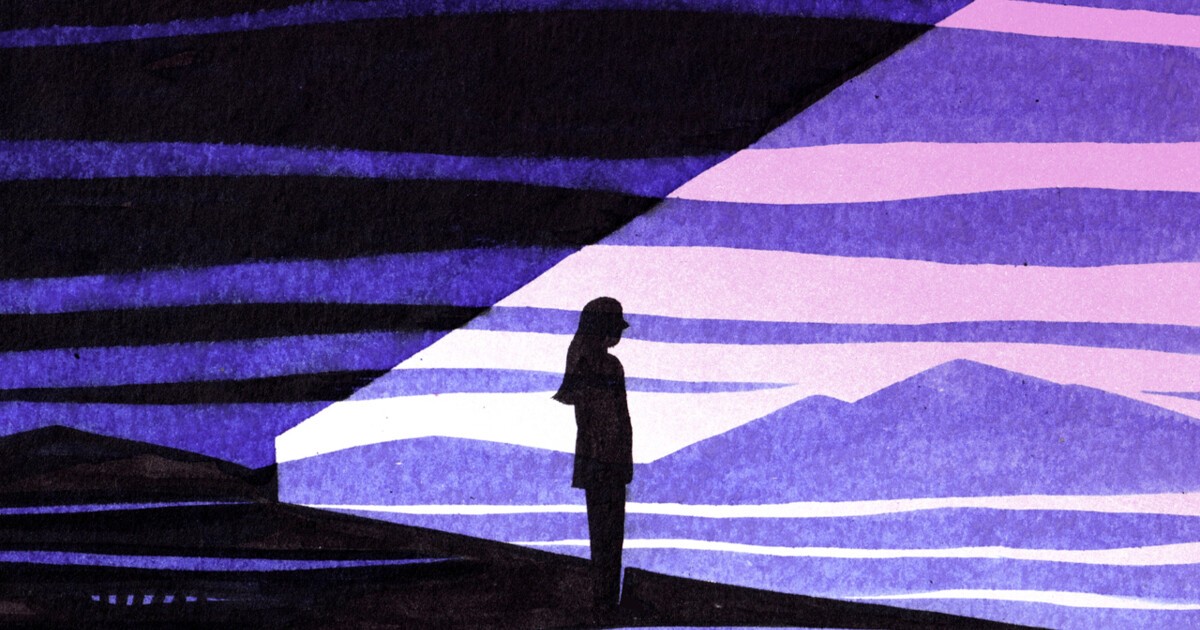
Walls of various kinds are present in almost all of Marlen Haushofer’s writing. They are a means of both entrapment...
3,424 words~16 min read