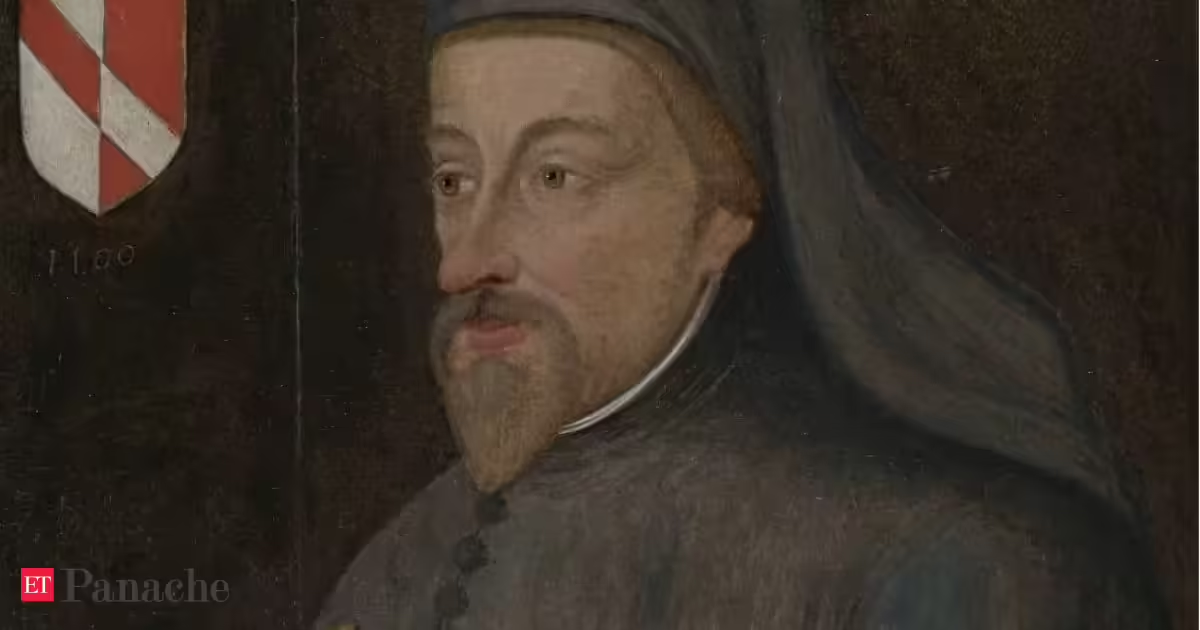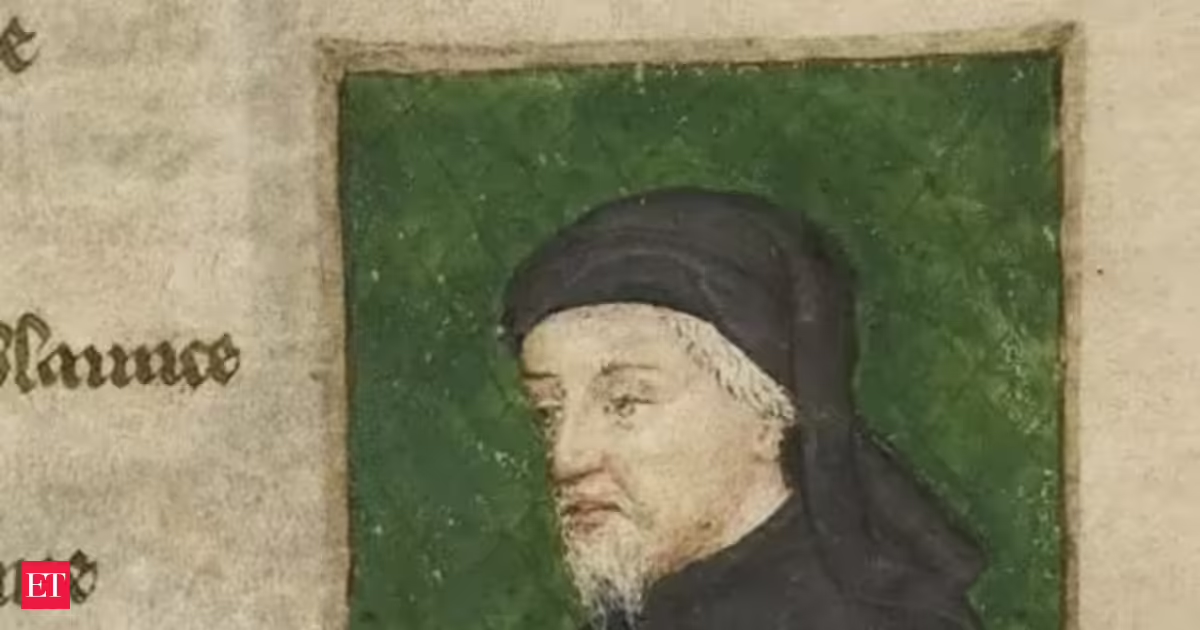
I’m not a medievalist but fell in love with one because he seduced me by quoting lines—in Middle English—from Chaucer’s Canterbury Tales.Article continues after advertisement
And of course, in my besotted state of lust, I studied that book in earnest. However, as it turned out, I discovered I loved the Canterbury Tales far more than the medievalist guy. After we broke up, I still read and re-read Chaucer’s book mostly because I was enamored by the story structure: a group of pilgrims traveling together and sharing stories—and comments about the stories—with one another.
I thought it was genius and wanted to do something similar when I began writing fiction. At first, I tried to imitate Chaucer very closely by writing characters from England (too many Masterpiece Theater influences) but at least I updated the era to the 1980s instead of the 1300s, and instead of traveling by horseback, they would ride a hippie Volkswagen-inspired tour bus on their merry way to Canterbury (where I’ve never been to before and, outside of Chaucer, knew nothing about.)
Stuck within the confines of the marshrutka, I was experiencing a microcosm of a societal transformation.
My characters then were not hippies—although maybe that would’ve been better. Instead, they were also named by profession, taking more than a few of the travelers’ identities directly from Chaucer. My version also included a Nun, a Wife of Bath, a Physician.