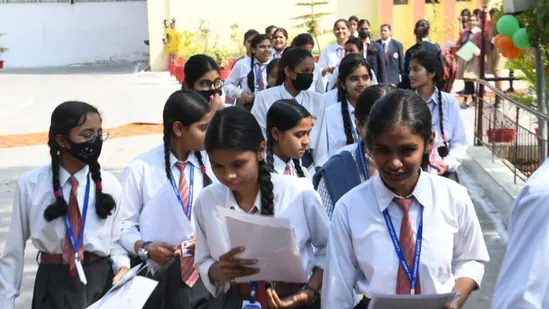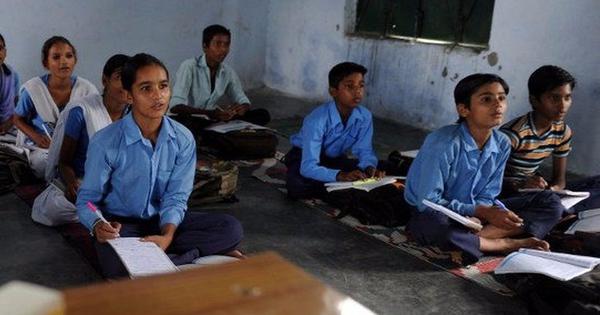
The Central Board of Secondary Education has announced that the study of three languages will become compulsory for students in Classes 9 and 10 from 1 July 2026.The move aligns with the recommendations of the National Education Policy 2020 and the National Curriculum Framework for School Education (NCF-SE) 2023.According to a circular issued by the CBSE on 15 May, students in Class IX must study three languages: referred to as R1, R2 and R3, with at least two of them being native Indian languages.No Class 10 Board Exam for Third LanguageWhile the third language will be compulsory, the CBSE clarified that students will not have to appear for a Board examination in the third language during the Class 10 Board exams.The Board stated that the decision was taken to reduce academic pressure and keep the emphasis on language learning rather than examination performance.“All assessments for R3 shall be entirely school-based and internal. The performance of students in R3 will be duly reflected in the CBSE certificate,” the circular said.The CBSE also confirmed that no student would be prevented from appearing in the Class 10 Board examinations because of the third language requirement.Two Indian Languages Mandatory Under New CBSE RulesUnder the revised language policy, schools may offer any language listed in the CBSE subject framework. However, students must ensure that at least two of their three selected languages are Indian languages.Foreign languages may only be chosen as the third language if the other two languages are Indian. Alternatively, foreign languages can be studied as an optional fourth language.The policy reflects the broader push under NEP 2020 to strengthen multilingual education and encourage the study of regional and native Indian languages.Temporary Textbook Arrangements for Class 9 StudentsAs part of the transition phase, the CBSE said that students entering Class IX in 2026 will initially use Class VI-level textbooks for the third language until specialised secondary-stage textbooks are introduced.Schools have also been advised to supplement the curriculum with regional literature and locally relevant educational material to strengthen language learning.CBSE Suggests Interim Solutions for Language Teacher ShortageRecognising that some schools may face shortages of qualified language teachers, the CBSE has suggested several temporary measures.These include inter-school teacher sharing, virtual teaching support, and the engagement of retired teachers or qualified postgraduate candidates to ensure smooth implementation of the policy.Special Relaxations for Foreign Students and CwSN CandidatesThe CBSE has also announced certain relaxations under the new three-language policy.Special provisions will be considered for Children with Special Needs (CwSN), foreign students returning to India, and schools located outside India. The Board said such cases would be reviewed individually.NEP 2020 Pushes Multilingual Education in SchoolsThe three-language formula is one of the key recommendations under the National Education Policy 2020, which aims to promote multilingualism and preserve India’s linguistic diversity.Inputs from ANI
CBSE three-language rule: Third language now mandatory for classes 9–10, but no board exam for R3. Check all key announcements
CBSE three-language rule: Starting July 1, 2026, CBSE mandates three languages for Classes 9 and 10, with at least two being native Indian languages. While compulsory, the third language will not have a Board exam, focusing on learning over performance. This aligns with NEP 2020's multilingual education goals.
463 words~2 min read