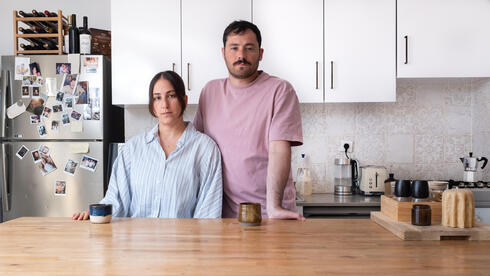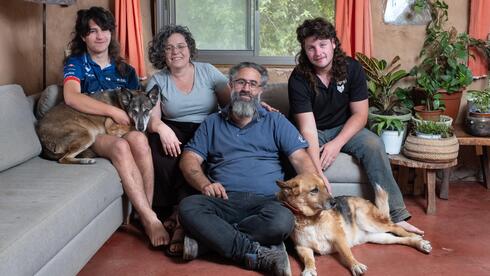
Yaron and Ronit spent years living in a handmade mud house on a shared family farm before buying new land to build a home from shipping containers, as Yaron copes with PTSD after rescuing Nova survivors and serving in reserve dutyAsi Haim|What do they do about the overdraft, how much are they paying for their home, and what dream did they fulfill in the shadow of war? People from across Israel speak candidly about their lives before and during the war. This time: the Gal family from Kfar Yehezkel.Photographed: Yaron, 47; Ronit, 47; Peleg, 18; Matan, 16. Not pictured: Navot, 20, a soldier.6 View gallery The Gal family (Photo: Asi Haim)Kfar Yehezkel?
Ronit: “Nahalal was the first moshav established in Israel, 20 kilometers from here. The second was Kfar Yehezkel, founded just three months later, but nobody knows that.”Yaron: “My family was among the founders. They arrived here in March 1922. Today we live on the historic family farm together with my two sisters and my mother. Everyone has their own unit, but it’s crowded, and recently we bought another farm in the moshav where we’re building our own house.”6 View gallery (Photo: Asi Haim)6 View gallery (Photo: Asi Haim)Crowded?
Yaron: “For a family farm to survive, it has to pass to just one person. If it’s divided among several siblings, by the third generation there’s no room left. And if my children have to wait another 30 or 40 years for one of the siblings to die so there’ll be room for another house, they won’t wait around or build their lives here. That’s what causes family farms to slowly die out, and eventually they have to be sold and the money divided. That’s why we decided to leave the mud house we built ourselves and buy a new property.”Living like a commune?