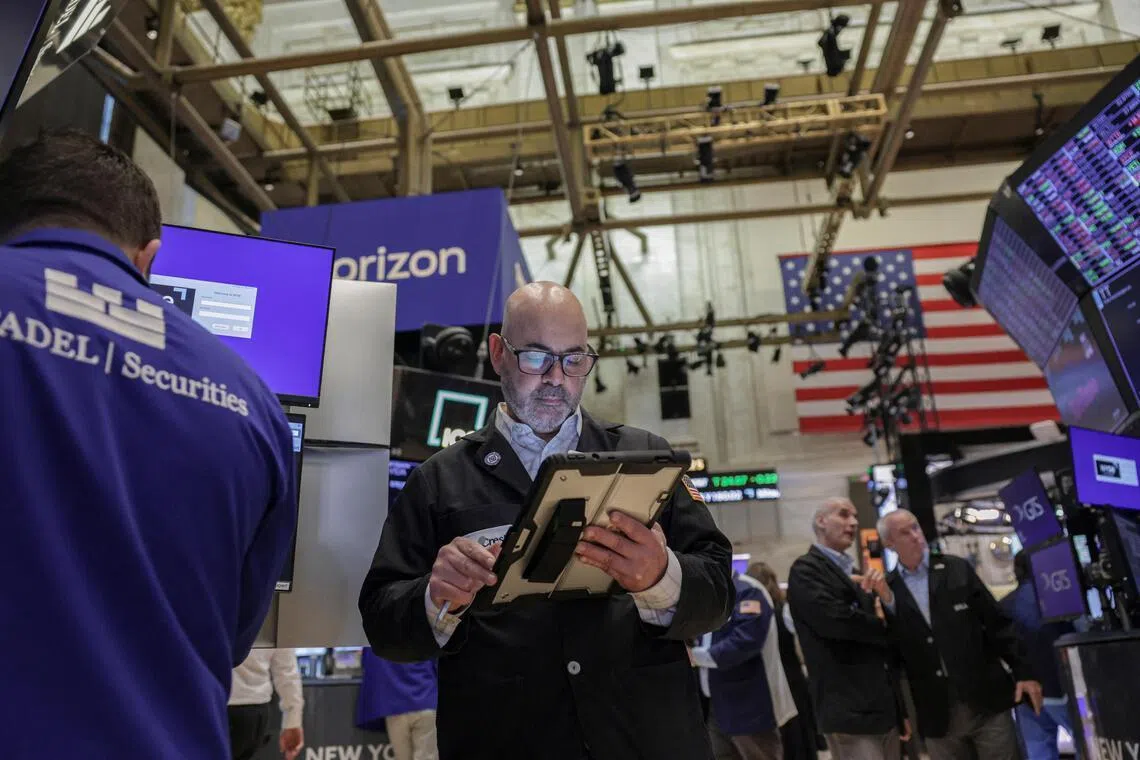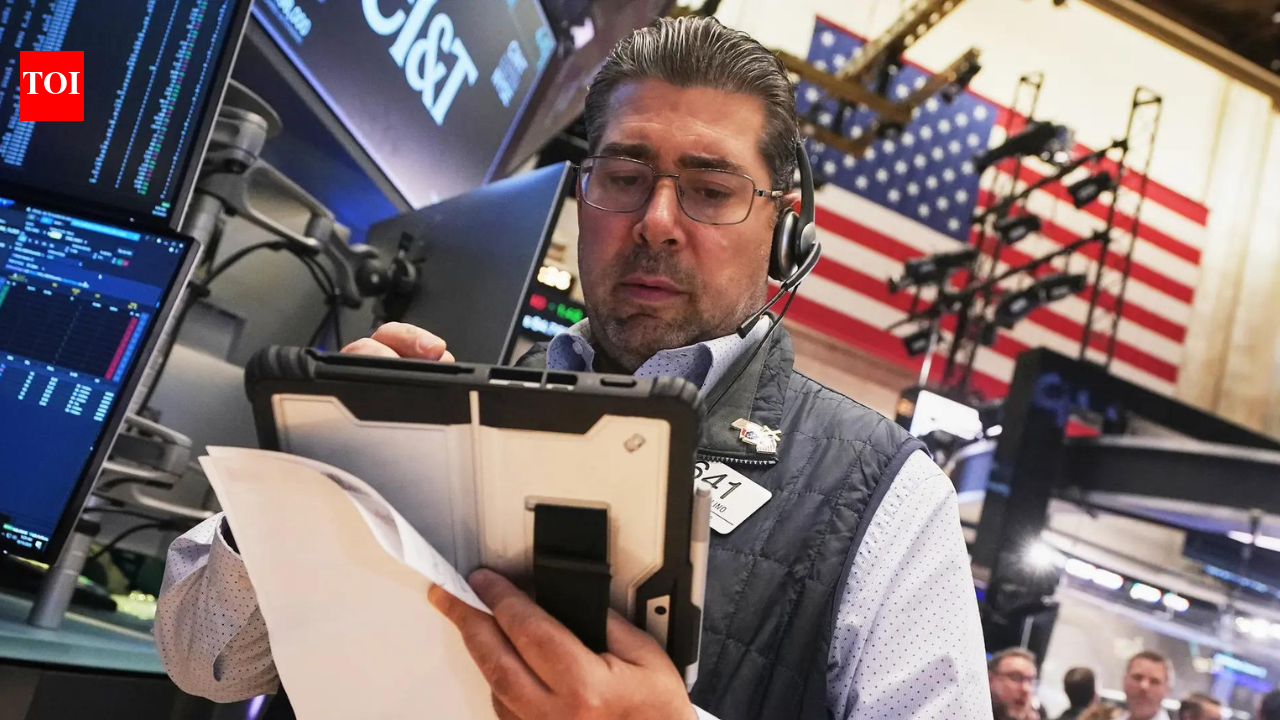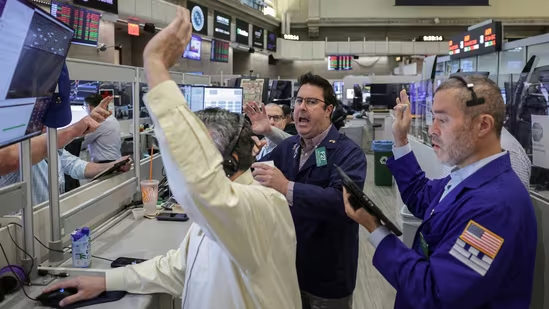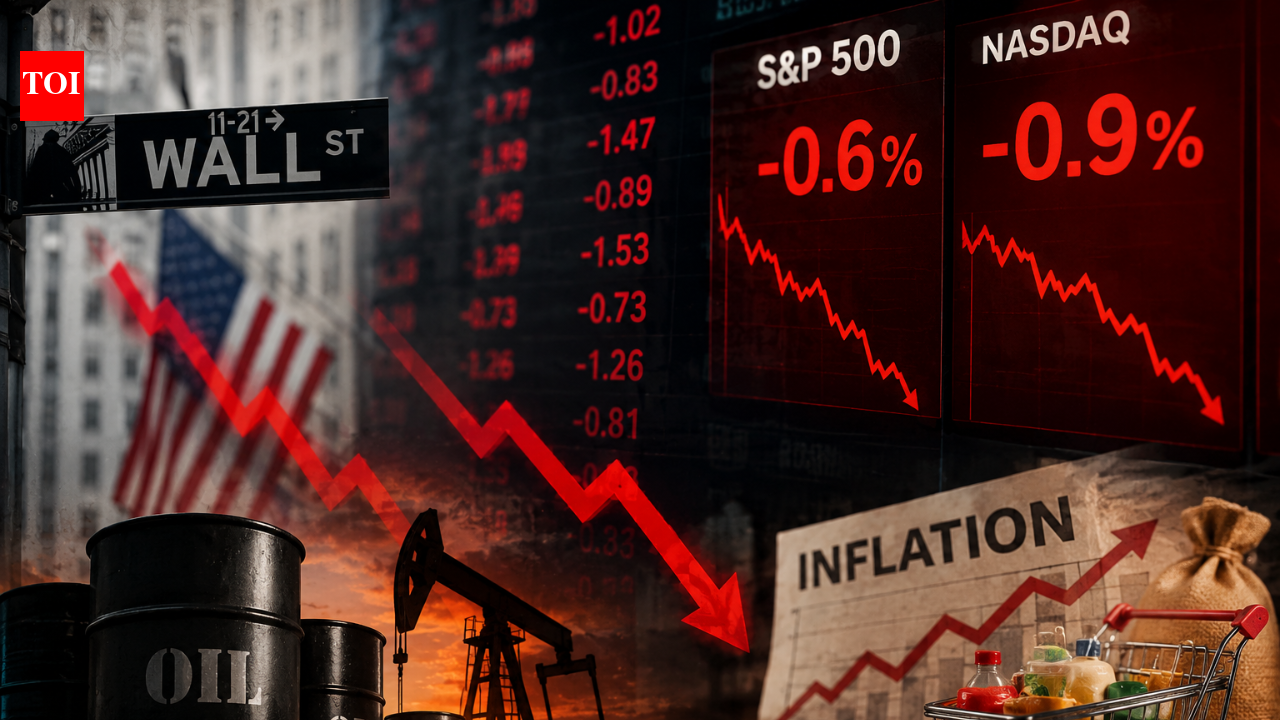
U.S. stocks retreated from artificial-intelligence-fueled record highs on Friday, as spiking crude prices ignited global inflation fears. All three major U.S. stock indexes veered sharply lower, each shedding more than 1% as a jump in benchmark Treasury yields, reflecting surging energy prices and concerns about long-term inflation, offered an attractive alternative to higher-risk equities. Despite the selloff, the S&P 500 logged its seventh straight weekly gain, its longest since a nine-week streak ended in December 2023. The Nasdaq and the Dow fell on the week, with the Nasdaq snapping a six-week winning streak. "There's a realization that the market had gotten way ahead of itself," said Kenny Polcari, chief market strategist at Slatestone Wealth in Jupiter, Florida. "It wasn't paying enough attention to what the bond market and economic data is telling it. It was caught up in this momentum AI trade." Crude prices surged after combative comments from U.S. President Donald Trump and Iran's Foreign Minister Abbas Araqchi raised doubts as to whether their countries' fragile truce would hold and dampened hopes that normal traffic through the crucial Strait of Hormuz would soon resume. Trump's meeting with Chinese President Xi Jinping concluded with few tangible results, and Beijing offered no clear help toward resolving the U.S.-Iran conflict. "It certainly was encouraging to see both countries engaging again at the highest level. Historically, these type of events bring about headlines outlining various commitments," said Matthew Keator, managing partner at the Keator Group, a wealth management firm in Lenox, Massachusetts. "This week's meeting seemed like more of a reset in relations between the two countries and less short-term, quantifiable results." The yield on 10-year Treasury notes, an indicator of global borrowing costs, touched its highest level since May 2025, when markets were reeling from Trump's "Liberation Day" tariff proclamation. Global bond yields also jumped on growing evidence of the Iran war's widespread economic damage. END OF POWELL ERA Friday marks Jerome Powell's last day as U.S. Federal Reserve chair, a position he has held through the pandemic, periods of inflation, and interest rate hiking and cutting cycles. Incoming Chair Kevin Warsh is saddled with the potential need for a rate hike if a protracted Iran war leads to sticky inflation. "The weakness today is highlighting the concerns that the recent (inflation) numbers aren't transient, and it's hard to envision the new chair communicating anything other than a neutral policy stance at best until we see some consistent, meaningful change in the data," Keator added. The odds of the Fed hiking interest rates by 25 basis points in December are approaching 40%, up from 13.6% a week ago, according to CME Group's FedWatch tool. The Dow Jones Industrial Average fell 537.29 points, or 1.07%, to 49,526.17, the S&P 500 lost 92.74 points, or 1.24%, to 7,408.50 and the Nasdaq Composite lost 410.08 points, or 1.54%, to 26,225.15. Among the 11 major sectors in the S&P 500, energy shares jumped 2.3%. The 10 remaining sectors lost ground, with materials and utilities suffering the steepest percentage losses. The Philadelphia SE Semiconductor Index slid 4%, dragged lower by stocks that have benefited from the AI hyperscaler phenomenon. Nvidia and AMD fell by 4.4% and 5.7%, respectively, while Intel dropped 6.2%. Microsoft rose 3.1% following the disclosure of a new position in the company taken by Bill Ackman's hedge fund Pershing Square. Dexcom jumped 6.6% following the medical device maker's announcement that it will appoint two independent directors and revamp a board committee in collaboration with activist investor Elliott Investment Management. Ford dropped 7.5%, retreating from a near 21% surge over the last two sessions on optimism over the automaker's energy storage business. Declining issues outnumbered advancers by a 3.88-to-1 ratio on the NYSE. There were 128 new highs and 187 new lows on the NYSE. On the Nasdaq, 1,121 stocks rose and 3,623 fell as declining issues outnumbered advancers by a 3.23-to-1 ratio. The S&P 500 posted 12 new 52-week highs and 32 new lows while the Nasdaq Composite recorded 53 new highs and 151 new lows. Volume on U.S. exchanges was 19.32 billion shares, compared with the 18.13 billion average for the full session over the last 20 trading days.
US Stocks end lower on mounting inflation worries
U.S. stocks declined Friday as rising crude prices fueled global inflation fears, pushing Treasury yields higher and making equities less attractive. The Trump-Xi summit yielded few results, while Jerome Powell's tenure as Fed chair concluded amidst concerns about sticky inflation and potential rate hikes. Energy shares saw gains, but the broader market retreated from AI-driven highs.
696 words~3 min read