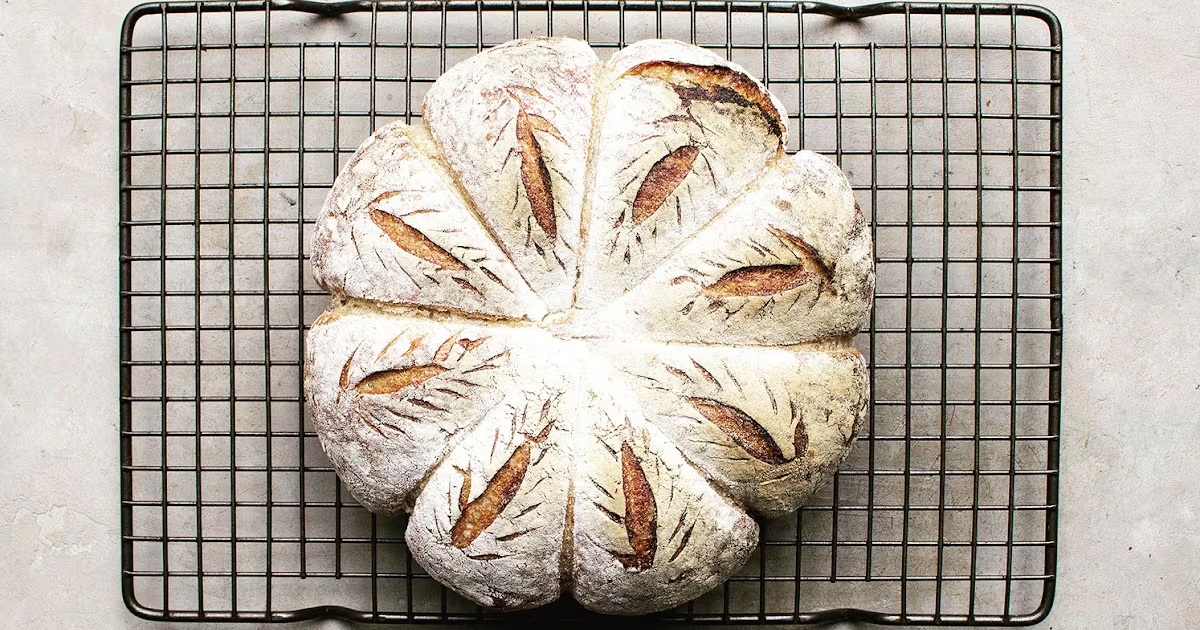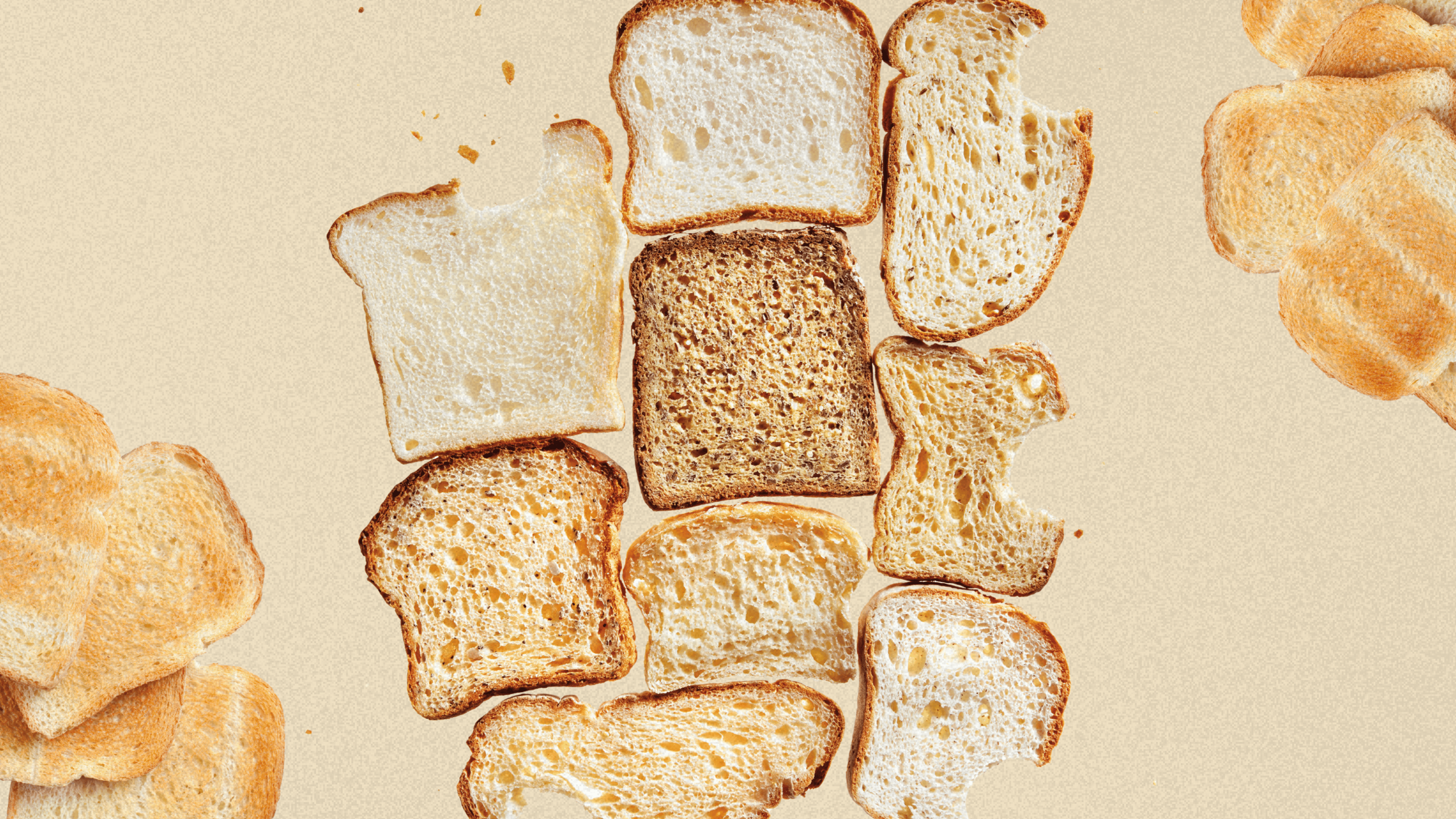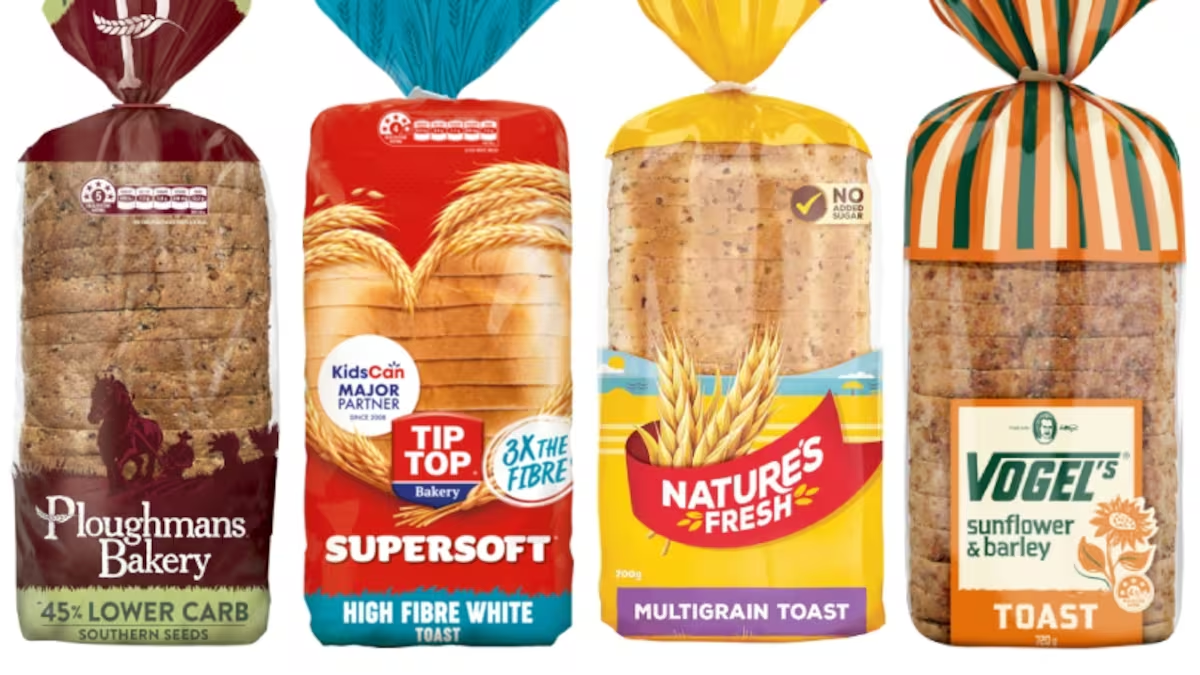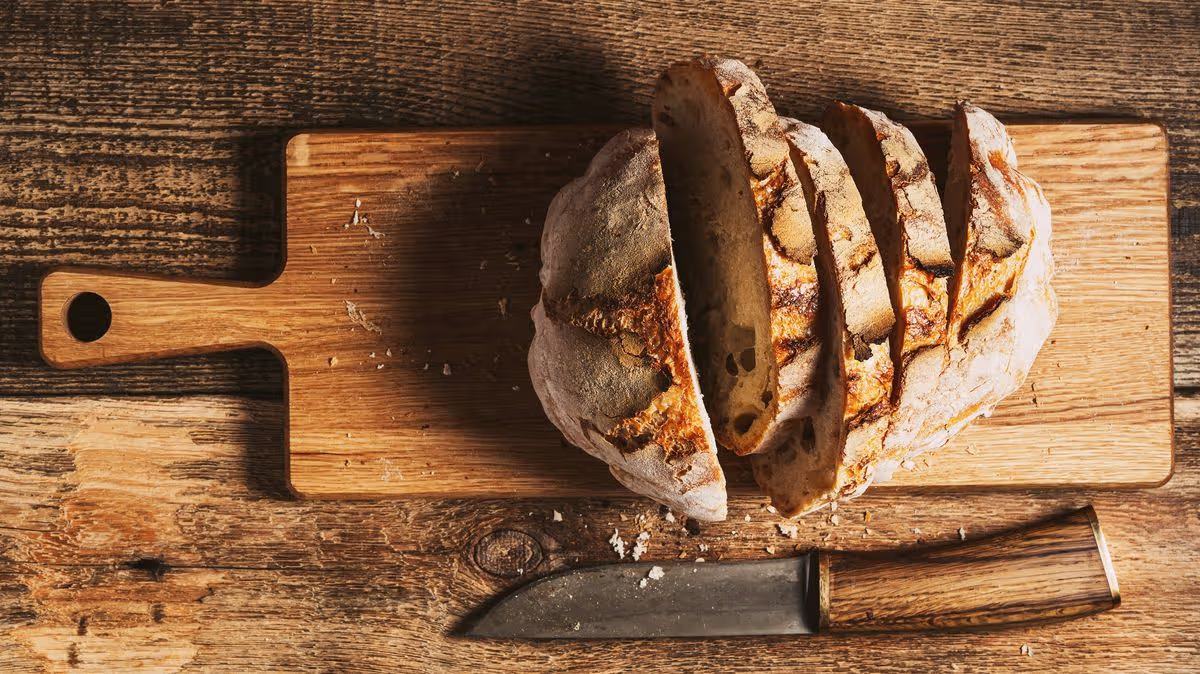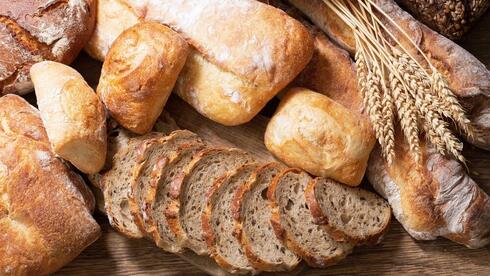
Bread is a daily staple for millions, but myths about sourdough, gluten, weight loss and dark bread still persist; A clinical dietitian explains what is true, what is misleading and what to check before buyingFew foods are as universal as bread. It has accompanied humanity for thousands of years, crossing cultures, religions and continents, serving as the foundation of almost every cuisine in the world: placed on the breakfast table, tucked into a sandwich at lunch and sometimes closing out the day with a simple dinner.As humans evolved, bread evolved with them, gradually becoming an inseparable part of the daily diet. Its roots go back to prehistoric times, when people began grinding grains and baking basic mixtures of flour and water on hot stones. With the shift to agriculture, bread became a central part of the human diet and later a cultural symbol, from flatbreads in the Middle East to sourdough loaves in Europe.3 View gallery Bread, an inseparable part of the daily diet (Photo: Shutterstock)Over the generations, bread not only fed entire populations but also reflected social, technological and economic differences, from white bread, once considered a luxury, to darker, coarser breads that were the food of the masses.“Bread is a basic food, found in almost every home. Almost anywhere we travel and walk into a supermarket, we’ll find bread,” says Shira Solo, a clinical and sports dietitian and lecturer at the Levinsky-Wingate Academic College. Yet, perhaps because of its huge popularity and daily presence, bread has also become the subject of many myths. Which claims hold up, and which do not?To determine which bread is healthiest, it helps to start with its basic ingredients. And, of course, not every loaf is made from wheat. “Today, bread can be made from almost any grain, from oats to lentils and buckwheat, so the variety on the market is especially wide,” Solo says.Still, in most cases, bread is made from wheat flour, and even there, the differences are significant. “Whole wheat flour, for example, is made by grinding the entire wheat kernel, including the bran and germ, so it is richer in dietary fiber, vitamins and minerals. White flour, by contrast, is made without the bran and germ, and therefore contains fewer nutrients,” she explains.Beyond the type of flour, the preparation method also matters. “Bread baked at home or in boutique bakeries is usually based on a combination of flour, water, yeast or sourdough, and sometimes additions such as salt or oil, depending on the type of bread. "Industrial breads made in large bakeries often include preservatives, baking improvers and other ingredients meant to extend shelf life and improve texture. There is a very wide range here, and the differences between breads are very large.”That brings us to the main question: Is it better to choose whole wheat bread or sourdough bread? Solo stresses that the central factor is the type of flour. “What matters is that the flour itself is healthier. In our case, the healthier flour is whole grain flour, whole wheat,” she says.And what about sourdough? The answer is a little more complicated. According to Solo, sourdough is simply a baking method. “To make bread, we need leavening, and that can be achieved with yeast or with sourdough. Yeast creates rising through a biological process of ‘respiration,’ while sourdough is a more traditional method, relying on natural bacteria that develop in a mixture of flour and water and help the dough rise. Still, either method can be used with any type of flour.”3 View gallery Shira Solo. 'The central factor is the type of flour' (Photo: Racheli Hai Minian)That means, she says, the ideal combination is sourdough bread made with whole-grain flour. She says sourdough does have some benefits: Its fermentation process lowers phytic acid (a compound that can interfere with the body’s absorption of minerals such as iron, zinc and calcium), which makes minerals more available, while the slower digestion may also help people feel full longer.Still, she notes that bread made with yeast is not inherently harmful. The confusion, she says, often comes from the association between sourdough and “boutique” baking. Such breads, made in small bakeries or at home, tend to be higher quality and contain fewer preservatives and baking improvers.“Breads from larger chains tend to be more industrial and are usually not made with sourdough, so people often make that association,” she explains.The bottom line: Even if bread is baked with yeast, that does not make it less healthy. “What should guide us is the type of flour and whether preservatives, baking improvers and various flour-treatment agents are being used,” she says.Bread in itself is not what causes weight gain, and it does not prevent weight loss. In fact, Solo says, it can even offer a certain advantage. Compared with other foods, such as rice, portion control is more precise. “With rice, there is much more tendency to drift, to take another spoonful, taste from the pot after it’s cooked, and then very often you end up eating more than you planned,” she explains.With bread, by contrast, it is easier to set clear limits. “Bread can be measured. We know how much a slice weighs, and we know how much we ate. We define two slices for ourselves at breakfast, and it’s easier to stick to that. It allows us to pay more attention to quantities and also feel full for longer.”Still, she notes that in the end, the central factor in weight loss is total daily calorie intake. “If we eat bread but still end the day in a calorie deficit, meaning we consumed less energy than we burned, we will lose weight even with bread in the diet.”That principle, she says, also applies to one of the most common questions about bread and dieting: whether it matters what time of day you eat it. Many people mistakenly believe that eating bread in the evening or at night leads to weight gain. “That is another myth,” Solo says. “The time at which you eat bread is not what affects weight loss. What matters is total daily intake. “If we eat bread at dinner but still consume less energy over the course of the day than our body burns, we will remain in a calorie deficit and lose weight.”Here's another myth. Not every dark bread is necessarily healthier, and sometimes appearance is misleading. “There are breads that have a dark color, but that can be achieved by using ingredients that add color, such as malt, molasses or caramel, which simply ‘color’ the bread,” Solo explains.3 View gallery Whole wheat bread. Color is not what counts(Photo: Shutterstock)In other words, even bread based on white flour, without whole grains, can look dark without offering any real nutritional advantage. That is why, she says, people should not rely on color alone. “You have to look at the ingredient list. With every product you buy, turn the package over and look at the fine print. It appears in small type, and many people don’t read it, but that is where all the information is,” she says.The bottom line: Choosing bread should be based on what the product contains, not on its color.There is no research evidence showing that bread itself causes inflammation in the body. Still, Solo says, it is important to pay attention to which bread you choose. If the goal is to get the most nutritional benefit, it is better to choose breads based on whole grains, such as whole wheat, spelt or rye.The picture changes, however, when bread is made with white flour and loaded with less healthy additives. “If the bread is based on white flour and contains a lot of added sugar and trans fat, then alongside other foods that may raise the risk of inflammation, it can have an effect,” Solo says.She also notes that what people spread on the bread matters. “Many times the bread can be healthy, and the spread is what causes the harm,” she says.For that reason, it is important to look at the product as a whole: the type of flour, the ingredient list and the overall diet throughout the day. In the end, Solo says, inflammation is not caused by one food alone, but by a combination of factors and accumulated eating habits.This too is a myth. “That is not true,” Solo says, explaining that the mere fact that bread is labeled “gluten-free” says nothing about its nutritional value. Gluten-free breads are made from other flours, but they are not always a better choice.“It is possible to make gluten-free bread from healthy flours, but in most cases we see gluten-free breads based on potato flour or rice flour, ingredients that, nutritionally, have fewer benefits, fewer vitamins and minerals, and less fiber,” she says.In addition, she says, a wide range of additives is often needed to recreate the familiar texture of bread. “Often, many stabilizers are used because manufacturers are trying to achieve a texture similar to regular bread. “Without gluten, which gives bread its elasticity, manufacturers often rely on other food industry additives to recreate the texture. In the end, that can make the bread less healthy.”Still, she says there are exceptions. “Gluten-free bread made with quinoa, buckwheat or lentil flour, without all those baking improvers, can be healthy,” she says. “But in practice, most products available to consumers are different. Most gluten-free breads sold in supermarkets are made with less healthy flours and do contain baking improvers and stabilizers.”The conclusion, then, is clear: Gluten-free bread is not automatically healthier.
Is sourdough really better? The biggest bread myths, debunked
Bread is a daily staple for millions, but myths about sourdough, gluten, weight loss and dark bread still persist; A clinical dietitian explains what is true, what is misleading and what to check before buying
1,584 words~7 min read