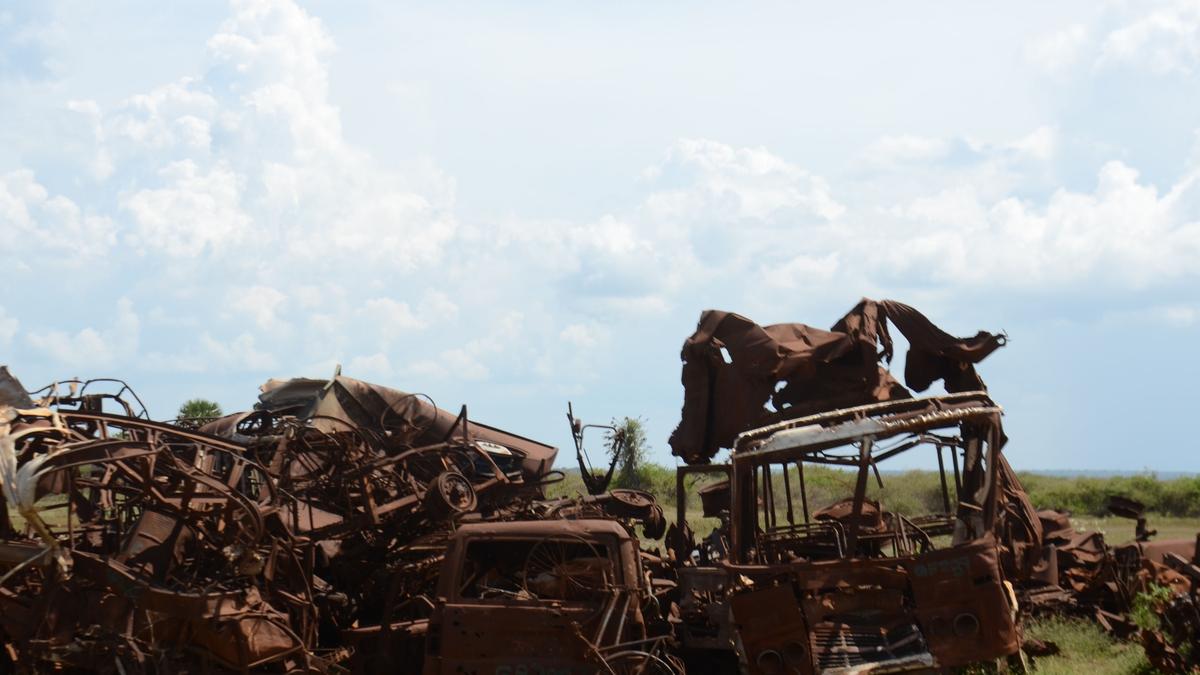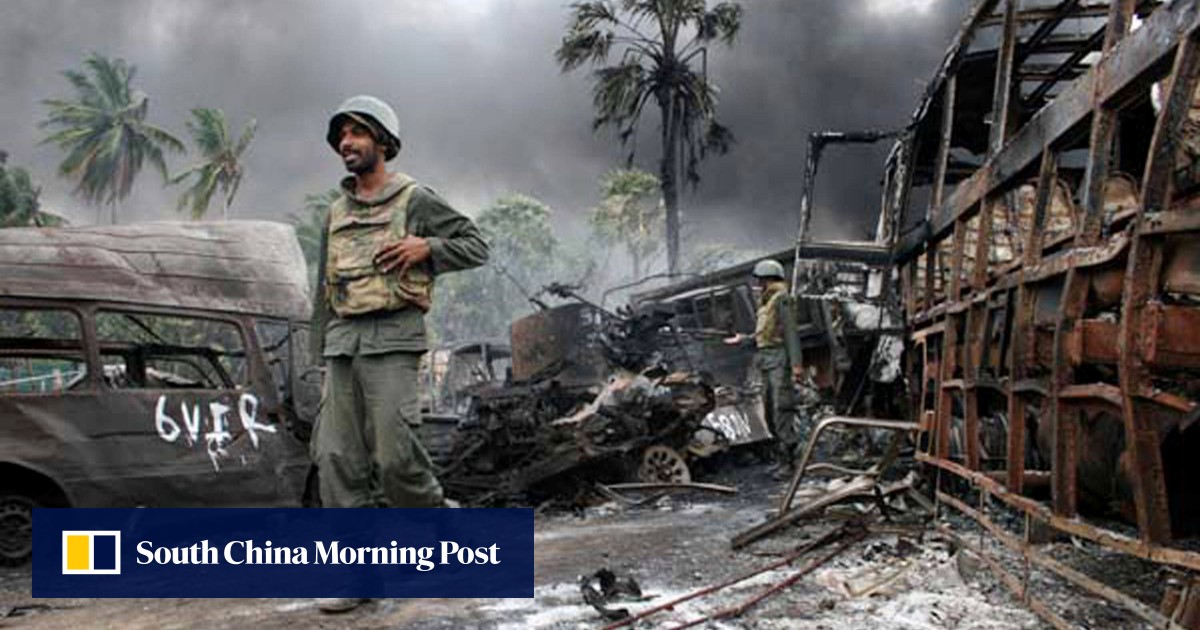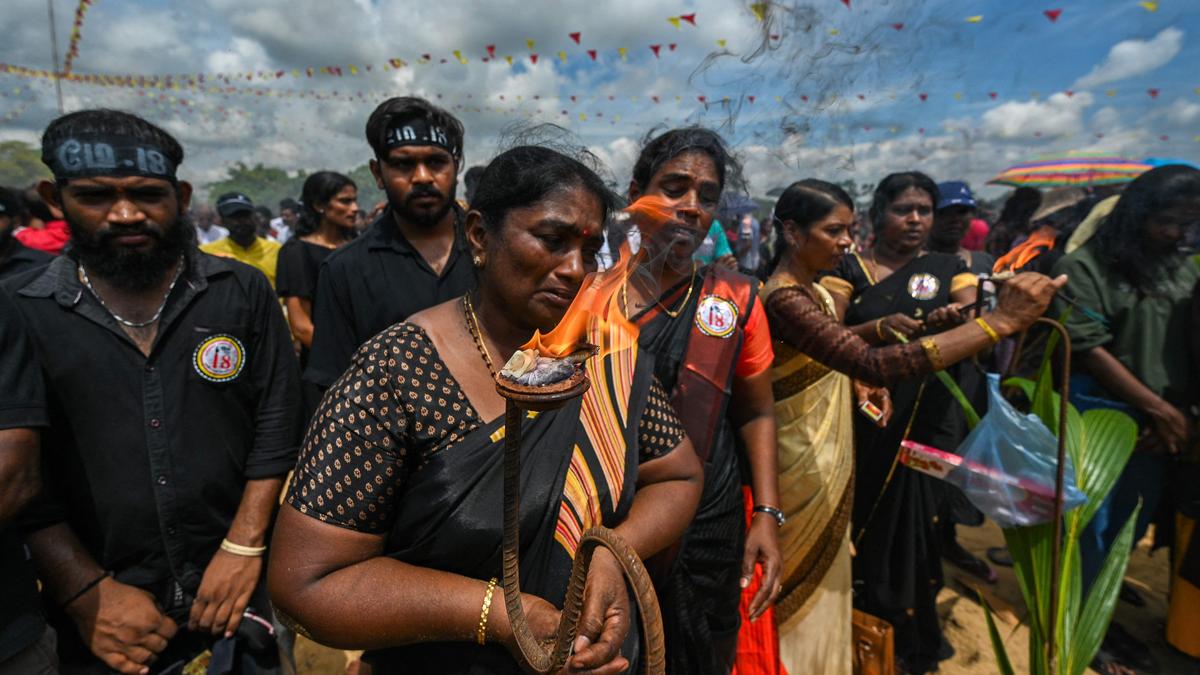
Wars do not end neatly on the battlefield, as the lives of Tamils in Sri Lanka’s north and east make evident.On May 18, the community will mark 17 years since the end of the long and horrific civil war that radically altered their lives. With its shadow lingering, the memory of the war that the armed forces and the Liberation Tigers of Tamil Eelam (LTTE) fought can hardly be confined to this annual commemoration. It manifests in their precarious daily lives and continues to weigh on their hopes for the future.“It was very tough and risky during those years [1983-2009],” says Natarasa Padmaleela, 54, from Udayarkattu, in the northern Mullaitivu district. “We kept moving around, ate whatever was available, washed clothes with palm fruit, and lived in constant fear of shelling. But life now seems even harder.”Opinion | After the civil war, the stifling impasse in Sri LankaThis is a common refrain among Tamils — not because they cannot distinguish between the grave dangers of a live war and the slow, painful pace of recovery, but because “peace” has yet to bring substantive relief or real prospects for a better life. One where they can earn a decent living, feed their families three meals a day, move freely without military men peering, remember their loved ones, and heal.It is not for the want of trying. There are few options that Sivarasa Yogeswari has not explored since the war ended. From working as a domestic worker in Saudi Arabia, to finding employment on small farms for a daily wage, to being a shop assistant, she has given everything a shot.“My life may look normal from the outside. But other than the fact that I managed to send my children to school, I have nothing to show for all this work. It is exhausting,” says the 51-year-old, living in the neighbouring Kilinochchi district. The fatigue is hard to miss in her lean frame and strained gait.Underplaying deprivationSince 2009, the Jaffna-centric Tamil polity has largely focused on wartime accountability and the still-unresolved political question at the heart of the ethnic conflict. Whether in parliament or in their frequent meetings with representatives of foreign governments — on whom many Tamil leaders continue to pin their hopes for justice — they raise issues such as enforced disappearances, the prolonged detention of suspects under draconian anti-terror laws, military and state-backed land grabs, provincial council elections, and power devolution. They speak far less about poverty, unemployment, the strain on rural livelihoods, soaring living costs, and the widespread hopelessness felt by ordinary people.These realities are borne out by data. A 2022-23 United Nations-led study of multidimensional vulnerabilities, based on three dimensions — education, health and disaster, living standards — and 12 indicators, including school attendance, health, unemployment, and indebtedness, found Mullaitivu, Kilinochchi, and Vavuniya in the north, and Batticaloa in the east, all of which are dominated by Tamils, among the most vulnerable districts on the island.“Tamil politicians are fighting for our rights. The Centre (government in Colombo) should take care of our sustenance,” says Perumal Pradeepan, a fisherman in Kilinochchi, explaining that one is like “uduppu” [clothes, connoting dignity] and the other, “sappadu” [food for survival]. Although he appears to assign the causes of dignity and equal rights to the Tamil leadership, and the responsibility of fulfilling basic material needs to the national government, he finds them intertwined in his own life: his fight for survival is not detached from his desire for dignity.“I am 32. I have over 15 lakh (roughly ₹4.4 lakh) in debt, after I borrowed money to buy nets. I struggle every day so that my family does not go hungry. It is humiliating to face the lender. This is my life,” he says, tearing up.Also read: Tamils in Sri Lanka mark 15th anniversary of civil war’s end in Mullivaikkal in 2025Tamils seemed wary of President Anura Kumara Dissanayake ahead of the September 2024 presidential election — his rival candidate and now Opposition Leader Sajith Premadasa got their highest vote share — but they made a quick switch in the general elections in November of the same year. In Jaffna, for instance, the National People’s Power (NPP) beat well-entrenched Tamil parties and won three out of six seats.The shift was palpable days before the November 14 parliamentary polls. Addressing a packed rally in Jaffna’s coastal village of Passaiyoor, Dissanayake promised to return people’s lands held by state agencies. He pledged to revive industries, create jobs, and build a country where all citizens, regardless of ethnicity or religion, feel equal. His popular image of a “simple leader”, charismatic outreach, and clear messaging convinced Tamils that he deserved a chance. Barring Batticaloa in the east, the NPP emerged at the top in all Tamil-majority areas in that election.Accessing landIn April 2025, a road from Vasavilan to Palaly town in the northern part of the Jaffna Peninsula was reopened to the public, 34 years after the military closed it for “security concerns”. In October 2025, the Ministry of Defence convened a high-level meeting to resolve “operational and administrative hurdles” to expedite the handover of remaining private lands to their owners. Residents have welcomed the initiative, but they question its slow-paced implementation.It is not just the military that controls people’s land, but also other state agencies, such as the Archaeology and Forest Departments, that are staking claim to land. The concern is especially prevalent in the Mullaitivu district. According to Thurairasa Ravikaran, a legislator from the opposition Illankai Tamil Arasu Kadchi (ITAK) representing the district in Parliament, the Dissanayake administration has been more responsive than its predecessors to the district’s infrastructure needs, including roads and bridges. “They have responded swiftly and positively to those requests. But when it comes to land grabs in the district by various state agencies, they seem unable or unwilling to address it,” he says.In the last few years, the issue has repeatedly cropped up across districts in the north and east. Kurunthurmalai in Mullaitivu became a site of fierce contestation. Tamils, whose ancestors had worshipped Siva at a hilltop temple, were suddenly told by soldiers that they could not visit the “archaeological” site, even as it rapidly morphed into a Buddhist centre of worship, with a stupa.“Building Buddhist shrines where Hindus traditionally prayed, and taking over people’s agricultural lands in the name of forest conservation are huge concerns. We see these planned settlements of Sinhalese in the north and east as a way of altering the demography of the region,” Ravikaran notes, adding, “Let’s not forget that contestations over land are what trigger big conflicts.”Finding jobsIn a district where the majority relies on farming and fisheries for a living, restricted access to land translates to a drastic fall in incomes. Apart from the few openings in the public services, there are few desirable jobs forthcoming for the youth. The heavy reliance on informal, rural livelihoods also means that the official rate of unemployment in these areas distorts the picture.Joblessness is more pronounced in the north and east than in the rest of the island, Governor of the Northern Province, Nagalingam Vethanayahan, says, while pointing to the government’s efforts aimed at employment creation.
Sri Lanka civil war: 17 years later, the imprints remain
Years after the civil war ended, the Tamils of Sri Lanka continue to face poverty, high unemployment, and land takeovers. They believe that governments have done little to devise a comprehensive plan for the war-battered northern and eastern regions.
2,362 words~11 min read