New venues, deep history and growing energy keep Memphis' uniquely American sound relevant and exciting.Show Caption
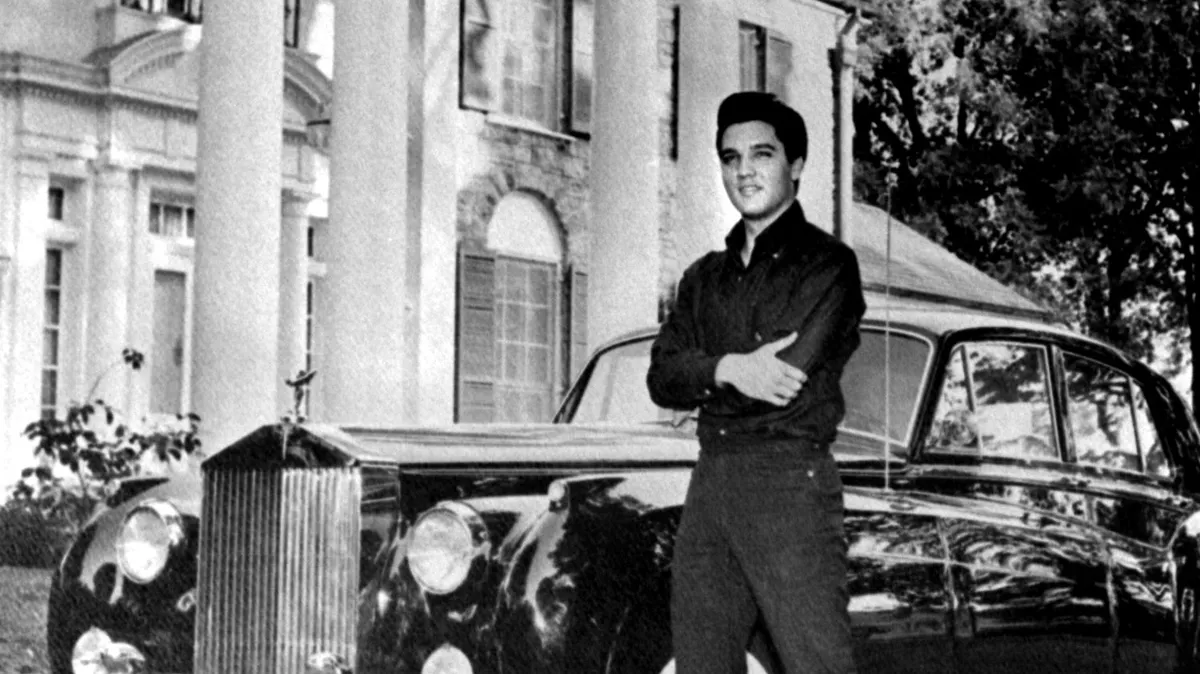
MEMPHIS – At 87 years old, Pastor Juan Shipp – dressed in pressed purple silk pants and shirt – listens with narrowed eyes to the soul-gospel strains of one of Memphis’ oldest groups tuning up beyond a recording studio window.Members of the Jubilee Hummingbirds talk and laugh, loose and unhurried, until organ-drenched grooves and warm guitar rhythms swell like a Sunday sermon.“You hear that?” Shipp asked, smiling and nodding slowly.Shipp is at Southern Grooves, a Memphis studio tucked into the sprawling concrete of a once abandoned Sears building, working with the Jubilee Hummingbirds. It’s a group he’s known since he was a part-time DJ spinning 45s on a gospel radio station in the 1960s.His unlikely journey here is a story of Memphis, where the shared fortunes of a city and its music have seen plenty of ups and downs, but where the past and present, never far apart, can make unexpected magic.Back then, Shipp, hearing the quality sound being laid down at iconic Stax Records, home to Otis Redding just a few miles away, set out to elevate the soul-infused gospel music he was spinning. Most groups sounded like they were “singing in a well,” he said.So Shipp set up in a small studio above a downtown sandwich joint.By 1972, Shipp started the label D-Vine Spirituals. And over the next dozen years, he recorded over 200 acts such as Elizabeth King & the Gospel Souls. Shipp fostered a sound with wah-wah guitar and a tight rhythm section. In the studio, he was known for demanding gusto from singers, once urging King to “Sing it like you’re making love to God.”By the mid-1980s, however, the industry was changing. Shipp decided to return to daily ministry while still working at the post office. The studio eventually moved and later shut down, as the city’s core entered a slump. Shipp figured his days in the studio were history.Then, nearly three decades later, Shipp dug up his masters from the shed after a writer inquired about them. They sat in storage for nearly a decade before a producer began reissuing them around 2020 to wide acclaim. NPR wrote about it. A documentary was made about the revival.Nowadays, Shipp – well into his ninth decade – is a partner at the Bible & Tire label, making new records including some at a Grammy-winning studio credited with giving the Memphis sound new life. He’s also come full circle in the DJ booth, where he spins a weekly radio show.If it all seems a minor miracle, Shipp wouldn’t disagree.But this is, after all, Memphis. A cradle of American music, whose famed legacy exists, sometimes uneasily but often serendipitously, alongside a determination to keep writing its music story – even when it's overlooked or counted out.After a tough few years in which Memphis has been battered by headlines about crime, Shipp is among those evangelizing about a city with well-known musical history but an often underappreciated music present – one supporters say is laden with talent, under-the-radar hotspots and new hopes for growth.Two new venues are opening this year to bolster the city’s live-music draw. Also this year, the city is celebrating the 90th anniversary of the Overton Park Shell, where Elvis first performed, with events including shows to highlight local musicians.Tourists still flock to monuments to Memphis’ towering contribution to American music, visiting Beale Street’s blues bars, Issac Hayes’ custom Cadillac Eldorado at the Stax Museum of American Soul Music or Elvis’ 14-acre Graceland estate and his label Sun Studios, the city's oldest music tourism site.But there are also places like Bar DKDC, a small music venue next to the beauty salon turned restaurant where Priscilla Presley got her curl-and-dye job. The swanky Memphis Listening Lab, a repository of 60,000 records, where you can slide into a leather sofa to explore Memphis blues or the latest hip-hop phenom. Hotels like train-themed Central Station, whose Eight & Sand lounge curates nationally-known DJs to spin records for free under a wall of speakers. And behind the scenes, top national artists still beat a path to places like Royal Studios and Sam Phillips Recordings Service, some of the city's oldest, continuously operating studios.“Memphis,” Shipp declares, “is still hot.”New venues, new hopes to grow music economyThe sky is turning orange-and-pink as the sun sinks on the Mississippi River, and Nick Barbian’s phone won’t stop buzzing.Wearing an Old 97’s T-shirt that hints at his Texas days, the shaggy haired promoter is putting out small fires ahead of the first major show at the 4,500-seat Grind City Amp, a new venue six years in the making, whose soaring stage frames Bluff City’s riverside skyline.There’s briefly trouble with the Wifi. A call to come to the box office. A VIP to greet. And in a city known for last-minute ticket buying that long bedeviled the live music scene, he could be forgiven for watching ticket sales like a fever. But at the box office, he breathes a sigh of relief at the long line of people streaming inside to see the southern soul band Alabama Shakes.Barbian is hoping that, along with Live Nation’s 1,300-seat Satellite Music Hall set to open later this year, will help draw bands that now bypass the city for lack of mid-sized spaces and add new platforms for emerging local artists.It’s just one piece of a larger puzzle, but Barbian believes the city has all the ingredients for a growth spurt despite a range of recent challenges.“We're trying to figure out how we can celebrate the history of Memphis,” he said, while building “new opportunities and grow the future of music in Memphis, so that the story continues on.”Nearby is Dywane Eric Thomas Jr., the Grammy-winning musician known as MonoNeon, dressed in technicolor hoodie and reflective shades. He loves Memphis and still lives here, he said, but mostly plays outside the city including in Europe. He wants to remain but noted that Memphis is still lagging as a music industry hub and can be “too stuck in tradition.”“If stuff like this keeps happening, it’ll keep growing” he said, referring to the Grind City opening. “But it’s been slow.”It’s part of a conversation that’s been going on here for many years. Memphis is said to have been mentioned in more songs than any other city. Its influence on music has been profound.And yet. Nashville brands itself Music City and attracts the development and the industry infrastructure and the publishing deals. Austin declares itself the live music capital of the world and gets the South by Southwest media spotlight and the tech-worker influx. Memphis gets history buffs and crime headlines. President Trump’s deployment of the National Guard to the city last year didn’t help. Some business owners have said it dampened business.Last month, LA Lakers star LeBron James said on the “Bob Does Sports” show that Memphis lacked appeal and that its NBA Grizzlies should move to Nashville."Memphis on a (expletive) random ass Thursday?" James said. "I'm not like the first guy to even talk about it in the NBA. We all, like, 'You guys have to move. Just go over to Nashville.”Memphis’ history of economic struggles is well known. But from the music standpoint, many question why it hasn't captured more value from all its creation. Feeling like “we are the makers, but not the beneficiaries, of music making has always kind of been like a thing for Memphians,” said DeMarcus Suggs, director of the Memphis Office of Creative and Cultural Economy.Mayor Paul Young created Suggs’ position in 2024 as an explicit acknowledgment that Memphis's musical identity is not just a heritage project but an economic strategy. The same year, the consultancy Sound Diplomacy released a music strategy report that found that Memphis's music ecosystem generates over $720 million a year, supports more than 5,000 jobs, and encompasses roughly 1,100 music-related assets across the city from museums to nonprofits to live venues. These are not small numbers. They are also, Suggs will tell you, not all they could be.It also found that 59% of musicians were considering leaving Memphis due to inadequate support and even more said earning a living in music was difficult. Suggs’ office is focused on gathering government, nonprofit and business support for the music industry – to develop more spaces to produce their work, opportunities to share and distribute it, systems that would develop talent.He cites efforts like the Crosstown Sync licensing program that works to get Memphis artists' music placed in Netflix shows, film, and commercial projects. And there’s Music Export Memphis, a nonprofit that gives touring and marketing grants to local musicians. The study’s many recommendations included calls to attract more artists and labels to boost music production.“Music is our largest cultural export,” Suggs said. "This is kind of our big bet, from the city's perspective.”To be sure, calls to better leverage music for economic development aren’t new. Whether this time is different remains to be seen. And Suggs adds one caveat: Do it without losing the authenticity that makes Memphis unique.Past and present meet at Royal StudiosOn a recent April day, Lawrence "Boo" Mitchell is rubbing his eyes as he walks into Royal Studios in South Memphis, a music landmark tucked into a lower-income neighborhood dotted by boarded up homes.Dressed in a shirt reading “That Memphis Sound” hung with several shiny necklaces, he’s tired after being up until 4 a.m. recording in the studio, whose sloping floor hints at the building's previous life as a movie theater. Under yellow ceiling insulation that’s changed little over decades is a Hammond organ, a drum kit, and microphones including one used by Al Green, who recorded some of his hits here under producer Willie Mitchell. He grew it from a minor rockabilly studio to one that shaped the 70s Memphis soul.He passes a wall scrawled with artist signatures, from Robert Plant to the Wu-Tang Clan, enters a hallway lined with gold records and sits at a control room mixing board that has its own stories to tell.Royal bought it in the 80s, only later discovering it came from famed Compass Point Studios in the Bahamas, where it recorded bands like Talking Heads.Mitchell, adopted and raised by his grandfather, said he was lucky to grow up in a city he calls “the cradle of musical civilization,” whose location placed it at a lucky musical crossroads. It got the blues from Mississippi, country from Nashville and jazz from New Orleans. It got gospel from across the South. The magic brew that propelled rock-n-roll's first stars.In the 1960s and 70s, Stax produced Otis Redding, Sam and Dave and Issac Hayes, while Royal was home to Ann Peebles and Al Green, scored with hits like "Tired of Being Alone", "Let's Stay Together.”It was a tumultuous time, too, of civil rights struggles and the assasination of Martin Luther King, Jr. in 1968. Amid a changing business, Stax faced involuntary bankruptcy in 1975. The impact of the large employer and community beacon rippled as the city faced a period of economic struggle.The downturn also thinned out the music clubs that were a pipeline for local talent, Mitchell said. But while some left for Nashville or Atlanta, Willie Mitchell kept working in the same spot with people like John Mayer, Keith Richards and Rod Stewart. Over the years, the city produced some influential artists and sounds. In the 1990s, the Memphis hip-hop sound led by Three 6 Mafia blew up and it remains a dominant influence on mainstream hip-hop, he said. Today, Mitchell points out, GloRilla — born Gloria Hallelujah Woods and raised in North Memphis — is one of the biggest rappers in the world. Lesser known is a small army of musicians who tour with national acts based in Memphis.“More often than not, something magical happens in Memphis. It might not be as much as it was before, but the Memphis fingerprint is still everywhere,” he said.He needed that magic in 2010. After Willie Mitchell died that year, the phone stopped ringing at Royal Studios. Boo Mitchell, who had been an engineer, would have to prove himself."All of the major credits to my name at that point were in conjunction with records I was making with my dad,” he said.A turning point came after he participated in Take Me to the River, a documentary and companion album about Memphis music. That project required Mitchell to record William Bell, Bobby Rush, Snoop Dogg, Terrence Howard and others, and brought attention and acclaim."That project just changed my life... and then the floodgates just opened,” he said.What followed: Boz Scaggs. Wu-Tang Clan. Robert Plant. Mark Ronson - and the famous night in 2014 when Ronson brought in Bruno Mars to sing on a track for an album he was putting together.It was 4 a.m. and they were still working on the lyrics. They’d run out of booze. Boo Mitchell rummaged around and found an old gift bottle of Four Roses bourbon given to Willie Mitchell.“I just looked at it and said, ‘Sorry Pop, take one for the team.’ So I cracked the top of it, and Bruno’s the first one with a cup, and he was like, ‘Yeah, Boo Mitchell, fill my cup, put some liquor in it!’” he told Memphis Magazine.They became lyrics in the song "Uptown Funk,” which became a monster hit and won a grammy.More recently Mitchell helped craft the Mississippi Delta blues soundtrack for the film Sinners, which won a Grammy for Best Compilation Soundtrack for Visual Media. These days the phone won’t quit. Mitchell said there are plenty of less visible local efforts to boost Memphis artists, such as promoters working to get them on tours with national headliners. In early May, he featured a series of acts including Stax great Carla Thomas at the city’s marquee RiverBeat festival, now in its third year, which effectively replaced a Beale Street Festival, which has not been held for the last two years. Stepping outside the studio, he said he has never considered moving to a fancier neighborhood or another city. There’s something special about the city’s perpetual underdog, blue-collar grit, he said.“The lightning keeps striking because there's magic and spirit here,” he said. Memphis’ deep bench of music talent At age 18, Marcella Simien moved to Memphis to attend art college. She never left. Now 35, the daughter of a zydeco musician is herself a musician.Simien, speaking after returning to Memphis from a show where she got to perform alongside artists including Janelle Monae, said her adopted city's music legacy has “influenced my work in so many ways.”She’s a contributor and beneficiary to some local music programs aiding musicians including Music Export Memphis, which has provided grants for her to tour. Such programs can be critical as musicians depend more on selling tickets to live shows.Simien is also an evangelist for rewriting negative perceptions about Memphis by highlighting its vibrant musical present.“When people think of Memphis, they only think of the history, and maybe they're not thinking about the vital present of the artists who are creating here – who are genre-bending and really innovative things musically and artistically,” she said. That ranges from an underground punk rock and garage psych scene anchored by Goner Records and its annual Gonerfest to a thriving DJ scene fueling a series called The Hood Rave organized by singer Talibah Safiya. “We're a city full of, honestly, like a lot of music snobs, which I love. People have great (expletive) taste,” she said, laughing.One example: On a recent April weekend in the Cooper-Young neighborhood, big crowds turned out for Porchfest, where everyday residents played front porch concerts of sizzling rock, punk and even hip-hop acts anchored by a stand-up bass in the back of a pickup truck.While some music bars struggled during the pandemic and more recently, music is served up at places like Hernado’s Hideaway, a juke joint named Wild Bill’s, The Lamplighter Lounge or Earnestine & Hazel's, a famed dive bar and former brothel whose lore includes inspiring The Rolling Stones' lyric of "a gin-soaked bar-room queen in Memphis” in their song "Honky Tonk Women.""There's endless interesting, unique artistic things happening here. Just endless,” she said. “There's definitely a spirit of hope and revitalization.”That was on view on a recent day at the Crosstown Concourse, a ten-story former Sears factory that went vacant in the early 1990s, fueling neighborhood decline. In 2017 it was revived into restaurants, a school, apartments and arts venues – and a new creative music hub that will soon see Live Nation’s Satellite Music Hall, now under construction, open across the street.Inside WYXR, a nonprofit station, whose DJ booth window looks on the main lobby, Jared “Jay B.” Boyd sat behind a pair of mics with Robby Grant, both station co-founders. Boyd is also a writer, produces the Beale Street Caravan podcast and plays shows as DJ Bizzle Bluebland.On this day, they talked about projects and contacts with a dizzying number of artists: a member of the band Wilco, the singer Kurt Vile and James Alexander, a musician for seminal band The Bar-Kays. Then Boyd waves to a man passing the DJ booth window.“That’s Craig Brewer,” Grant explains, the filmmaker who wrote and directed Hustle & Flow, the Oscar-winning film about a Memphis hustler pursuing music that propelled Three 6 Mafia’s Memphis style rap to influential heights. He too works in the building.Take the stairs one floor up and you’ll find Chad Weekley, who heads the Memphis LIstening lab. People can spin any of the tens of thousands of 45s, LPs, CDs and books – and record music or a podcast in a free studio. The place features listening stations, $200,000 speakers for group events, leather sofas and views from loft-style windows.Weekley also curates Eight & Sand, the bar at Central Station Hotel two miles south, a train-themed hotel at a working station that serves Amtrak's City of New Orleans route. In the lounge are thousands of Memphis-connected records perched not far from the 30-foot wall of high-end EgglestonWorks speakers.He is not romantic about some of the challenges. He brings world-renowned DJs, often for free and sometimes can't fill the room when “these guys are 50 bucks in New York or LA." He shrugs. It’s not the wealthiest city, but it’s one packed with talent and music."Man, people thought we fell off in the late 70s, when Stax stopped. It's like, hell no baby! Man, we're pushing it. We always have, we always will."Music keeps playing in MemphisBehind the stage-lit semicircle of the Overton Park Shell, the WPA bandshell that is celebrating its 90th birthday this year, crowds gathered on the sloping green lawn, sipping local beers as several National Guardsmen in body armor patrolled the site. Backstage, members of the band Old Crow Medicine Show tuned up in a room that is plastered with photos of the Shell’s most famous moment.That happened on July 30, 1954, when Elvis Prestley put on his first rock-n-roll show. He was opening for yodeler Slim Whitman for the “Hillbilly Hoedown.” He was so unknown, the play bill that night had his name spelled as Ellis Presley.With his parents in the audience, Presley came out in pink-striped pants and a bow tie, jet black hair, said Shell director Natalie Wilson. Nervous, he forgot the lyrics. So he started shaking his hips as he sang “That’s All Right, Mama,” and, Wilson said, the crowd was electrified.'What did I do?” Elvis asked the promoter after he played, according to Wilson."Whatever you did, do it again!” was the reply, sending him back for an encore and a path to become an icon.Despite its history of hosting other young stars including one of Johnny Cash’s first shows, the Shell has struggled at times like the city around it. It almost met its demise twice, including in1969, when plans emerged to route Interstate 40 through the park. In response, Thomas Boggs, a drummer for The Box Tops, staged a 48-hour protest, Wilson said, chaining himself to the stage and playing music. 'We're not putting an interstate through the park and taking that stage down.'” Wilson described Boggs arguing. The highway eventually rerouted.This year, as the shell marks its 90th birthday, just a few years older than the Pastor Shipp. Back in the 1970s, Shipp’s D-Vine records held a weekly Wednesday gospel show at the Shell. He’s glad they’re both still around - and both still at it. Whatever is ahead for Memphis and its music scene, whose fortunes have long been intertwined, most all agree that one thing is certain:Memphis will keep on playing.