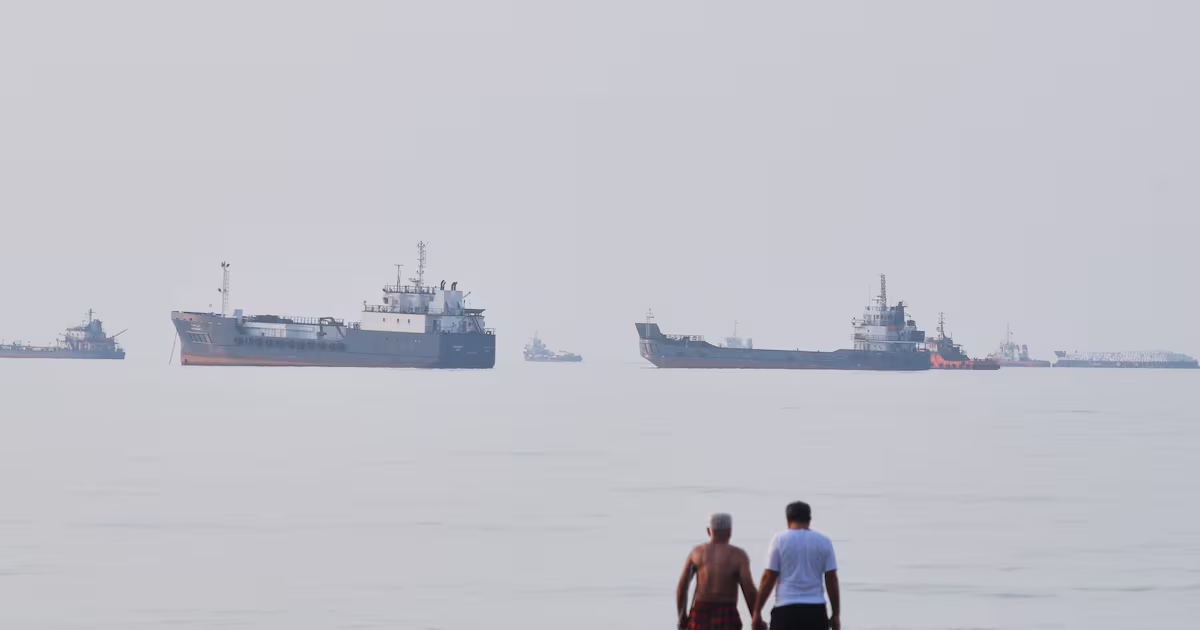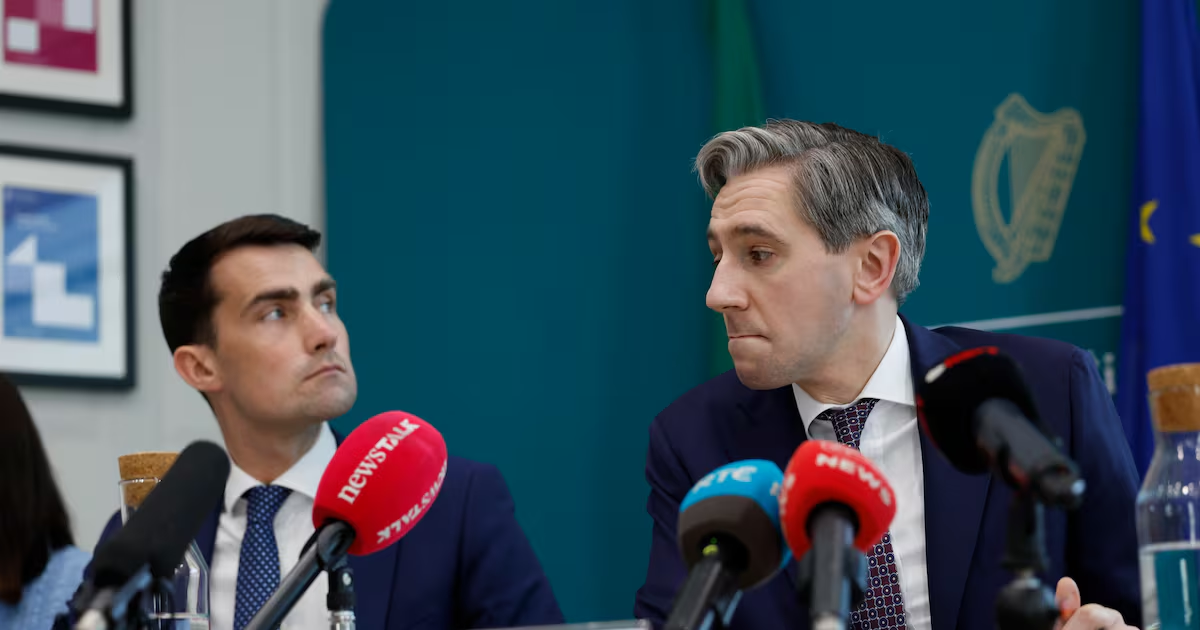
There is an air of unreality about the prolonged build up to Budget 2027 in October. Despite an international energy crisis which could upend economic projections, Ministers and backbenchers continue to debate how much might be available for spending increases and tax reductions, as if the reopening of the Strait of Hormuz can be taken for granted. Unfortunately, this is not the case. There may yet be a deal between the US and Iran, though even then a return to normality in energy markets will take time. And the risk of a prolonged closure or partial closure of the strait remains real, with serious implications for the world economy.Yet budget planning continues almost as normal. True, the Taoiseach and senior ministers nod towards the uncertainties. But there is no sense of a serious attempt to plan how to react if energy prices do rise further heading into next winter. AIB – and the Department of Finance – warn that this could push inflation up to 7 per cent. Economist John FitzGerald cautions that the budget surplus could be wiped out in a malign scenario. Yet debate continue in Government on a spending and tax package to woo the voters.The situation may be clearer in the weeks ahead. But the scale of the risks call for caution and for corralling resources to meet possibly urgent needs. The move by the Minister for Public Expenditure, Jack Chambers, to control the growth of public spending is welcome in this context and overdue. This is not austerity. In all likelihood spending will still rise by 7 per cent this year and that is before any measures in the budget to help poorer households through the winter.The Government must continue the vital work of State investment and the normal business of supporting those who need it. And it is reasonable to consider what should be done if the energy situation improves. But it is also essential to plan for a more difficult scenario and to be honest with the public about what this might involve. The State can help those worst hit in a full-scale energy shock, but it won’t have the resources to insulate the entire economy. Ireland is fortunate to be in a better budget situation than pretty much any other country in Europe. But the plan for now must be to retain room for manoeuvre in planning – to ensure that, barring a major crunch, the budget stays in surplus and that the State continues to put money into the two funds for the future. This will make next year’s budget more difficult to frame and force decisions on priorities. But it leaves room to react if energy prices do not fall back. No doubt the Government’s softly softly attitude has been influenced by the forthcoming byelections. But they need to be clear with voters that if the Strait of Hormuz remains blocked, the budget for 2027 is going to look very different.
The Irish Times view on budget planning: surrounded by an air of unreality
The Government appears to be ignoring the risk of a prolonged energy crisis
491 words~2 min read